

Recessed Ceiling Lighting Built for Project Volume
ADC12 aluminum housings, ±0.1mm CNC-machined trim rings, and CE/UL/SAA certification already in place. Your 200-unit fit-out order ships with the documentation your import team needs and the dimensional consistency your installers expect.
What Makes Recessed Ceiling Lighting a Different Sourcing Problem
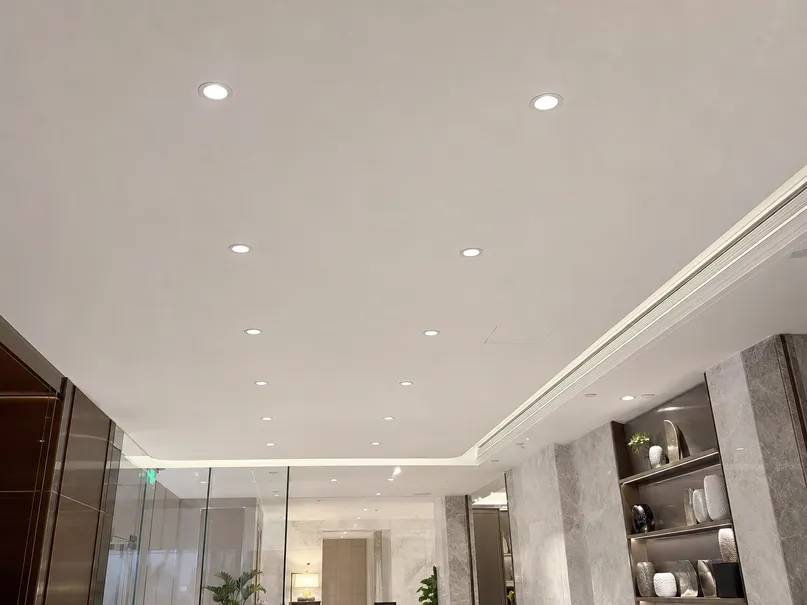
Recessed ceiling lighting is the highest-volume sub-type in the ceiling fixture category — and the one where sourcing mistakes are most expensive to fix. A pendant order with a finish inconsistency is a visible problem on one fixture. A recessed downlight order with a trim ring that doesn't sit flush, or a color temperature that drifts 200K across a batch, is a problem across every ceiling in the project.
When a hotel fit-out has 400 recessed fixtures and 30 of them have a visible gap between the trim ring and the ceiling surface, that's not a product defect — it's a project failure.
We've been manufacturing recessed ceiling lighting for commercial and hospitality fit-outs since 2008. The buyers who come to us for this product type are typically supplying project contractors or FF&E procurement companies, and they've usually had at least one bad experience with a supplier who could deliver a good sample but couldn't hold the spec across a production batch. That's the problem we're built to solve.
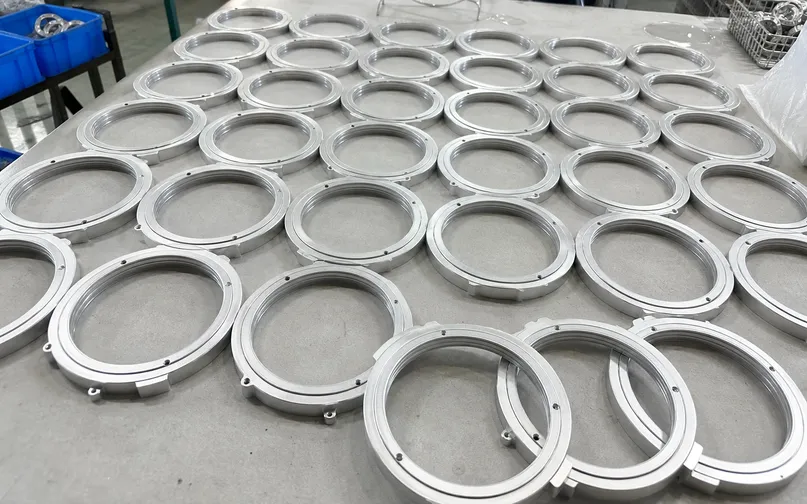
Our CNC machining holds ±0.1mm on trim ring outer diameter and flange depth — the two dimensions that determine whether a recessed fixture sits flush or leaves a gap. We run the same tooling across a production batch without mid-run swaps, so the 400th unit off the line matches the first.
The Core Problem We Solve
Suppliers who deliver a good sample but can't hold the spec across a production batch. Our single-tooling-run approach ensures the 400th unit matches the first.
The category page covers the full ceiling lighting range and the general manufacturing approach — view all ceiling lighting. This page is specific to recessed downlights and trim ring fixtures: the specs, the configurations, the market segments that generate volume, and the details that determine whether a batch ships right the first time.
Get a Quote for Recessed Ceiling LightingTechnical Specifications
These are the standard parameters for our recessed ceiling lighting range. Exact values for a specific SKU depend on the configuration — contact us with your project requirements and we'll confirm the precise spec sheet.
| Parameter | Standard Value / Range |
|---|---|
| Housing Material | ADC12 aluminum alloy die-cast |
| Trim Ring Material | ADC12 aluminum alloy, CNC-machined |
| Trim Ring Outer Diameter | 75mm – 200mm (standard sizes); custom sizes available |
| Cut-Out Diameter | 65mm – 185mm (matched to trim ring OD) |
| Housing Depth | 80mm – 130mm (varies by wattage and driver configuration) |
| Wattage | 7W, 9W, 12W, 15W, 18W, 24W (standard); custom wattage on request |
| Color Temperature | 2700K, 3000K, 4000K, 5000K, 6500K |
| CRI | ≥80 standard; ≥90 available on request |
| Lumen Output | 600lm – 2,400lm (wattage-dependent) |
| Beam Angle | 24°, 36°, 60° (standard); adjustable gimbal versions available |
| IP Rating | IP20 standard; IP44 and IP65 available |
| Dimming | Non-dim, TRIAC, 0–10V, DALI (specified per SKU) |
| Voltage | 100–240V AC universal; 12V/24V DC available |
| Driver Type | Constant current, integrated; remote driver option available |
| Surface Finish | White powder coat standard; matte black, brushed nickel, brushed gold, chrome available |
| Certifications | CE, UL, SAA, SGS |
| Mounting | J-box compatible (North America); ceiling rose compatible (Europe/AU) |
Specifications shown are standard values for this product type. Actual specifications may vary by SKU and configuration. Contact us for detailed product data sheets and project-specific confirmation.
CRI ≥90: A Markup Opportunity for Retail, Gallery, and Hospitality
CRI ≥90 is worth specifying if you're supplying retail, gallery, or hospitality accounts — it's a feature your buyers can mark up on, and it's available across the full wattage range without a significant cost premium.
We've seen more buyers in the Middle East and Australian markets requesting CRI ≥90 as a baseline over the last two years — worth considering if you're building a line for those regions.
Housing and Trim Ring: Where Batch Consistency Is Won or Lost
The housing and trim ring are where most recessed fixture quality problems originate — and where we've invested the most in process control. Here's what that looks like in practice.
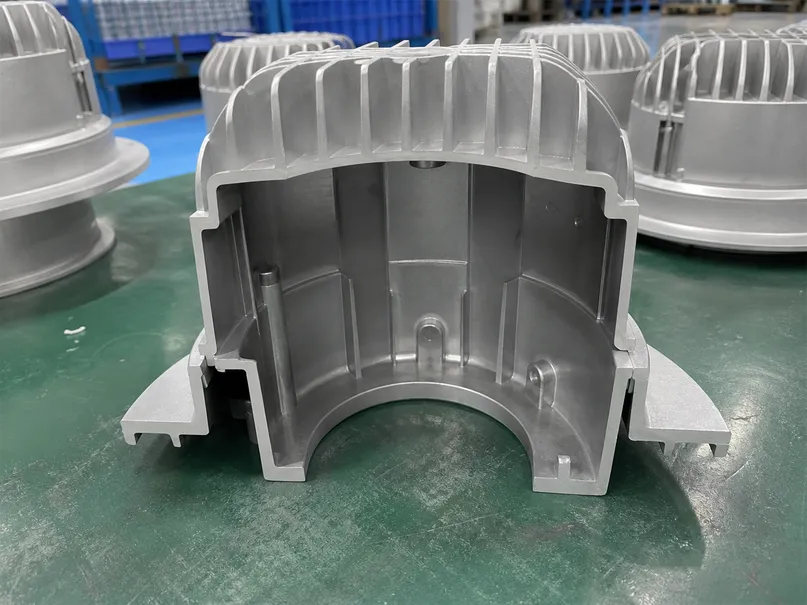
The housing is die-cast from ADC12 aluminum alloy, which gives us the wall thickness consistency and thermal conductivity we need for the driver cavity. ADC12 is the standard alloy for this application — it casts cleanly, machines well, and dissipates heat at a rate that keeps the driver within its rated thermal envelope.
We don't use zinc alloy for recessed housings because the density adds freight weight without improving thermal performance. (Zinc alloy makes sense for decorative trim rings where surface finish quality is the priority — we use it there. For the housing itself, aluminum is the right call.)
CNC-Machined Trim Rings, Not Cast-to-Final
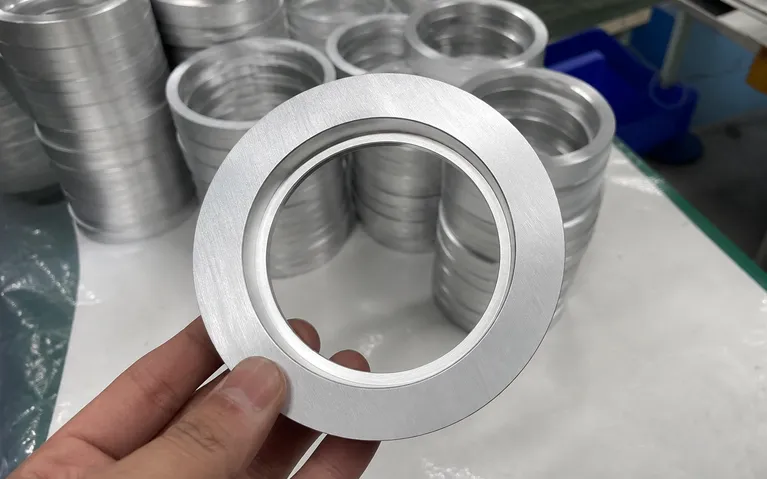
The trim ring is CNC-machined after casting, not just cast to final dimension. Casting tolerances on aluminum are typically ±0.3–0.5mm — acceptable for many applications, but not for a trim ring that has to sit flush against a ceiling surface across 400 units.
CNC machining brings the outer diameter and flange depth to ±0.1mm. That's the tolerance that eliminates the gap problem.
We run the same CNC program across a production batch without parameter adjustments, so dimensional consistency doesn't depend on the operator's judgment.
Standard Casting Tolerance
±0.3–0.5mm
Acceptable for non-visible structural components. Not sufficient for flush-mount trim rings across large batch orders.
Our CNC-Machined Tolerance
±0.1mm
Eliminates visible gaps at the ceiling line. Consistent across full production batches without operator-dependent adjustments.
Per-SKU Driver Cavity Design
The driver cavity is designed per SKU, not adapted from a standard template. We specify the cavity depth and ventilation geometry based on the driver's thermal requirements at the fixture's rated wattage.
A recessed housing running a driver that wasn't specified for its thermal profile will show lumen depreciation within 12–18 months — that's a warranty claim your downstream customer brings back to you.
We run thermal simulation on new designs before tooling is committed, and we verify junction temperature on production samples before a new SKU goes into volume production.
Thermal Verification
- Simulation before tooling
- Junction temp verified on samples
- Per-SKU cavity geometry
Quality Verification Before Packing
Burn-In Aging Test
Every luminaire goes through a minimum burn-in aging test before packing. Driver failures and wiring faults show up here, not in your customer's installation.
Photometric Verification
Lumen output and color temperature verification runs on a sample basis from each production batch to ensure spec compliance.
Color Temp Gate: ±150K
If a batch drifts outside the approved color temperature tolerance (±150K from spec), it doesn't ship. No exceptions.
Market Segments That Generate Repeat Volume
Recessed ceiling lighting is a repeat-order category. The segments below are where our existing buyers see consistent volume — not because the end-user experience is compelling, but because the commercial structure of each segment drives predictable purchasing cycles.
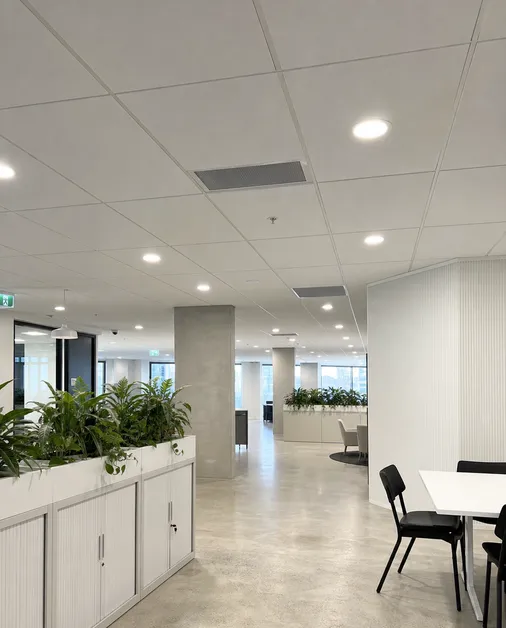
Commercial Office and Retail Fit-Out
Office and retail fit-outs spec recessed downlights in quantities of 100–1,000 units per project, and project contractors who have a reliable recessed fixture supplier with consistent lead times and documentation tend to consolidate purchasing.
CE and UL certification is a prerequisite for most commercial fit-out projects in regulated markets — having the documentation ready at the inquiry stage shortens your sales cycle.
Contractors in this segment reorder on project cycles of 6–18 months; once you're on their approved supplier list, the volume is predictable.
Hospitality Renovation and New Build
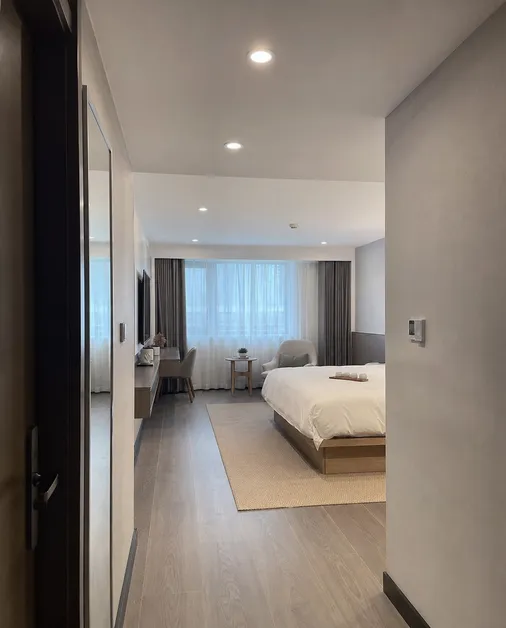
Hotels and serviced apartments spec recessed ceiling lighting in guest rooms, corridors, and F&B spaces — typically 200–600 units per property. The renovation cycle runs 5–8 years, which means a hospitality distributor with 10 hotel accounts has a rolling reorder pipeline.
Recessed kitchen lighting and recessed lights in kitchen prep areas are a specific sub-segment here: IP44 rating is required for damp locations, and CRI ≥90 is increasingly specified for F&B spaces where food presentation matters.
We manufacture IP44-rated recessed fixtures with CRI ≥90 drivers as a standard configuration — no custom development required.
Residential Development and Luxury Residential
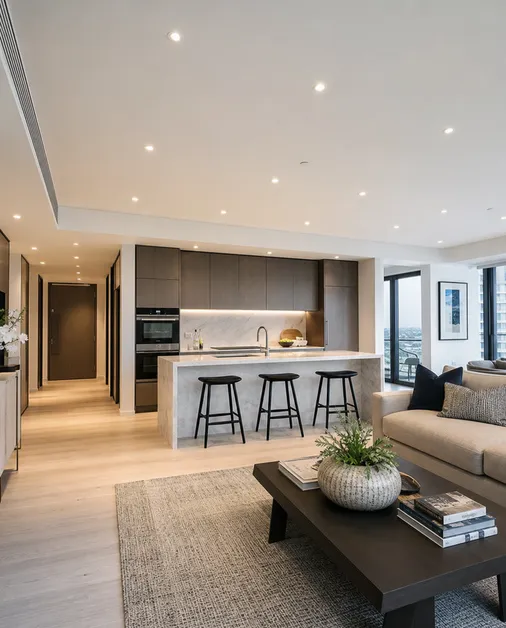
Property developers specifying recessed ceiling lighting for multi-unit residential projects order in quantities that make MOQ requirements straightforward — a 50-unit apartment building with 20 recessed fixtures per unit is a 1,000-unit order.
The design brief in this segment has shifted toward smaller trim ring diameters (75–100mm) and warmer color temperatures (2700K–3000K) over the last few years.
Recessed kitchen lighting is a specific high-volume sub-category in residential development: kitchen ceilings typically carry 6–12 recessed fixtures per unit, and the specification is usually consistent across all units in a development, making batch consistency critical.
Lighting Showrooms and Online Retail
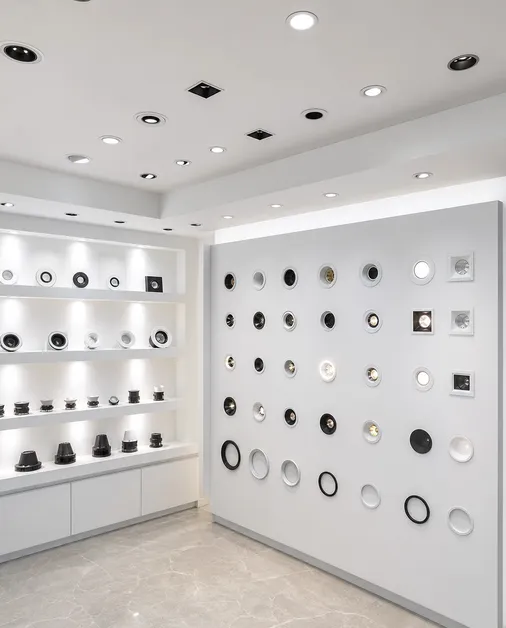
Recessed ceiling lighting is a catalog staple for lighting distributors and online retailers. The category sells on specification clarity — buyers comparing recessed fixtures across suppliers are looking at cut-out diameter, wattage, color temperature options, and dimming compatibility.
Having a clean, complete spec sheet and certification documentation ready accelerates the listing process for e-commerce buyers.
We provide IES files from our in-house optical lab for buyers who need them for project submissions or product listings.
Discuss Your Market Segment and Volume Requirements
Tell us your target segment, typical order quantities, and certification needs. We'll confirm lead time and pricing structure.
Recessed Kitchen Lighting: Configuration Specifics
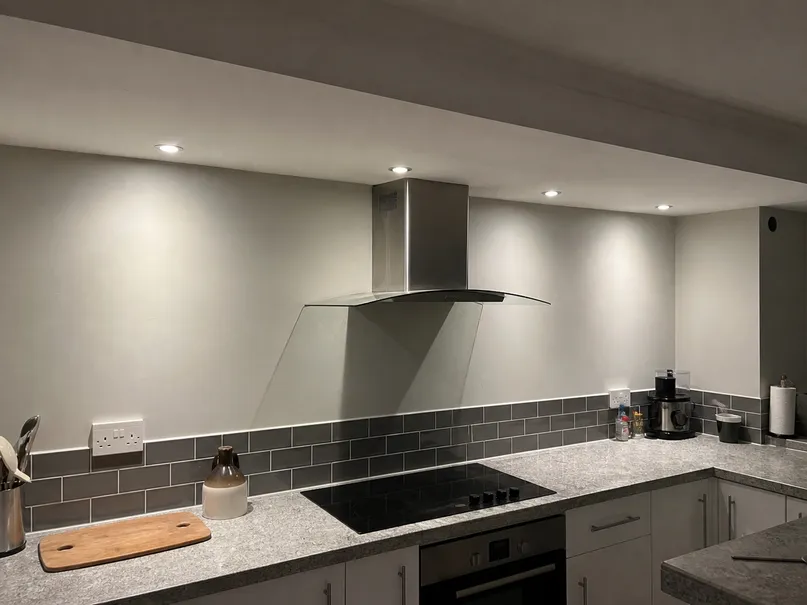
Recessed kitchen lighting and recessed lights in kitchen applications are a distinct configuration within the broader recessed ceiling lighting range — the application environment drives specific requirements that are worth addressing directly.
Kitchen ceilings in residential and commercial applications have two characteristics that affect fixture selection: higher ambient humidity than standard dry rooms, and proximity to cooking surfaces where grease and steam are present.
IP Rating by Application
Residential Kitchen — IP44 Minimum
Protection against water splashing from any direction. Covers the steam and condensation environment above a cooking surface.
Commercial Kitchen — IP65 Minimum
Restaurant prep areas, hotel F&B kitchens. We manufacture recessed fixtures to this rating with gasketed trim rings and sealed driver compartments.
Color Temperature for Kitchen Applications
Color temperature selection for recessed kitchen lighting follows a different logic than general residential lighting.
4000K (Neutral White) — Most Common Specification
Renders food colors accurately without the yellow cast of 2700K or the clinical feel of 5000K. CRI ≥90 is worth specifying for any kitchen application where food presentation is part of the brief — the difference between CRI 80 and CRI 90 is visible on fresh produce and cooked food, and it's a feature that justifies a price premium in the residential and hospitality segments.
Beam Angle Configuration
Beam angle matters more in kitchen applications than in general ambient lighting. We manufacture both configurations as standard SKUs, and we can configure a mixed beam angle order within the same production run.
36° Beam Angle
Standard for general kitchen illumination. Provides broad, even coverage across the ceiling plane for ambient lighting.
General Ceiling Positions24° Beam Angle
Appropriate for task lighting over countertops and prep surfaces. Concentrates output where precision work happens.
Counter-Position FixturesCut-Out Diameter — Confirm Before Ordering
One detail that comes up regularly with kitchen applications: the cut-out diameter needs to be confirmed against the ceiling construction before ordering. Older residential construction often has ceiling joists at non-standard spacing, and a 150mm cut-out that works in new construction may not clear the joist in a renovation. We recommend confirming the ceiling construction type with your buyer before specifying the cut-out diameter.
Container Economics and Packaging for Recessed Fixtures
Recessed ceiling lighting is a volume category, and container economics matter as much as unit price on a large order. The cylindrical housing geometry is the worst-case scenario for container loading efficiency — if you pack recessed fixtures in round cartons, you're shipping a significant percentage of air.
Rectangular Carton Strategy
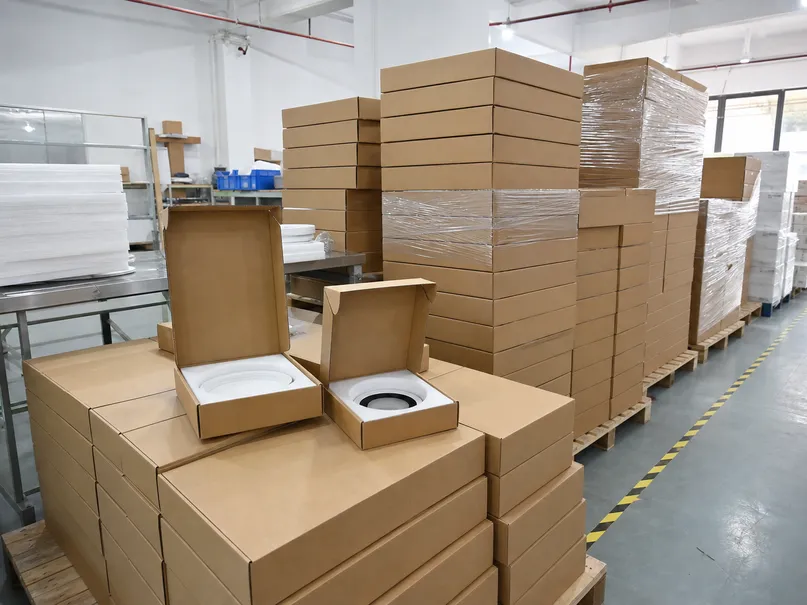
We use rectangular outer cartons sized to the fixture's actual footprint, not to the housing's circular cross-section. For a standard 100mm trim ring recessed fixture, this typically improves loading density by 15–20% versus round packaging.
Impact on a 2,000-Unit Order (40HQ Container)
Real freight cost savings that show up in your landed cost calculation and protect your margin. The density improvement is 15–20% versus round packaging on a standard 100mm trim ring fixture.
Inner Packaging — Trim Ring Protection
Individual foam-lined cartons with the trim ring face protected against surface scratching. The trim ring finish — whether white powder coat, matte black, or brushed nickel — is the most visible surface on the installed fixture, and transit scratches on the trim face are the most common packaging-related complaint in this category.
We added a foam face protector to the standard inner carton after seeing scratch patterns on a batch shipped to a North American distributor. It added about 0.3% to packaging cost and eliminated the complaint.
Lead Time
Catalog Recessed Ceiling Lighting
25–35 Days
From order confirmation
Custom Configurations
+7–10 Days
Non-standard cut-out diameters, custom trim ring finishes, or specific driver configurations. Added for configuration review and sample approval before production starts.
We communicate lead time milestones proactively. If a production issue is going to affect your ship date, you hear about it before the container is supposed to load.
Certification Coverage for Your Destination Market
CE, UL, SAA, and SGS certification is already in place across the recessed ceiling lighting range. These aren't certifications we're working toward — they're part of the product development process, and the documentation is maintained per SKU.
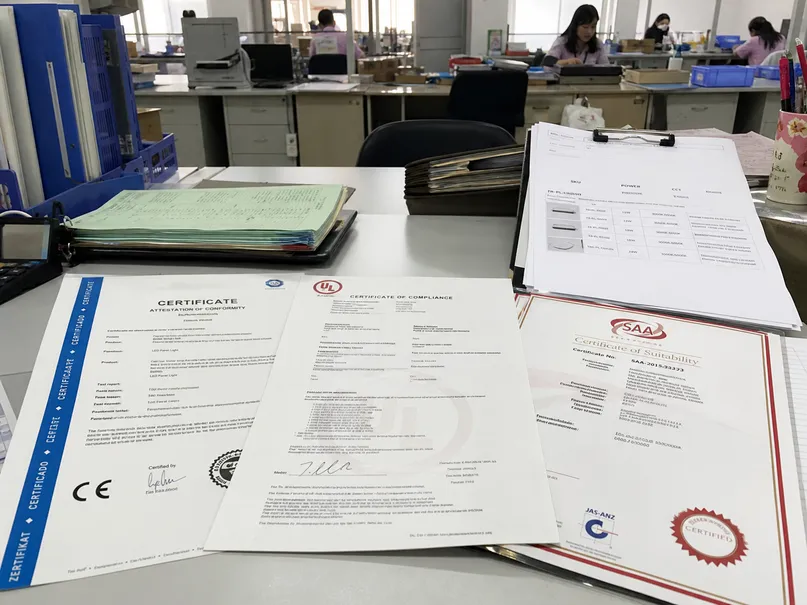
| Certification | Market | What It Covers for Recessed Fixtures |
|---|---|---|
| CE | EU / EEA | LVD, EMC, RoHS — required for commercial fit-out projects in European markets |
| UL | North America | UL Listed for residential and commercial use; J-box mounting compatibility verified |
| SAA | Australia / New Zealand | AS/NZS electrical safety compliance; ceiling rose mounting pattern confirmed |
| SGS | General export | Third-party quality and safety verification; available for buyer audit programs |
| ISO 9001:2015 | Process | Quality management system across all production |
North American Market: UL Listing Detail
For buyers supplying North American markets, the UL listing covers both residential and commercial applications — relevant if your buyers are project contractors who need to specify UL Listed fixtures for commercial building permits. The J-box mounting pattern on our North American-configured recessed fixtures is verified against standard US electrical box spacing before production.
European ceiling rose dimensions and North American J-box spacing are different — we spec the mounting pattern to the destination market, not to a single global standard. If you're supplying both markets, we can configure the same SKU for both mounting systems on request.
Documentation Packages Available Per SKU
For buyers who need specific documentation packages — Declaration of Conformity, UL file numbers, test reports, material safety data sheets — we maintain these per SKU and provide them as part of the order documentation. If your import team has specific documentation requirements for customs clearance or retailer compliance programs, tell us at the inquiry stage.
Declaration of Conformity
UL File Numbers
Test Reports
Material Safety Data Sheets
OEM and Custom Recessed Ceiling Lighting
Custom recessed ceiling lighting is a meaningful part of our volume in this category. The most common OEM requests we see are: custom trim ring diameters to match an existing ceiling grid system, custom finish colors to match a project's interior specification, and custom wattage/color temperature combinations for a specific application.
Existing Tooling Library
Standard housing forms with custom trim ring dimensions or finish specifications
New Die-Cast Tooling
Non-standard housing geometries or integrated trim ring designs
Customization Dimensions Available
Trim Ring Diameter & Profile
Custom OD and flange profile within the structural limits of the housing design. We flag designs where the flange geometry would compromise the flush-fit tolerance before tooling is committed.
Cut-Out Diameter
Matched to the trim ring OD with the standard clearance tolerance. Non-standard cut-out diameters for specific ceiling grid systems are available.
Surface Finish
Any finish in our standard range — white, matte black, brushed nickel, brushed gold, chrome, custom RAL powder coat colors on runs over 100 units.
Wattage & Color Temperature
Configurable per SKU. Mixed color temperature orders (e.g., 3000K for general positions, 4000K for task positions) within the same production run are supported.
Dimming Protocol
TRIAC, 0–10V, or DALI configured per SKU based on your destination market's standard control infrastructure.
Branding & Packaging
Custom logo on the fixture body, custom packaging design, and private label documentation are standard OEM services.
Prototyping Turnaround
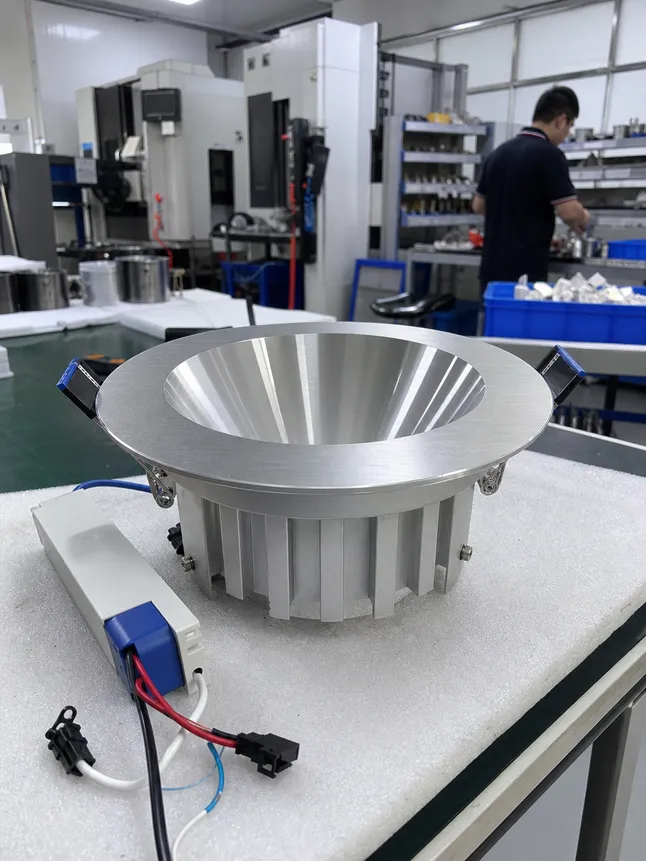
Prototyping turnaround for new recessed fixture configurations runs 7–10 working days from approved drawings to physical sample — a CNC-machined housing with provisional surface finishing and driver integration, not a 3D-printed mock-up.
Frequently Asked Questions
What cut-out diameter should I specify for recessed ceiling lighting in a standard ceiling grid?
What cut-out diameter should I specify for recessed ceiling lighting in a standard ceiling grid?
Standard suspended ceiling grids in commercial applications use 600×600mm or 1200×600mm tile formats, and the recessed fixture cut-out needs to clear the grid structure.
For standard commercial applications, a 150mm cut-out diameter is the most common specification — it clears the grid structure in both tile formats and accommodates a 165–175mm trim ring OD that provides adequate visual coverage.
For residential applications with drywall ceilings, cut-out diameter is less constrained by grid geometry and more by the desired trim ring size — 75–100mm cut-outs with matching trim rings are the most common residential specification.
Always confirm the ceiling construction type before specifying the cut-out diameter, particularly in renovation projects where ceiling joist spacing may limit the available cut-out size.
What IP rating do I need for recessed kitchen lighting?
What IP rating do I need for recessed kitchen lighting?
For residential kitchen applications, IP44 is the appropriate minimum — it covers the steam and condensation environment above cooking surfaces.
For commercial kitchen applications (restaurant prep areas, hotel F&B kitchens), IP65 is the standard minimum, with gasketed trim rings and sealed driver compartments required.
IP20 is not appropriate for kitchen ceiling positions directly above cooking surfaces, even in residential applications.
We manufacture recessed ceiling lighting across IP20, IP44, and IP65 ratings; specify the application environment and we'll confirm the right rating and the certification documentation.
Why do recessed ceiling fixtures sometimes show a gap between the trim ring and the ceiling surface after installation?
The gap problem has two causes: dimensional variation in the trim ring outer diameter, and variation in the flange depth. If the trim ring OD varies by more than ±0.3mm across a batch, some units will sit flush and others won't — the ceiling cut-out is fixed, but the trim ring isn't. The same applies to flange depth variation.
The Fix
CNC machining the trim ring to ±0.1mm tolerance after casting, rather than relying on casting tolerances alone.
Sourcing guidance: Ask any recessed fixture supplier specifically how they hold trim ring dimensional tolerance across a production batch — not just on the sample, but on the 200th unit.
What is the difference between TRIAC dimming and DALI dimming for recessed ceiling lighting, and which should I specify?
TRIAC (Phase-Cut) Dimming
Compatible with the wall dimmers already installed in most residential and light commercial buildings.
Best for:
- Residential projects
- Hospitality
- Retrofit commercial applications
DALI (Digital) Dimming
A digital control protocol used in commercial building management systems, allowing individual fixture addressing and integration with building automation.
Best for:
- New commercial fit-outs
- Office buildings with centralized lighting control
The two systems are not interchangeable. Specify the dimming protocol based on your buyer's end application and the control infrastructure already in place. If you're supplying both residential and commercial buyers, we can configure the same fixture housing with different driver/dimming specifications per SKU.
What is the minimum order quantity for recessed ceiling lighting, and what does the lead time look like?
MOQ for standard catalog recessed ceiling lighting starts at 50 units per SKU. For custom configurations within our existing tooling library (custom finish, custom wattage, custom color temperature), MOQ starts at 100 units. For designs requiring new tooling, MOQ is typically 300–500 units.
Standard lead time runs 25–35 days from order confirmation. Custom configurations without new tooling add 7–10 days for configuration review and sample approval. New tooling adds 15–20 days for the tooling cycle before production starts. We confirm the specific lead time at the inquiry stage based on current line loading.
How do I verify that recessed ceiling lighting certifications are valid for my destination market?
Each certification standard has its own verification path. Here's what to request and how to confirm validity:
CE (Europe)
Request the Declaration of Conformity (DoC) — it lists the specific directives covered, the product scope, and the issuing manufacturer.
UL (North America)
The fixture should carry the UL Listed mark and a UL file number, which can be verified on UL's public database.
SAA (Australia)
The certificate includes a certificate number verifiable with the issuing body.
Key verification principle
Ask for the actual certificate documents, not just a claim of certification — a valid certificate has an issue date, an expiry date, a scope of products covered, and a certificate number. We maintain current certification documents per SKU and provide them as part of standard order documentation.
Other Ceiling Lighting Products
Recessed ceiling lighting is one of six sub-types in our ceiling lighting range. If recessed fixtures don't match your project requirements, these alternatives may be a better fit.
Flush Mount Ceiling Lighting
Low-profile surface-mount fixtures for spaces where ceiling cavity depth isn't available — corridors, low-ceiling hospitality rooms, and renovation projects where cutting into the ceiling isn't an option.
View rangeModern Ceiling Lighting
Clean-geometry surface-mount fixtures for residential and boutique commercial applications where design intent matters as much as function.
View rangeLuxury Ceiling Lighting
Large-format decorative ceiling fixtures for villa lobbies, boutique hotel public areas, and high-end residential projects where the fixture is a design statement.
View rangeDecorative Ceiling Lighting
Mixed-material surface-mount fixtures for buyers who need design differentiation above the commodity tier.
View rangeIndustrial Ceiling Lighting
Robust ceiling fixtures for commercial and light-industrial environments with higher IP ratings and continuous-operation driver configurations.
View rangeGet a Quote for Recessed Ceiling Lighting
Send us your project requirements — cut-out diameter, wattage, color temperature, dimming protocol, destination market, and volume — and we'll come back with a detailed quote and spec sheet within 2 business days.
If you're not sure which configuration fits your project, send us the project spec or a photo of what you're currently sourcing and our engineering team will recommend the right configuration.
Already have a design or a custom trim ring requirement? Send us the drawings or reference dimensions — we'll review for manufacturability and come back with a tooling cost estimate and lead time confirmation.
Wholesale only. Strict MOQ applies.
Contact Details
Phone
+86 134 2021 9307
Address
No. 14 Beisan Rd, Gusan Ind. Zone, Guzhen, Zhongshan, Guangdong, China