

Adjustable Spotlights Built for Commercial Deployment
Directional adjustable spotlights with precise beam control, full-run finish consistency, CE/UL/SAA certified.
We manufacture adjustable spotlights for importers, distributors, and project contractors who need a factory that holds spec across a 500-unit batch, not just the sample. Every fixture ships after 100% aging test and photometric verification.
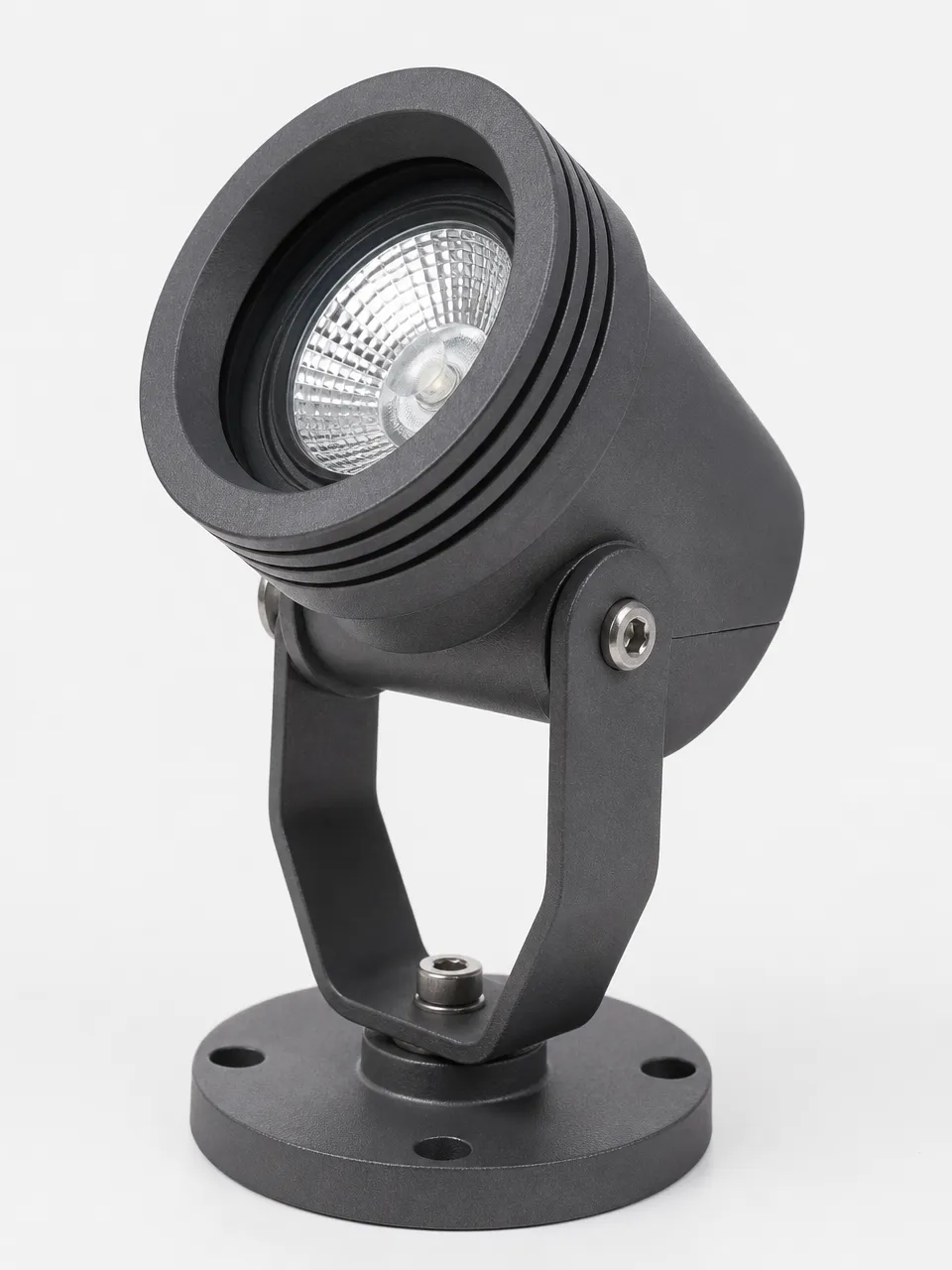
What Makes Adjustable Spotlights a Different Sourcing Decision
Adjustable spotlights sit in a different category from fixed downlights or track heads. The mechanical pivot — the joint that lets the fixture rotate and tilt — is where most quality problems in this product type originate. A fixed downlight has no moving parts after installation. An adjustable spotlight has a tilt mechanism that gets repositioned during commissioning, sometimes repeatedly, and that joint needs to hold its set position without creep.
If the friction mechanism is undersized or the housing tolerance is loose, the fixture drifts over time. Your downstream customer repositions it, it drifts again, and eventually you're fielding warranty calls about a fixture that "won't stay pointed."
We've been making directional spotlights long enough to know that the pivot joint is where you either spend the engineering time or you pay for it later. Our adjustable ceiling lights use a die-cast aluminum housing with a machined pivot seat — the friction is set by a stainless steel tension screw, not a plastic clip or a press-fit detent.
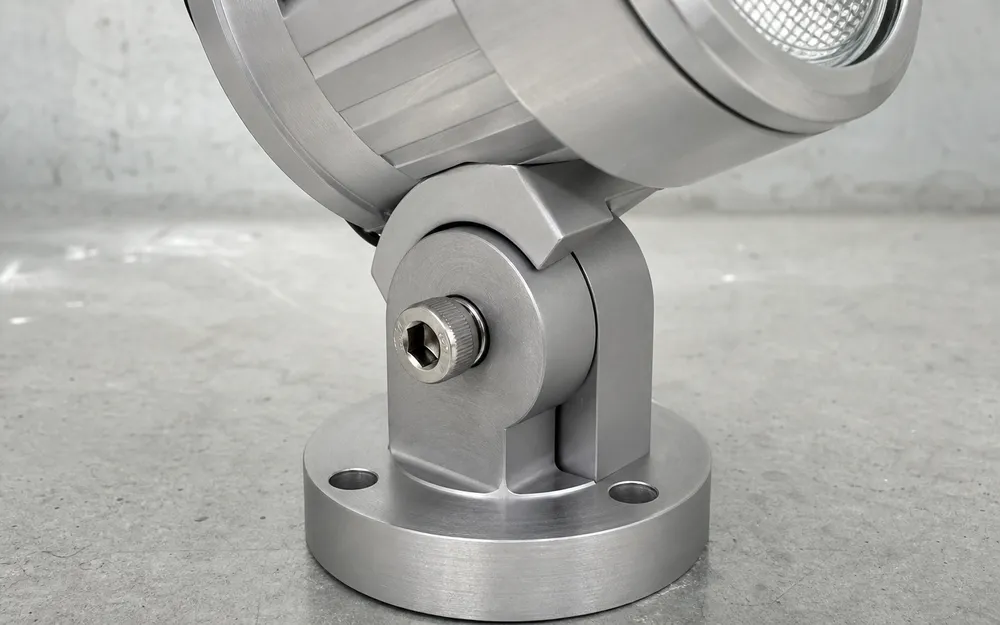
Pivot Joint Engineering
Tilt range: 0–45° vertical axis · 350° horizontal rotation · Joint holds position under fixture weight without additional locking.
The tilt range runs 0–45° on the vertical axis with 350° horizontal rotation, and the joint holds its position under the fixture's own weight without additional locking. We tested a spring-clip design early on and dropped it after seeing position drift in thermal cycling — the aluminum expands and contracts enough to change the clip tension over time.
For buyers building a product line or specifying fixtures for a project, this matters commercially: fewer post-installation adjustments, fewer service calls, and a fixture that photographs consistently across a multi-unit installation. That's the difference between a product your downstream customers reorder and one they replace.
No Position Drift
Stainless steel tension screw holds set angle under fixture weight — no creep, no re-aiming after thermal cycling.
Fewer Warranty Calls
Machined pivot seat eliminates the plastic-clip failure mode that generates "won't stay pointed" complaints from end users.
Reorder-Grade Consistency
Fixtures photograph consistently across multi-unit installations — the difference between a product customers reorder and one they replace.
Technical Specifications
These are industry-standard values for this product type. Actual specifications vary by SKU and configuration — contact us for detailed product data sheets on specific models.
Full Specification Table
| Parameter | Typical Specification |
|---|---|
| Housing material | Die-cast aluminum (ADC12 alloy) |
| Tilt range | 0–45° |
| Rotation range | 350° horizontal |
| Wattage range | 7W – 35W |
| LED source | COB or SMD, CRI ≥ 90 |
| Color temperature | 2700K / 3000K / 4000K (selectable) |
| Beam angle options | 15° / 24° / 36° / 60° |
| Lumen output (typical) | 600–3500 lm depending on wattage |
| Driver type | Constant current, external or integrated |
| Dimming compatibility | TRIAC / 0-10V / DALI (by configuration) |
| Input voltage | 100–240V AC, 50/60Hz |
| IP rating | IP20 (standard) / IP44 (wet-rated option) |
| Finish options | Matte white, matte black, brushed gold, brushed nickel, custom RAL |
| Cutout diameter (recessed) | 68mm / 75mm / 90mm / 110mm (standard) |
| Operating temperature | -20°C to +45°C |
| Certifications | CE, UL, SAA, SGS |
Specifications shown are industry-standard values for this product type. Actual specifications may vary by model. Contact us for detailed product data sheets, IES files, and test reports.
Light Output
Dimming
Beam Angles
Need Detailed Specs?
Request product data sheets, IES files, and test reports for your target market.
Request SpecificationsBeam Control: Where the Optical Lab Earns Its Keep
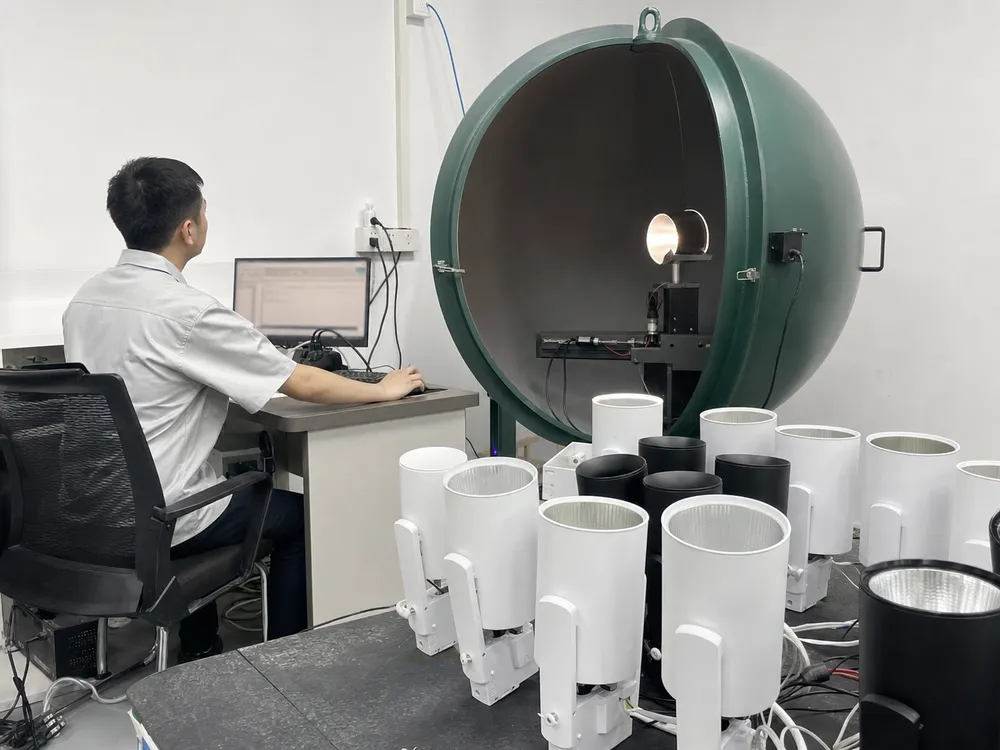
The beam angle is the spec that most buyers list on their comparison sheet and then don't verify. We do. Our in-house optical lab runs photometric testing on every new design and on production samples — lumen output, beam angle, and color rendering are measured against the approved spec before a design goes into production and spot-checked during runs. If a batch drifts outside tolerance, it doesn't ship.
For adjustable spotlights specifically, beam angle consistency matters more than it does for fixed fixtures because the fixture is being aimed. A 24° beam that's actually 31° doesn't accent the way the designer specified. For project contractors submitting lighting calculations, the IES file needs to match what's actually installed.
IES Files From Our Lab, Not the Data Sheet
We generate IES files from our own photometric measurements — not from the LED manufacturer's data sheet — so what you submit to the project team is what gets installed.
COB vs SMD: Application-Matched LED Selection
COB LED Option
- Cleaner beam profile for accent applications
- Single-source optics — no multi-shadow artifact
- Tighter center-beam candlepower
- Best for: precise accent tool applications
SMD LED Option
- Higher lumen output per watt at wider beam angles
- Better for general illumination applications
- Directional ceiling light use cases
- Best for: broad coverage, efficiency-first projects
We specify the LED type per SKU based on the intended application — we don't use a single LED spec across the whole range and call it done.
Color Rendering: CRI ≥ 90 Standard
CRI ≥ 90 is standard across the line. For buyers supplying retail, gallery, or hospitality accounts, we can configure CRI ≥ 95 on runs over 200 units.
The CRI ≥ 95 bin costs more and the yield is lower, so it doesn't make sense to run it as a standard spec — but if your market demands it, we can do it.
Market Segments Where Adjustable Spotlights Move Volume
Retail Fit-Out and Shop Lighting Supply
Retail is the highest-volume segment for adjustable spotlights. A single mid-size retail chain fit-out can run 200–800 fixtures per location, and chains typically roll out across multiple locations on a 12–18 month schedule.
The key spec for retail is beam angle flexibility — the same fixture needs to work over a display table (24°), a feature wall (36°), and a perimeter shelf run (15°). Buyers supplying retail fit-out contractors need a range that covers these configurations from a single housing SKU, which reduces their inventory complexity and gives the contractor a consistent aesthetic across the store.
Single-SKU coverage: Our adjustable ceiling lights cover 15°–60° beam angles from the same housing, so your buyer isn't mixing fixture families mid-project.
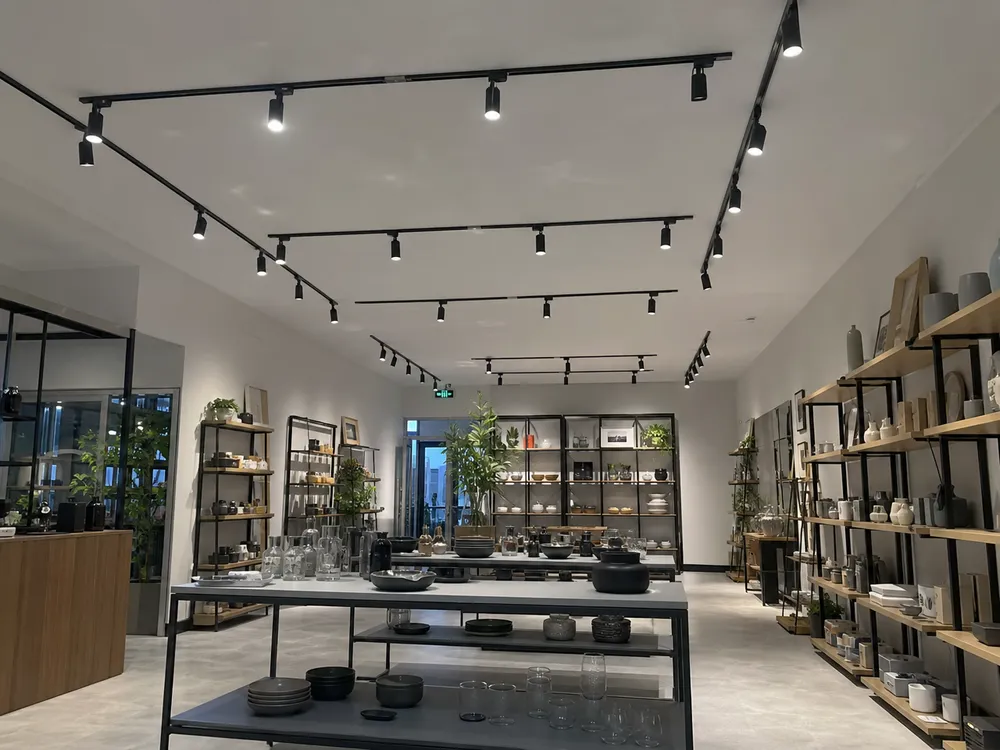
Hospitality and Hotel FF&E
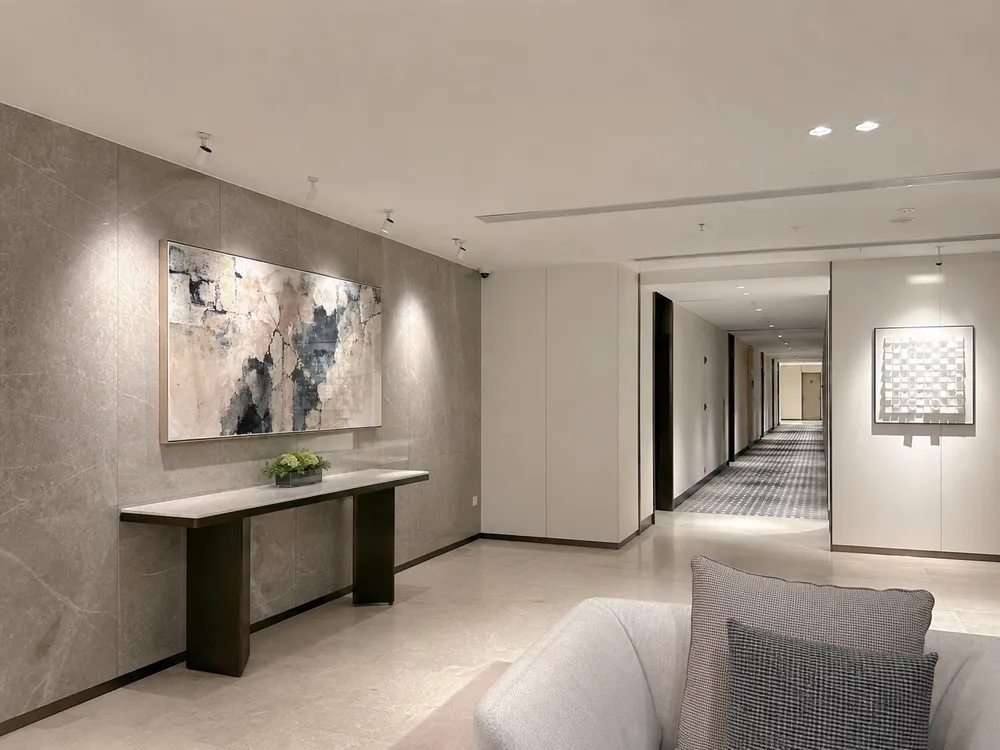
Hotel projects specify adjustable spotlights for guestroom accent lighting, corridor feature walls, and lobby focal points. The typical hotel project runs 50–300 fixtures per property, with repeat orders as the chain expands.
The critical spec for hospitality is dimming compatibility — TRIAC dimming for markets with existing dimmer infrastructure, DALI for new-build projects with building management systems. We configure the driver per order based on the destination market's standard.
Inventory advantage: For buyers supplying hotel FF&E contractors, having a factory that can configure dimming protocol to spec — rather than stocking multiple SKUs for different dimming systems — compresses your inventory and reduces the risk of a wrong-spec shipment on a time-sensitive project.
Residential Developer and Luxury Fit-Out
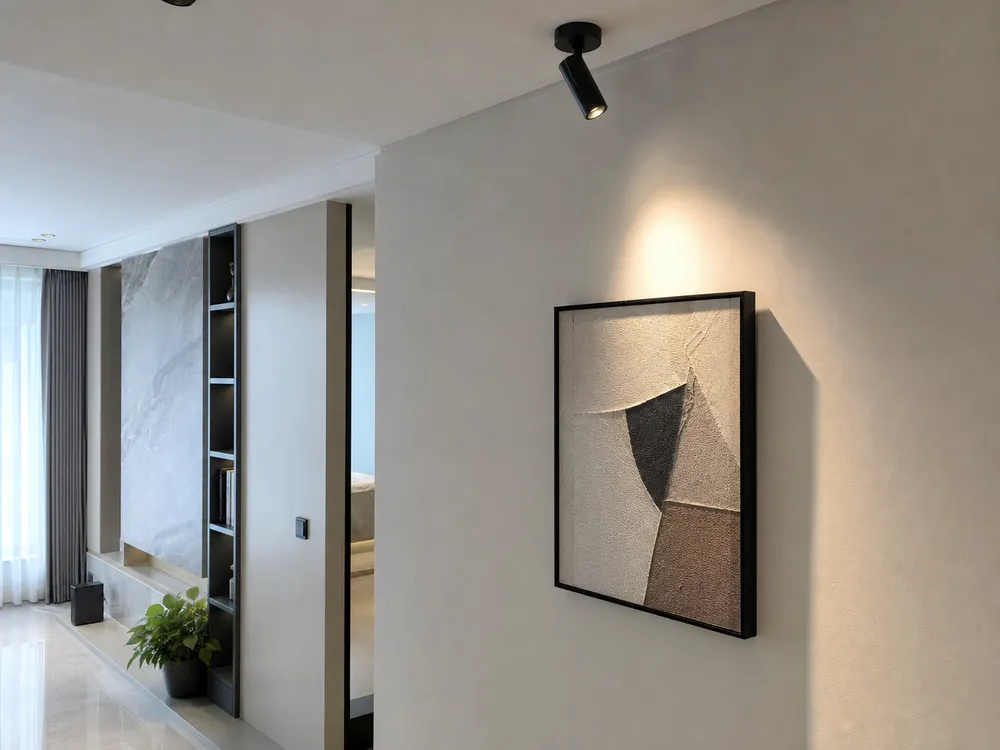
High-end residential developers and interior design firms specify adjustable spotlights for kitchen task lighting, artwork accent, and architectural feature illumination. Order volumes per project are lower (20–80 fixtures), but the margin profile is higher and the reorder pattern is strong — a designer who specifies your fixture on one project will specify it again.
The finish range matters here: brushed gold and matte black are the two highest-demand finishes in this segment right now, and we have both processes dialed in on our in-house finishing line.
Wholesale Distribution for the Electrical Trade
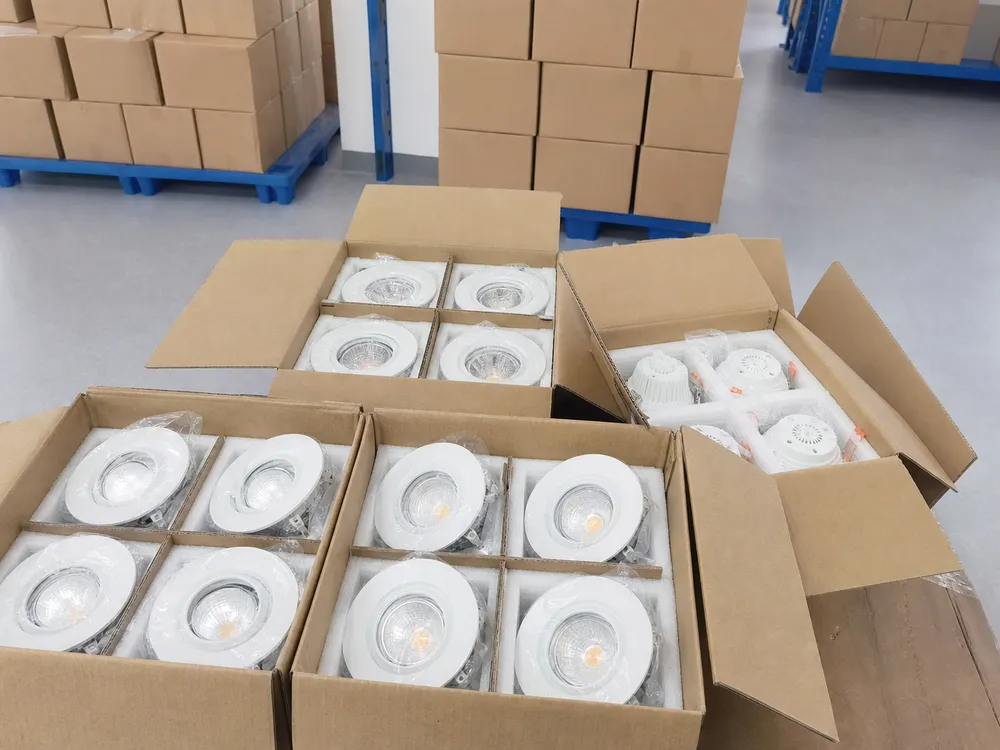
Electrical wholesalers stocking adjustable spotlights for contractor supply need a product that covers the broadest possible installation scenario from a manageable SKU count.
The IP44 wet-rated option extends the fixture into bathroom and covered outdoor applications, which expands the addressable market without adding a separate product family. CE and UL certification covers the two largest import markets from a single factory source.
Die-Cast Housing and Finish: What Batch Consistency Actually Means
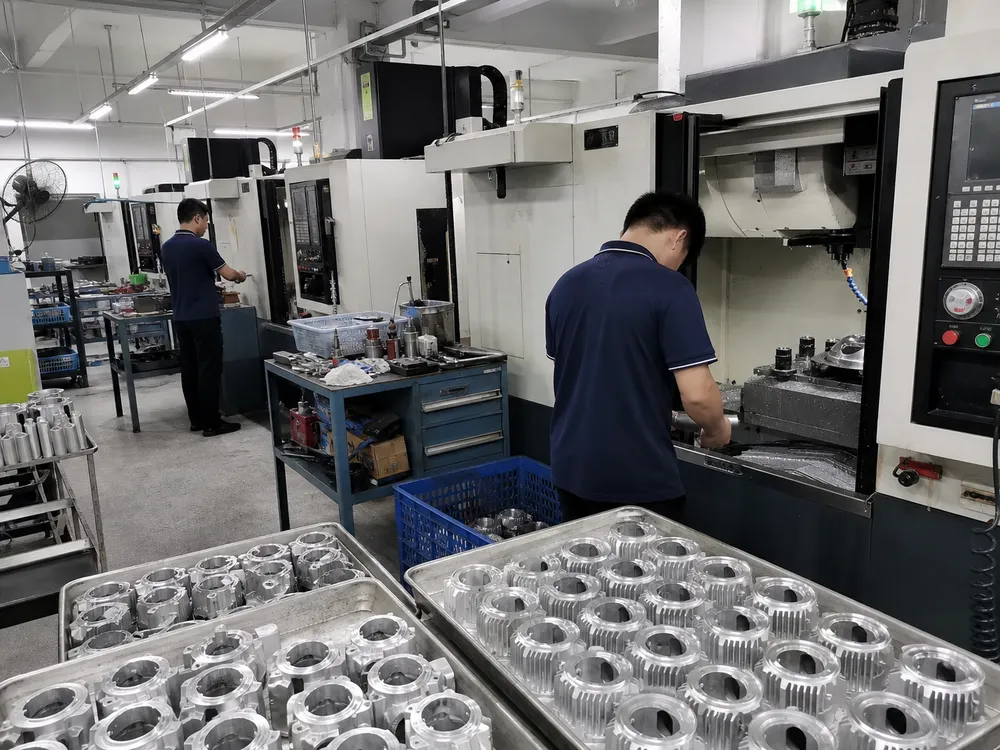
Most decorative lighting factories in Guzhen are assembly operations — they buy die-cast housings from a casting supplier, buy drivers from a driver supplier, and put them together. We run our own die-casting and CNC machining under the same roof. For adjustable spotlights, this matters in two specific ways.
The Pivot Seat
The tilt mechanism's friction and range depend on the dimensional accuracy of the pivot seat in the housing. If that seat is cast by a third-party supplier with ±0.3mm tolerance and assembled with a stainless tension screw, the friction setting varies unit to unit.
We hold ±0.1mm on critical mounting dimensions on our CNC line, which means the pivot mechanism behaves consistently across a production batch.
Your installer sets the friction once and moves on — they're not adjusting each fixture individually.
Finish Consistency
Our powder coat line runs automated application at 60–80μm thickness. That's consistent across the batch, not just the first few units off the line.
For buyers supplying projects where multiple fixtures are visible simultaneously — a retail ceiling grid, a hotel corridor — finish variation between units is a visible quality problem.
We run salt spray testing on finish samples before committing a batch to production.
For buyers supplying coastal markets or humid climates, ask us about the extended salt spray spec — we can run 500-hour testing on finish samples as part of the pre-production approval process.
Highest-Volume Finishes
The matte black and brushed gold finishes are our two highest-volume options on adjustable spotlights. Both are in-house processes, which means we're not waiting on a subcontractor's schedule when you need a reorder.
Black
Gold
Certification Coverage by Destination Market
| Market | Certification | Notes |
|---|---|---|
| Europe | CE (LVD + EMC) | Declaration of Conformity available per SKU |
| North America | UL | Listed; test reports available |
| Australia / NZ | SAA | Compliant; documentation available |
| General export | SGS | Audit reports available on request |
| All markets | ISO 9001:2015 | Process quality management |
CE, UL, and SAA are held and maintained — not pending, not "available upon request."
When your import team is reviewing documentation before a container loads, the paperwork is ready. For buyers who need specific documentation packages — test reports, Declaration of Conformity, material safety data sheets — we maintain these per SKU and provide them as part of the order documentation.
Energy Efficiency Compliance
For buyers importing into markets with specific energy efficiency requirements (ErP in Europe, Title 20 in California), contact us with your target market and wattage range — we'll confirm compliance status and provide the relevant documentation.
Need Certification Docs?
Get certification documentation for your specific destination market and SKU requirements.
Get Certification DocumentationCustomization: What You Can Specify and What Affects MOQ
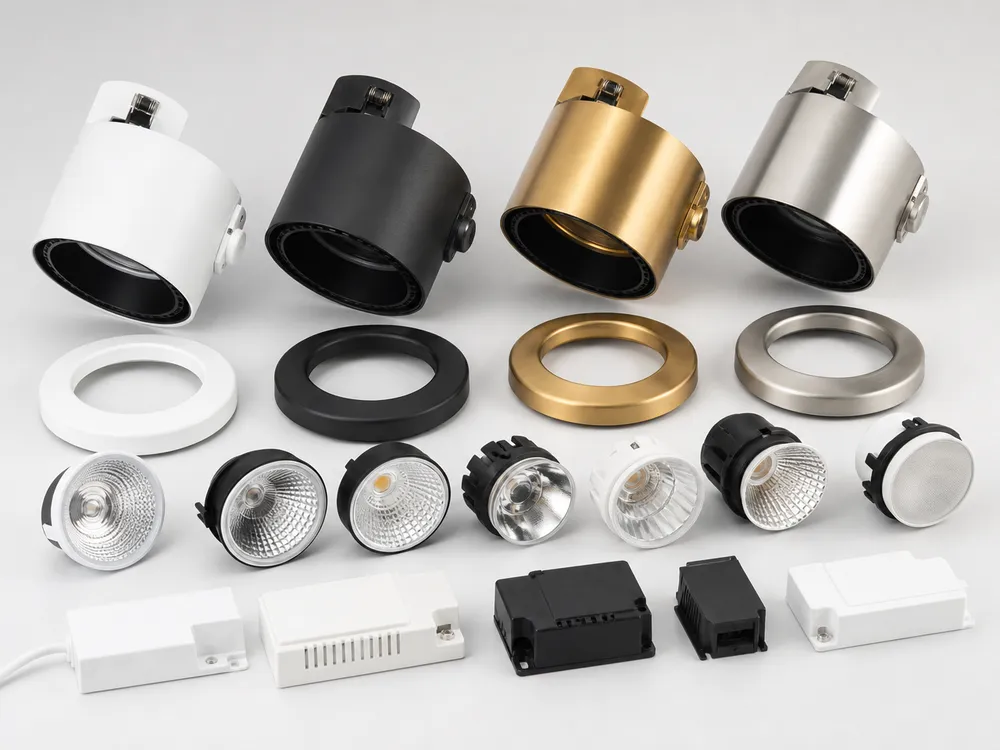
Adjustable spotlights are one of our more customizable product types because the housing, optics, and driver are three separable components. Here's what's configurable and what the practical limits are.
Housing & Finish
Any RAL color is available on runs of 100 units or more per finish. Below 100 units, the powder line changeover cost doesn't make sense for either side.
Standard finishes — matte white, matte black, brushed gold, brushed nickel — are available at standard MOQ.
Custom housing geometry (modified flange diameter, different trim ring profile, branded escutcheon) requires new tooling. We quote tooling cost separately and it's amortized over the first production run.
Optics
Beam angle is set by the lens/reflector assembly. We stock 15°, 24°, 36°, and 60° optics as standard.
Custom beam angles (e.g., 10° for long-throw gallery applications, 45° for wide-wash) are available with a minimum run of 200 units to justify the optical tooling.
Driver & Dimming
Driver configuration is specified per order — wattage, dimming protocol (TRIAC, 0-10V, DALI), and input voltage range. No MOQ premium for driver configuration changes; this is a standard part of how we quote.
If you're supplying multiple markets with different dimming standards, we can run split batches from the same housing production run.
Color Temperature
2700K, 3000K, and 4000K are standard.
Tunable white (2700K–6500K) is available on runs of 200 units or more.
OEM / ODM
If you're bringing your own design — a housing profile, a trim detail, a specific optical requirement — our R&D team works from reference images, dimensions, and target cost.
Prototype turnaround runs 7–10 working days from approved drawings to physical sample. That's a functional sample with provisional surface finishing and driver integration, not a mock-up.
MOQ Summary by Customization Type
| Customization | Minimum Quantity | Notes |
|---|---|---|
| Standard finishes | Standard MOQ | Matte white, matte black, brushed gold, brushed nickel |
| Custom RAL color | 100 units per finish | Powder line changeover cost threshold |
| Custom beam angle | 200 units | Optical tooling required |
| Driver / dimming config | No MOQ premium | TRIAC, 0-10V, DALI — standard quoting |
| Tunable white (2700K–6500K) | 200 units | Standard CCTs: 2700K, 3000K, 4000K |
| Custom housing geometry | Tooling quoted separately | Amortized over first production run |
| OEM/ODM prototype | 7–10 working days | Functional sample, not mock-up |
Packaging, Container Loading, and Landed Cost
Individual Fixture Packaging
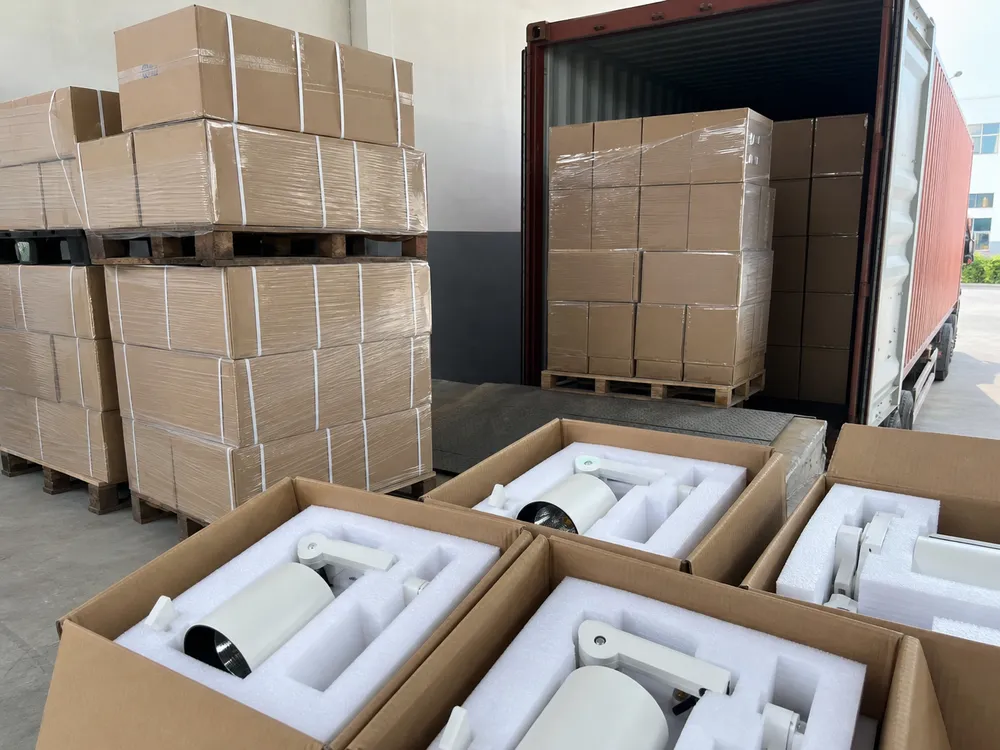
Each adjustable spotlight ships in an individual foam-lined inner carton with outer carton reinforcement. The foam profile is cut to the fixture geometry — the pivot mechanism is supported in transit, not just the housing body.
We've seen damage patterns from specific routes (Middle East and Australian sea freight in particular runs hot in summer) and the packaging spec reflects that.
Container Loading Efficiency
Standard carton dimensions are optimized for 40HQ container loading. Typical loading efficiency for adjustable spotlight cartons runs 800–1,200 units per 40HQ depending on fixture size.
For large-volume orders, we can review carton dimensions against your container spec to maximize units per container — a 5–8% improvement in loading efficiency is real money on a 2,000-unit order.
E-Commerce & White-Label Packaging
For buyers supplying e-commerce channels or Amazon FBA, we can configure retail-ready packaging with your branding, barcode labeling, and FBA-compliant carton marking.
White-label and blind drop-ship configurations are available — contact us with your channel requirements.
Standard Catalog Configurations
25–35 days
From order confirmation to shipment
Custom Configurations (New Tooling)
+15–20 days
Tooling cycle added before production starts
Other Spotlights in This Range
Adjustable spotlights are one of seven product types in our spotlights and track lighting range. If your project or product line needs a different configuration:
Track Lighting
Adjustable heads on a continuous track system. Suited for retail and gallery applications where fixture positions need to be repositioned after installation without ceiling work.
Recessed Spotlights
Fixed-aim recessed downlights. Lower profile than adjustable, suited for general illumination where beam direction doesn't need to change post-installation.
Ceiling Spotlights
Surface-mount directional spotlights. No ceiling cutout required, suited for retrofit applications or exposed-ceiling aesthetics.
LED Spotlights
Broader LED spotlight range covering fixed and semi-adjustable configurations.
Gallery Spotlights
High-CRI, precision-beam spotlights optimized for artwork and museum applications.
Wall Washer Lighting
Linear wash fixtures for architectural surface illumination.
Frequently Asked Questions
What tilt and rotation range do adjustable spotlights typically offer, and does the joint hold position over time?
Standard tilt range is 0–45° with 350° horizontal rotation. The joint uses a stainless steel tension screw in a machined aluminum pivot seat — it holds position under the fixture's own weight without a secondary lock. The key variable is the dimensional tolerance on the pivot seat: loose tolerances mean the friction setting varies unit to unit and the joint can creep under thermal cycling. We hold ±0.1mm on the pivot seat via CNC machining, which keeps the friction consistent across a production batch. If you're specifying fixtures for a project where repositioning after commissioning is expected, ask us about the heavy-duty pivot option — it's rated for higher repositioning frequency.
What dimming protocols are available, and how do I specify the right one for my market?
We configure the driver per order. TRIAC (leading-edge and trailing-edge) covers most residential and light commercial applications in North America and Europe where existing dimmer infrastructure is in place. 0-10V is standard for commercial new-build in North America. DALI is specified for projects with building management systems, common in European commercial and hospitality new-build. Tell us your destination market and whether the project is retrofit or new-build — we'll recommend the driver configuration and confirm compatibility with the dimmer brands common in your market.
What CRI level is standard, and can I get CRI ≥ 95 for retail or gallery applications?
CRI ≥ 90 is standard across the adjustable spotlight range. CRI ≥ 95 is available on runs of 200 units or more — the higher-CRI LED bin costs more and the yield is lower, so it's not a standard stock spec, but it's a straightforward configuration for buyers supplying retail, gallery, or hospitality accounts where color rendering is a selling point.
What certifications does this product hold, and are test reports available?
CE (LVD + EMC), UL, SAA, and SGS are held and maintained. ISO 9001:2015 covers the production process. Test reports, Declaration of Conformity, and material safety data sheets are maintained per SKU and provided as part of the order documentation. If you need specific documentation for customs clearance or your import team's compliance review, tell us your destination market and we'll confirm what's available.
What is the MOQ for adjustable spotlights, and how does customization affect it?
Standard catalog configurations (standard finishes, standard beam angles, standard driver specs) ship at our standard wholesale MOQ — contact us for the current figure as it varies by product family. Custom RAL finishes require a minimum of 100 units per finish. Custom beam angles and tunable white configurations require 200 units minimum. OEM housing modifications with new tooling are quoted separately; tooling cost is amortized over the first production run. Split batches across driver configurations (e.g., TRIAC and DALI from the same housing run) are available without MOQ premium.
How does your 100% aging test work, and what does it catch?
Every luminaire runs powered for a minimum burn-in period before packing. The aging test catches LED driver failures, wiring faults, and early-life component failures — the failure modes that show up in the first 100 hours of operation. Without a burn-in protocol, these failures show up in your customer's installation. The aging test protocol was formalized after a batch of LED drivers failed in the field for a Gulf distributor — that was an expensive lesson, and it's why the 100% aging test is non-negotiable before any container leaves our facility.
Get a Quote for Adjustable Spotlights
Send us your project specs — fixture count, target market, dimming requirements, finish preference, and any certification documentation you need — and we'll come back with a detailed quote. If you're not sure which configuration fits your application, describe the installation environment and we'll recommend the beam angle, driver spec, and finish based on what's working for our existing buyers in your region.
Most new buyers in this category start with a sample order to test with their own customers or project team before committing to a production run. We can ship samples within the standard lead time.
Wholesale only. Strict MOQ applies.
What to Include in Your Request
Providing these details upfront helps us return an accurate quote faster:
-
Fixture count and project timeline
-
Target market and certification needs (CE, UL, SAA, etc.)
-
Dimming requirements (DALI, 0-10V, Triac, etc.)
-
Finish preference and beam angle
-
Installation environment description (if unsure on specs)
-
Any required certification documentation
Test with your own customers or project team before committing to a production run.