

Architectural Lighting Built for Project Specification
Precision-finished, multi-market certified, and OEM-ready from a factory that has been running this category since 2008.
Every fixture in this collection is manufactured in-house from die-cast housing to final photometric verification. CE, UL, and SAA certifications are held and maintained — your compliance team doesn't wait on paperwork.
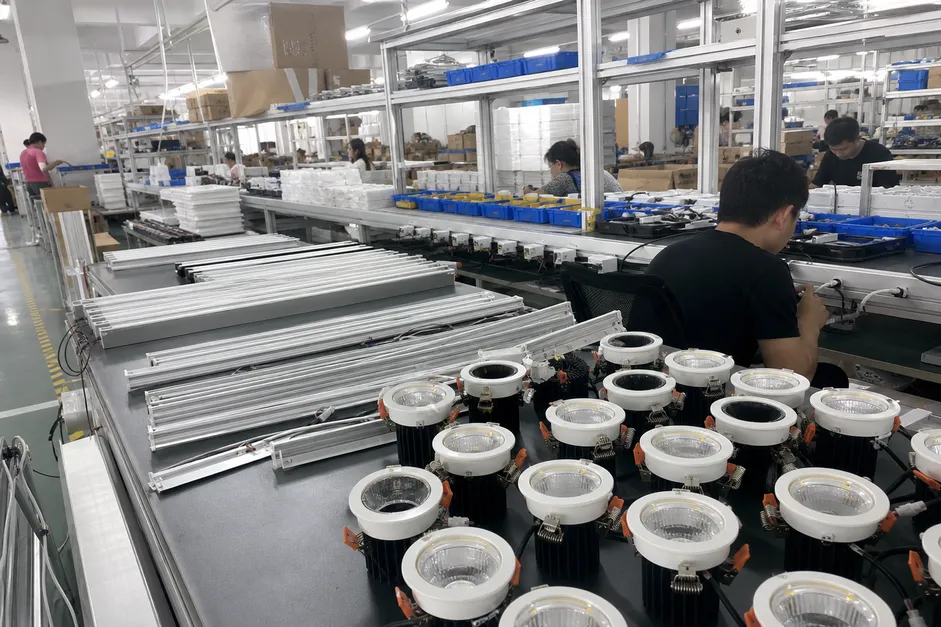
What Architectural Lighting Means at the Production Level
Architectural lighting sits at the intersection of structural precision and visual intent. The fixtures in this collection — recessed downlights, linear wall washers, surface-mounted ceiling profiles, directional spotlights, and integrated cove systems — are specified into projects by designers and contractors who need exact photometric performance, dimensional accuracy for ceiling cutouts, and finish consistency across a multi-room or multi-floor installation.
That last point is where most factories fall short. A decorative pendant can tolerate a 5% color variation between batches and nobody notices. An architectural fixture installed in a 200-room hotel corridor cannot. When your downstream client's project manager walks that corridor and sees warm-white on one side and cool-white on the other, the warranty claim lands on you.
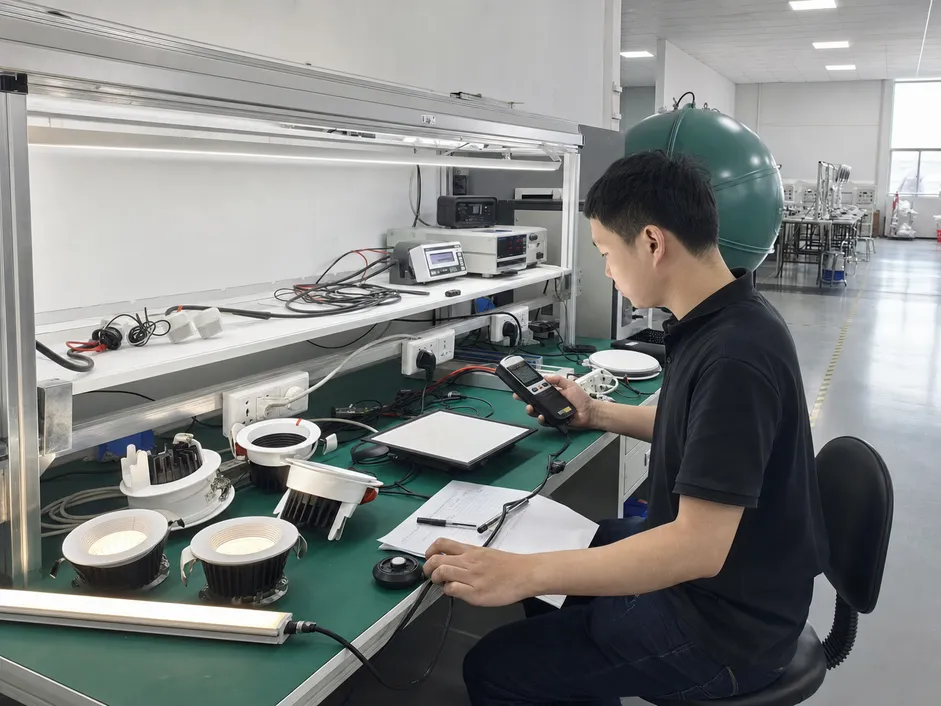
Batch-Level Photometric Sign-Off
We run photometric verification on production samples from every batch — lumen output and color temperature checked against the approved spec — and batches that drift outside tolerance don't ship.
We added this protocol after a hotel project in the Gulf came back with color inconsistency complaints on a 1,200-unit order. That was the last time we shipped without batch-level photometric sign-off.
Full Architectural Spectrum Coverage
Recessed & Surface Downlights
Recessed and surface-mounted downlights for general and task illumination in commercial interiors.
Adjustable Accent Fixtures
Directional spotlights for retail, gallery, and hospitality accent applications.
Linear LED Profiles
Cove and perimeter lighting systems for continuous runs and architectural integration.
Wall Washers
Facade and interior surface illumination for even light distribution across vertical planes.
Decorative-Architectural Hybrids
Fixtures that carry a design statement while meeting project specification requirements for photometric and dimensional accuracy.
Custom Configurations
Size, beam angle, color temperature, finish, and driver configuration adjustable within established production parameters — 18 years of tooling refinement.
Browse the full collections range or send us your project spec for a direct quote.
Send Project SpecFixture Types and Technical Specifications
The architectural lighting collection spans six primary fixture categories. Specifications below reflect industry-standard values for each type; actual production specs are confirmed per order.
Recessed Downlights
Standard Specification Range
| Parameter | Standard Range |
|---|---|
| Cutout diameter | 68mm – 200mm |
| Housing material | Die-cast aluminum (ADC12 alloy) |
| Wattage | 7W – 30W |
| Color temperature | 2700K – 6500K (custom CCT available) |
| CRI | ≥80 Ra standard; ≥90 Ra available |
| Beam angle | 15° / 24° / 36° / 60° (fixed and adjustable) |
| Driver | Constant current, TRIAC/0-10V/DALI dimming options |
| IP rating | IP20 standard; IP44/IP65 available for wet locations |
| Certifications | CE, UL, SAA |
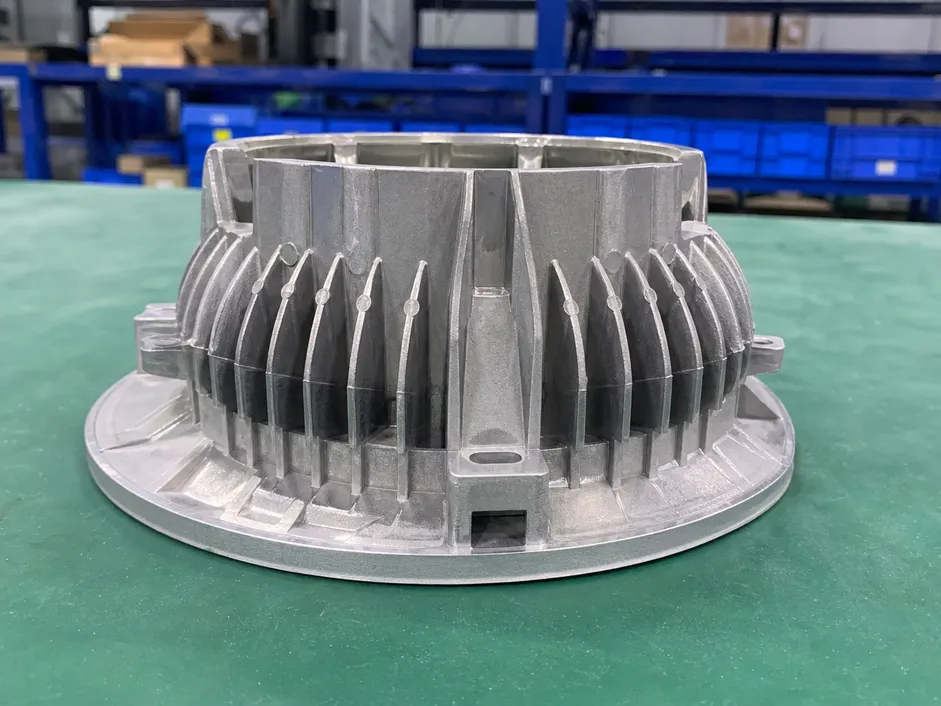
Why ADC12 Over ADC6
We run the downlight housing on ADC12 die-cast aluminum — not the cheaper ADC6 that some factories use to hit a lower unit cost. The difference shows up in thermal performance: ADC12 has better thermal conductivity, which keeps junction temperature lower and extends LED lifespan. For a buyer supplying hotel or commercial projects where re-lamping cost is a real operational concern for your client, that's a meaningful spec difference.
Linear LED Profiles and Cove Systems
Standard Specification Range
| Parameter | Standard Range |
|---|---|
| Profile length | 500mm – 2000mm (custom lengths available) |
| Profile material | 6063-T5 extruded aluminum |
| LED strip | SMD2835 / SMD5630, 60–120 LEDs/m |
| Wattage | 8W – 25W per meter |
| Color temperature | 2700K – 6500K; tunable white (2700K–6500K) available |
| CRI | ≥80 Ra standard; ≥95 Ra available for retail/gallery applications |
| Diffuser options | Opal PC, frosted PC, clear PC, no diffuser |
| IP rating | IP20 / IP44 / IP65 |
| Certifications | CE, UL |
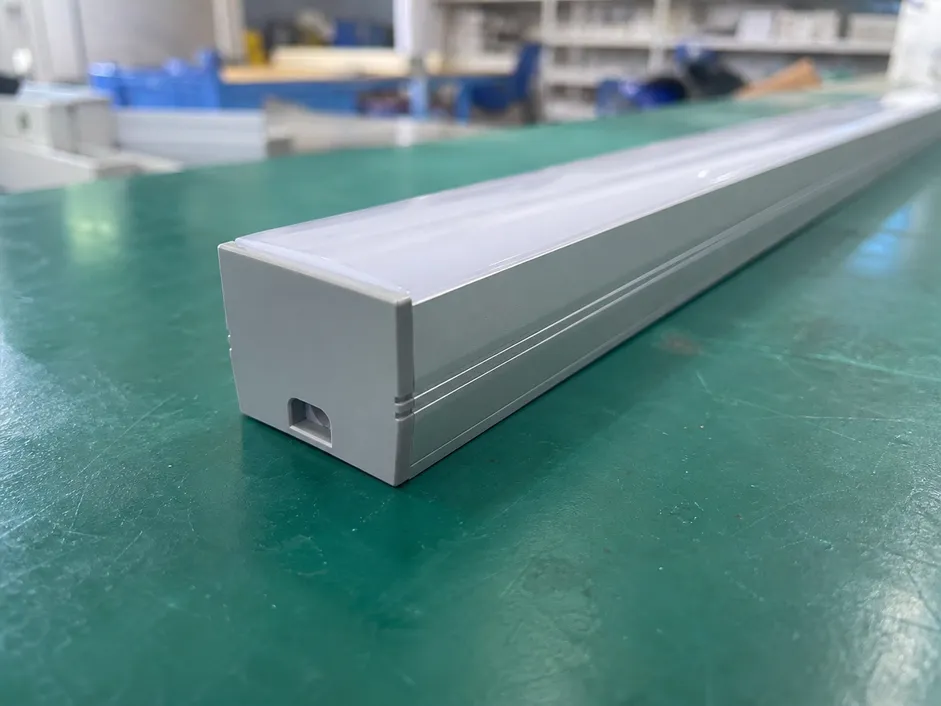
Proprietary Tooled Profiles
Linear profiles are extruded from 6063-T5 aluminum — the alloy grade that gives you the clean edge definition and tight dimensional tolerance that architectural installations require. We don't use generic extrusion profiles sourced from the open market; our profiles are tooled to our own cross-section drawings, which means the diffuser clip, end cap, and mounting bracket all fit without adjustment on-site.
(This sounds like a small thing until your installer is on a scissor lift at 6 meters trying to force a diffuser into a profile that's 0.3mm out of spec.)
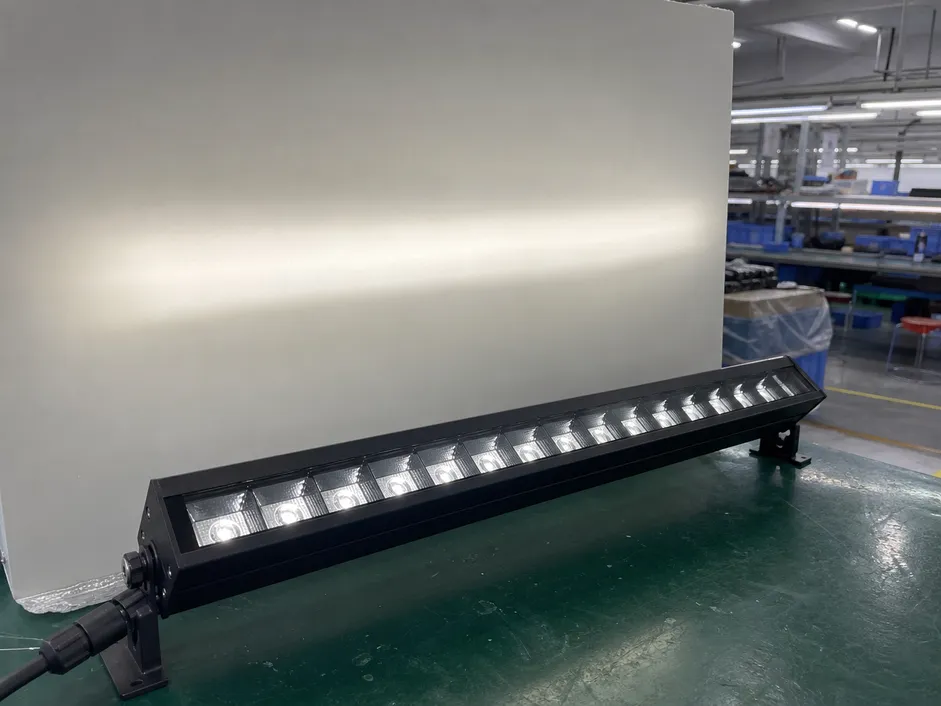
Wall Washers
| Parameter | Standard Range |
|---|---|
| Housing material | Die-cast aluminum |
| Wattage | 10W – 50W |
| Beam angle | 10°×40° asymmetric standard; custom optics available |
| Color temperature | 2700K – 5000K |
| CRI | ≥80 Ra standard; ≥90 Ra available |
| IP rating | IP20 (interior); IP65 (exterior) |
| Finish options | Matte white, matte black, brushed gold, custom RAL |
| Certifications | CE, UL, SAA |
Adjustable Accent and Spotlight Fixtures
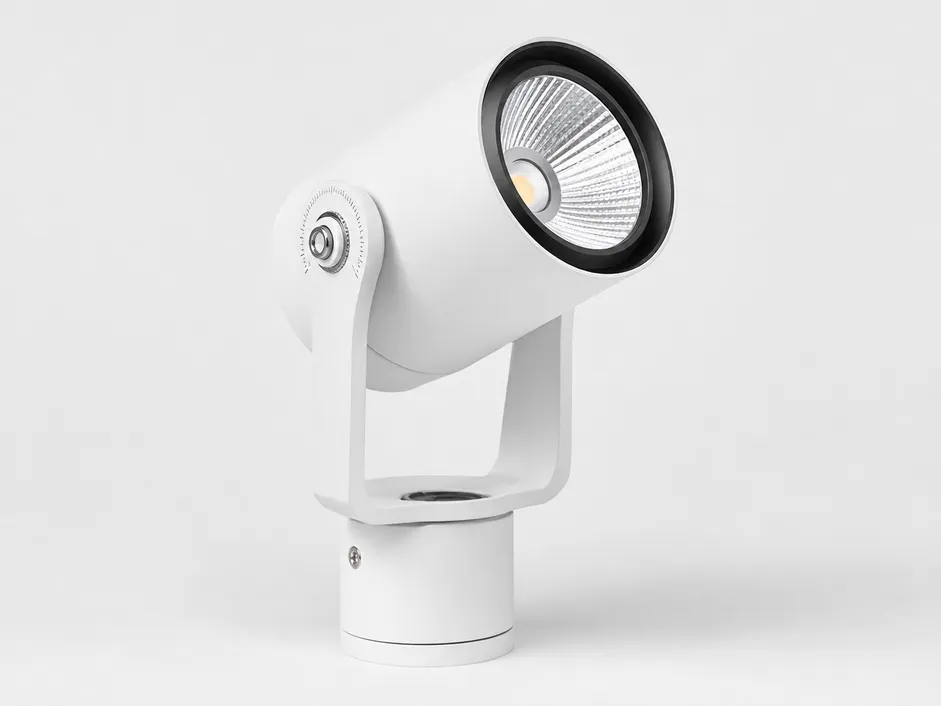
| Parameter | Standard Range |
|---|---|
| Housing material | Die-cast aluminum |
| Wattage | 7W – 35W |
| Tilt range | 0°–30° standard; 0°–45° available |
| Rotation | 350° |
| Beam angle | 15° / 24° / 36° (fixed lens); variable optic available |
| Color temperature | 2700K – 5000K |
| CRI | ≥80 Ra standard; ≥90 Ra available |
| Driver | TRIAC / 0-10V / DALI |
| Certifications | CE, UL, SAA |
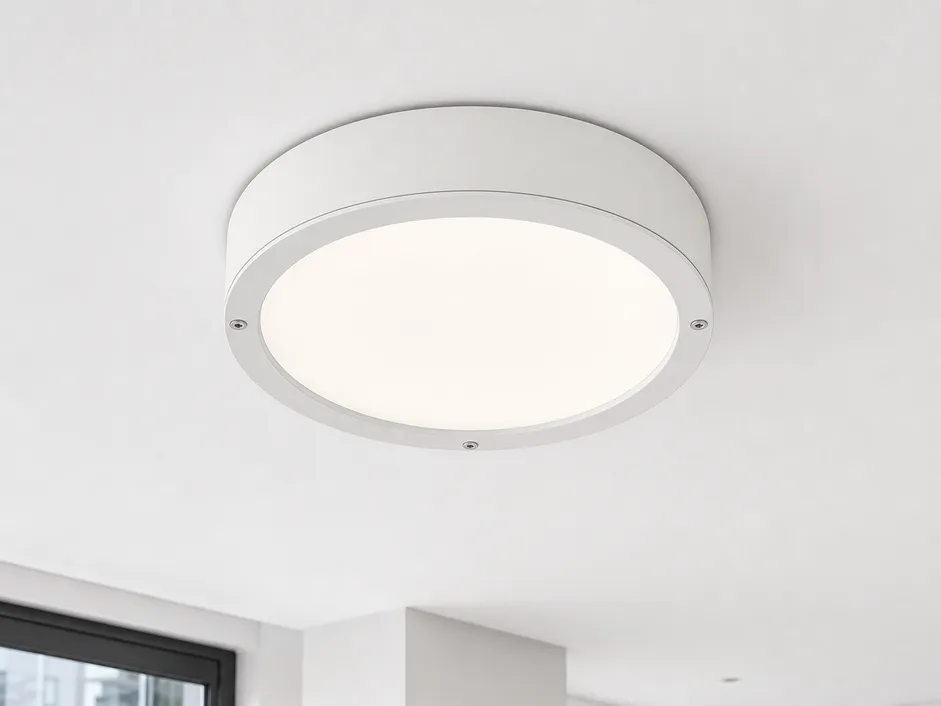
Surface-Mounted Ceiling Fixtures
| Parameter | Standard Range |
|---|---|
| Housing material | Die-cast aluminum / steel combination |
| Diameter / dimensions | 100mm – 600mm (round); custom rectangular available |
| Wattage | 12W – 60W |
| Color temperature | 2700K – 6500K |
| CRI | ≥80 Ra |
| IP rating | IP20 / IP44 |
| Certifications | CE, UL, SAA |
Decorative-Architectural Hybrids
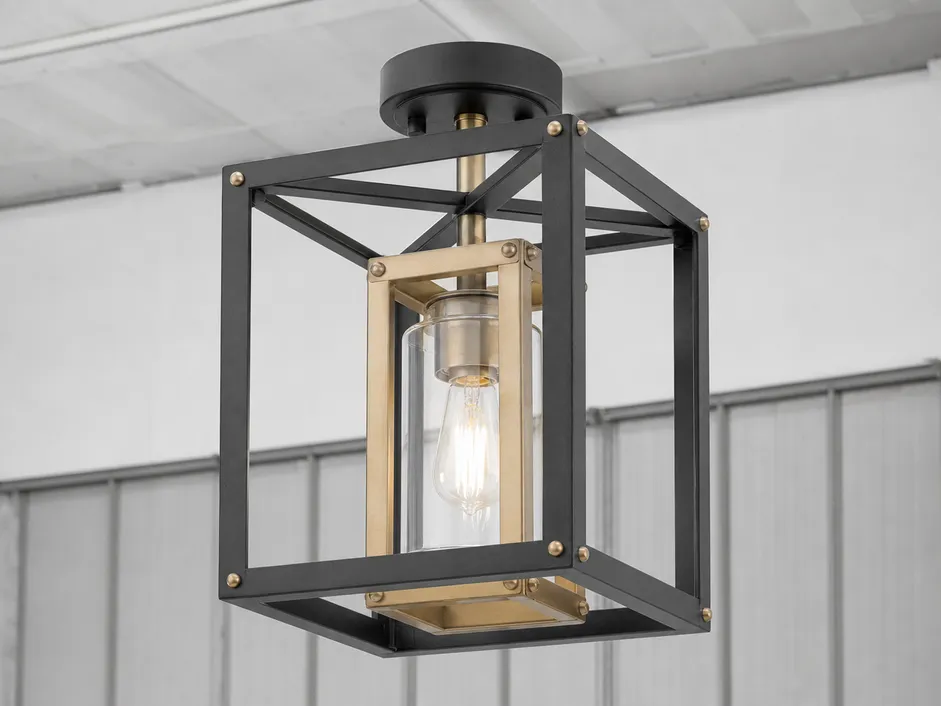
This is the category that has grown fastest for us over the past three years — fixtures that carry a visible design language (geometric metalwork, exposed hardware, material contrast) while meeting the photometric and installation requirements of a specified project.
The demand is coming from hospitality and high-end residential developers who want architectural performance without the clinical aesthetic of a pure technical fixture.
We can develop these as OEM projects from your design brief or from our existing design library. Minimum order quantities and lead times depend on whether new tooling is required.
OEM Development: Submit your design brief or select from our existing library. New tooling projects carry different MOQs and lead times than catalog-based orders.
Specifications shown are industry-standard values for this product type. Actual specifications may vary by SKU. Contact us for detailed product data sheets and photometric files.
Need Specifications for Your Project?
Get a detailed quote with photometric files, lead times, and MOQ for any fixture type above.
Photometric Accuracy and Batch Consistency: The Commercial Mechanism
This is the section most factory websites skip, so let us be direct about what we actually do and why it matters to your business.
Architectural lighting projects are specified with photometric data — lumen output, beam angle, color temperature, and CRI are written into the project documentation. When your client's lighting designer specifies a 3000K, 90 CRI, 24° beam downlight at 800 lumens, those numbers are in the contract. If the fixture that arrives on-site delivers 2850K and 680 lumens, the project manager has a legitimate claim. That claim comes back to you, not to us — which is why the photometric accuracy of what we ship is a direct input to your warranty exposure.
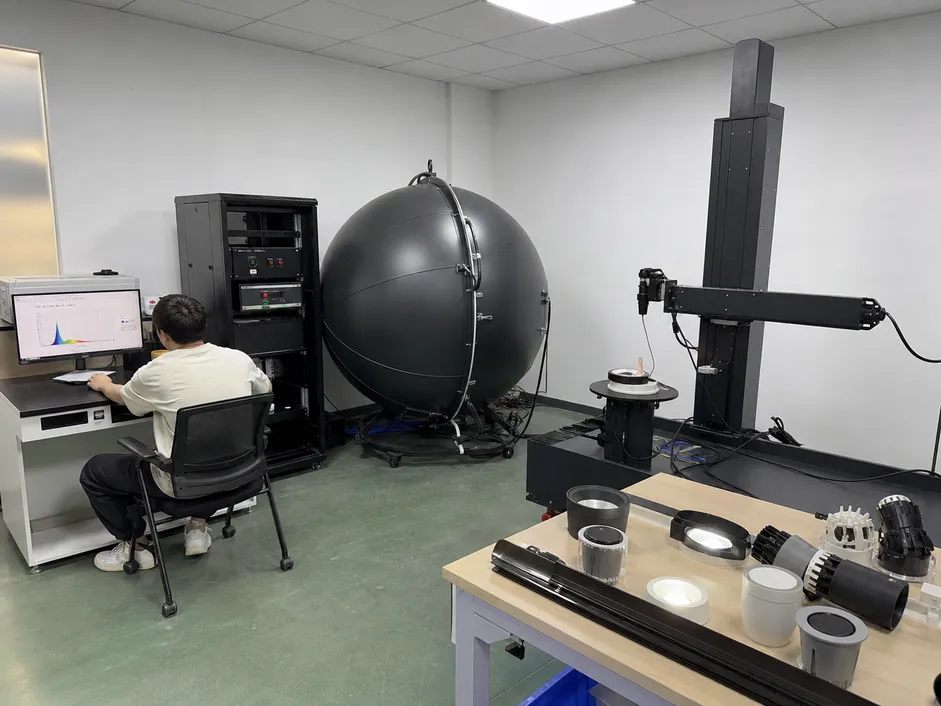
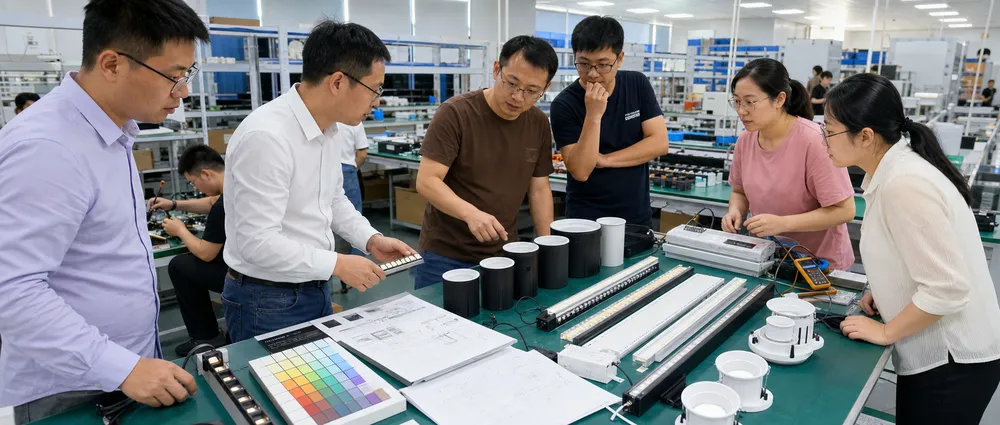
Our in-house optical lab runs photometric testing on new designs before tooling is committed and on production samples from every batch. The lab uses an integrating sphere for lumen measurement and a goniophotometer for beam angle and distribution data. Color temperature and CRI are measured per batch, not assumed from the LED chip spec sheet.
Why Chip Specs ≠ Fixture Specs
LED chips from the same manufacturer and same bin code can still drift 100–150K in color temperature across different production lots — we've seen it, and we don't assume the chip spec is the fixture spec. Every batch is measured at the fixture level, not extrapolated from component datasheets.
IES File Generation for Project Submissions
For buyers who need IES files for project submissions — which is standard practice for any specified commercial project in North America and increasingly required in Europe — we generate IES files from our own photometric measurements, not from the chip manufacturer's data.
That distinction matters when your client's lighting simulation software is being used to validate the design. IES files derived from actual fixture-level goniophotometer data reflect the real beam distribution, including the effects of the reflector, lens, and housing geometry — not just the bare LED emission pattern.
IES File Source Comparison
ASCLighting IES Files
Generated from fixture-level goniophotometer measurements — reflects actual beam distribution including reflector, lens, and housing effects
Chip Manufacturer IES Data
Based on bare LED emission pattern only — does not account for optical assembly, housing losses, or thermal derating in the final fixture
Batch Consistency Enforcement
Color Temperature
Checked on a sample from each production batch against the approved spec
±150K tolerance
Lumen Output
Integrating sphere measurement on production samples every batch
±10% tolerance
Out-of-Tolerance
Batches outside tolerance are held and investigated before shipment
Zero ship-through
Batch Traceability
For 500+ unit orders split across multiple production runs, batch records maintained
Full trace-back
For large orders split across multiple production runs — which happens on 500+ unit orders — we maintain batch records so you can trace any field issue back to a specific production run. This level of documentation is standard for buyers supplying specified commercial projects. If your current supplier can't provide batch-level photometric records, that's a gap in your risk management.
Market Segments Where Architectural Lighting Generates Repeat Volume
Architectural lighting isn't a one-time purchase category. The segments below generate structured, repeatable order patterns — understanding which ones fit your distribution model helps you build a product line that compounds rather than one that requires constant new customer acquisition.
Hospitality: Hotels, Resorts, and Serviced Apartments
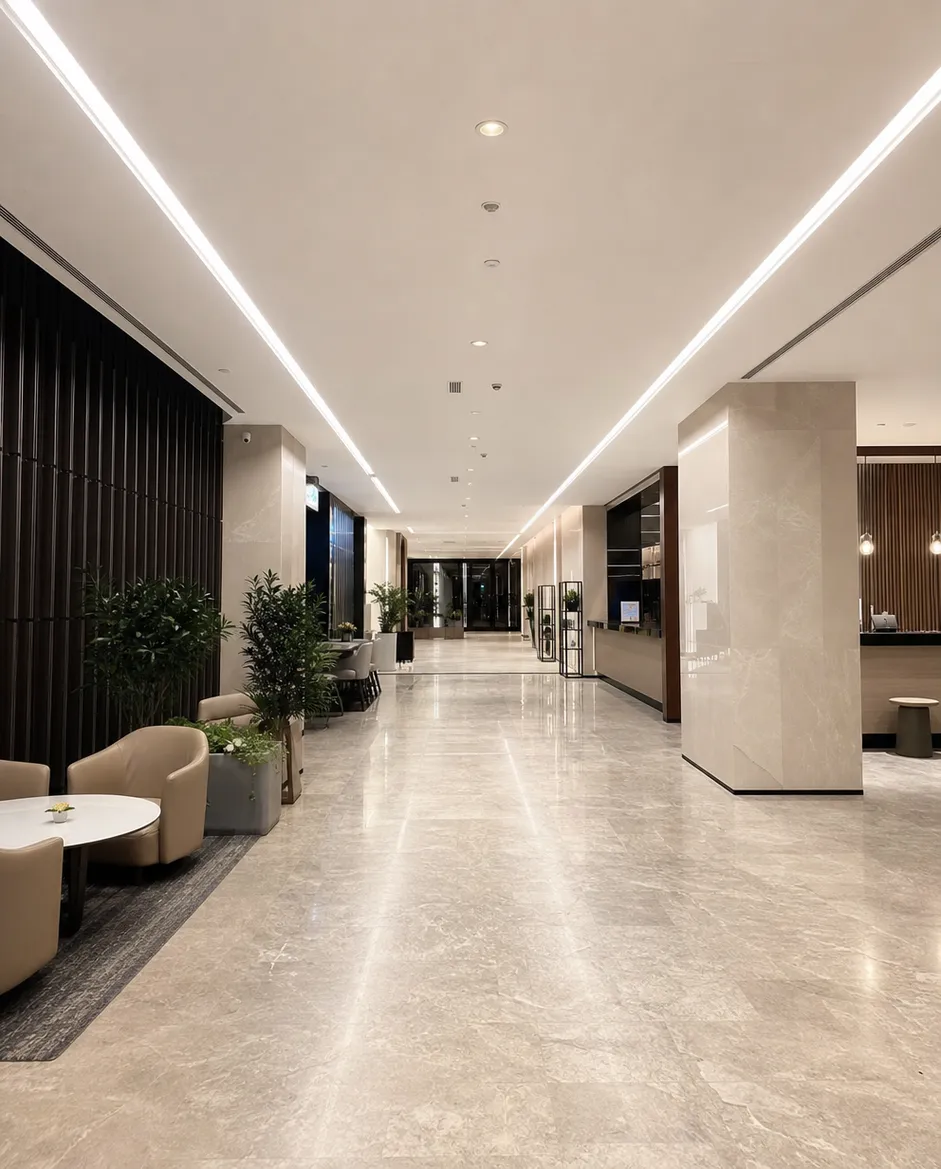
Highest-Volume Single-Order SegmentHotel projects are the highest-volume single-order segment in architectural lighting. A mid-scale hotel property typically specifies 800–2,500 luminaires across guestrooms, corridors, lobbies, and F&B spaces. The fixture mix is heavily weighted toward recessed downlights and linear profiles, with accent fixtures in public areas.
What makes this segment commercially attractive for distributors and contractors is the reorder pattern: hotel groups build multiple properties on the same design standard, so a fixture spec that wins one property often rolls across 5–10 properties in the same group. We've supplied hotel projects in the Middle East and Southeast Asia where the initial order was 1,200 units and the follow-on orders over three years totaled over 8,000 units across the same group's portfolio.
Compliance Requirements
- CE — for European-managed brands
- UL — for North American-managed brands
- SAA — sometimes requested by Australian-based project managers working in the Middle East region
All three certifications held in-house.
Typical Order Scale
800–2,500 units
Portfolio Rollout
5–10 properties
Commercial Office and Mixed-Use Development
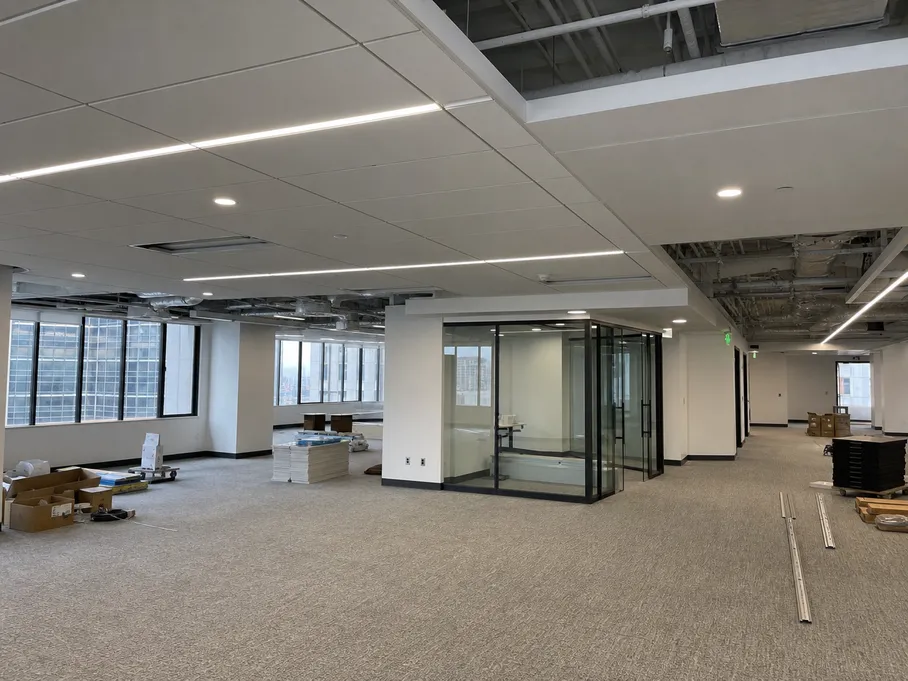
Office fit-outs and mixed-use developments run on developer and fit-out contractor procurement cycles. A typical floor plate of 1,000–2,000 sqm requires 150–400 recessed downlights plus linear profiles for perimeter and feature lighting.
The volume per project is lower than hospitality, but the project frequency is higher — a fit-out contractor working in a single city market may complete 20–40 projects per year.
For distributors supplying this segment, the key is having a consistent, well-documented product that contractors can specify repeatedly without re-qualifying the supplier. Our batch documentation and consistent photometric performance are specifically what makes repeat specification possible.
Floor Plate Coverage
1,000–2,000 sqm
Luminaires Per Floor
150–400 units
Annual Project Frequency
20–40 per contractor
Key Requirement
Batch Consistency
High-End Residential Development and Villa Projects
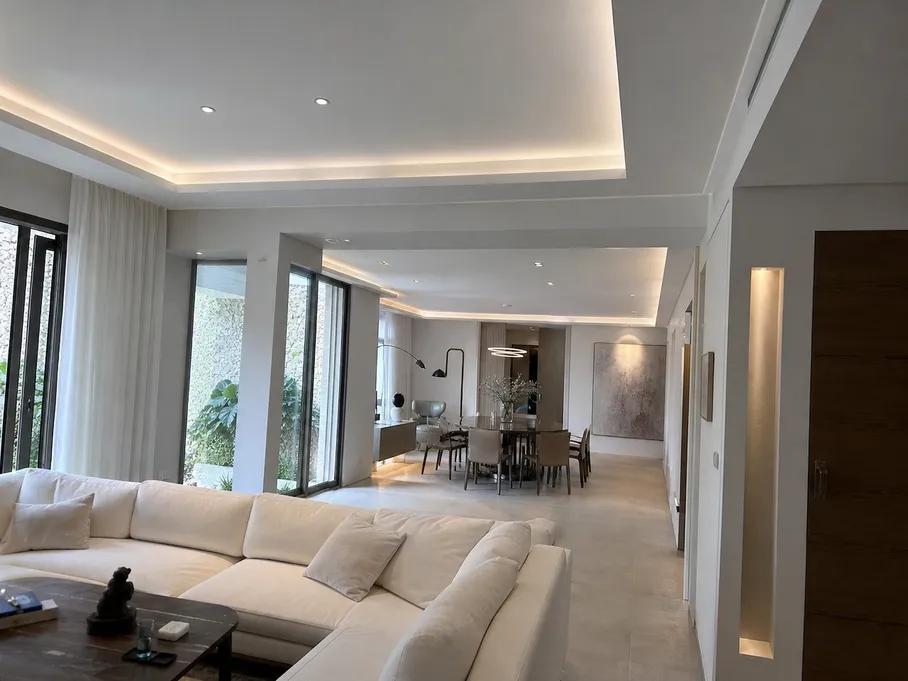
Luxury residential developers and villa contractors specify architectural lighting at a higher price point and with more customization than standard residential. A typical villa project runs 200–600 luminaires, with a mix of recessed downlights, linear cove profiles, wall washers, and decorative-architectural accent fixtures.
The margin profile in this segment is better than commercial office because the end client is less price-sensitive and more specification-driven.
Custom architectural lighting — modified beam angles, bespoke finishes, non-standard color temperatures — is common in this segment and is where our OEM capability adds direct margin for your business.
Typical Villa Fixture Mix
Retail and Showroom Environments
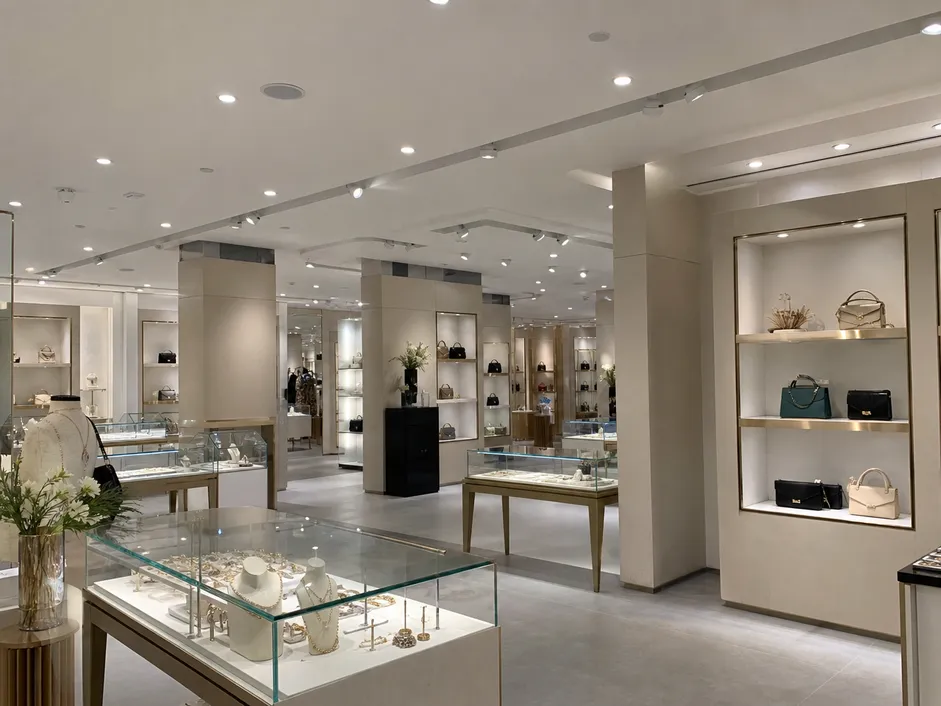
Retail lighting is driven by CRI requirements — 90+ CRI is standard for fashion retail, jewelry, and premium food retail because color rendering directly affects how merchandise looks and therefore how it sells. Our ≥90 Ra option across the downlight and accent fixture range covers this requirement.
Retail projects also have a high reorder frequency: store rollouts across a chain can run 50–200 stores, each requiring 100–400 fixtures. A distributor who wins the specification for a retail chain's store rollout has a multi-year, multi-order revenue stream.
This segment has grown significantly for us in the past two years — worth building into your product line if you're not already there.
Hospitality F&B: Restaurants and Bars
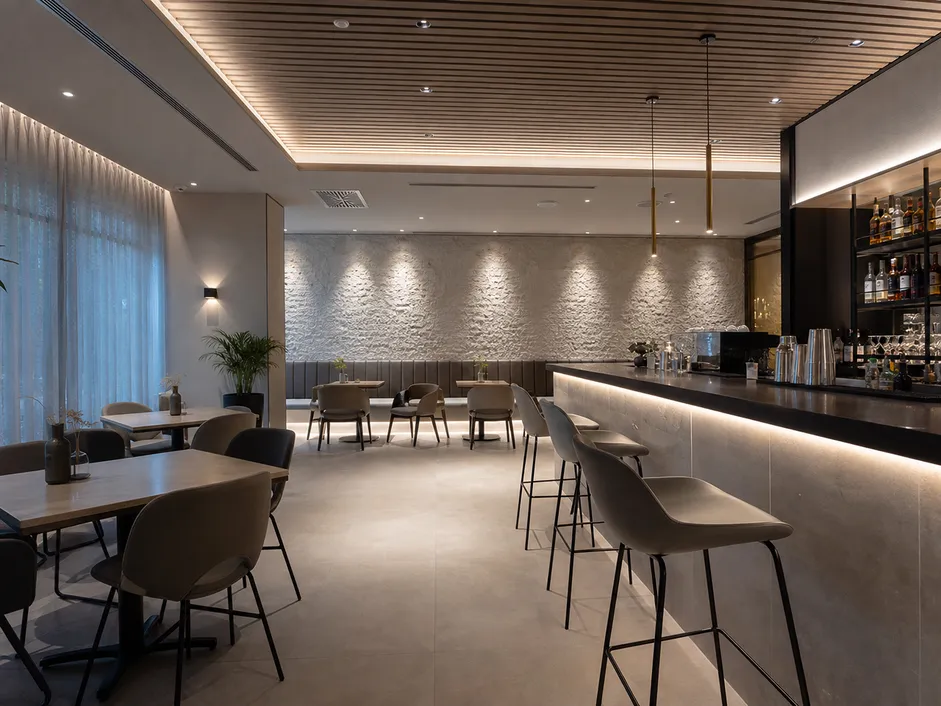
Restaurant and bar lighting sits between hospitality and retail in terms of specification complexity. The fixture mix typically includes:
- Adjustable accent fixtures for table lighting
- Linear profiles for bar and counter illumination
- Wall washers for feature wall treatment
Project sizes run 80–300 fixtures. The reorder driver here is restaurant group rollouts and refurbishments — a restaurant group that refurbishes every 5–7 years across 20–50 locations is a structured revenue stream for a distributor with the right product.
Custom Architectural Lighting: What Can Be Modified and What Can't
Custom architectural lighting is a significant part of what we do — roughly 40% of our architectural lighting volume is OEM or modified-standard product. Here's what's actually adjustable versus what requires new tooling.
Adjustable Without New Tooling
Standard Lead Time
Color Temperature
Any CCT from 2700K to 6500K, including tunable white (2700K–6500K in a single fixture with dual-channel driver). No tooling change required — this is a driver and LED strip specification.
CRI
Standard ≥80 Ra or ≥90 Ra. Higher CRI LEDs are a component swap, not a tooling change.
Beam Angle
Fixed optic changes (15°/24°/36°/60°) are lens swaps within the existing housing. Variable optic modules are available for most downlight and accent fixture housings.
Dimming Protocol
TRIAC, 0-10V, and DALI are all available within the same housing — the driver is specified per order. DALI is increasingly required for commercial projects in Europe and Australia; we've been building DALI-compatible drivers into our standard range for the past four years.
Finish
Matte white, matte black, brushed gold, brushed nickel, and antique bronze are standard. Custom RAL colors are available on orders of 100+ units per SKU — below that, the powder line changeover cost doesn't make sense for either of us.
Voltage
100–240V universal driver is standard. 277V for North American commercial applications is available on request.
Requires New Tooling
Add 15–20 Days
Housing Dimensions
Changing the cutout diameter, housing depth, or overall fixture dimensions requires new die-casting tooling. Tooling cost is quoted per project and is typically amortized across the first production run.
Custom Extrusion Profiles
Non-standard cross-sections for linear profiles require new extrusion tooling. We maintain a library of 12 standard cross-sections; if your project requires something outside that library, we quote the tooling separately.
Integrated Mounting Systems
Custom ceiling plates, canopy designs, or integrated junction box configurations require tooling.
Bespoke Optical Systems
Custom beam angles outside our standard lens range, or asymmetric distributions not in our standard wall washer optic library, require new optical tooling.
OEM Development Process
For full OEM projects — where you're bringing a design concept or reference fixture rather than modifying our standard range — our process runs as follows:
Brief Submission
Send us your reference images, target dimensions, photometric requirements, target market (for certification requirements), and target FOB cost range.
Engineering Review
Our structural and optical engineers review the brief and come back within 3–5 working days with a feasibility assessment, recommended specification, and tooling cost estimate.
Prototype
Once the design is approved, prototype turnaround runs 7–10 working days to a functional sample with provisional surface finishing.
Photometric Validation
The prototype goes through the optical lab for photometric measurement. If the output doesn't match the spec, we adjust the optical design before committing to production tooling.
Production
First production run after tooling confirmation. Standard lead time 25–35 days from order confirmation.
MOQ: Typically 200–500 units per SKU depending on fixture type and tooling investment. We'll confirm the specific MOQ in the engineering review stage.
Certifications and Compliance Pre-Qualification by Market
Architectural lighting for commercial projects requires market-specific certification. Here's what we hold and what it means for your import and project compliance process.
CE (LVD + EMC)
European Union, UK
Covers electrical safety and electromagnetic compatibility. Required for commercial project specification in EU markets.
UL Listed
North America (US/Canada)
UL listing is required for specified commercial projects in most US jurisdictions. We hold UL listing, not just UL compliance — the distinction matters when your project's AHJ (Authority Having Jurisdiction) reviews the submittal.
SAA
Australia / New Zealand
Required for commercial installation in AU/NZ. Increasingly requested for Middle East projects managed by Australian project managers.
SGS
General Export
Third-party audit and testing. Useful for buyers in markets without specific certification requirements who need independent quality verification.
ISO 9001:2015
Manufacturing Process
Governs our production quality management system. Required by some procurement teams as a supplier qualification criterion.
North American Projects
UL listing versus UL compliance is a distinction that comes up regularly in project submittals. A UL-listed fixture has been tested and listed by UL as a product — it carries the UL mark and appears in the UL product database. A "UL-compliant" fixture has been designed to meet UL standards but hasn't been through the listing process. Most commercial project AHJs require listed, not just compliant. We hold UL listing on our architectural lighting range.
European Projects
CE marking covers the LVD (Low Voltage Directive) and EMC (Electromagnetic Compatibility Directive). For luminaires with integrated LED drivers, the ErP (Energy-related Products) Directive requirements also apply — our LED drivers are specified to meet ErP Lot 19 requirements for professional lighting applications.
Documentation Packages
For buyers who need documentation packages — Declaration of Conformity, test reports, photometric data, material safety data — we maintain these per SKU and provide them as standard order documentation.
Container Loading and Export Packaging for Architectural Lighting
Architectural lighting fixtures have specific packaging requirements that affect your landed cost and damage rate. Here's how we handle it.
Recessed Downlights
Foam-lined individual cartons
Recessed downlights ship in individual foam-lined inner cartons, 10–20 units per master carton depending on fixture size. Master carton dimensions are optimized for 40HQ container loading — we run the carton dimensions against container loading software before finalizing packaging specs on new SKUs.
Freight Impact
A 5% improvement in container utilization on a 2,000-unit order is real freight savings.
Linear Profiles
Most fragile — tube-in-carton format
Linear profiles are the most fragile item in the architectural range. We ship profiles in individual PE foam sleeves inside rigid cardboard tubes, with end caps on both ends. The tube is then packed in a master carton with foam end blocks.
We developed this packaging after seeing profile damage from compression during ocean freight — the tube-in-carton format handles the compression forces that flat-pack cartons don't.
Large Project Orders — Pallet-Packed Shipments
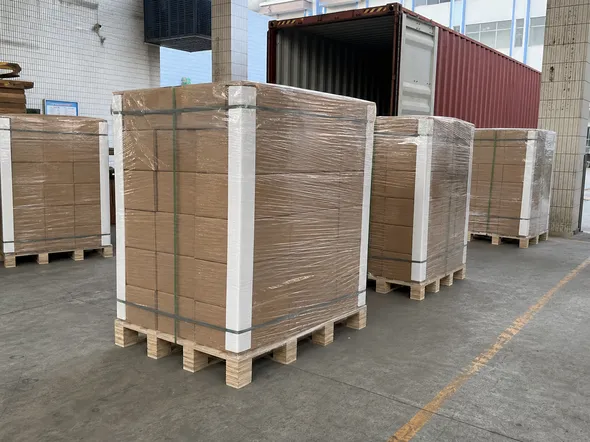
For large project orders — 500+ units — we can provide pallet-packed shipments with stretch wrap and corner protection for container loading. This reduces handling damage during container stuffing and is preferred by buyers whose receiving warehouses use forklift unloading.
Threshold: 500+ units qualifies for pallet-packed format with forklift-ready configuration.
Export Marks & Custom Labeling
Standard Export Marks
Applied to all master cartons:
- Carton number
- SKU identification
- Quantity per carton
- Gross/net weight
- Country of origin
Custom Labeling Options
Available on orders meeting MOQ threshold:
- Your brand name on cartons
- Your SKU codes & barcode format
- Blind drop-ship / white-label (no ASCLighting branding)
For buyers operating blind drop-ship or white-label programs, we can ship without ASCLighting branding on the outer carton.
Sourcing Architectural Lighting from Guzhen: What the Supply Chain Gives You
We're based in Guzhen, Zhongshan — China's lighting manufacturing hub. That location isn't incidental to how we operate; it's a structural advantage in the architectural lighting category specifically.
Architectural lighting requires a wider component range than decorative lighting. Precision optics, DALI-compatible drivers, high-CRI LED modules, custom extrusion profiles, and specialty surface finishes all need to be sourced reliably and quickly.
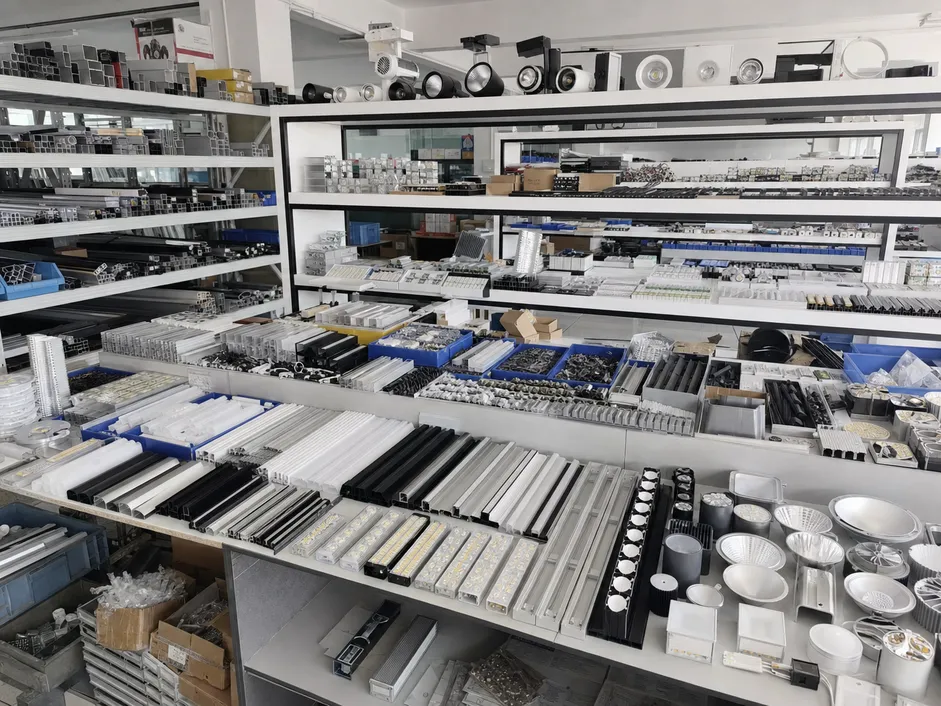
30-Minute Component Radius
In Guzhen, the component supply chain for precision optics, DALI drivers, high-CRI LED modules, custom extrusion profiles, and specialty surface finishes is within a 30-minute radius.
Non-Standard Sourcing Speed
When a buyer needs a non-standard beam angle optic or a specific driver protocol that isn't in our standard inventory, we can source it locally and have it in production within days rather than weeks.
7–10 Day Prototype Cycle
Our 7–10 working day prototype turnaround is only possible because tooling shops, component suppliers, and specialist subcontractors are local. Other regions quote 3–4 weeks for the same prototype.
Guzhen vs. Other Manufacturing Regions
| Factor | Guzhen (ASCLighting) | Other Guangdong / Non-Hub Regions |
|---|---|---|
| Component supply density | 30-minute radius for all architectural components | Multi-day sourcing for specialty items |
| Prototype turnaround | 7–10 working days | 3–4 weeks typical |
| Non-standard component sourcing | Days to production | Weeks to production |
| Supplier quality knowledge | Institutional knowledge since 2008 | Trial-and-error with new suppliers |
Operating in This Supply Chain Since 2008
We know which component suppliers hold consistent quality across batches, which tooling shops can hold the tolerances architectural fixtures require, and which subcontractors to avoid.
That institutional knowledge doesn't show up on a spec sheet, but it's what keeps your orders on schedule. Factories in other regions — even other parts of Guangdong — don't have that density of specialized suppliers within immediate reach.
Years in Guzhen
Supply Chain
Frequently Asked Questions
What is the minimum order quantity for architectural lighting?
Standard catalog architectural lighting: MOQ is 50–100 units per SKU depending on fixture type. Modified-standard products (custom CCT, CRI, finish, or dimming protocol within existing tooling): MOQ is typically 100–200 units per SKU. Full OEM projects with new tooling: MOQ is 200–500 units per SKU, confirmed during the engineering review.
We work wholesale only — these MOQs are firm.
What DALI version do your architectural fixtures support, and does it matter for my project?
We support DALI-2 (IEC 62386 Part 207/209) on our current driver range. DALI-2 matters for commercial projects because it's the version required for interoperability with modern building management systems (BMS) from Lutron, Helvar, Tridonic, and others.
DALI-1 drivers will work with DALI-2 controllers in basic on/off and dimming functions, but DALI-2 adds device query and feedback functions that BMS integrators increasingly require for commissioning.
If your project spec calls out DALI without specifying the version, confirm with the BMS integrator before ordering — we can supply either, but the driver is specified at order time and can't be swapped after production.
Why do LED architectural fixtures sometimes show color inconsistency across a large installation, and how do you prevent it?
Color inconsistency in large installations almost always comes from mixing LED bins across production batches. LED chips are binned by the manufacturer for color temperature and flux, but bin tolerances allow variation — two chips from the same nominal 3000K bin can measure 2900K and 3100K. When fixtures from different production batches are installed in the same space, the bin variation becomes visible.
We prevent this by sourcing LEDs from a single bin code for each production run and maintaining batch records that tie each fixture to its production run and LED bin. For large orders that span multiple production runs, we communicate the bin code per batch so you can manage installation sequencing if needed.
What's the difference between IP44 and IP65 for architectural lighting, and which do I need for my application?
IP44 protects against solid objects >1mm and water splashing from any direction — suitable for bathroom zones 2, covered outdoor areas, and commercial kitchens where water splash is possible but not direct spray.
IP65 adds protection against low-pressure water jets from any direction — required for outdoor facades, uncovered exterior soffits, and commercial wash-down environments.
For hotel bathroom applications, IP44 is typically sufficient for zone 2 (outside the shower zone). For exterior architectural lighting on building facades or landscape features, IP65 is the minimum.
If your project spec calls for IP65 in a location that only sees occasional rain, you're over-specifying — IP65 fixtures cost more and have fewer design options. Confirm the actual water exposure with the project's M&E engineer before specifying.
What lead time should I plan for a 500-unit architectural lighting order with custom color temperature and DALI dimming?
Custom CCT and DALI dimming are both driver and LED specifications — no new tooling required. Lead time for a 500-unit order with these modifications runs 25–35 days from order confirmation and approved samples.
If you need photometric data and IES files before placing the order, add 5–7 days for us to run the optical lab measurements on the specified configuration.
For project timelines, we recommend building in a 5-day buffer beyond our quoted lead time for customs clearance and local delivery — we hit our ship dates consistently, but port and customs delays are outside our control.
Related Collections
Architectural lighting sits within our broader collections range. Depending on your project requirements or distribution focus, these related collections may also be relevant.
Luxury Lighting Collection
High-specification decorative fixtures for premium hospitality and residential projects where design statement is the primary driver.
Modern Lighting Collection
Clean-line contemporary fixtures that bridge decorative and architectural aesthetics, suited for commercial and residential fit-outs.
Minimalist Lighting Collection
Reduced-form fixtures for projects where the architecture is the feature and the lighting should recede.
Contemporary Lighting Collection
Current-trend fixtures for retail, F&B, and residential developers working in the mid-to-premium segment.
Start Your Architectural Lighting Sourcing
Send us your project spec or product brief — fixture type, target market, volume, certification requirements, and any customization needs — and we'll come back with a detailed quote, photometric data, and a configuration recommendation based on what's working for our existing buyers in your region.
How Most New Buyers Start
Most new buyers in the architectural lighting category start with a sample order on 2–3 SKUs to verify photometric performance and finish quality against their project requirements before committing to a full production order.
What to Include in Your Brief
- Fixture type and application context
- Target market and certification requirements
- Estimated volume per order or annual forecast
- Customization needs (finish, CCT, beam angle, dimensions)
Contact Us Directly
Address
No. 14 Beisan Rd, Gusan Ind. Zone, Guzhen, Zhongshan, Guangdong, China
Wholesale only. Strict MOQ applies.