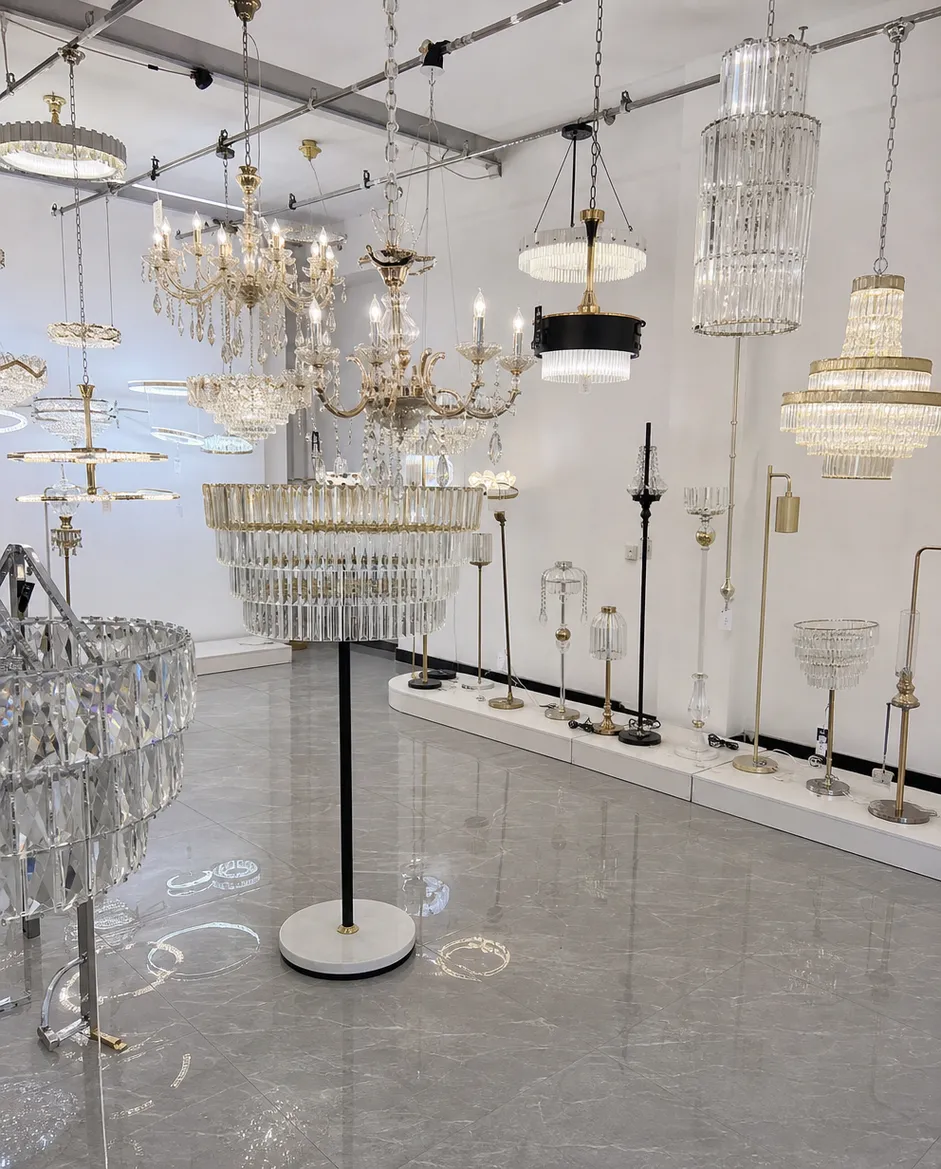

Factory-Direct Luxury Lighting
Die-cast metal, PVD and electroplated finishes, full CE/UL/SAA compliance, built for wholesale programs.
We've manufactured high-end decorative and architectural luminaires since 2008. Every fixture in this collection ships with photometric verification and a 100% aging test — so your downstream customers don't become your warranty department.
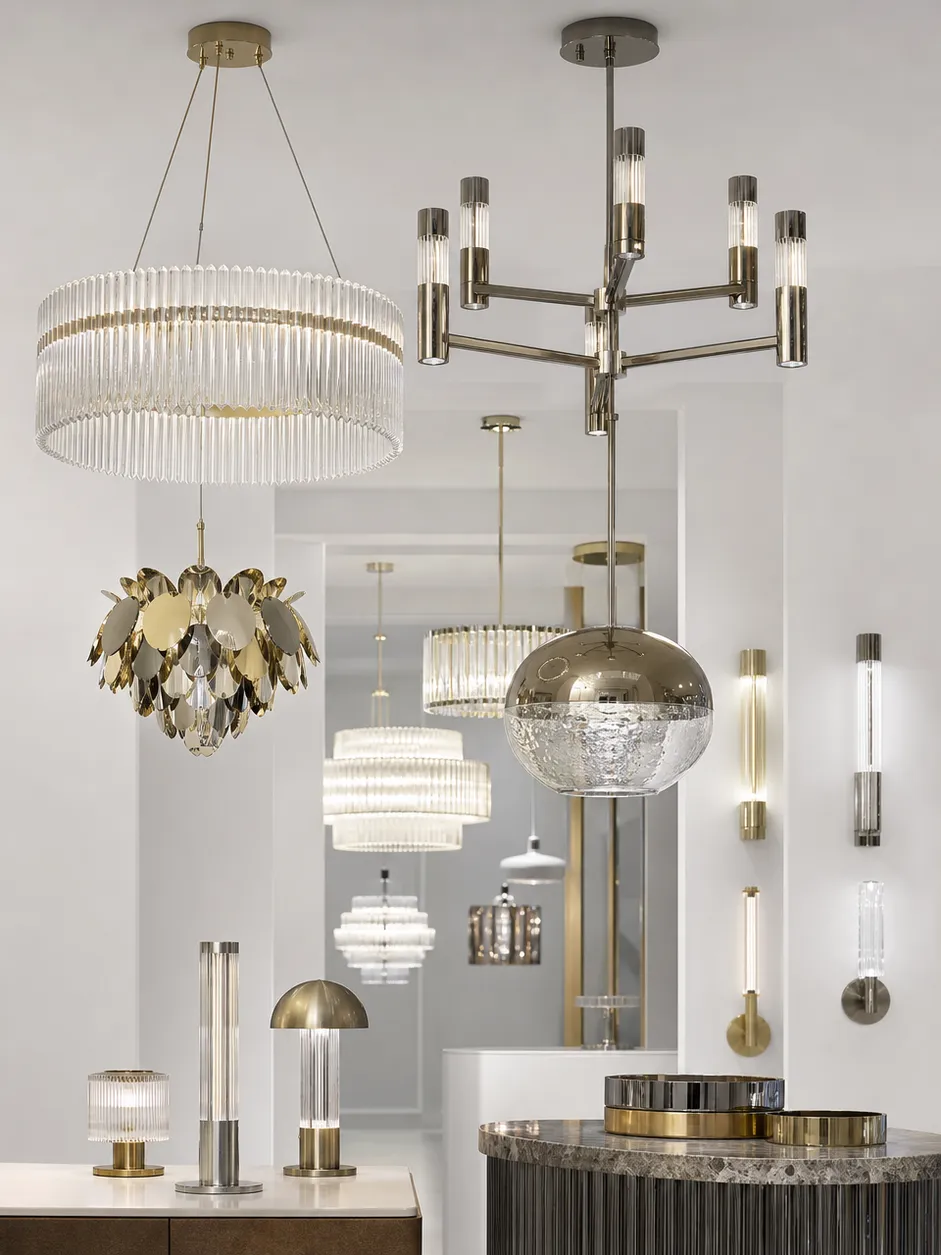
What "Luxury" Means on a Production Line
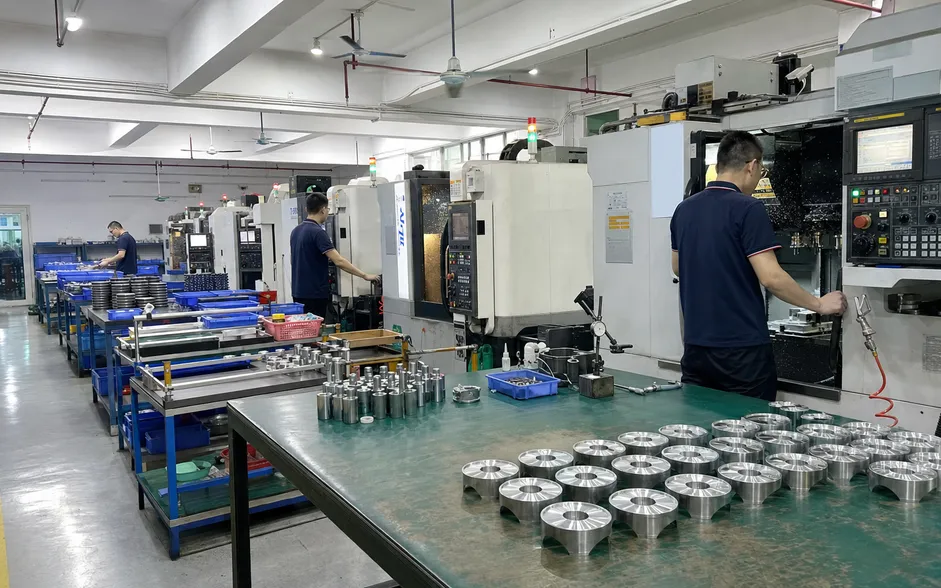
The word gets used loosely. On our floor, luxury lighting means three specific things: metal components cast and machined in-house to ±0.1mm tolerances, surface finishes that pass 500-hour salt spray testing, and LED drivers specified per SKU for the destination market's dimming infrastructure — not a single driver spec applied across the whole catalog.
We run die-casting, CNC machining, electroplating, powder coating, and PVD finishing under one 12,000 m² roof in Guzhen. Most decorative lighting factories in this district are assembly operations — they buy housings, buy drivers, buy shades, and put them together. We make the housings. That distinction matters when your buyer's project manager is on-site and a fitting dimension is off, or when a finish starts delaminating six months after installation. Those problems trace back to the casting and finishing stages, and if you don't control those stages, you can't fix them.
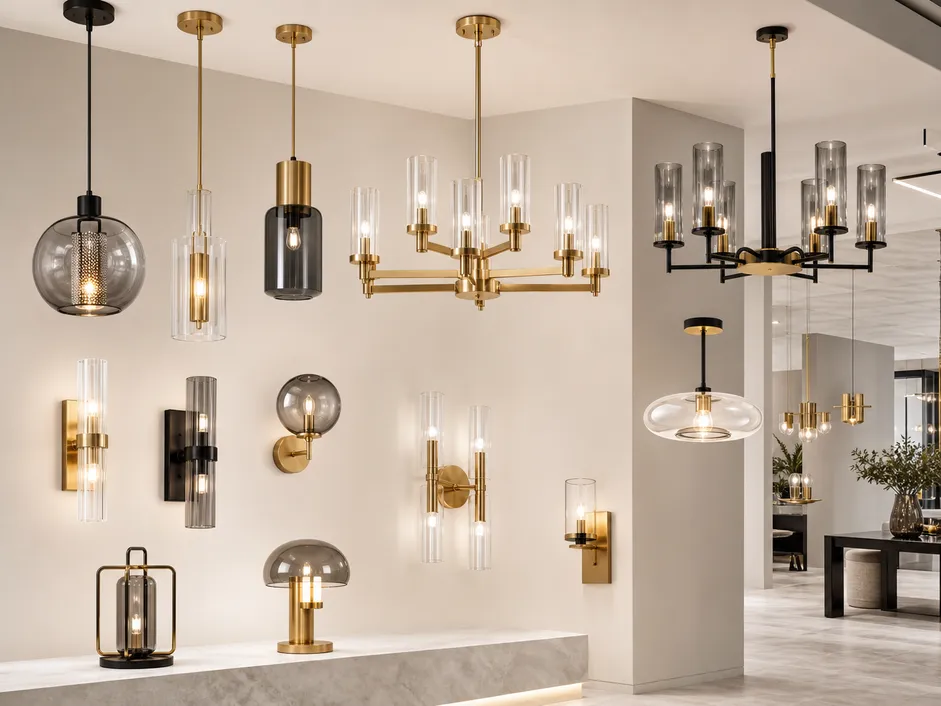
The luxury lighting collection spans pendant lighting, chandeliers, wall sconces, and ceiling fixtures — the full decorative spectrum for hospitality, high-end residential, and premium commercial projects. Every SKU in this collection is built to the same production standard: same QC checkpoints, same aging test protocol, same photometric verification before the container loads.
±0.1mm Tolerance
In-house cast & machined
500hr Salt Spray
Surface finish durability
Per-SKU Drivers
Market-specific dimming
Manufacturing vs. Assembly — Why It Matters
Most decorative lighting factories in Guzhen are assembly operations — they buy housings, buy drivers, buy shades, and put them together. We make the housings. When a fitting dimension is off or a finish delaminates six months after installation, those problems trace back to the casting and finishing stages. If you don't control those stages, you can't fix them. Our 12,000 m² facility runs die-casting, CNC machining, electroplating, powder coating, and PVD finishing under one roof.
Production Specifications That Protect Your Margin
Buyers sourcing high-end lighting for resale or project deployment need to know what they're actually getting — not marketing language, but the production parameters that determine whether the fixture holds up and whether your downstream customer comes back for more.
| Parameter | Specification |
|---|---|
| Housing material | Die-cast aluminum alloy (ADC12) or zinc alloy (ZA-8), per SKU |
| CNC tolerance | ±0.1mm on critical mounting dimensions |
| Surface finishing | Electroplating, powder coating (60–80μm), PVD — in-house |
| Salt spray resistance | 500 hours (standard); 1,000 hours available on request |
| LED driver | Specified per SKU; 0–10V and TRIAC dimming options available |
| Color temperature range | Typically 2700K–4000K; custom CCT available |
| CRI | ≥90 Ra standard across the luxury collection |
| Voltage | 100–240V universal; market-specific configurations available |
| IP rating | IP20 standard; IP44/IP54 available for bathroom and outdoor-adjacent specs |
| Certifications | CE, UL, SAA, SGS — held and maintained |
| Aging test | 100% of units, minimum burn-in before packing |
| Photometric verification | Batch sample testing; IES files available for project submissions |
Specifications shown are production-standard values for this collection. Exact parameters vary by SKU. Contact us for product-specific data sheets and test reports.
Why CRI ≥90 Is Standard Across This Collection
The CRI ≥90 specification is worth noting for your downstream market positioning. In hospitality and premium residential projects, lighting specifiers increasingly require ≥90 CRI as a baseline — it's written into FF&E specs for four- and five-star hotel programs. Sourcing fixtures that already meet this threshold means your project customers don't need to negotiate exceptions or run their own testing.
We moved the whole luxury collection to ≥90 CRI as a standard after a Gulf hospitality distributor told us their hotel clients were rejecting ≤80 CRI fixtures at the specification stage — not at delivery. That's an expensive rejection point.
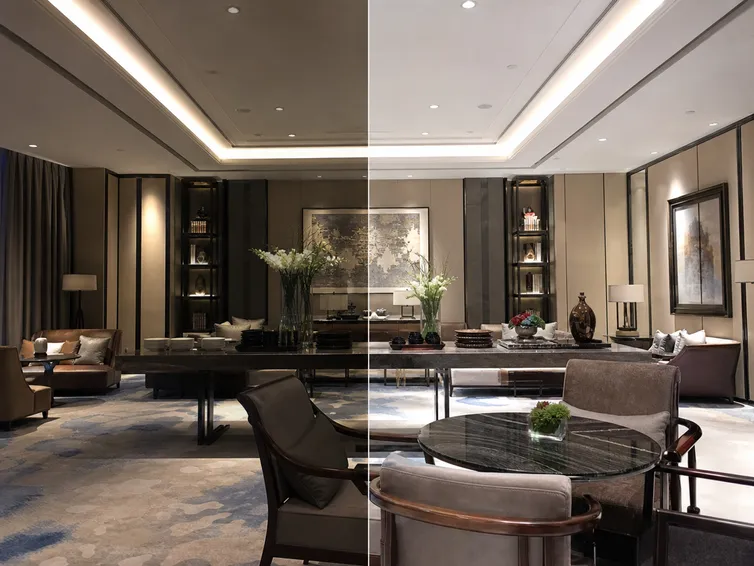
Market Segments Where This Collection Generates Repeat Orders
High-end lighting isn't a single market — it's several distinct segments with different order patterns, margin structures, and compliance requirements. Here's where the luxury collection performs commercially.
Hospitality FF&E Supply
Hotels, Resorts & Serviced Apartments
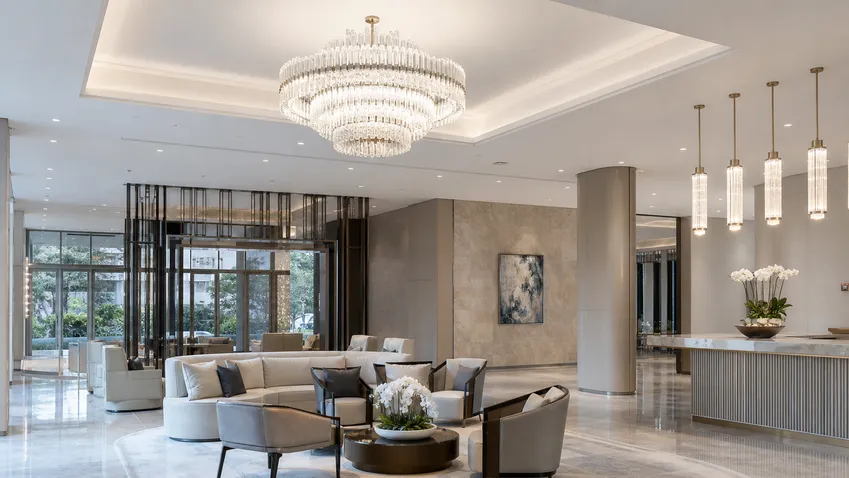
Hotels, resorts, and serviced apartments are the highest-volume segment for luxury decorative lighting. A mid-scale hotel renovation typically specifies 200–600 luminaires across guest rooms, corridors, lobbies, and F&B spaces — and the FF&E procurement cycle runs on a 5–7 year replacement schedule, which means your first successful supply becomes a reorder program.
The compliance requirements are specific: CE for European properties, UL for North American brands, SAA for Australian operators. We hold all three, so your documentation package is ready without waiting on certification work.
The fixture types that move in hospitality are bedside wall sconces, lobby chandeliers, corridor pendants, and restaurant ceiling fixtures — all within this collection's range. We've supplied Gulf, Southeast Asian, and European hospitality distributors long enough to know that finish consistency across a 300-unit batch matters more than the sample.
Our automated powder line and in-house PVD finishing handle batch consistency at that scale; the QC checkpoint after finishing catches adhesion failures and color drift before assembly.
Premium Residential Developers and Fit-Out Contractors
Villas, Luxury Apartments & High-End Fit-Out
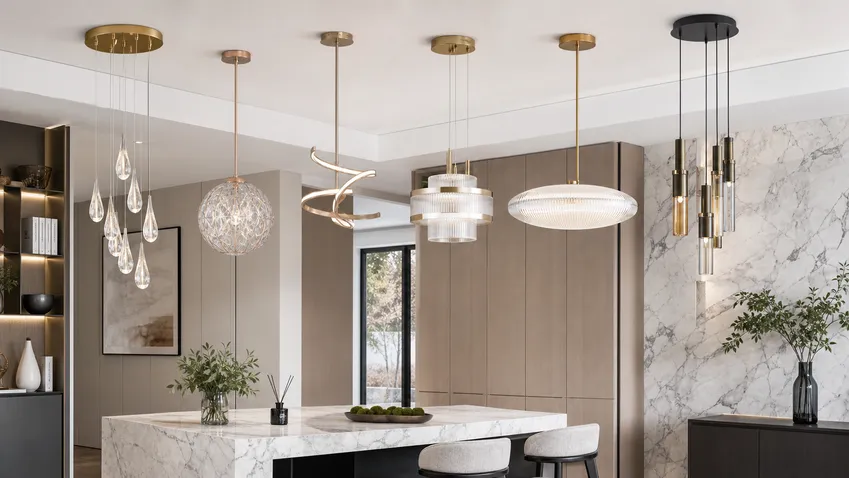
High-end residential developers — villa projects, luxury apartment towers, premium fit-out contractors — source lighting in project quantities: typically 50–300 units per project, with multiple projects running annually. The margin structure here is different from hospitality: fewer units per order, but higher per-unit value and faster specification cycles.
Developers in this segment are increasingly specifying fixtures by finish and form factor rather than by brand, which means your ability to offer OEM customization (custom finishes, custom canopy dimensions, private label) is a direct competitive advantage.
We support OEM customization on runs from 100 units upward — custom RAL colors, custom PVD finishes (brushed gold, rose gold, gunmetal, champagne), custom canopy and mounting plate dimensions. Prototype turnaround runs 7–10 working days from approved drawings.
For fit-out contractors who need to match an existing interior specification, that turnaround means you can confirm feasibility and show a physical sample before the project timeline closes.
Lighting Distributors Building a Premium Product Line
If you're a distributor adding a luxury tier to your catalog, the collection structure here gives you range without requiring you to manage multiple factory relationships. Pendant lighting, chandeliers, wall sconces, and ceiling fixtures from a single source means consistent finish quality across your line, consistent documentation, and a single point of contact for reorders and warranty claims.
We've had distributors tell us that managing three factories for a single collection — one for pendants, one for chandeliers, one for sconces — was costing them more in coordination time than the per-unit price difference justified. Consolidating to one factory with full range coverage changed that calculation.
The luxury collection is positioned above our standard decorative range in material spec and finish quality, so it gives you a clear two-tier structure: standard decorative for volume accounts, luxury for premium accounts and project work. That segmentation protects your margin on the premium tier.
Overseas Manufacturers Sourcing Finished Components
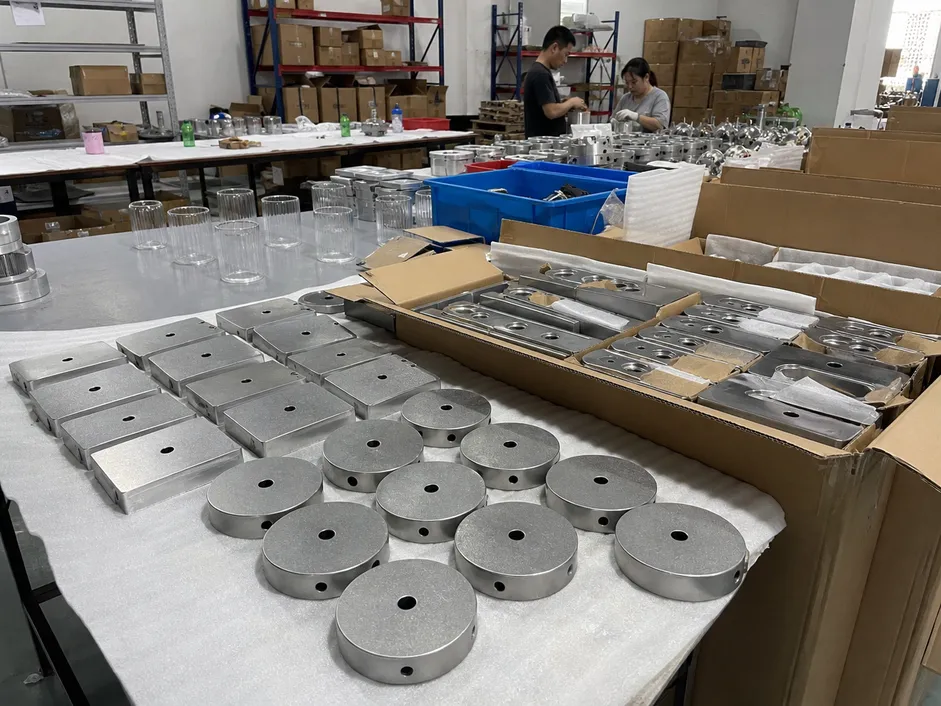
Some overseas lighting manufacturers source finished sub-assemblies — die-cast housings, finished canopies, glass shades — rather than complete luminaires. We supply finished components as well as complete fixtures.
If you're assembling locally for compliance or tariff reasons, we can supply the metal components to your spec with our surface finishing applied, ready for your local assembly and driver integration. This is a less common use case but worth flagging if your business model involves local assembly.
Ready to discuss your market segment?
Whether you're a hospitality specifier, residential developer, distributor, or component buyer — let's talk volume requirements and lead times.
Discuss Your RequirementsIn-House Production: Why Vertical Integration Matters for High-End Fixtures
The quality problems that generate warranty claims and RMA requests in luxury decorative lighting almost always trace back to two stages: metal component dimensional consistency and surface finish adhesion. Both are controlled by what happens before assembly — in the casting, machining, and finishing stages.
If those stages are outsourced to third-party suppliers, you're dependent on their QC, their process consistency, and their willingness to hold tolerances across a 500-unit batch. We've seen what happens when that dependency breaks — it's why we invested in bringing those stages in-house.
Die-Casting & CNC Machining
Aluminum alloy (ADC12) and zinc alloy (ZA-8) housings are cast on-site using our own tooling. CNC machining holds ±0.1mm on critical mounting dimensions — canopy mounting holes, pendant cord entry points, wall plate fixing positions.
We run the same tooling across a production batch without mid-run swaps, so the first unit and the last unit in a 300-piece run have the same dimensional profile.
For your installation teams:
No on-site fitting adjustments required.
For your project manager:
No callbacks due to dimensional inconsistency.
Surface Finishing — The Stage That Defines Perceived Quality
The finishing line runs electroplating, powder coating, and PVD in-house. Powder coat thickness is automated at 60–80μm — consistent across the batch, not just the first few units off the line.
Before any batch goes to the finishing stage, we run a pre-treatment step: phosphate conversion coating on the metal surface to improve adhesion. We added this step after seeing powder coat delamination at weld seams on an early production run — the pre-treatment adds process time, but it eliminates the failure mode.
PVD finishes (brushed gold, rose gold, gunmetal, champagne) are applied in our own PVD chamber, which means we control the deposition parameters and can match a finish specification across multiple production runs. For buyers building a product line where finish consistency across reorders matters, this is the capability that makes it possible.
Driver Integration & Electrical Assembly
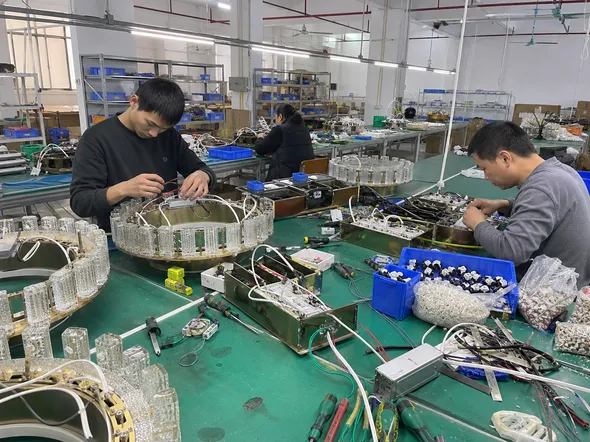
LED drivers are specified per SKU based on wattage, dimming compatibility, and destination market voltage and certification requirements. We don't use a single driver across the luxury collection — a 12W bedside sconce for a European hotel program gets a different driver spec than a 60W lobby chandelier for a North American property.
The driver selection is documented per SKU, so when you reorder, the electrical spec is consistent with your previous shipment.
Wiring is assembled and inspected before the 100% aging test — every luminaire runs powered for a minimum burn-in period before packing. Driver failures and wiring faults show up here, not in your customer's installation.
Example A
12W bedside sconce — European hotel program — EU voltage/dimming driver spec
Example B
60W lobby chandelier — North American property — UL-listed driver spec
Certifications and Compliance: Pre-Qualified for Your Target Market
CE, UL, SAA, and SGS are held and maintained — not pending, not "available upon request." For buyers importing into Europe, North America, or Australia, this means your compliance team isn't waiting on certification work when you're ready to place an order.
CE Mark
EU and most European markets. Full Declaration of Conformity available per SKU.
UL Listed
United States and Canada. Required for commercial and residential installations in North America.
SAA Approved
Australia and New Zealand. Covers electrical safety requirements for the ANZ market.
SGS Tested
General export compliance documentation. ISO 9001:2015 governs the production process framework.
Documentation Packages
For buyers who need specific documentation packages — Declaration of Conformity, test reports, material safety data sheets — we maintain these per SKU and include them in the order documentation.
If your import team or customs broker needs a specific document format, tell us at the order stage and we'll prepare it.
- Declaration of Conformity (per SKU)
- Test reports (electrical safety, EMC)
- Material safety data sheets
- Custom document formats for your broker
RoHS & Material Compliance
The luxury collection uses RoHS-compliant components throughout — relevant for EU import and for buyers supplying markets with material safety requirements.
If your downstream customers or retail partners require material declarations, we can provide them.
IES Files for Project Submissions
Our in-house optical lab generates IES photometric files from our own measurements. For buyers supplying lighting specifiers or project contractors who need IES files for lighting design software submissions, we provide these as part of the product documentation package.
This is something a lot of decorative lighting factories can't offer — they don't have the measurement equipment. We added the optical lab specifically because our hospitality and commercial project buyers kept asking for IES files and we were sending them to third-party labs, which added two weeks to the documentation timeline.
Need Certification Documentation for Your Target Market?
Tell us your destination market and we'll confirm which certifications and documentation packages apply to your order.
Request Certification DocumentationOEM and ODM: Custom Specifications for Your Product Line
The luxury collection is a starting point, not a ceiling. We support OEM and ODM customization across the full range — custom finishes, custom dimensions, custom electrical configurations, private label packaging.
What Can Be Customized
Finish
Any RAL color in powder coat; PVD finishes in brushed gold, rose gold, gunmetal, champagne, and custom specifications on runs of 200+ units.
Dimensions
Canopy size, pendant drop length, arm configuration, mounting plate dimensions — within the structural constraints of the base casting.
Electrical
Driver wattage, dimming protocol (0–10V, TRIAC, DALI on request), voltage configuration, CCT.
Shade & Diffuser
Glass type, frosted vs. clear, custom glass colors on runs of 300+ units.
Branding
Private label packaging, custom instruction manuals, OEM brand marking on fixtures.
Prototype Turnaround
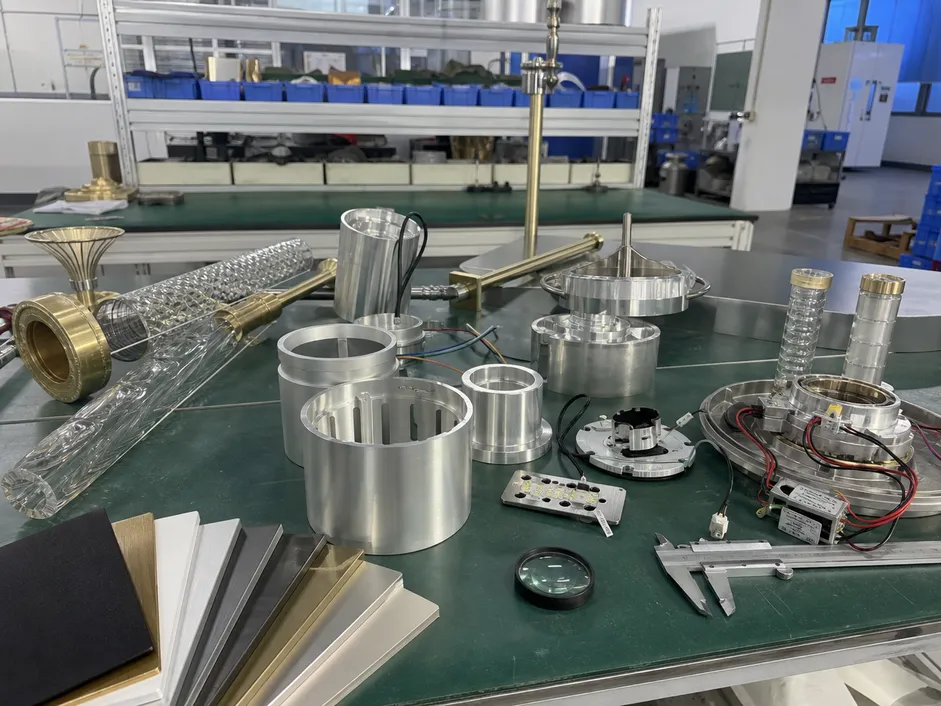
7–10 working days from approved drawings to physical sample. This covers CNC-machined prototype housing, provisional surface finishing, and driver integration — a functional sample, not a mock-up.
If you're bringing a design concept rather than finished drawings, our structural engineers work from reference images, dimensions, and target cost to develop the production-ready design. We flag cost traps early — overly complex casting geometry, non-standard driver cavities, finishes requiring multiple process steps — rather than quoting them in and surprising you at the production stage.
Minimum Order Quantities for Customization
| Customization Type | Typical MOQ |
|---|---|
| Standard catalog finish | Per standard MOQ (confirm at inquiry) |
| Custom RAL powder coat color | 100 units |
| Custom PVD finish specification | 200 units |
| Custom casting dimension (new tooling) | 300 units + tooling cost |
| Custom glass shade | 300 units |
| Private label packaging | 100 units |
Tooling Cycle: The Most Common Mistake
For buyers new to OEM development in decorative lighting, the most common mistake is underestimating the tooling cycle. New casting tooling adds 15–20 days before production starts.
If your project timeline is tight, we can often adapt an existing base casting to your specification — modifying canopy dimensions, arm configurations, or mounting details — which avoids the full tooling cycle. Tell us your timeline at the inquiry stage and we'll recommend the fastest path to production.
Container Loading and Export Packaging
Luxury decorative fixtures are fragile. Multi-arm chandeliers, glass pendant shades, and electroplated canopies don't survive ocean freight in standard cartons. We've learned which fixtures need what packaging through damage patterns on specific routes — and we've engineered the packaging accordingly.
Individual Foam-Lined Inner Cartons
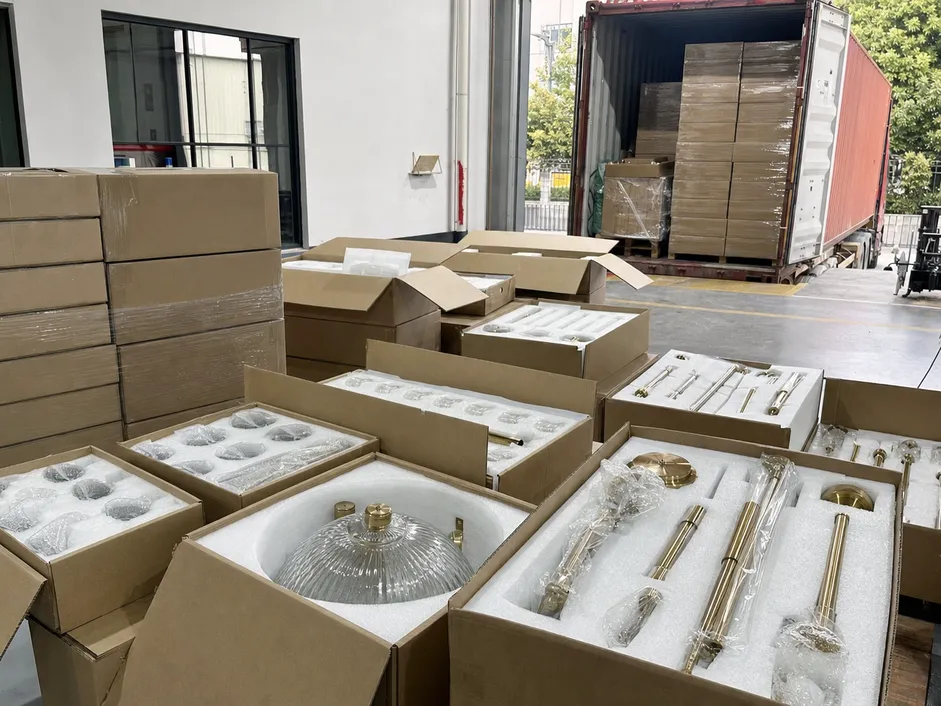
Each fixture ships in an individual foam-lined inner carton with component separation for multi-part fixtures — arms, shades, canopies packed separately and labeled for assembly.
Ocean Freight Rated Outer Cartons
Outer cartons are rated for the drop and compression forces of ocean freight. For glass components, we use custom-cut EPE foam inserts rather than generic padding — the insert is shaped to the specific glass profile, so it doesn't shift in transit.
Container Loading Optimization
For large-volume orders, we optimize carton dimensions for 40HQ container loading efficiency. A 5–8% improvement in units per container is real money on a 2,000-unit order — it's the difference between needing one container and needing one and a fraction. We calculate loading efficiency at the order stage and flag it if a carton dimension change would meaningfully improve your landed cost.
Typical Container Loading (40HQ)
| Fixture Type | Typical Units per 40HQ |
|---|---|
| Wall sconces (medium) | 800–1,200 units |
| Pendant lights (single, medium) | 400–600 units |
| Ceiling fixtures (medium flush mount) | 300–500 units |
| Chandeliers (medium, multi-arm) | 80–150 units |
Loading quantities are indicative. Exact figures depend on fixture dimensions and packaging configuration. We provide loading calculations with the proforma invoice.
Catalog Items
Standard lead time on catalog items runs 25–35 days from order confirmation.
Custom & OEM Orders
Custom and OEM orders depend on tooling requirements — new tooling adds 15–20 days before production starts.
We communicate lead time milestones proactively; if a production issue is going to affect your ship date, you hear about it before the container is supposed to load.
Other Collections Worth Comparing
The luxury collection sits at the top of our decorative range in material spec and finish quality. If you're evaluating fit for your specific market, here's how the sibling collections position:
Modern Lighting Collection
Cleaner geometry, more restrained finish palette. Suited for contemporary residential and commercial projects where the luxury collection's ornamental detail would be out of spec.
Decorative Lighting Collection
Broader range, standard material spec. Better suited for volume distribution where per-unit cost is the primary driver.
Architectural Lighting Collection
Structural and ambient lighting for commercial and hospitality projects where the fixture integrates into the architecture rather than serving as a decorative focal point.
Minimalist Lighting Collection
Reduced form, minimal surface detail. Suited for Scandinavian and Japanese-influenced interiors where the luxury collection's finish complexity would conflict with the design language.
Contemporary Lighting Collection
Current-season design direction. Overlaps with the luxury collection in quality tier but with more trend-responsive forms.
View All Collections
Browse the full catalog to compare positioning across all product lines.
Multi-tier catalog pairing: If you're building a multi-tier catalog, the luxury and modern collections are the most common pairing — they cover the premium and mid-premium segments without overlapping in positioning.
Sourcing Questions We Get Asked
What is the MOQ for the luxury lighting collection?
MOQ varies by SKU and customization level. Standard catalog items have lower MOQs than custom configurations. Send us your fixture list and target quantities and we'll confirm MOQ and pricing per line item — it's faster than a general answer here.
What certifications does the luxury collection carry, and are test reports available?
CE, UL, SAA, SGS, and ISO 9001:2015. Test reports and Declaration of Conformity are maintained per SKU and included in the order documentation package. If you need a specific document for your import team before placing an order, we can provide it.
What IP rating do I need for bathroom and wet-area specifications?
Standard luxury collection fixtures are IP20, suitable for dry interior environments. For bathroom zones (Zone 1 and Zone 2 per IEC 60598), you need IP44 minimum; for direct water contact zones, IP65.
We offer IP44 and IP54 configurations on selected SKUs — specify your installation environment at the inquiry stage and we'll confirm which fixtures are available in the required IP rating.
How do I match a finish across a reorder placed 12 months later?
Finish consistency across reorders is a real concern in luxury decorative lighting — it's one of the reasons we run finishing in-house rather than outsourcing it.
For powder coat finishes, we maintain the RAL reference and process parameters per SKU. For PVD finishes, we keep the deposition recipe on file.
We can't guarantee a perfect match across a multi-year gap if the base material batch changes, but we run a finish comparison sample before committing a reorder batch to production and flag any drift before it ships.
What is the lead time for OEM development with new tooling?
- •Prototype: 7–10 working days from approved drawings
- •New casting tooling: 15–20 days
- •Production after tooling confirmation: 25–35 days
- •Total from approved drawings to first production shipment: typically 45–60 days depending on order complexity
If your timeline is tighter, tell us at the inquiry stage — we can often adapt existing tooling to reduce the development cycle.
Can you supply IES files for lighting design software?
Yes. Our in-house optical lab generates IES photometric files from our own measurements. Available for all SKUs in the luxury collection. Request them at the order stage or when submitting a project specification.
Start a Sourcing Conversation
Send us your fixture list, target market, volume, and any certification or customization requirements. We'll come back with a detailed quote, lead time, and — where relevant — a recommendation on configuration based on what's working for our existing buyers in your region.
If you're new to this product category or evaluating us against your current supplier, a sample order is the right starting point. We can ship samples of specific SKUs so you can assess finish quality, dimensional accuracy, and packaging before committing to a production run.
Wholesale only. Strict MOQ applies.