

Custom Lighting Fixtures Built to Your Spec
From approved drawing to physical sample in 7–10 working days. Full in-house production: die-casting, CNC machining, surface finishing, and assembly under one roof in Guzhen, China.
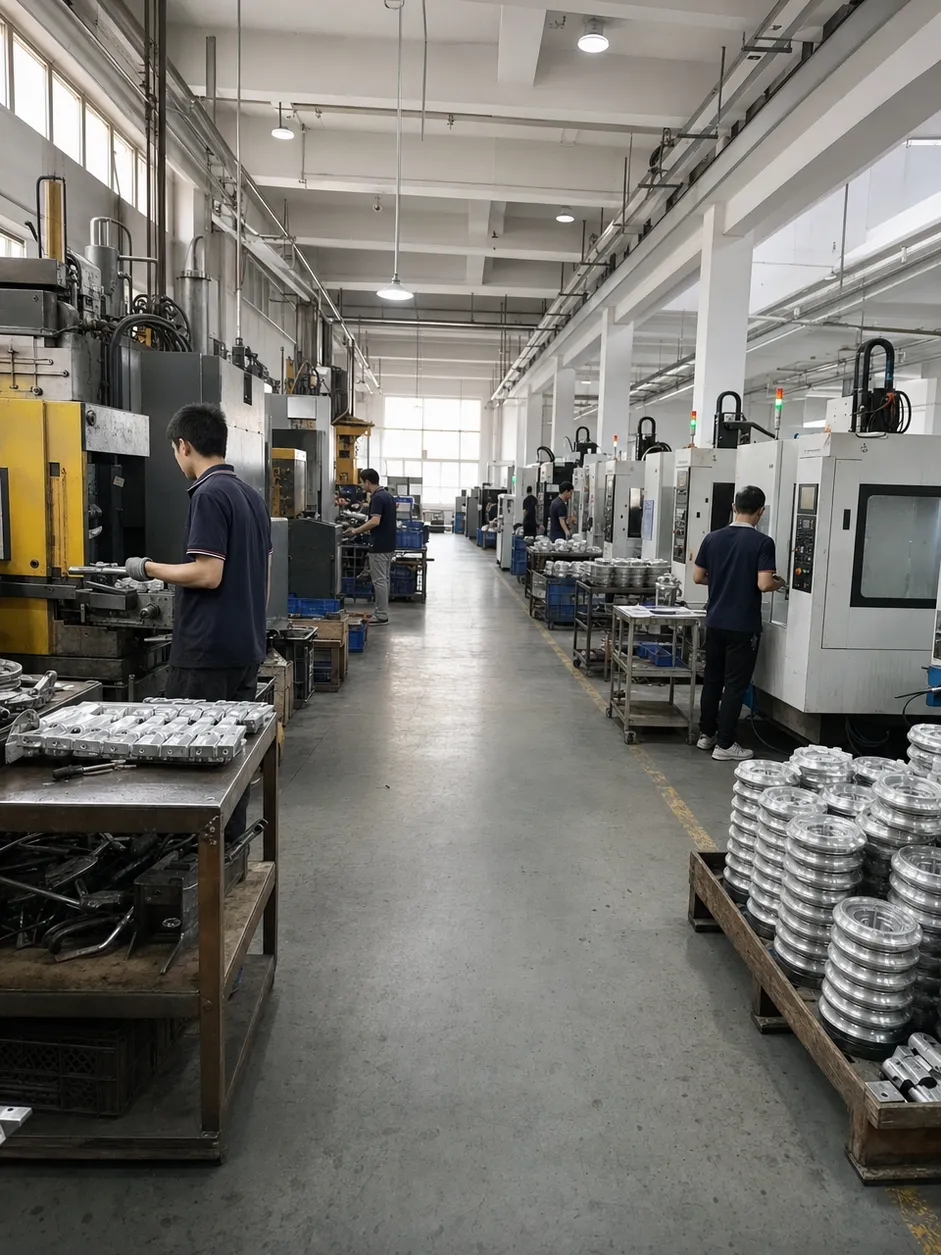
What "Custom" Actually Means at the Factory Level
Most suppliers use "custom" to mean color options and logo placement. We mean something different. Custom lighting fixtures at ASCLighting starts with your spec — a drawing, a reference image, a project brief, or even a sample from another supplier you want improved — and ends with a production-ready luminaire built to your dimensions, your finish, your driver spec, and your destination market's certification requirements.
The distinction matters commercially. If you're building a private-label product line, you need fixtures that your downstream customers can't source from a catalog. If you're fulfilling a hospitality or commercial project spec, you need exact dimensions and photometric performance, not close approximations. If you're an overseas manufacturer looking to outsource a component or a complete fixture, you need a factory that can hold tolerances and document the process.
These are three different sourcing problems, and they all land on the same capability: genuine in-house manufacturing, not assembly from bought-in parts.
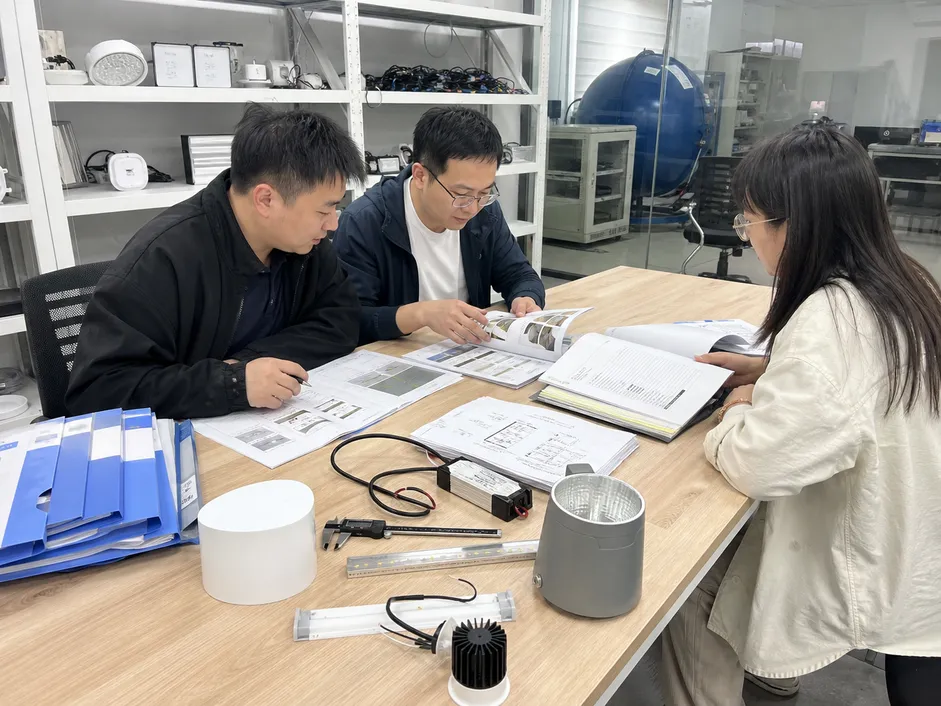
We run our own die-casting, CNC machining, and surface finishing at our 12,000 m² facility in Guzhen. That vertical integration is what makes bespoke lighting fixtures commercially viable at the volumes B2B buyers actually need — not 10,000-unit minimums, but the kind of run sizes that make sense for a product launch or a project specification.
The supply chain density in Guzhen means we can source specialty components — custom glass, unusual hardware, non-standard LED modules — faster than factories in other regions. That matters when your project timeline is tight.
Private-Label Programs
Fixtures your downstream customers can't source from a catalog. Unique geometry, proprietary finishes, exclusive designs built to your brand identity.
Hospitality & Commercial Specs
Exact dimensions and photometric performance to match architectural drawings — not close approximations from a standard catalog.
Component Outsourcing
Overseas manufacturers needing a factory that can hold tolerances and document the process for components or complete fixture assemblies.
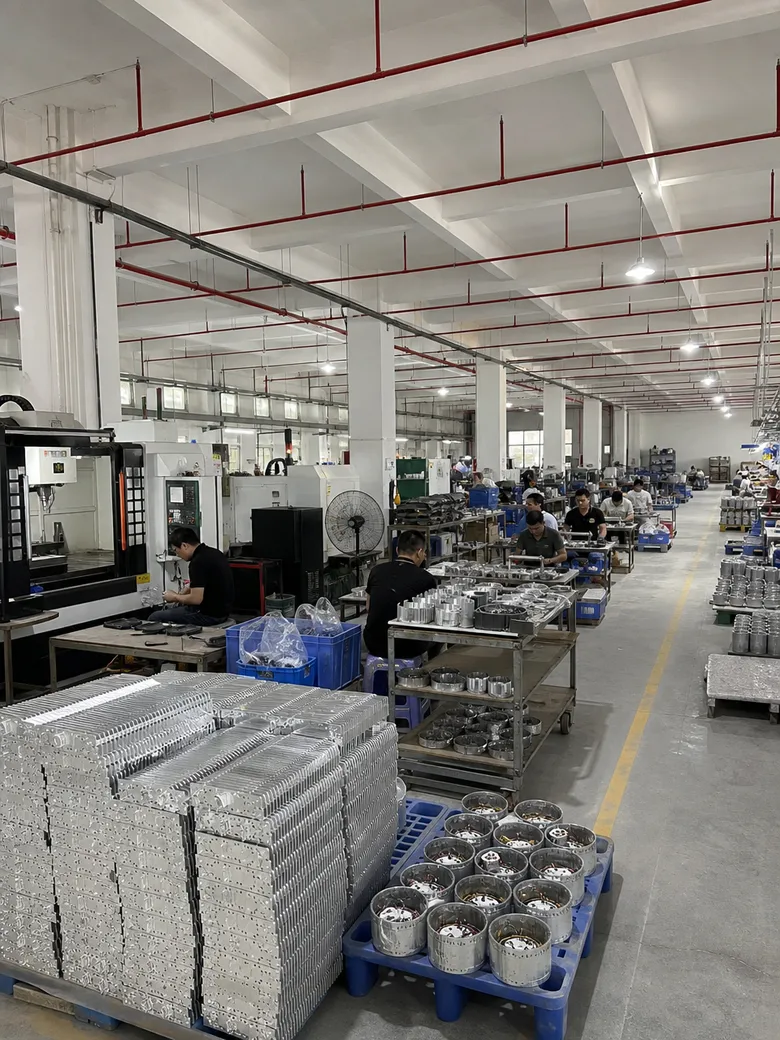
Vertical Integration: Everything Under One Roof
Die-Casting
In-house aluminum die-casting for housings and structural components
CNC Machining
Precision machining for tight-tolerance parts and custom geometries
Surface Finishing
Powder coating, anodizing, plating, and specialty finishes on-site
Assembly & Testing
Driver integration, wiring, and 100% aging test before shipment
From Concept to Sample: The 7–10 Day Prototyping Process
The 7–10 working day prototype turnaround is the number buyers ask about most. Here's what it covers — and where timelines extend.
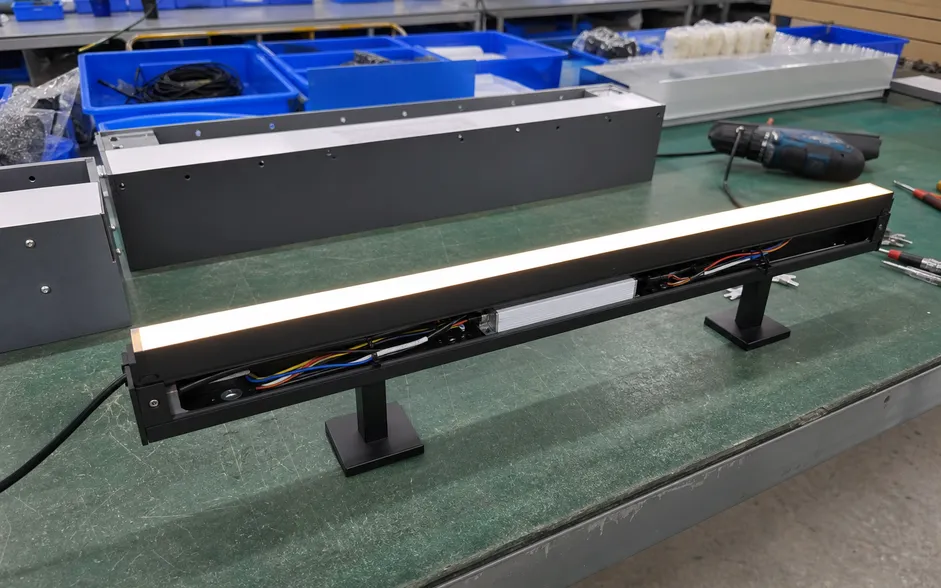
What You Receive
A functional sample — powered, wired, and finished — not a mock-up or a 3D print. From the moment we have approved drawings or a confirmed design brief, our engineering team generates production-ready CAD files, the die-casting or CNC machining team cuts the prototype housing, the finishing line applies provisional surface treatment, and the assembly team integrates the driver and wiring.
Design Review & CAD Generation
Engineering team reviews for tooling complexity, driver cavity sizing, and finish compatibility. Production-ready CAD files generated.
Prototype Housing
Die-casting or CNC machining team cuts the prototype housing to spec.
Surface Treatment
Finishing line applies provisional surface treatment matching your specified finish.
Assembly & Integration
Driver and wiring integrated. Functional sample powered and tested.
When Tooling Adds Time
If the design requires new tooling for complex cast geometries, add 15–20 days for the tooling cycle. We flag this upfront during the design review, not after you've been waiting two weeks.
Engineering Review Before Commitment
The R&D team — 15 lighting engineers with an in-house optical lab — reviews every new design for tooling complexity, driver cavity sizing, and finish compatibility before we commit to a timeline.
We've seen enough projects where a seemingly simple design change (a deeper housing recess, a non-standard canopy diameter) adds a full tooling cycle, and we'd rather surface that in the first conversation.
ODM Projects: From Concept to Production-Ready Design
For ODM projects where you're bringing a concept rather than finished drawings, the process starts with a design consultation. Send us reference images, target dimensions, and a cost target. Our structural engineers work backward from the cost target to identify where the design needs to simplify.
Three Most Common Cost Traps in Decorative Lighting Design
Overly Complex Casting Geometry
Intricate forms that require multi-part tooling or secondary machining operations.
Multi-Step Finishes
Layered surface treatments that add process time and quality control complexity.
Non-Standard Driver Cavities
Custom driver housing dimensions that limit component sourcing options.
We flag them early and propose alternatives that preserve the visual intent while keeping the production cost where it needs to be for your margin.
Send Your Project Brief for a Prototype QuoteTechnical Specifications for Custom Fixture Production
The parameters below reflect our standard production capabilities for custom lighting fixtures. Actual specifications depend on your design — contact us with drawings or a brief for exact feasibility and lead time.
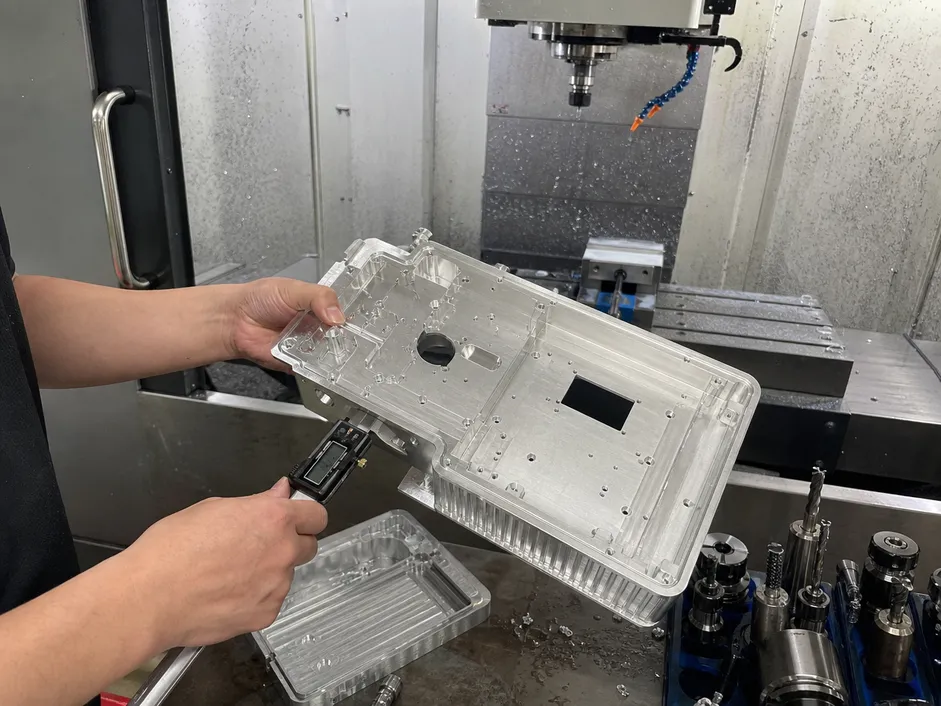
Housing Materials
Aluminum alloy (ADC12), zinc alloy (Zamak 3/5), steel, brass accents
CNC Tolerance
±0.1mm on critical mounting dimensions
Surface Finishes
Electroplating, powder coat (60–80μm), PVD, hand-applied patina
Finish Colors
Any RAL color (powder coat); brushed gold, matte black, chrome, antique brass, satin nickel (standard)
LED Driver Options
Constant current / constant voltage; TRIAC, 0–10V, DALI dimming; 100–277V universal input available
Color Temperature
2700K–6500K; tunable white (2700K–6500K) available on select configurations
CRI
Standard ≥80; high-CRI ≥90 available
IP Rating
IP20 standard; IP44/IP65 available for specified designs
Certifications
CE (Europe), UL (North America), SAA (Australia)
7–10 Days
Prototype lead time
(from approved drawings, no new tooling)
25–35 Days
Production lead time (standard)
Add 15–20 days if new tooling required
Wholesale Only
Contact us for program-specific MOQ
IES Files From Our Optical Lab
For buyers who need IES files for project submissions, we generate them from our own optical lab measurements — not from manufacturer spec sheets. Lumen output, beam angle, and color rendering are verified on production samples, not assumed from the driver datasheet.
Specifications shown reflect standard production capabilities. Actual parameters depend on your design. Contact us for a detailed feasibility assessment.
Request Technical ConsultationMarket Segments Where Custom Fixtures Deliver Margin
Custom decorative lighting isn't a single market — it's several, each with different order patterns, margin structures, and sourcing requirements. Here's where we see the strongest commercial logic for buyers working with us on custom programs.
Hospitality Fit-Out Contractors & Procurement Agents
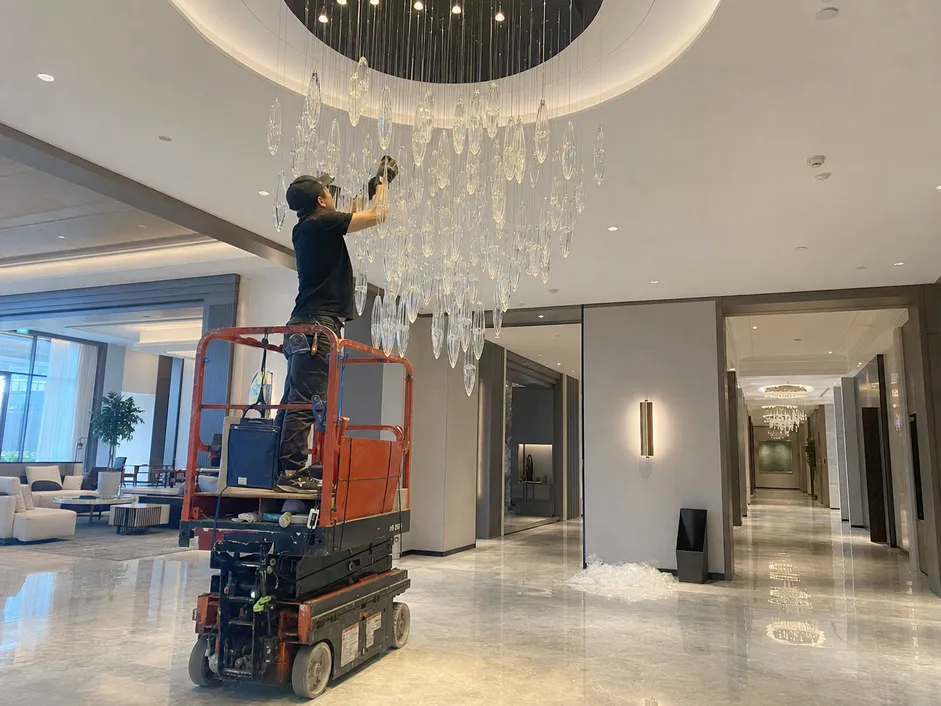
Hotel and resort projects specify fixtures by design intent, not catalog number. A 200-room hotel property typically requires 800–1,500 luminaires across lobby, corridor, and guestroom applications, all coordinated in finish and form.
Contractors who can supply a complete custom fixture package — rather than assembling from multiple catalog sources — command a meaningful margin premium and reduce the client's coordination risk.
We've supplied complete fixture packages for hospitality projects across the Middle East and Southeast Asia; the typical order structure is a sample approval phase followed by a single production run, with documentation packages for the project's compliance file.
Lighting Importers Building Private-Label Lines
If you're importing into North America, Europe, or Australia and selling under your own brand, catalog fixtures from Guzhen are available to every competitor at the same price. Custom fixtures — your dimensions, your finish combinations, your packaging — are not.
The margin differential between a private-label custom fixture and a catalog equivalent is typically 20–35% at retail, and the reorder dynamic is cleaner: your customers come back to you, not to whoever else carries the same SKU.
We've seen this play out consistently with our North American and European importer accounts — the ones who invested in even a modest custom program early have significantly better account retention.
Overseas Manufacturers & OEM Buyers
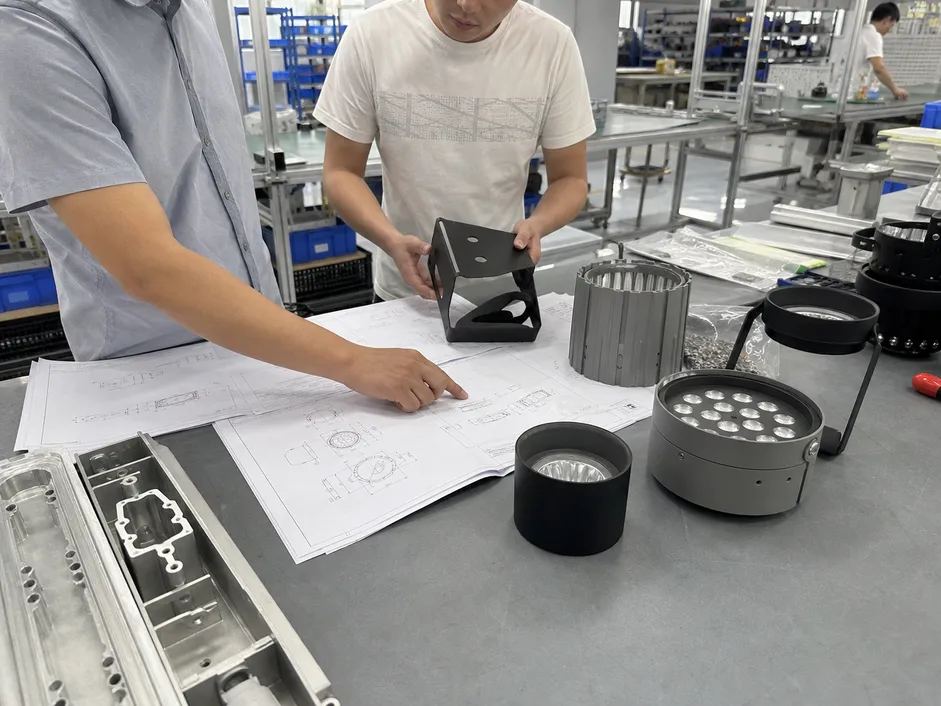
Some of our buyers aren't resellers — they're manufacturers in other markets who need specific components or complete fixtures built to their engineering drawings. We handle this as a standard OEM engagement: your drawings, your spec, our production.
The 15-engineer R&D team can also provide design-for-manufacture feedback if your drawings were developed without factory input and have cost or production issues we can help resolve.
Commercial Interior Designers & Specification Firms
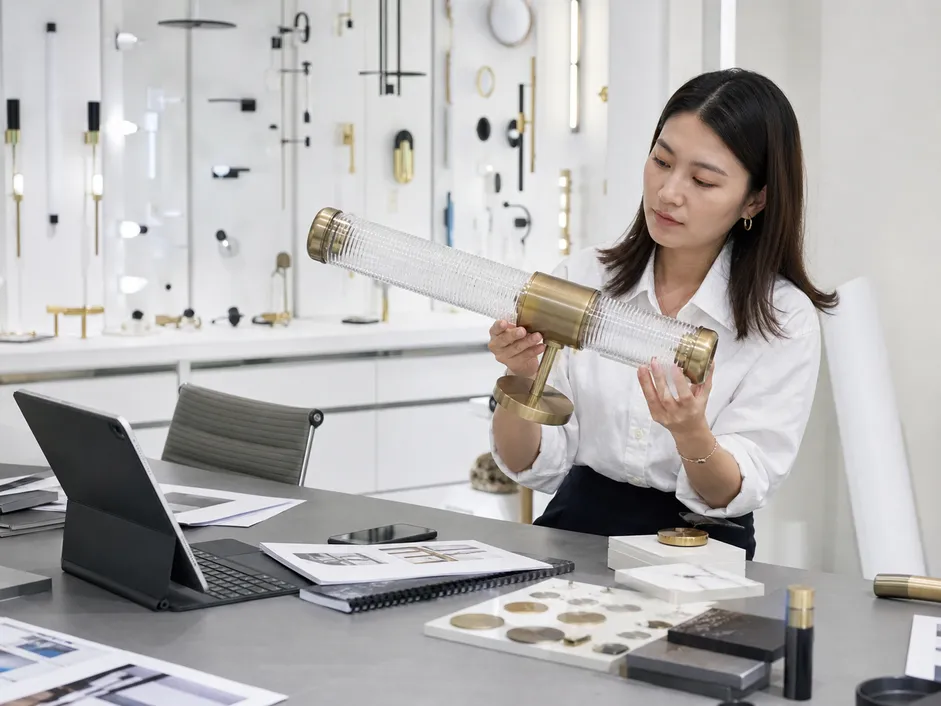
Design firms working on high-end residential or commercial projects increasingly source direct from manufacturers to control the specification and protect the project margin.
The typical engagement starts with a custom sample for client approval, followed by a project production run of 50–500 units. Our 7–10 day prototype turnaround fits the design approval timeline for most projects.
Related Custom Programs
How In-House Production Protects Your Custom Order
This is worth explaining in detail because it's where most custom lighting sourcing problems originate. The majority of decorative lighting factories in Guzhen are assembly operations — they buy die-cast housings from one supplier, drivers from another, glass or shades from a third, and assemble.
For standard catalog products, that model works. For custom fixtures, it creates three problems:
Dimensional consistency depends on your housing supplier holding tolerances across batches
Finish quality depends on your finishing subcontractor's process stability
Driver compatibility depends on whoever specified the driver understanding your fixture's thermal and electrical requirements
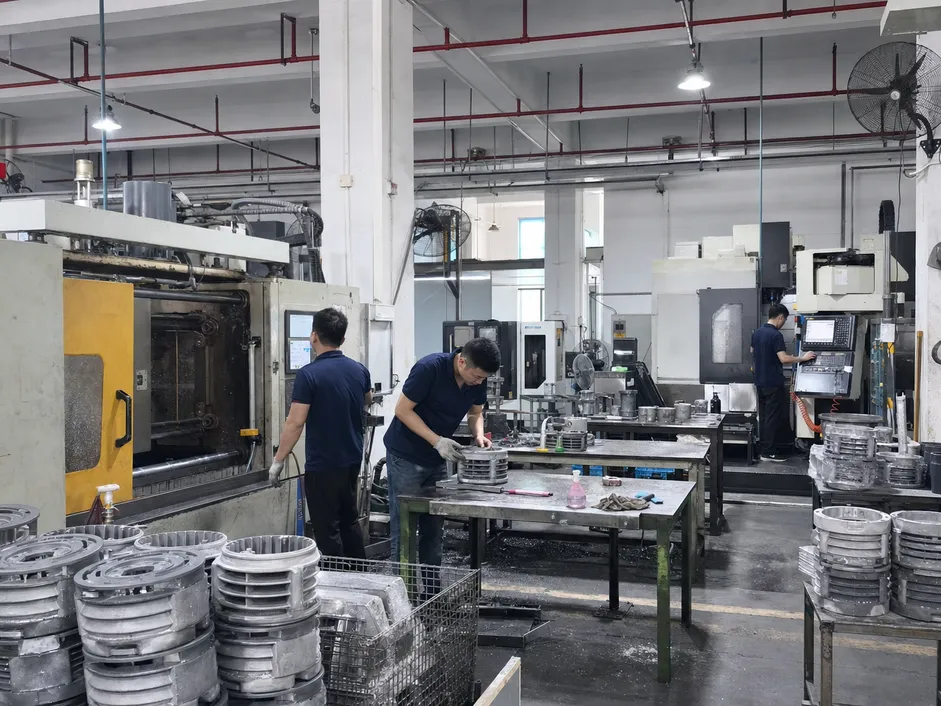
Die-Casting & CNC Machining
We run die-casting, CNC machining, and surface finishing in-house. For a custom fixture program, that means the housing geometry is controlled by our tooling, not a subcontractor's.
CNC Tolerance on Critical Dimensions
±0.1mm
Canopy-to-ceiling interface, shade attachment point, driver cavity clearance — the dimensions that cause installation problems when they drift, and they don't drift when the same tooling runs the same program across multiple batches.
Surface Finishing Line
The surface finishing line handles electroplating, powder coating, and PVD under the same roof. Powder coat thickness runs 60–80μm with automated application — consistent across a 500-unit batch, not just the first 50.
Salt Spray Testing Threshold
500 hours minimum
Relevant for coastal markets or humid climates where finish failure generates warranty claims. Salt spray testing runs on finish samples before committing a batch to production.
Per-SKU Driver Selection
Driver selection for custom fixtures is specified per SKU, not defaulted to a house spec. The driver is matched to the fixture's wattage, the target market's voltage range, the dimming protocol your downstream customers expect, and the certification requirements of your destination market.
Matched at Design Stage
We handle driver-to-fixture matching at the design stage, not as an afterthought when the certification audit flags it.
Driver Specification by Destination Market
North American Hospitality
- UL-listed driver
- TRIAC dimming compatibility
- 120V input voltage
European Distribution
- CE-marked driver
- DALI capability (if project spec requires)
- 220–240V input voltage
Brushed Gold & Matte Black — High-Volume Custom Finishes
These are our two highest-volume custom finishes. If your program is built around either, we have the process parameters dialed in and can provide finish samples within the prototype timeline.
Certification Coverage Across Your Export Markets
Custom fixtures built here ship with the certifications your import team needs, not as an add-on service. CE, UL, and SAA are held and maintained — built into the product development process, not retrofitted after the design is finalized.
For custom programs, certification planning starts at the design review stage. If your fixture is going to North America, the driver selection, wiring gauge, and housing material choices are all made with UL compliance in mind from the first prototype.
If it's going to Europe, CE marking covers the Low Voltage Directive and EMC requirements — we maintain the technical file per SKU and can provide the Declaration of Conformity as part of your order documentation. For Australia, SAA certification covers the relevant AS/NZS standards.
SGS audit reports are available on request. For buyers whose import compliance teams require factory audit documentation, we cooperate with customer-requested audits as a standard part of how we work with buyers in regulated markets.
| Market | Certification Held | Documentation Available |
|---|---|---|
| Europe | CE (LVD + EMC) | Declaration of Conformity, test reports |
| North America | UL | UL listing documentation |
| Australia | SAA | SAA certification documentation |
| General Export | SGS | SGS audit reports |
| All Markets | ISO 9001:2015 | Quality management system documentation |
Custom Designs & Certification Timeline
If your fixture design introduces a new configuration that hasn't been certified before — a new housing geometry, a different driver, a new wattage — we factor the certification timeline into the project schedule. For most custom programs, the prototype approval and certification testing run in parallel to minimize total lead time.
Quality Control on Custom Runs: What Happens Before Your Container Loads
Custom fixture programs get the same four-stage QC process as our standard catalog. Incoming inspection covers the aluminum alloy grade, driver batch testing, and any custom components — glass, hardware, specialty shades — before they enter production. In-process inspection runs at three checkpoints: after die-casting and machining, after surface finishing, and after assembly.
The finishing checkpoint is where most defects in decorative lighting get caught. Adhesion failures, color inconsistency, and surface contamination are visible at this stage and fixable before the fixture is assembled. For custom finishes — particularly multi-step finishes like antique brass or hand-applied patina — we run a finish approval sample against the approved standard before the full batch goes through the line. Color drift across a 300-unit batch is the most common complaint we hear from buyers who've sourced from assembly-only factories; it doesn't happen when the finishing line is running the same automated process parameters on every unit.
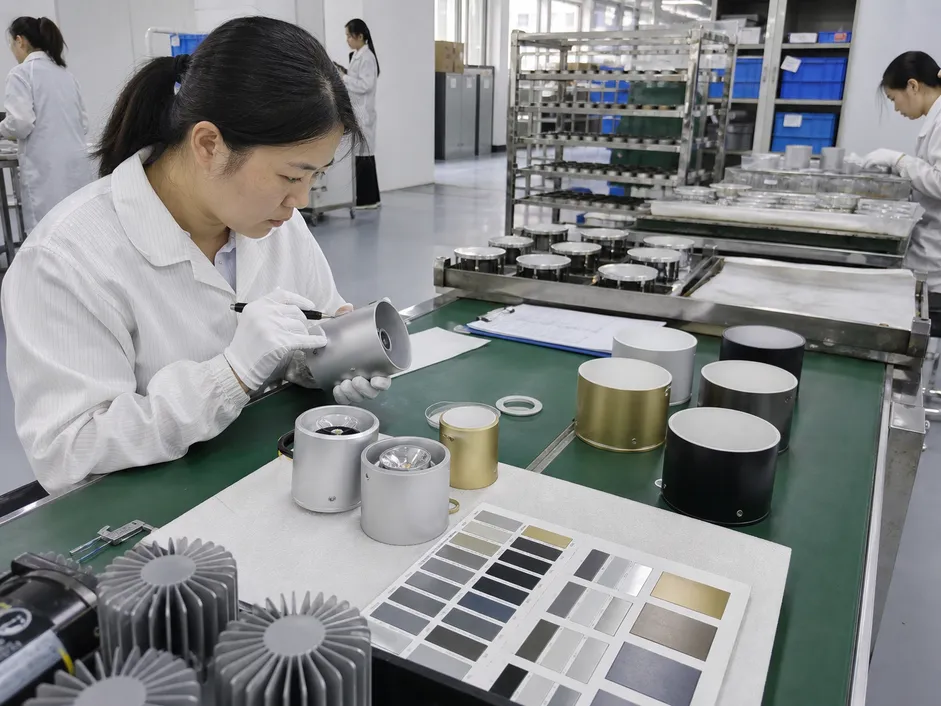
Incoming Inspection
Aluminum alloy grade verification, driver batch testing, and custom component checks (glass, hardware, specialty shades) before production entry.
In-Process Inspection
Three checkpoints: after die-casting and machining, after surface finishing, and after assembly. Finish stage catches adhesion failures, color inconsistency, and contamination.
100% Aging Test
Every luminaire — every unit, not a sample. LED driver failures, wiring faults, and early-life component failures surface here, not in your customer's installation.
Photometric Verification
Sample-basis lumen output and color temperature checks against approved spec. Batches outside tolerance don't ship — investigation and correction before release.
100% Aging Test — Every Unit
The outgoing stage runs 100% aging test on every luminaire — every unit, not a sample. LED driver failures, wiring faults, and early-life component failures show up here, not in your customer's installation.
For custom programs, this is particularly important: a driver failure in a hospitality installation generates a service call, a warranty claim, and a conversation with the project manager about your reliability. The aging test is the last line of defense before the container loads.
Photometric Verification
Photometric verification runs on a sample basis from each production batch. Lumen output and color temperature are checked against the approved spec. If a batch drifts outside tolerance, it doesn't ship — we run the investigation, identify the cause, and correct before releasing.
For buyers who need photometric data for project submissions, we provide IES files generated from our own lab measurements.
Why this matters for custom programs: A driver failure in a hospitality installation generates a service call, a warranty claim, and a conversation with the project manager about your reliability. The aging test is the last line of defense before the container loads.
Packaging and Container Loading for Custom Fixture Programs
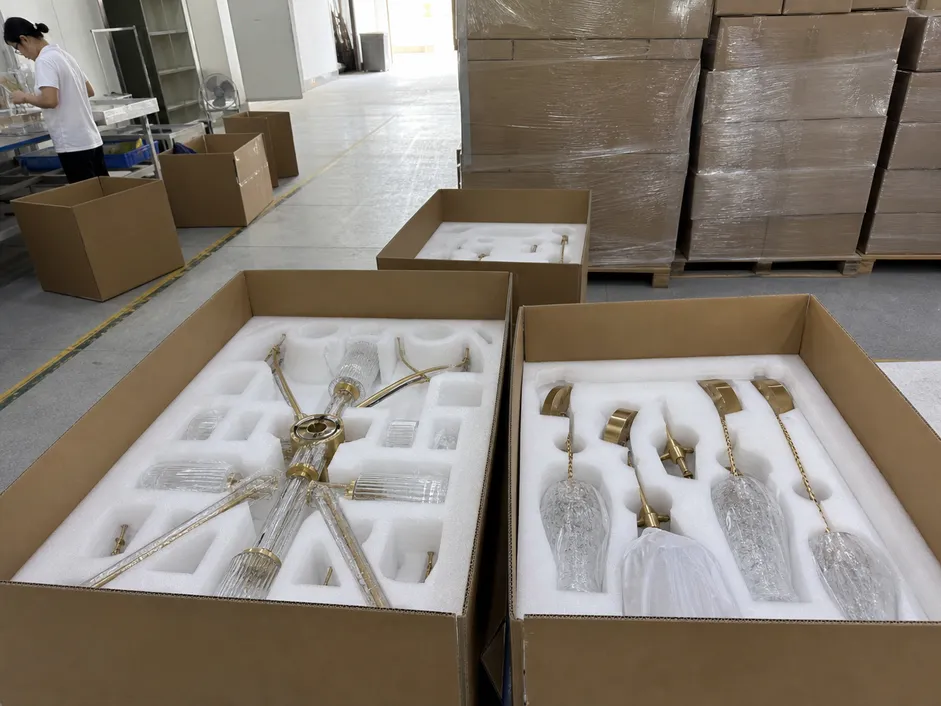
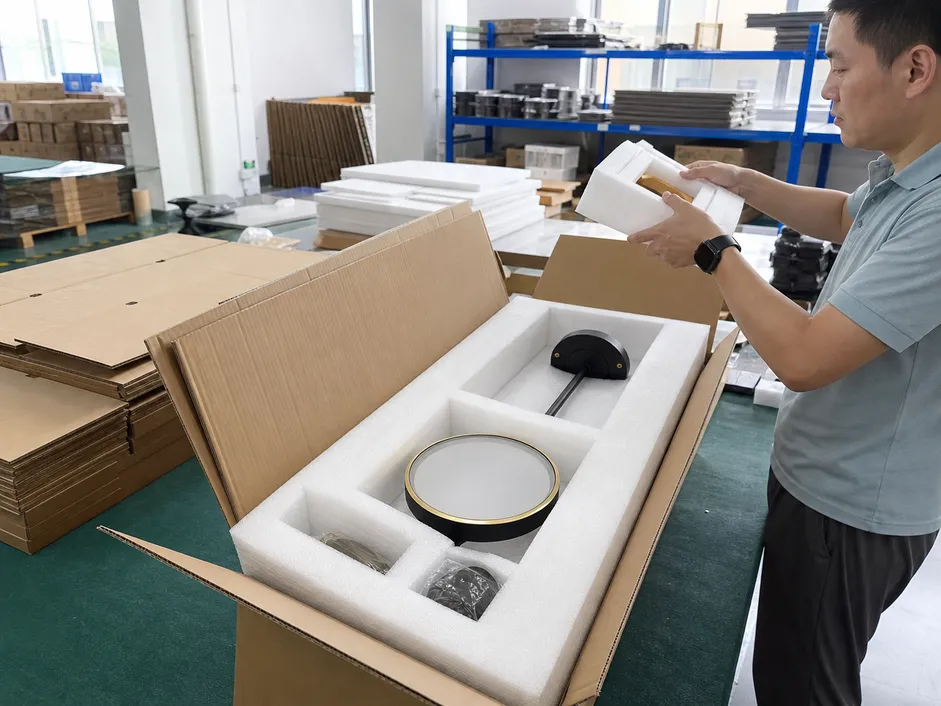
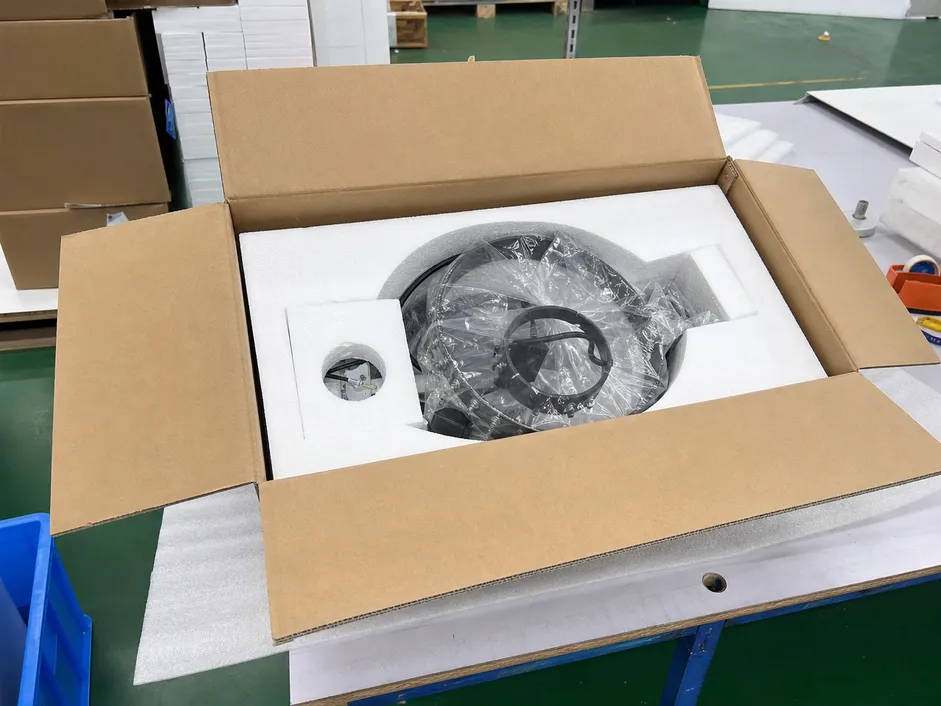
Custom fixtures — particularly multi-arm chandeliers, large pendants, and complex decorative pieces — require packaging engineered for the specific fixture, not a generic carton. We design export packaging per SKU for the destination market. Fragile elements ship in individual foam-lined cartons with outer carton reinforcement rated for the drop and compression forces of ocean freight.
For glass components, we use custom-cut EPE foam inserts rather than generic padding — the insert is shaped to the glass profile, not just wrapped around it.
Container Loading Optimization
For large-volume custom programs, we optimize carton dimensions for 40HQ container loading efficiency. A 5–8% improvement in units per container is real money on a 2,000-unit order — it's the difference between needing one container and needing one and a fraction.
We run the container loading calculation as part of the production planning process and flag it if the carton design is inefficient.
More units per container with optimized carton dimensions
E-Commerce Channel Packaging
For buyers supplying e-commerce channels — Amazon, Wayfair, independent online stores — we can configure packaging for mail-order durability: double-wall outer cartons, internal suspension packaging for pendant fixtures, and ISTA-compliant drop test performance.
White-label packaging with your brand's artwork is standard for OEM programs.
-
Double-wall outer cartons for mail-order durability
-
Internal suspension packaging for pendant fixtures
-
ISTA-compliant drop test performance
-
White-label packaging with your brand artwork (standard for OEM)
Specify the channel upfront. We've had buyers discover after their first container that their packaging wasn't rated for the handling their logistics provider was giving it. It's worth specifying the channel upfront so we design the packaging for the actual journey, not just the factory floor.
Frequently Asked Questions
What is the minimum order quantity for custom lighting fixtures?
We work wholesale only with strict MOQ requirements. MOQ varies by fixture type, customization complexity, and whether new tooling is required. Contact us with your fixture type and target volume — we'll confirm MOQ and whether your program qualifies for a custom run or is better served by a catalog product with finish customization.
Can you match a finish from a sample or reference image?
Yes. Send us a physical sample or a high-resolution reference image with the substrate material (brass, aluminum, steel) and we'll develop a finish match. For powder coat colors, we work from RAL codes or physical samples. For PVD and electroplated finishes, we run development samples before committing to production. Finish approval is part of the prototype process — you sign off on the finish sample before the production batch runs.
What IP rating is available for custom fixtures intended for outdoor or wet-location use?
IP44 and IP65 are available for custom designs specified for outdoor or wet-location applications. The housing design, gasket specification, and driver enclosure all need to be engineered for the IP rating from the start — it's not a modification you can add to an indoor fixture design. If your project requires IP-rated fixtures, flag it at the design brief stage so we engineer it in from the beginning.
How do you handle color temperature consistency across a large custom production run?
Color temperature is verified against the approved spec during production. We specify LED modules by bin code — not just by nominal color temperature — so the variation across a batch stays within ±100K of the target. For hospitality projects where color consistency across hundreds of fixtures in the same space is critical, we can tighten the bin specification further. Photometric verification runs on a sample basis from each production batch; if a batch drifts outside the approved tolerance, it doesn't ship.
What documentation do you provide for customs clearance and compliance?
Standard documentation includes commercial invoice, packing list, bill of lading, and certificate of origin. For CE-marked products, we provide the Declaration of Conformity and can supply the technical file on request. For UL-listed products, UL listing documentation is available. Test reports, material safety data sheets, and SGS audit reports are available per SKU. If your import compliance team has specific documentation requirements, send us the list at the order stage and we'll confirm what we can provide.
What's the difference between your custom lighting fixtures and your custom pendant lighting or custom wall sconces?
Custom lighting fixtures is the broadest entry point — it covers any fixture type where you're bringing a custom design or specification. Custom pendant lighting and custom wall sconces are more specific programs with their own design parameters and typical order structures. If you know your fixture type, start with the specific page. If you're sourcing a mixed fixture package — pendants, sconces, and ceiling fixtures for a single project — start here and we'll route the inquiry to the right production team.
Start Your Custom Fixture Program
Send us your project brief — fixture type, reference images or drawings, target market, volume estimate, and any certification requirements. Our engineering team reviews every inquiry and comes back with a feasibility assessment, prototype timeline, and indicative pricing within one business day.
New to custom sourcing from China? Most buyers in this category start with a 2-unit sample order to validate the design and finish before committing to a production run. We can ship samples within the 7–10 day prototype window. Tell us your target retail price point or landed cost target and we'll spec the configuration that protects your margin.
Get a Quote for Custom Lighting FixturesWholesale only. Strict MOQ applies.
Contact Our Engineering Team
Phone
+86 134 2021 9307Factory Address
No. 14 Beisan Rd, Gusan Ind. Zone, Guzhen, Zhongshan, Guangdong, China