
Bespoke Pendant Lighting Built to Your Specification
From concept drawing to production-ready sample in 7–10 working days. Full in-house tooling, die-casting, surface finishing, and driver integration under one roof.
Every fixture ships with 100% aging test and photometric verification. CE, UL, and SAA certified.
What Custom Pendant Lighting Actually Means at the Factory Level
Most suppliers use "custom" to mean color options and cord length. We use it to mean the fixture doesn't exist yet — you bring a concept, a reference image, a sketch, or a target retail price point, and we engineer the production-ready version from scratch.
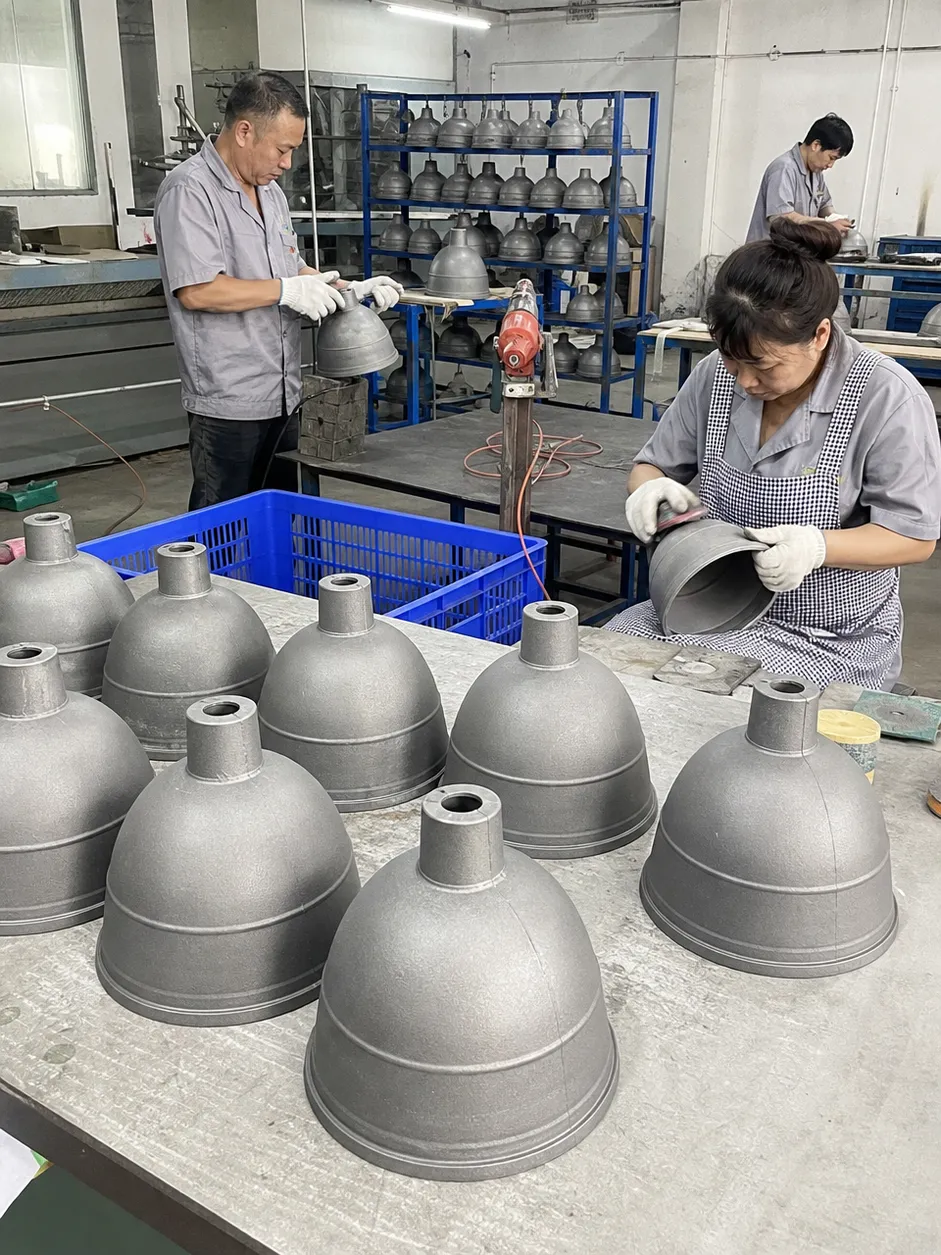
Custom pendant lighting at ASCLighting covers the full spectrum: OEM work where you supply finished drawings and we manufacture to spec, and ODM work where our engineering team develops the design from your brief. The distinction matters commercially because ODM projects carry tooling investment and a longer development cycle, while OEM projects on existing tooling can move from approved drawings to production sample in 7–10 working days. We're clear about which path applies to your project before any cost is committed.
The pendant category is where we started in 2008 — decorative pendants and chandeliers for the Middle East and Southeast Asian markets were our original core. That history means the production infrastructure for pendant work is the most mature part of our factory: dedicated die-casting tooling for canopy and housing geometries, a surface finishing line that handles the full range of decorative finishes, and a driver selection process calibrated to pendant-specific thermal and dimming requirements.
When you're sourcing custom pendant lighting, the factory's depth in this specific category is what determines whether your sample looks like the reference and whether the production batch matches the sample.
OEM Path
You supply finished drawings. We manufacture to spec on existing or new tooling. Fastest route to production sample — 7–10 working days from approved drawings.
ODM Path
You supply a concept, reference image, or target price point. Our engineering team develops the production-ready design. Carries tooling investment and a longer development cycle.
Pendant-First Since 2008
- Dedicated die-casting tooling for canopy & housing geometries
- Full-range decorative surface finishing line
- Driver selection calibrated to pendant thermal & dimming requirements
From Brief to Sample: The 7–10 Day Development Path
The 7–10 working day prototype turnaround is the number buyers ask about most, so here's what it actually covers — because it's not a mock-up.
Production Feasibility Review
When you send us approved drawings or a detailed brief, our structural engineers review the geometry for production feasibility first. Decorative pendant designs frequently have cost traps that aren't obvious from a rendering:
- Overly complex casting geometry that requires multi-part tooling
- Canopy profiles that create parting-line marks in visible locations
- Shade attachment methods that add assembly time without adding perceived value
We flag these before quoting, not after. We've seen enough projects where a designer's reference image was built around a hand-fabricated prototype — beautiful, but not manufacturable at volume without a complete redesign. Catching that early saves everyone time.
CNC-Machined Prototype Production
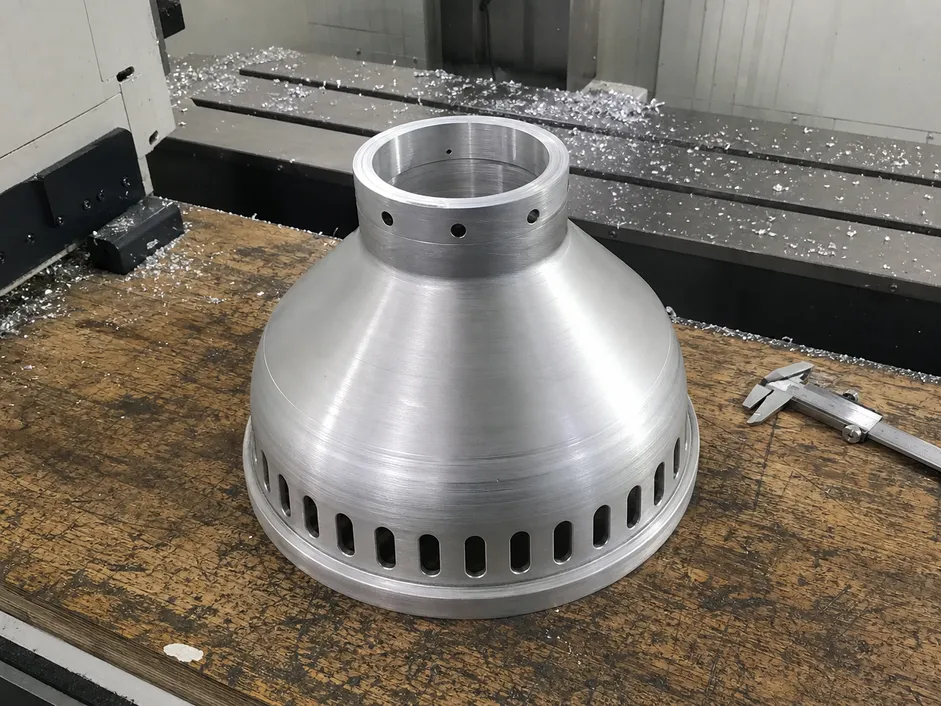
Once the design is confirmed as production-feasible, CNC-machined prototype housings are produced from aluminum or zinc alloy depending on the final spec. The prototype goes through provisional surface finishing — not a full production run, but representative enough to evaluate color, texture, and sheen.
Driver Integration & Photometric Verification
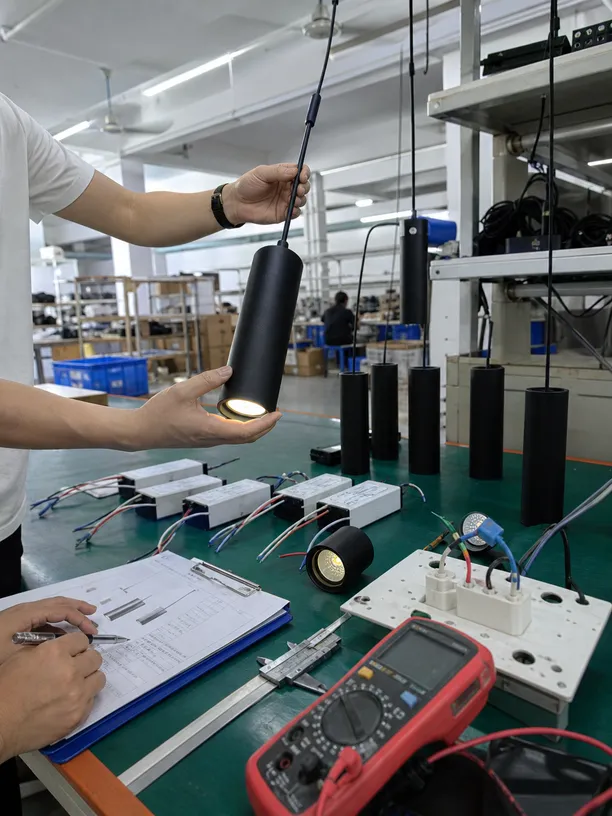
Driver integration is included: the sample you receive is a functional, powered fixture, not a shell. Photometric output is measured against the target spec in our optical lab before the sample ships.
ODM Projects: +3–5 Working Days
For ODM projects where you're starting from a concept rather than drawings, add 3–5 working days for the design development phase. Our engineers work from reference images, target dimensions, and cost parameters to produce a production-ready design.
We document the design decisions — material grade, wall thickness, canopy geometry, shade attachment method — so you have a complete technical package, not just a sample.
Development Timeline Summary
Technical Specifications: What We Build To
Custom pendant lighting specifications vary by project, but the following parameters represent our standard production capabilities and the ranges within which we work. Exact specifications for your project are confirmed during the development phase.
| Parameter | Standard Range / Typical Value |
|---|---|
| Housing material | Aluminum alloy (ADC12), zinc alloy (Zamak 3/5), steel |
| Shade material | Blown glass, mouth-blown glass, metal (steel/aluminum), fabric, acrylic, rattan |
| Canopy diameter | 80–200mm (custom tooling available outside this range) |
| Pendant drop length | 300–3,000mm (adjustable cord/rod configurations) |
| Wattage | 3W–60W per pendant head (LED, driver-integrated) |
| Color temperature | 2700K, 3000K, 4000K (custom CCT available on request) |
| CRI | ≥80 standard; ≥90 available for hospitality and retail applications |
| Dimming compatibility | TRIAC, 0-10V, DALI (specified per driver selection) |
| Input voltage | 100–240V AC (market-specific driver selection) |
| Surface finishes | Brushed gold, matte black, antique brass, chrome, satin nickel, custom RAL/PVD |
| IP rating | IP20 standard; IP44 available for bathroom/outdoor-adjacent applications |
| Certifications | CE, UL, SAA (held); additional certifications available upon request |
| MOQ | Confirmed per project — contact us for details |
| Standard lead time | 25–35 days from order confirmation (new tooling: add 15–20 days) |
Specifications shown reflect our standard production capabilities. Exact parameters for your project are confirmed during the development and sampling phase. Contact us for a detailed technical specification sheet.
Driver Selection Note
We don't use a single driver spec across all pendant SKUs — the driver is matched to the fixture's wattage, the target market's voltage standard, and the dimming protocol your downstream customers are likely to encounter.
A pendant going into a North American hospitality project needs TRIAC dimming compatibility with the installed dimmer infrastructure; the same fixture going into a European residential project may need DALI. Getting this wrong generates field complaints that come back to you, not to us. We specify it correctly at the development stage.
Surface Finishing: Where Margin Lives in Decorative Pendants
In the decorative pendant category, finish quality is the primary driver of perceived value — and perceived value is what your downstream customers are paying for. A fixture with a mediocre finish sells at commodity pricing regardless of the underlying design. A fixture with a consistent, well-executed finish commands a premium.
In-House Finishing Line
Our surface finishing line runs electroplating, powder coating, and PVD in-house. For custom pendant lighting, the most commercially significant finishes are:
Brushed Gold (PVD)
High-volume finish for hospitality and high-end residential. PVD adhesion testing on production samples before committing a batch — PVD on complex geometries can delaminate at edges if the pre-treatment isn't right, and that's a warranty claim waiting to happen.
Matte Black (Powder Coat)
Highest-volume finish alongside brushed gold. Powder coat thickness runs 60–80μm with automated application, consistent across the batch. We grind and pre-treat every weld before coating to prevent adhesion failures at weld seams — the most common finish defect in this category.
Antique Brass (Electroplating)
Strong performer in the restaurant and boutique hospitality segments. Electroplating process delivers the depth and warmth that distinguishes premium decorative fixtures from commodity alternatives.
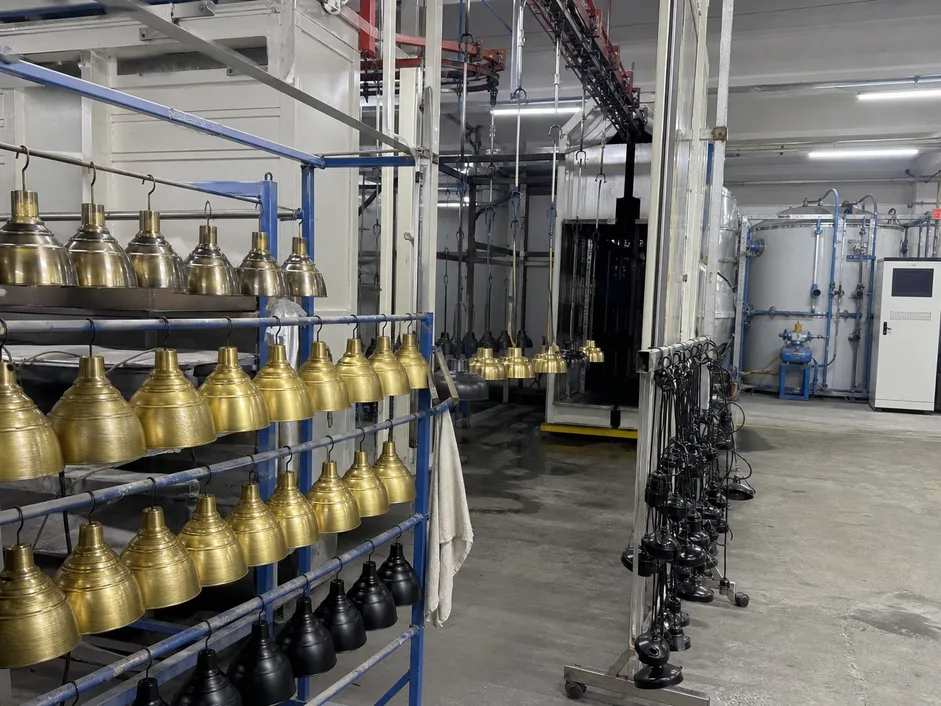
Batch-to-Batch Consistency
Brushed gold and matte black are our two highest-volume finishes across all pendant work. If you're building a line around either, we have the process parameters documented and can guarantee batch-to-batch consistency across repeat orders.
Powder Coat Consistency
Thickness runs 60–80μm with automated application. Visual consistency across a multi-unit order — no shade variation between fixture 1 and fixture 200. Durability in the field with proper adhesion at every weld seam.
PVD Adhesion Testing
We run adhesion testing on production samples before committing a batch. PVD on complex geometries can delaminate at edges if the pre-treatment isn't right — we catch it before it becomes a warranty claim in the field.
Salt Spray Testing
For buyers supplying coastal markets or humid climates — Gulf region, Southeast Asia, parts of Australia — we run salt spray testing on finish samples before production. The standard is 500 hours; we'll tell you if a specific finish configuration doesn't pass before you've committed to a production run.
Market Segments Where Custom Pendant Lighting Generates Repeat Volume
Custom pendant lighting isn't a one-time project category — the buyers who do well with it build repeatable programs around specific market segments. Here's where we see the most consistent volume from our existing distributor and contractor base.
Hospitality Fit-Outs
Hotels, Resorts, Serviced Apartments
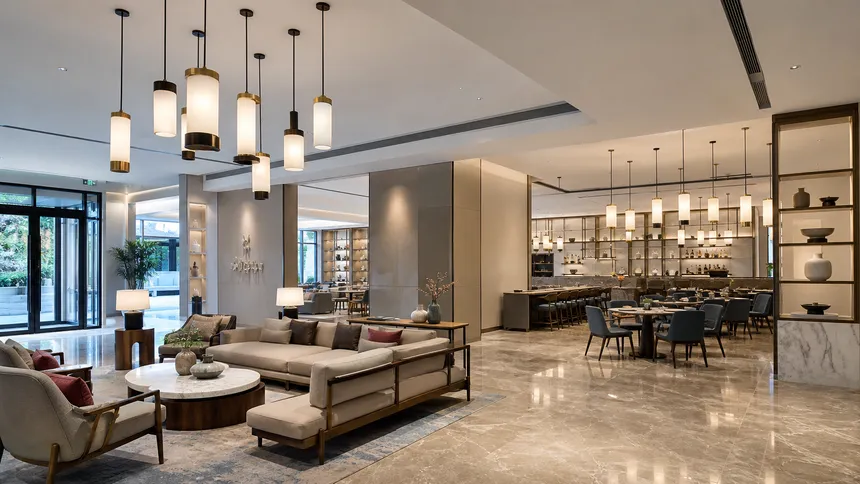
This is the highest-value segment for custom pendant work. A mid-scale hotel property typically specifies 50–200 pendant fixtures across lobby, restaurant, bar, and corridor spaces, with a single design brief covering all zones.
The custom requirement comes from brand standards — chain hotels need fixtures that match their interior design guidelines, not catalog items that approximate them.
For buyers supplying FF&E procurement companies or interior design firms, this segment generates 200–500 unit orders per property, with repeat business when the same design firm works on the next property.
Restaurant Chains & F&B Groups
Multi-Location Rollouts
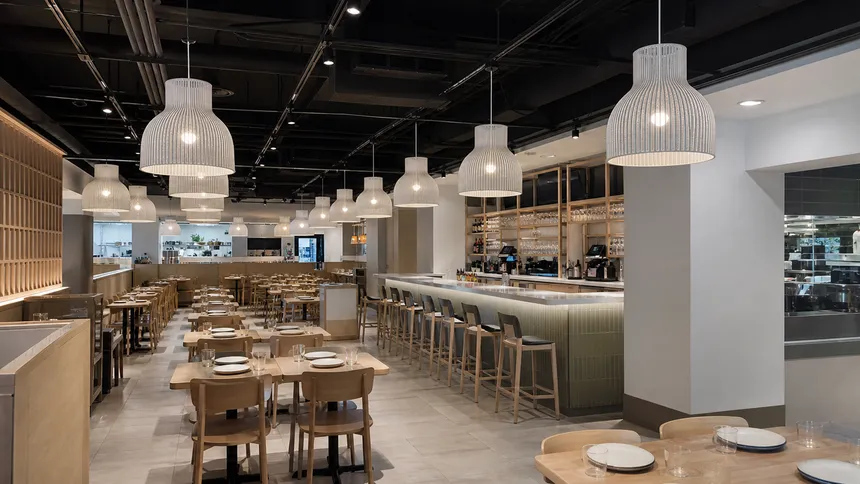
Multi-location restaurant groups are a high-reorder segment. When a chain rolls out a new concept across 20–50 locations, they need identical fixtures at each site — which means a custom design locked to their spec, not a catalog item that might be discontinued.
We've supplied this type of program for buyers in Southeast Asia and the Middle East.
The commercial logic for your distribution business: one design development investment, then reorder volume across every new location opening. Typical pendant count per restaurant fit-out runs 20–80 units depending on the space.
Luxury Residential Developers
Villa Projects & Premium Units
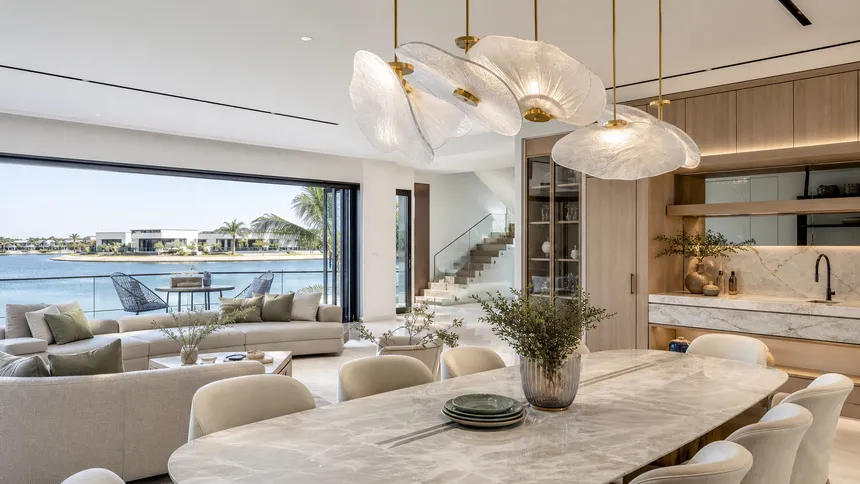
High-end residential developers in the Gulf, Southeast Asia, and Australia specify custom pendant lighting as part of the interior package for premium units.
The driver here is differentiation — developers selling at a price premium need fixtures that aren't available in retail channels. Custom pendant lighting fills that gap.
Order volumes per project run 30–150 units, with multiple projects per developer per year for active buyers.
Lighting Importers Building Proprietary Lines
Own Your SKU, Own Your Margin
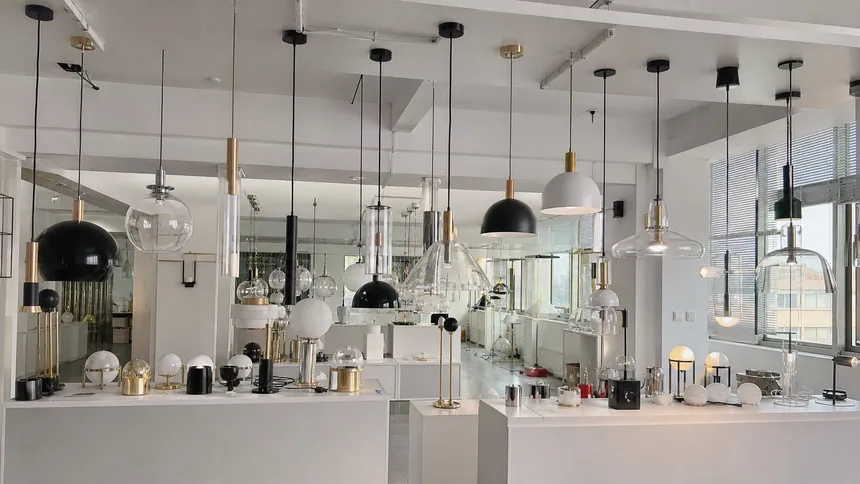
This is the segment where bespoke pendant lighting generates the most durable margin. An importer who develops a custom design owns the tooling and the SKU — competitors can't source the same fixture.
We work with importers in North America, Europe, and Australia on this basis: they develop a design with our engineering team, we hold the tooling, and they reorder against it.
The initial tooling investment is recovered within the first 2–3 production runs for most SKUs.
(This segment has grown significantly for us over the last three years — worth considering if you're building a product line rather than just filling project orders.)
OEM vs. ODM: Choosing the Right Development Path for Your Business
The distinction between OEM and ODM custom pendant lighting affects your timeline, your tooling investment, and your IP position — so it's worth being precise about which path fits your situation.
OEM
You Supply the Drawings
You own the design. You provide production-ready technical drawings — 2D dimensions, 3D CAD files, material specifications, finish requirements. We manufacture to your spec.
Tooling is quoted separately and owned by you.
Lead Time
From approved drawings to production sample: 7–10 working days
Best Fit When:
- You have an in-house design team
- You're replicating an existing product with modifications
- IP ownership is a priority for your business
ODM
We Develop the Design From Your Brief
You provide a concept — a reference image, a sketch, a description of the aesthetic direction, a target retail price point, and any hard constraints (ceiling height, shade material, dimming requirement). Our engineering team develops the production-ready design.
You review and approve before tooling is committed.
Additional Lead Time
ODM projects typically add 3–5 working days to the development cycle
Best Fit When:
- You don't have design resources in-house
- You're entering a new product category
- You want to move faster than an internal design process allows
Transparent Tooling — Both Paths
In both cases, tooling is quoted transparently before any commitment. We don't bury tooling costs in unit pricing — you see the tooling investment as a separate line item, and you own the tooling once it's paid for.
For repeat orders, tooling is already amortized and the unit cost reflects production only.
Customization Parameters and What Can't Be Changed
Knowing the limits of customization is as useful as knowing the options. Here's what we can and can't do on custom pendant lighting.
What's Fully Customizable
- Housing geometry and canopy profile — new tooling required for significant shape changes
- Shade material — blown glass, metal, fabric, acrylic, rattan, stone. We source or fabricate based on your spec
- Shade dimensions — diameter, height, wall thickness (within material constraints)
- Surface finish — any RAL color on powder coat; PVD in gold, rose gold, gunmetal, black; electroplating in chrome, antique brass, nickel
- Pendant drop length and suspension method — cord, rod, cable, or combination
- Wattage and color temperature — 2700K–4000K, 3W–60W per head
- Dimming protocol — TRIAC, 0-10V, DALI
- Canopy configuration — single pendant, multi-pendant cluster, linear bar
- Branding — custom packaging, logo on canopy or fixture body, private label documentation
What Has Constraints
Minimum Order Quantities for Custom Finishes
Powder coat color changes require a minimum batch to justify the line changeover — below a certain volume, the changeover cost doesn't make sense for either party. We'll tell you the threshold for your specific finish.
Glass Shade Customization
Mouth-blown glass shades have dimensional tolerances of ±3–5mm — this is inherent to the process, not a quality issue. If your design requires tighter tolerances, we specify machine-blown or pressed glass instead.
New Tooling Lead Time
Significant geometry changes require new die-casting tooling, which adds 15–20 working days to the development cycle. Minor modifications to existing tooling are faster.
Driver Customization
We select from our qualified driver supplier list. If you specify a driver brand not on our list, we require a qualification run before committing to production.
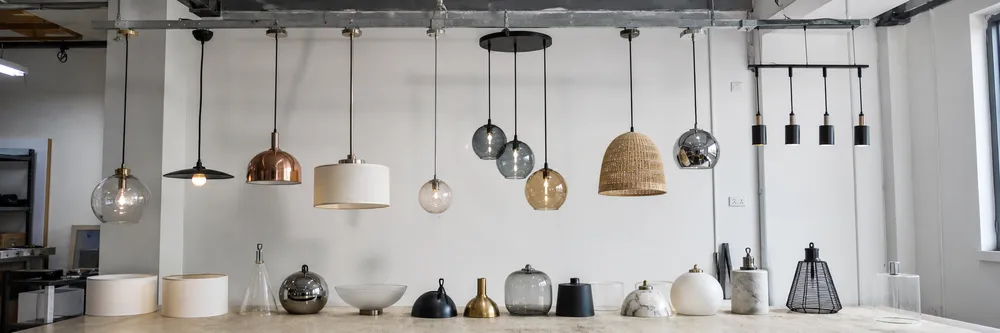
Quality Control on Custom Pendant Orders: Four Stages Before Your Container Loads
Custom orders carry higher QC risk than standard catalog items because every production run is, by definition, the first time we've made that exact fixture at volume. Our four-stage QC process is designed around this reality.
Incoming Inspection
Raw materials and purchased components checked before entering production.
In-Process Inspection
Three checkpoints: post-machining, post-finishing, and post-assembly.
100% Aging Test
Every luminaire runs powered for a minimum burn-in period before packing.
Pre-Shipment Inspection
Photometric verification in our optical lab against approved spec.
Incoming Inspection — Detail
For custom pendant orders, incoming inspection includes:
- Aluminum alloy grade verification on housing castings
- Glass shade dimensional sampling — we check 10% of each glass delivery against the approved sample
- Driver batch testing
A driver batch that fails incoming testing doesn't enter production — we've had this happen, and catching it at incoming is far less disruptive than catching it at outgoing.
In-Process Inspection — Three Checkpoints
After die-casting and CNC machining
Dimensional tolerances verified against approved drawings. CNC tolerances hold to ±0.1mm on critical mounting dimensions — canopy-to-ceiling plate fit, shade attachment points, and cord entry geometry.
After surface finishing
Every fixture visually inspected for adhesion failures, color consistency, and surface contamination.
After assembly
Wiring continuity and driver-to-fixture compatibility checked before the aging test.
100% Aging Test — Detail
Every luminaire runs powered for a minimum burn-in period before packing. For custom pendant orders, we run the aging test against the approved photometric spec — lumen output and color temperature are verified, not just assumed.
LED driver failures, wiring faults, and early-life component failures show up here.
The aging test protocol was formalized after a batch of LED drivers failed in the field for a Gulf distributor early in our history. That was an expensive lesson for everyone involved, and it's why this step is non-negotiable.
Pre-Shipment Inspection — Detail
A sample from each production batch goes through photometric verification in our optical lab:
- Lumen output checked against approved spec
- Beam angle verified
- Color temperature confirmed within tolerance
If a batch drifts outside tolerance, it doesn't ship.
For buyers who need third-party inspection, we coordinate with SGS and other inspection agencies as part of the standard pre-shipment process.
Full Documentation Provided Per SKU
Test reports, Declaration of Conformity, and material safety data sheets are provided per SKU as part of the order package.
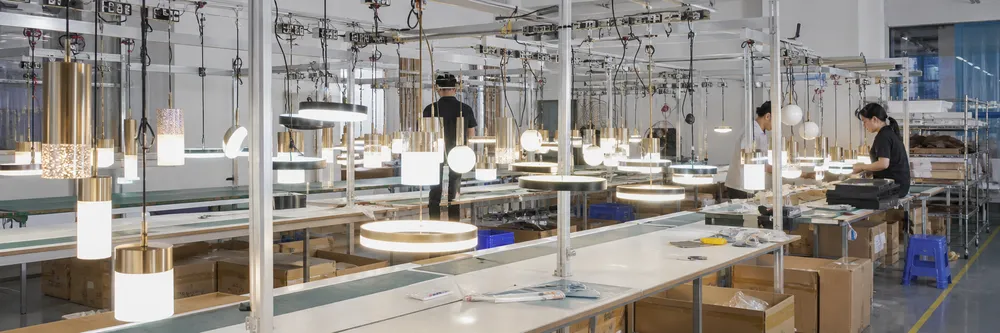
Packaging and Container Loading for Custom Pendant Shipments
Decorative pendant fixtures are among the most damage-prone products in ocean freight — glass shades, exposed metal finishes, and multi-arm configurations all create fragility points that standard carton packaging doesn't address adequately.
Individual Fixture Protection
Each custom pendant fixture ships in an individual foam-lined inner carton, with the shade and housing packed separately where the design requires it. Outer cartons are rated for the drop and compression forces of ocean freight.
We've learned which fixtures need additional internal bracing after seeing damage patterns from specific routes, and we apply that knowledge to custom orders.
Glass shade pendants: EPE foam inserts molded to the shade profile rather than generic foam sheets — the contact surface area matters for preventing transit chips.
Container Loading Efficiency
For large-volume orders, we optimize carton dimensions for 40HQ container loading efficiency. A 5–8% improvement in units per container is real money on a 500-unit order.
We run the loading calculation as part of the order documentation so you know your landed cost before the container ships.
Cost transparency: Loading calculations included in order documentation — landed cost confirmed before the container ships.
E-Commerce & Amazon FBA Packaging
For buyers supplying e-commerce channels or Amazon FBA, we can configure packaging for direct-to-consumer shipment. This is a separate packaging spec from the standard export carton — confirm your channel requirements at the order stage.
Individual retail boxes with product photography panels
FBA-compliant labeling
Drop-ship packaging rated for parcel carrier handling
Certifications and Market Compliance
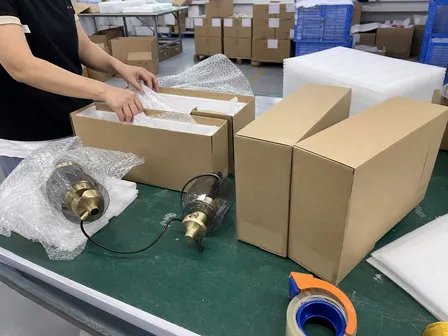
CE, UL, and SAA certifications are held and maintained — not pending, not "available upon request." For buyers importing into Europe, North America, and Australia, the compliance documentation is ready when your import team needs it.
| Certification | Market | Status |
|---|---|---|
| CE | European Union | Held |
| UL | North America (USA/Canada) | Held |
| SAA | Australia / New Zealand | Held |
| ISO 9001:2015 | Quality management system | Held |
| SGS | General export / third-party audit | Held |
Custom Pendant Certification Path
For custom pendant lighting projects, the certification path depends on whether the custom design falls within the scope of existing certified product families or requires new testing.
We assess this during the development phase and advise on the certification timeline before tooling is committed.
Key point: Most custom pendant designs that use our standard driver and wiring configurations can be covered under existing CE and UL certifications without additional testing — we'll confirm this for your specific project.
Additional Market Requirements
For buyers supplying markets with additional requirements, we maintain material safety documentation and can provide compliance statements as part of the order package.
- RoHS/REACH compliance — for European importers
- California Title 20 — for North American buyers
- Hotel brand compliance standards — specific brand documentation available
Need Compliance Documentation?
Full certification and material safety documentation available as part of your order package.
Frequently Asked Questions
What is the minimum order quantity for custom pendant lighting?
What is the minimum order quantity for custom pendant lighting?
MOQ varies by project — it depends on whether new tooling is required, the complexity of the design, and the finish configuration. For custom designs on new tooling, MOQ is typically higher to amortize the tooling investment across the production run. For designs using existing tooling with finish or dimension modifications, MOQ can be lower. We confirm MOQ as part of the project quotation — contact us with your design brief and target volume, and we'll give you a specific number.
How do I know if my pendant design is manufacturable at volume?
How do I know if my pendant design is manufacturable at volume?
Send us the reference image, sketch, or drawing. Our structural engineers review every new design for production feasibility before quoting — we check casting geometry, parting-line placement, shade attachment method, and driver cavity sizing. If there are cost traps or manufacturability issues, we flag them with specific recommendations before any tooling investment is made. This review is part of our standard development process, not a paid service.
What's the difference between blown glass and pressed glass for pendant shades, and which should I specify?
What's the difference between blown glass and pressed glass for pendant shades, and which should I specify?
Mouth-blown glass has natural dimensional variation (±3–5mm) and subtle surface texture that reads as handcrafted — it commands a premium in hospitality and high-end residential applications where that character is part of the value proposition. Pressed glass is dimensionally consistent (±0.5mm) and better suited for designs where precise geometry matters or where you're supplying a market that values uniformity.
For most decorative pendant applications, mouth-blown glass is the right choice for premium positioning; pressed glass is the right choice when your buyer's customer will notice dimensional inconsistency across a multi-fixture installation.
Can I use my own driver specification in a custom pendant order?
Can I use my own driver specification in a custom pendant order?
Yes, with a qualification step. We maintain a list of qualified driver suppliers whose products have been tested in our fixtures. If you specify a driver not on our list, we run a qualification batch before committing to production — this adds time but protects both parties from field failures. If your driver specification is driven by a specific certification requirement or a customer's existing infrastructure, tell us at the brief stage and we'll work it into the development plan.
What causes LED pendant fixtures to lose brightness after 6–12 months in the field?
What causes LED pendant fixtures to lose brightness after 6–12 months in the field?
The two most common causes are driver thermal stress and LED junction temperature running above spec. In pendant fixtures, the driver is often housed in the canopy — a small, enclosed space with limited airflow. If the driver is undersized for the wattage or if the canopy geometry doesn't allow adequate heat dissipation, the driver degrades faster than its rated life. We size drivers with a 20–30% headroom above the LED load and specify canopy ventilation geometry during the design phase to prevent this.
The second cause — LED junction temperature — is addressed through thermal path design: the LED board mounting surface, the heat sink geometry, and the thermal interface material all affect how efficiently heat moves away from the junction. We validate thermal performance on prototypes before production, not after field complaints.
Related Custom Lighting Products
If custom pendant lighting isn't the right fit for your project, these related products may be:
Custom Lighting Fixtures
Broader custom fixture development covering ceiling, wall, and specialty applications beyond the pendant category.
Learn moreCustom Wall Sconces
Custom wall-mounted fixtures for hospitality corridors, residential feature walls, and retail environments.
Learn moreCustom Architectural Lighting
Project-scale custom lighting for large commercial and hospitality developments where architectural integration is the brief.
Learn moreHospitality Custom Lighting
Custom lighting programs developed specifically for hotel, resort, and F&B fit-out requirements.
Learn moreStart Your Custom Pendant Lighting Project
Send us your brief — a reference image, a sketch, a target retail price point, or a set of technical drawings. Our engineering team will review the design for production feasibility, confirm the development path (OEM or ODM), and come back with a detailed quotation covering tooling, unit cost, lead time, and certification scope.
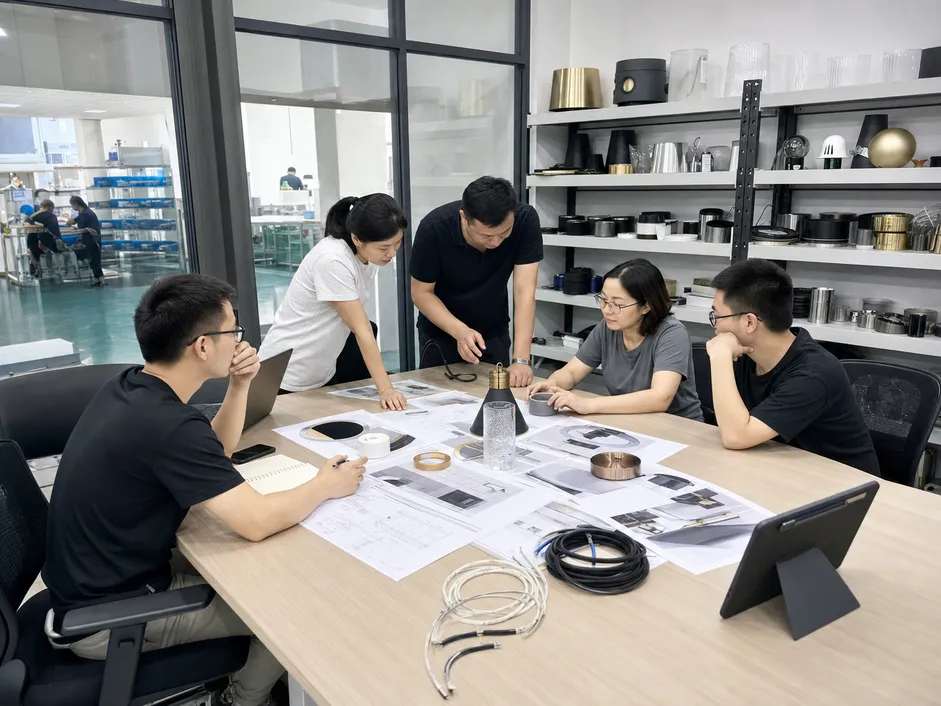
How Most Projects Begin
Most new custom pendant projects start with a 2-unit sample order. We ship the sample, you test it with your own customers or against your project spec, and we move to production once you're satisfied. The sample cost is credited against the first production order.
Wholesale only. Strict MOQ applies.
Contact Our Team
Phone / WhatsApp
+86 134 2021 9307Address
No. 14 Beisan Rd, Gusan Ind. Zone, Guzhen, Zhongshan, Guangdong, China