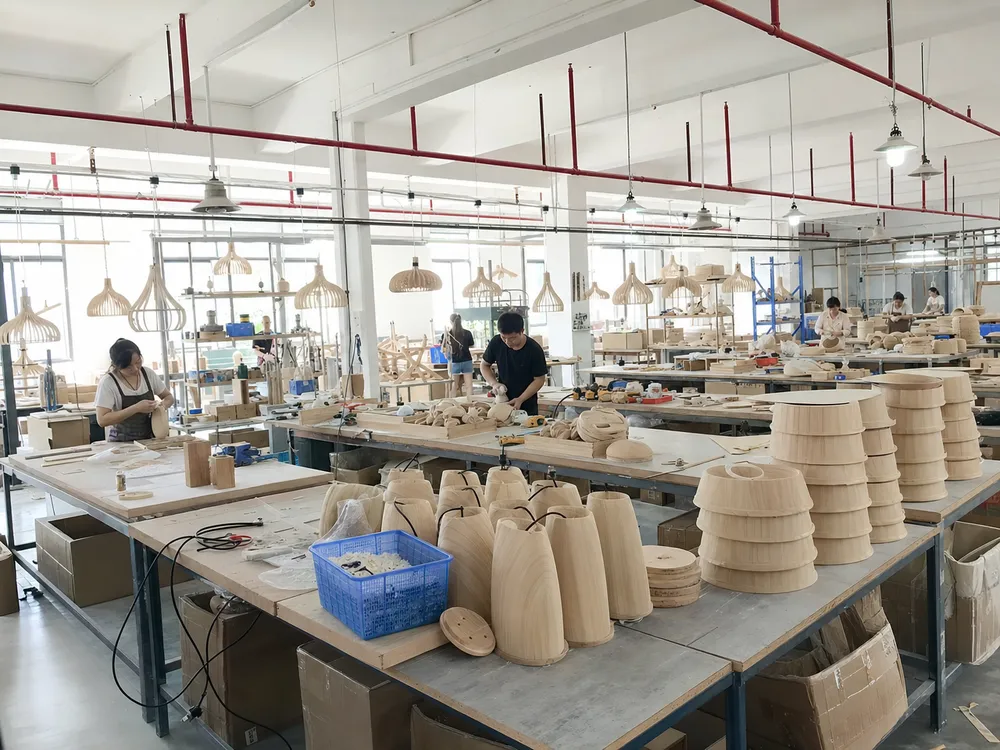

Wood Pendant Lighting
Solid wood and metal pendant lighting — sourced, finished, and assembled in-house, not assembled from whoever had stock that week.
Natural wood pendant lights built for buyers who need consistent grain character, stable joinery, and finish quality that holds across a 300-unit hotel order. CE, UL, and SAA certified. OEM/ODM with 7–10 day prototype turnaround.
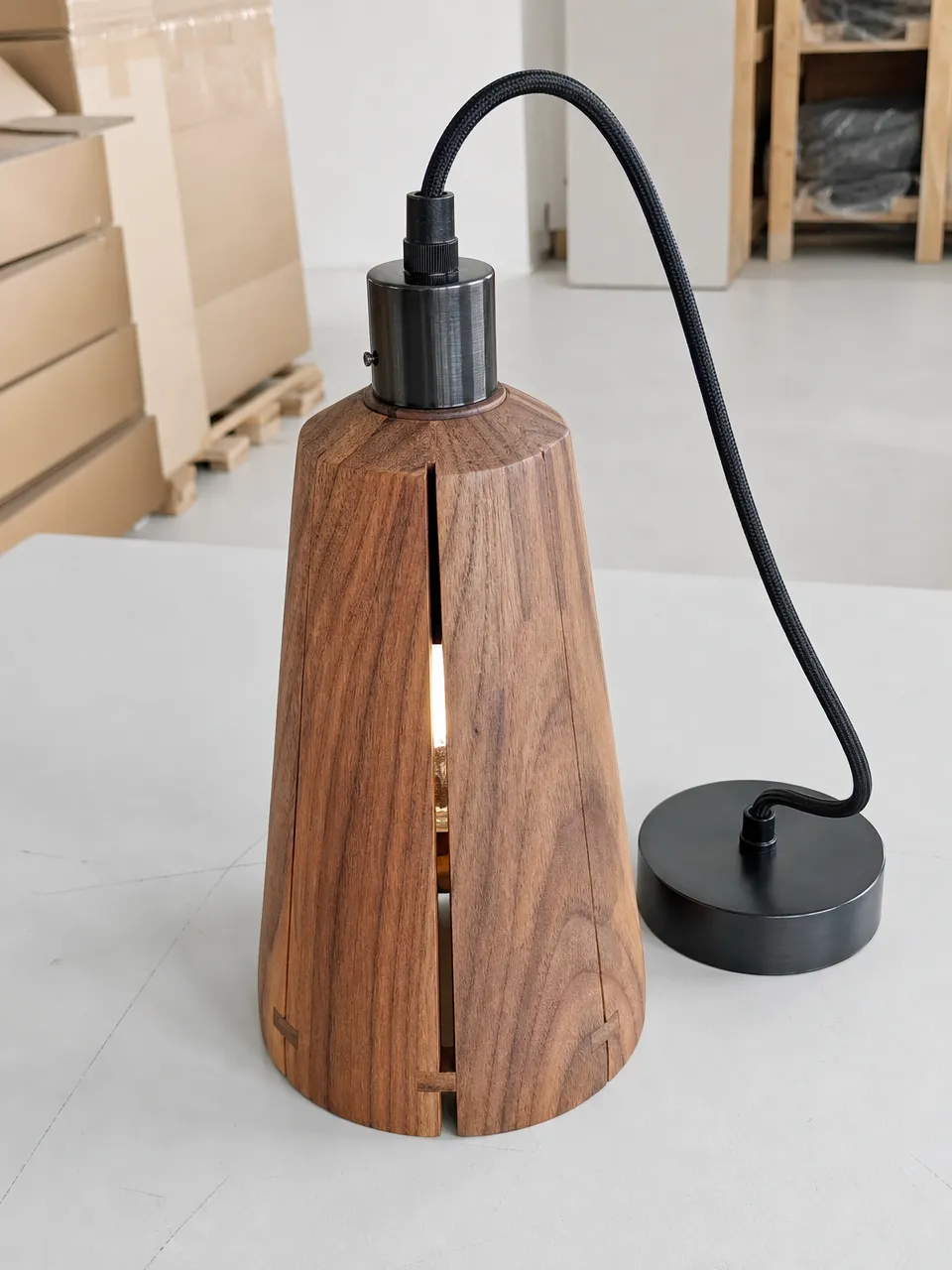
What Makes Wood Pendant Lighting a Different Manufacturing Problem
Wood pendant lighting sits at the intersection of two material categories that each have their own failure modes — and most factories handle one well and the other poorly. The metal hardware side is straightforward for us: die-cast aluminum canopy components, CNC-machined mounting hardware, in-house surface finishing. That's the same process we run across our full pendant range. The wood side is where the sourcing and process discipline actually matters.
We use solid wood and engineered wood with real wood veneer on visible surfaces — not MDF with a printed wood-look film. The distinction matters commercially because your downstream customers can tell the difference, and because MDF behaves differently under humidity cycling than solid or veneered wood. A fixture that looks fine in a climate-controlled showroom can develop surface cracking or joint separation after six months in a coastal restaurant kitchen. We've seen that failure mode from other suppliers' product, which is why we specify the wood component to a moisture content range of 8–12% before finishing — dry enough to be stable, not so dry that it absorbs ambient moisture and swells after installation.
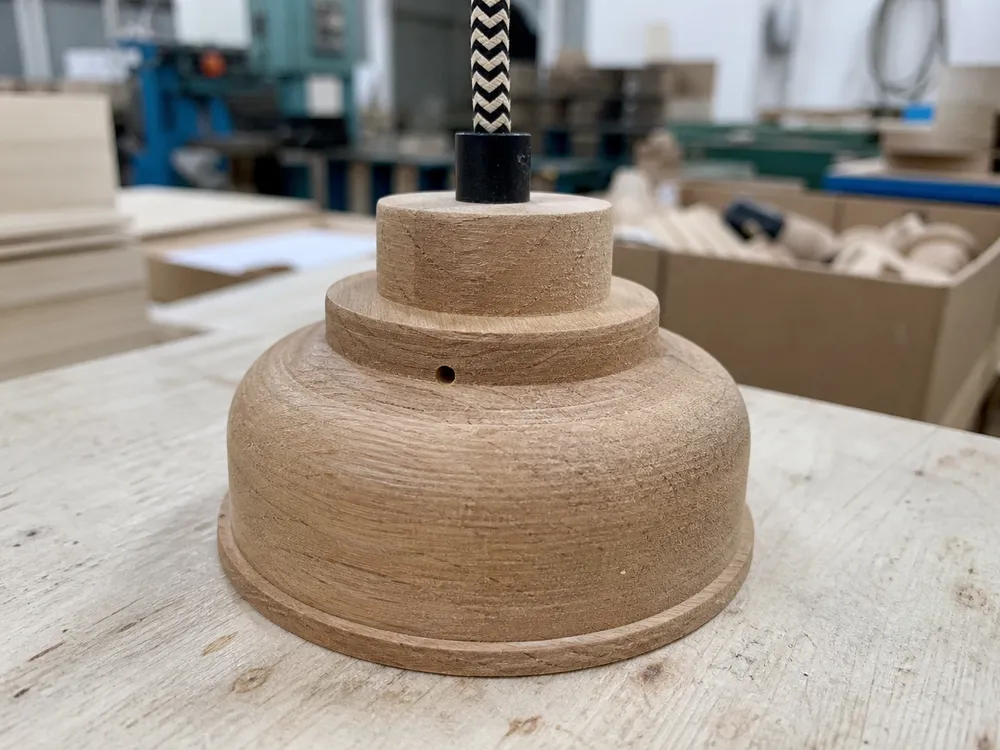
Wood Finishing Process — Separate Line, No Shortcuts
The wood finishing process runs separately from our metal finishing line. Wood components go through sanding to 240-grit before any coating is applied, then a sealer coat, then the finish coat — either clear lacquer, stained lacquer, or oil finish depending on the design spec. We don't skip the sealer step to save time.
We tried a faster process on an early run and saw finish adhesion failures at the end-grain sections within a few months. The sealer step is now non-negotiable.
The metal hardware gets its own finishing treatment — powder coat or electroplating — and the two components are assembled after both finishing processes are complete, so there's no cross-contamination between the wood and metal finishing steps.
240-Grit Sanding
All wood surfaces sanded to 240-grit before any coating is applied
Sealer Coat
Non-negotiable sealer prevents end-grain adhesion failures
Finish Coat
Clear lacquer, stained lacquer, or oil finish per design spec
Post-Finish Assembly
Wood and metal joined only after both finishing processes complete — zero cross-contamination
Technical Specifications
Industry-standard parameters for our wood pendant lighting range. Exact specifications vary by design — contact us for detailed data sheets on specific SKUs.
| Parameter | Specification |
|---|---|
| Wood Species | Ash, oak, walnut, pine (standard); other species on OEM request |
| Wood Construction | Solid wood (primary visible components); engineered wood with real veneer (secondary components) |
| Metal Components | Aluminum alloy (ADC12) canopy and hardware; steel suspension hardware |
| Wood Moisture Content | 8–12% (pre-finishing specification) |
| Wood Finish Options | Clear lacquer, stained lacquer (walnut/ebony/natural tones), oil finish, whitewash |
| Metal Finish Options | Matte black, brushed gold, brushed nickel, antique brass, white powder coat |
| Light Source | E26/E27 socket (standard); integrated LED available on selected designs |
| Wattage | Socket type: up to 60W equivalent; integrated LED: 8W–18W typical |
| Color Temperature | 2700K, 3000K standard; 4000K available |
| CRI | ≥80 standard; ≥90 on specified SKUs |
| Dimming | Compatible with standard TRIAC dimmers (socket type); driver-dependent for integrated LED |
| Voltage | 100–240V AC universal; 120V and 230V dedicated versions available |
| Suspension Drop | 0.5m–2m standard; custom lengths available |
| IP Rating | IP20 (standard indoor) |
| Certifications | CE, UL, SAA, SGS; RoHS compliant |
| MOQ | Strict MOQ applies; contact for specific minimums |
Specifications shown are industry-standard values for this product type. Actual specifications may vary by design. Contact us for detailed product data sheets.
Wood Species and Grain Character: What You're Actually Specifying
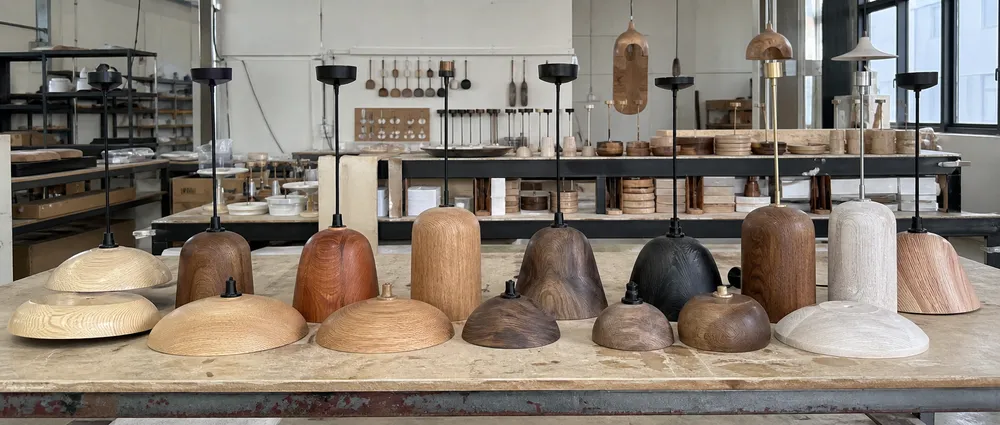
The wood species selection is the first decision that affects both your cost and your downstream market positioning, and it's worth being specific about what each option delivers commercially.
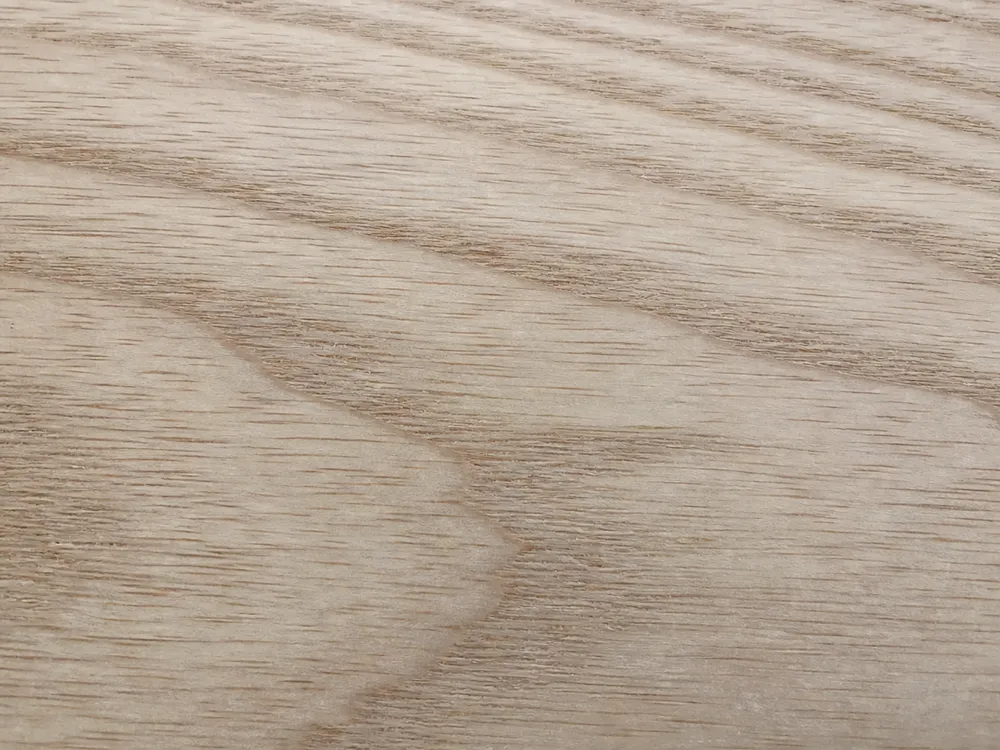
Ash
Highest VolumeOur highest-volume wood species for pendant lighting. The grain is pronounced but consistent — it photographs well, which matters for e-commerce listings and project documentation.
Ash takes stain evenly, so if you're specifying a walnut-tone finish on an ash substrate, the color comes out uniform across a batch rather than blotchy.
It's also one of the more dimensionally stable hardwoods, which reduces the risk of joint movement after installation.
Best for: Buyers building a mid-to-high-end catalog where the natural wood aesthetic needs to support healthy margins at a competitive price point.
Oak
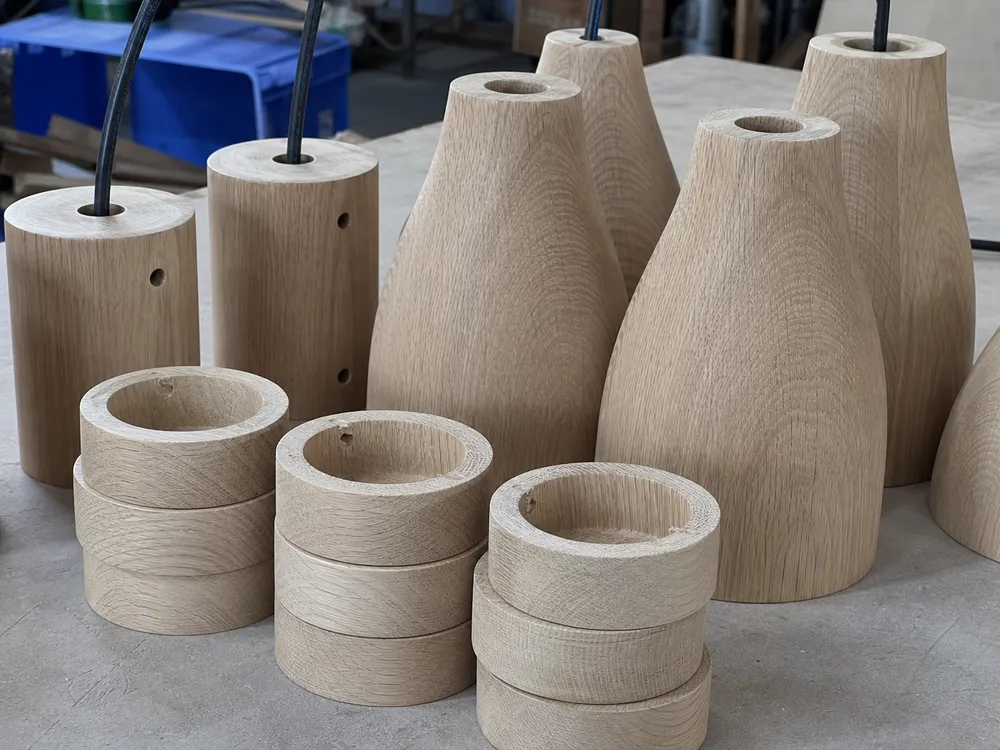
Distinctive FigureCarries more grain variation than ash — the medullary rays give it a distinctive figure that some buyers specifically want and others find inconsistent.
We sort oak components by grain character before finishing, so if you're specifying oak for a project where visual consistency matters, tell us and we'll tighten the selection criteria.
Oak is harder than ash, which means it machines cleanly and holds detail well on turned or routed profiles. It's the right choice for buyers whose downstream customers are specifically asking for oak.
Best for: Projects where downstream customers specifically request oak, or where turned/routed profiles need clean machining and detail retention.
Walnut
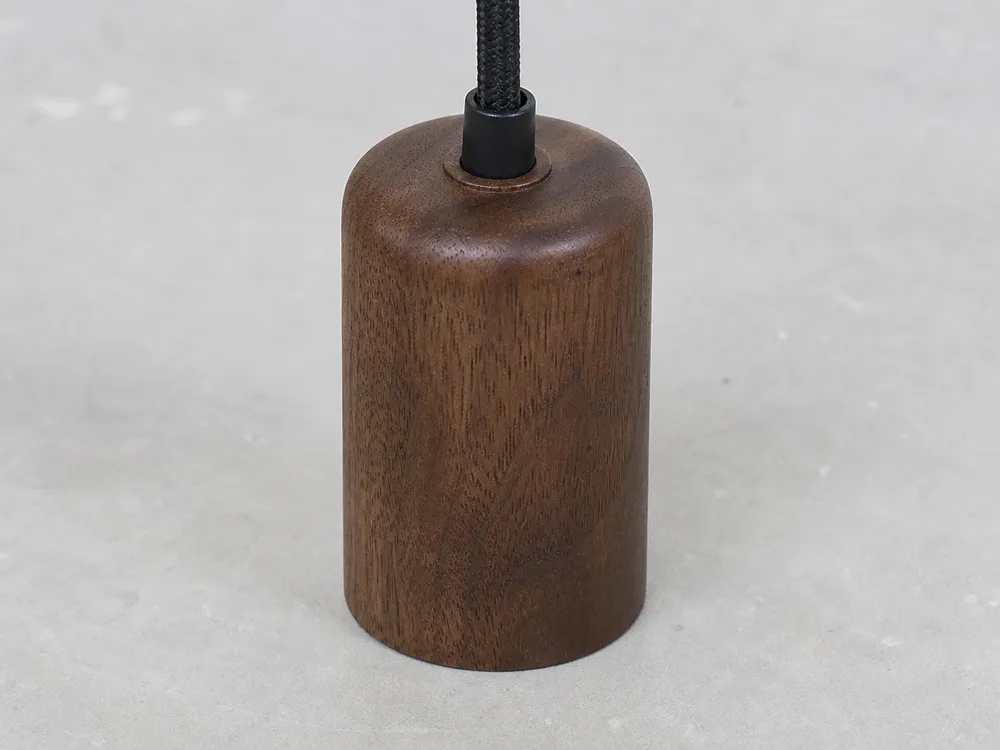
Premium OptionThe premium option — darker natural color, finer grain, and a surface that takes oil finish particularly well. Walnut commands a higher material cost, which is reflected in the unit price, but it also supports a higher retail price point.
We've seen walnut wood pendant lights move well in the North American luxury residential segment and in high-end hospitality fit-outs where the material specification is part of the project story.
Walnut availability can be tighter than ash or oak — if you're planning a large walnut run, give us lead time to confirm material availability before you commit the order.
Pine
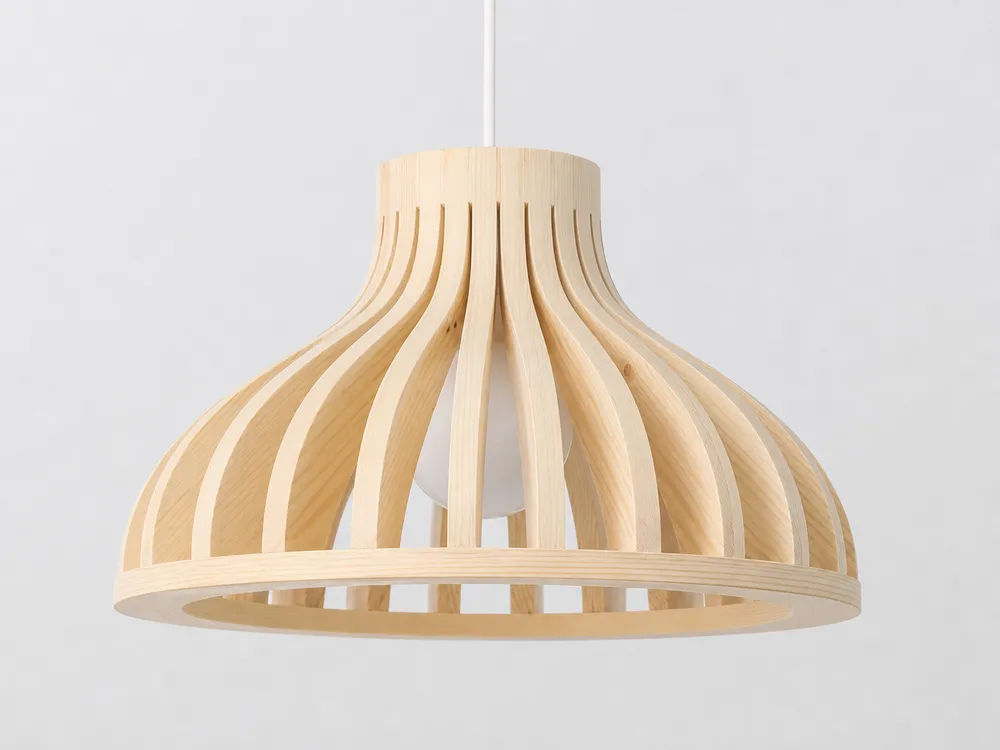
Entry-LevelThe entry-level option — softer, lighter, and lower cost. The grain is less pronounced than hardwoods, which gives it a cleaner, more Scandinavian aesthetic when finished with clear lacquer or whitewash.
Pine is the right choice for buyers targeting the mid-market residential segment where the natural wood look matters but the price point is competitive.
Best for: Mid-market residential where the natural wood look matters but the price point needs to stay competitive.
Market Segments Where Natural Wood Pendant Lights Drive Margin
Wood pendant lighting isn't a single market — the buyers who specify it are operating in distinct segments with different volume patterns, margin profiles, and reorder logic. Here's where we see the commercial opportunity:
Hospitality Fit-Out Supply
Boutique hotels, farm-to-table restaurants, wellness resorts
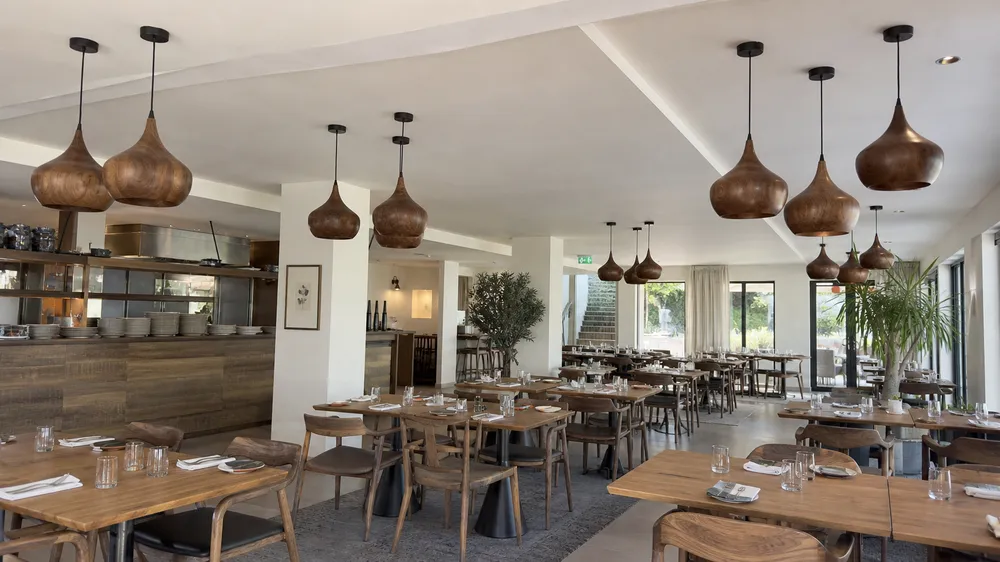
Boutique hotels, farm-to-table restaurants, and wellness resorts have been specifying natural wood pendant lighting consistently for the past several years. A single boutique hotel project can run 50–200 wood pendant fixtures across dining areas, guest rooms, and common spaces.
The key commercial variable for buyers supplying this segment is finish consistency across the full project quantity — a hotel designer who specifies a walnut-finish pendant for 80 guest rooms needs every fixture to match. Our wood component sorting and batch finishing process is specifically designed for this requirement.
Buyers supplying hospitality fit-out contractors also need CE or UL certification and documentation packages for project sign-off — both are standard with our product.
Residential Developer Programs
Mid-to-high-end residential developments, biophilic design specs
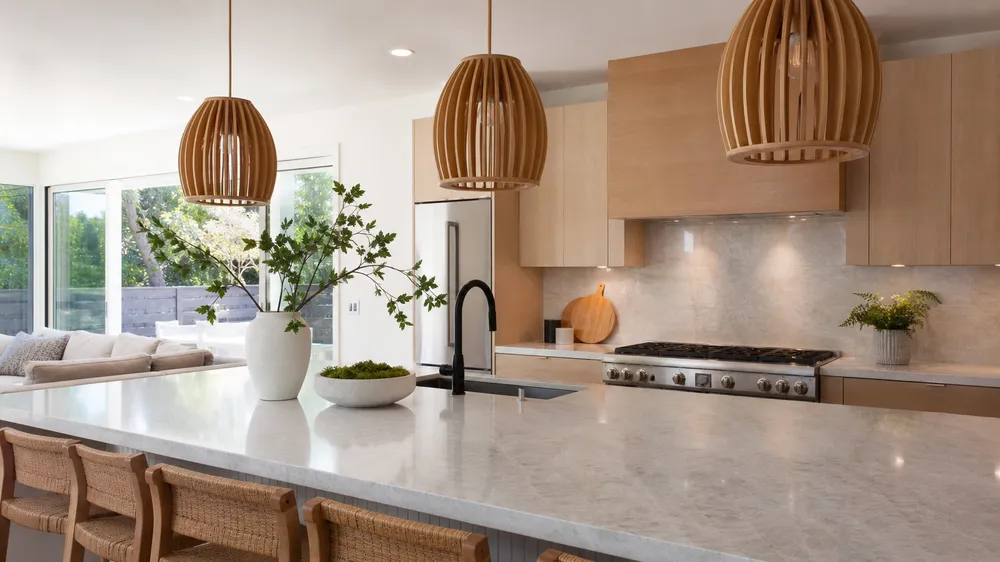
Mid-to-high-end residential developers in North America and Europe have been incorporating biophilic design elements — natural materials, organic forms, wood and stone — into their standard specifications. Wood pendant lighting over kitchen islands and dining areas is one of the most common expressions of this trend.
Developers specifying across 20–100 units need reliable reorder availability and consistent finish quality across multiple production runs.
We maintain production records per SKU so reorders match the original batch within our finish tolerance specifications.
E-Commerce and Catalog Distribution
Wayfair, Amazon, independent lighting e-commerce stores
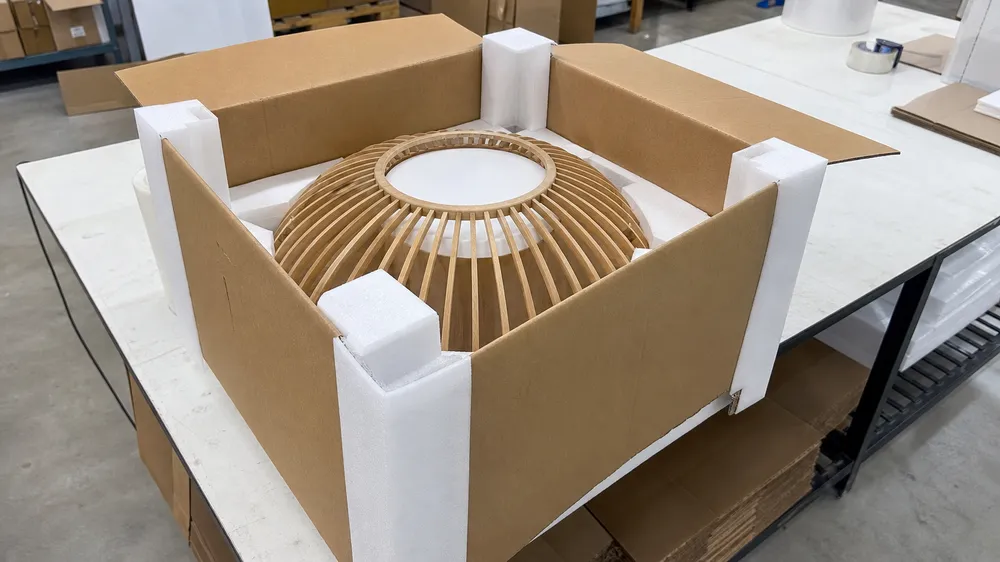
Natural wood pendant lights are a strong-performing category on platforms like Wayfair, Amazon, and independent lighting e-commerce stores. The visual appeal photographs well, the price point supports healthy retail margins, and the biophilic trend has sustained demand for several years.
For buyers in this channel, packaging durability is a critical variable — wood pendant fixtures need to survive the drop and compression forces of parcel shipping, not just ocean freight.
We can configure packaging for last-mile delivery if you're distributing through e-commerce channels; the wood components need additional protection against corner impact that standard ocean freight packaging doesn't provide.
Interior Design and Specification Supply
High-end residential and commercial design projects, OEM/custom
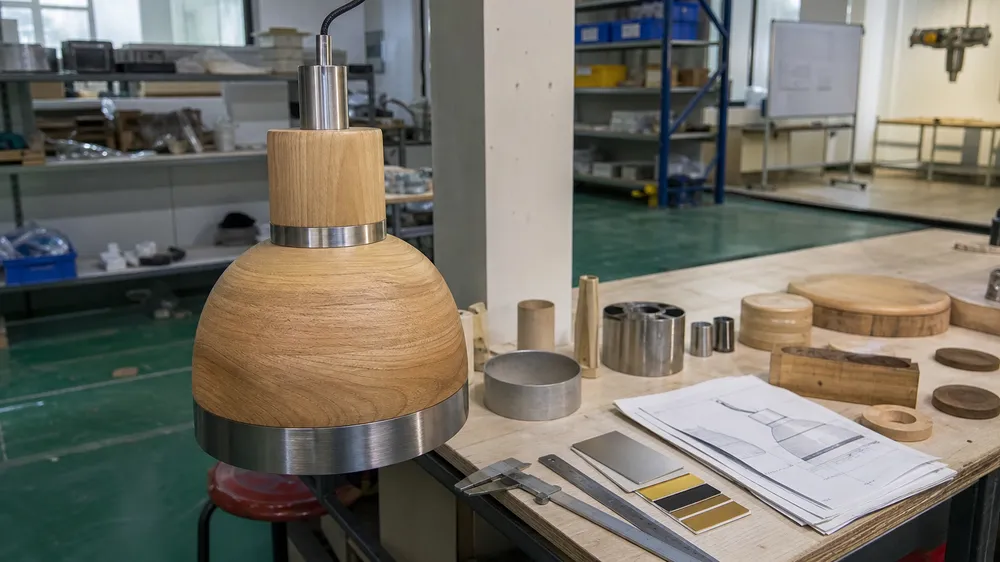
Design-led buyers sourcing for high-end residential and commercial projects often need custom configurations — specific wood species, proprietary stain colors, or mixed wood-and-metal combinations that aren't in the standard catalog.
Our OEM capability covers all of these: custom stain matching from a physical sample or Pantone reference, non-standard wood species on sufficient volume, and custom metal finish combinations.
Prototype turnaround is 7–10 working days from approved drawings.
Ready to discuss your market segment?
Tell us your channel, volume, and finish requirements — we'll confirm pricing and lead time for your specific application.
Wood-Metal Joint Design: The Structural Detail That Determines Longevity
The joint between the wood body and the metal hardware is where most wood pendant lighting fails in the field — and it's the detail that separates a fixture designed for long-term installation from one that looks good in a showroom for six months.
We use mechanical fastening with adhesive backup on all wood-to-metal joints. The metal hardware is machined with a recessed seat that the wood component fits into, so the joint has a mechanical register rather than relying purely on adhesive bond strength. The adhesive is a two-part epoxy rated for the temperature cycling range of an interior lighting application — not a general-purpose wood glue that softens under the heat generated by the light source.
On designs where the wood component is load-bearing (i.e., the wood is part of the suspension structure rather than purely decorative), we use stainless steel through-bolts rather than wood screws, because wood screws can pull out under sustained load if the wood expands and contracts seasonally.
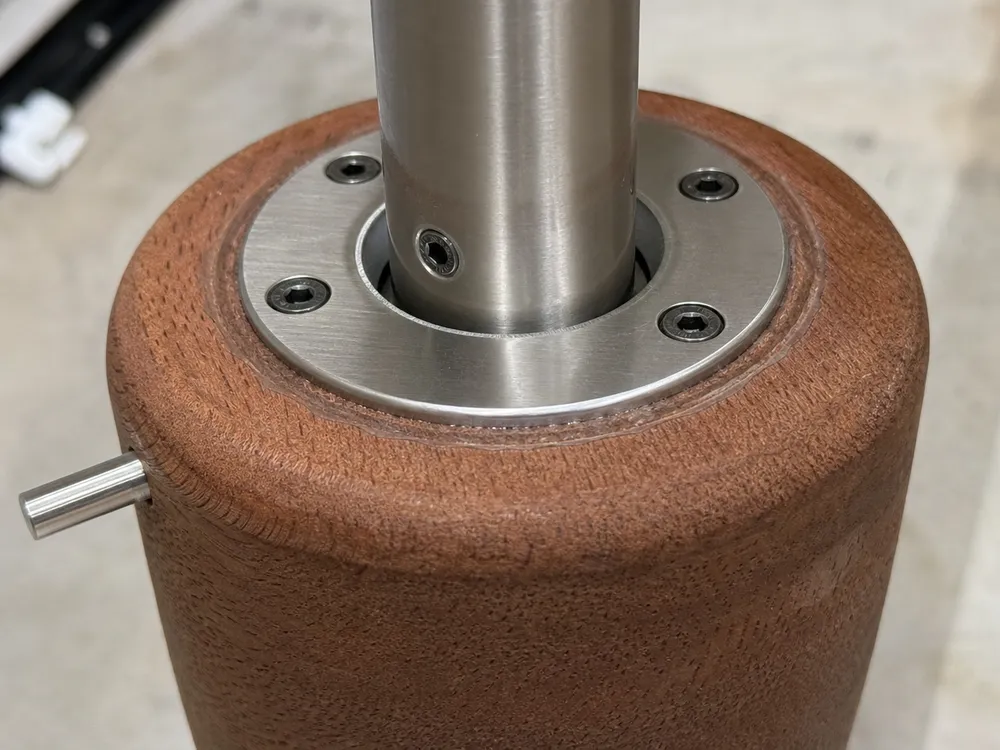
Joint Methods Compared
Mechanical Register + Epoxy
Recessed machined seat provides mechanical interlock. Two-part epoxy rated for thermal cycling backs up the joint. Designed for sustained load over years of seasonal wood movement.
Stainless Steel Through-Bolts
Used on load-bearing wood components. Eliminates pull-out risk from seasonal expansion/contraction that compromises wood screws under sustained tension.
Common Failure Modes
General-purpose wood glue softens under heat. Wood screws pull out with seasonal movement. Adhesive-only joints without mechanical register fail under thermal cycling.
Canopy Hardware Specification
The canopy hardware — the ceiling plate and suspension cable attachment — is die-cast aluminum, CNC-machined to ±0.1mm on the mounting dimensions. This is the same hardware spec we run across our full pendant range, and it means the fixture aligns correctly with standard junction box configurations in North American and European markets.
We've seen wood pendant fixtures from other suppliers arrive with canopy plates that were slightly out of spec — not enough to fail structurally, but enough to require shimming at installation. That's the kind of detail that generates callbacks and damages your relationship with the contractor.
Material
Die-Cast Aluminum
Machining Tolerance
±0.1mm
Compatibility
NA & EU Junction Boxes
Customization Options and Limitations
Wood pendant lighting has more customization variables than all-metal designs, and being clear about what's feasible at what volume saves time on both sides.
Wood Species
Standard (available at standard MOQ):
Available on OEM (higher MOQ):
Minimum run requirements for non-standard species are higher than for standard species; contact us with your target species and volume for a feasibility assessment.
Stain and Finish Color
We match stain colors from physical samples or Pantone references.
Standard stain tones:
Custom stain colors require a minimum run to justify the color development and approval process. We produce a stain sample on the actual wood species before committing to production, because the same stain formula reads differently on ash versus oak.
Metal Finish Combinations
Any combination of our standard metal finishes can be paired with any wood finish:
Top Reorder Combinations
- Matte black + natural or light walnut wood
- Brushed gold + dark walnut or ebony-stained wood
Based on existing buyer reorder data, not aesthetic opinion.
Dimensions and Form
Standard catalog designs have fixed dimensions. Custom dimensions — larger diameter, different proportions, non-standard suspension hardware — are available on OEM orders.
Engineering Review Required
Structural changes that affect the wood-to-metal joint design require engineering review before we can confirm feasibility.
Light Source Configuration
Socket-type (E26/E27)
Integrated LED on selected designs where fixture geometry accommodates the driver cavity without compromising the wood component
Thermal Constraint
Not all wood pendant designs can accommodate integrated LED — the driver generates heat that needs to be managed, and in a wood housing, thermal management requires specific design provisions.
Private Label and Packaging
Full private label capability — your brand name on the fixture, custom packaging design, and documentation. Standard for buyers building a branded product line.
Quality Control Specific to Wood Components
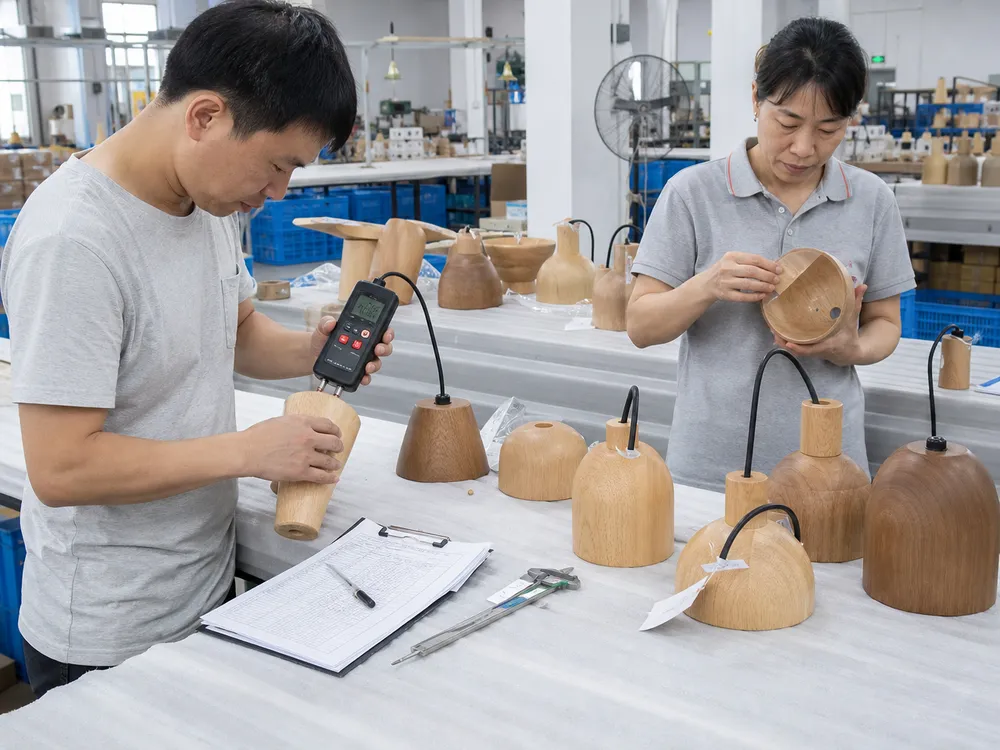
The QC process for wood pendant lighting has additional checkpoints beyond what we run on all-metal designs, because wood introduces variables that metal doesn't.
Incoming Wood Inspection
Every batch of wood components is inspected for moisture content (target 8–12%), grain character consistency, and surface defects before entering production. Components outside the moisture range are held for conditioning — we don't rush wood into production because the schedule is tight.
Dimensional checks confirm that the wood components are within tolerance for the metal hardware they'll be joined to.
Post-Finishing Wood Inspection
After the wood finishing process, components are inspected for finish adhesion, color consistency against the approved sample, and surface quality.
End-grain sections get particular attention — this is where finish adhesion failures most commonly occur, and where we've had to reject batches in the past when the sealer step wasn't executed correctly.
Assembly Inspection
The wood-to-metal joint is checked for alignment, adhesive coverage, and mechanical fastener torque. Any joint that shows gap or misalignment at this stage is disassembled and re-done — we don't ship fixtures with visible joint gaps.
Aging Test
Same as our full pendant range — every luminaire runs powered for a minimum burn-in period before packing. The aging test catches electrical failures; the wood-specific inspections catch the material and finish failures. Both are required before a fixture ships.
Photometric Verification & Certifications
Beyond production QC, we run photometric verification on a sample basis from each production batch — lumen output and color temperature checked against the approved spec.
Our certifications cover the full product including wood components. Wood material sourcing is documented for buyers who need material safety data for their import compliance.
Learn more about our manufacturing capabilitiesPackaging for Wood Pendant Lighting
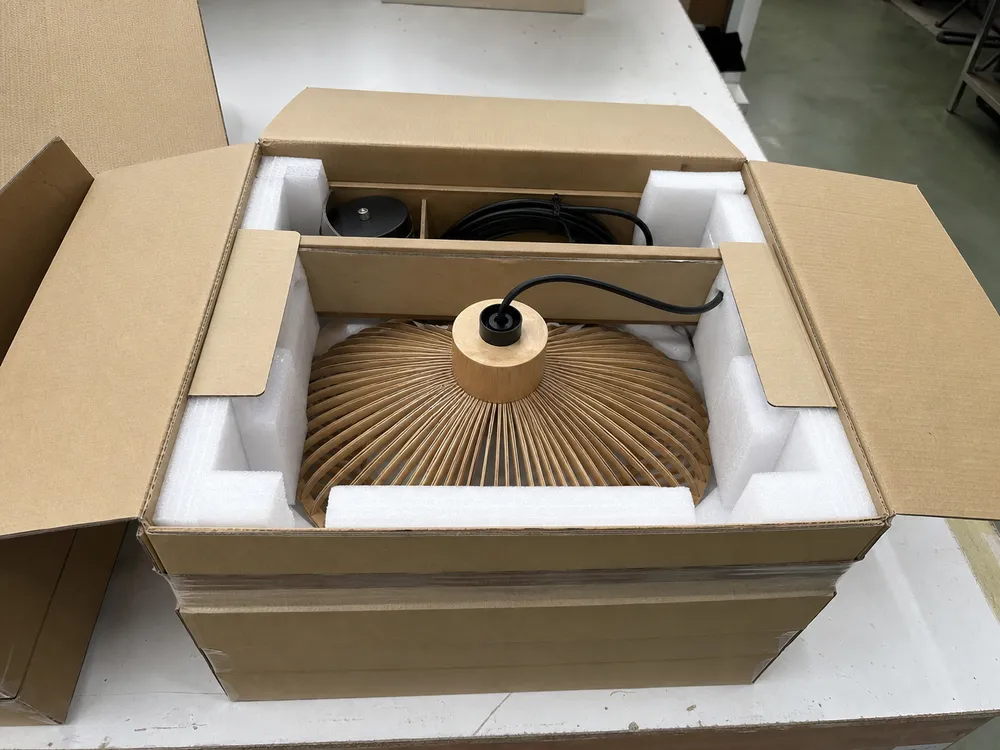
Wood pendant fixtures need more packaging attention than all-metal designs for two reasons: the wood surface is more susceptible to impact damage than metal, and the wood-to-metal joint can be stressed by the compression and drop forces of ocean freight if the fixture isn't properly immobilized in the carton.
Standard Export Packaging
Individual Foam-Lined Carton
Each fixture in its own carton. The foam insert is custom-cut to immobilize the wood body and prevent it from contacting the metal hardware during transit. Wood surfaces are wrapped in soft tissue before foam contact to prevent surface marking.
Corner Protection
Additional corner protection on the wood components, which are the highest-risk points for impact damage.
Suspension Cable Management
Cables coiled and secured to prevent stress on the canopy connection.
Outer Carton
Master cartons rated for ocean freight compression and drop forces. Carton dimensions optimized for 40HQ container loading efficiency.
E-Commerce Distribution Channel
For buyers distributing through e-commerce channels where fixtures ship individually to end customers, we can configure packaging for last-mile parcel delivery — this requires additional internal bracing and outer carton reinforcement beyond the ocean freight standard.
Specify your distribution channel when requesting a quote so we can configure the packaging correctly.
Frequently Asked Questions
What wood species are available for custom wood pendant lighting orders?
Ash, oak, walnut, and pine are our standard species — available at standard MOQ with no additional lead time for material sourcing. Non-standard species (teak, maple, beech, cherry) are available on OEM orders with sufficient volume; contact us with your target species and volume for a feasibility assessment.
For any species, we produce a stain sample on the actual wood before committing to production, because stain color reads differently across species.
How do you ensure wood finish color consistency across a 200-unit order?
We batch all wood components for a single order through the same finishing run where possible — same stain bath concentration, same application conditions, same curing time. Before the production run starts, we produce a finish sample on the actual wood species and get your approval.
During production, the finishing checkpoint compares each component against the approved sample. For large orders where multiple finishing runs are unavoidable, we maintain the stain formula records and run a color check at the start of each subsequent batch.
Finish color tolerance is checked visually against the approved sample under standardized lighting conditions.
Can wood pendant lighting be used in restaurant kitchens or humid environments?
IP20-rated wood pendant fixtures are designed for standard dry interior environments. For locations with elevated humidity — above cooking areas, near dishwashing stations, in bathrooms — we don't recommend standard wood pendant fixtures. The wood will absorb moisture over time and the finish will eventually fail.
If your project requires pendant lighting in a humid environment, we'd recommend our metal pendant range with IP44 rating instead. For restaurant dining areas (not kitchen areas), standard IP20 wood pendants are appropriate.
What is the lead time for wood pendant lighting, and does OEM take longer?
Standard catalog items: 25–35 days from order confirmation.
OEM orders with custom stain colors: add approximately 5–7 days for stain development and approval before production starts.
OEM orders requiring new tooling (custom dimensions, non-standard hardware): add 15–20 days for the tooling cycle.
Prototype turnaround for OEM development: 7–10 working days from approved drawings to physical sample.
Wooden pendant lighting vs. all-metal pendant lighting: which is better for hospitality projects?
Neither is universally better — they serve different design briefs and market positions.
Wood pendant lighting is the right choice when the project brief calls for warmth, natural materials, or a biophilic aesthetic — boutique hotels, farm-to-table restaurants, wellness facilities.
All-metal pendant lighting is the right choice when the brief calls for a cleaner, more industrial or contemporary aesthetic, or when the installation environment has humidity or temperature variation that would stress wood components.
For hospitality buyers building a catalog that covers both segments, we'd suggest carrying both — they don't compete for the same project specs.
What is the MOQ for wood pendant lighting?
Strict MOQ applies. The specific minimum varies by design and customization level — standard catalog designs have lower minimums than OEM or custom finish orders.
Contact us with your target design and volume, and we'll confirm the MOQ and lead time for your specific requirement.
Other Pendant Lighting in Our Range
Wood pendant lighting is one of ten sub-categories in our pendant range. If you're building a catalog or evaluating options across styles:
Industrial Pendant Lighting
Exposed hardware, matte black and raw metal finishes. The all-metal counterpart to wood pendants for buyers who need both aesthetics in their catalog.
Glass Pendant Lighting
Blown and molded glass shades with metal hardware. Higher retail margins than wood or metal designs; strong in the luxury residential and hospitality segments.
Modern Pendant Lighting
Clean geometry, minimal ornamentation. The volume segment for residential developers and mid-to-high-end commercial fit-outs.
Gold Pendant Lighting
Brushed gold, antique brass, and champagne gold finishes. Pairs well with dark walnut wood tones if you're building a mixed-material line.
Cluster Pendant Lighting
Multi-drop configurations on a single canopy. Available in wood-and-metal combinations for restaurant and hospitality applications.
View Full Pendant Range
Browse all ten pendant lighting sub-categories in our manufacturing catalog.
Get a Quote for Wood Pendant Lighting
If you're evaluating natural wood pendant lights for a catalog program, a project spec, or an OEM development, send us the details and we'll come back with a specific quote and configuration recommendation.
Most new buyers in this category start with a 2–5 unit sample order to verify finish quality and wood character before committing to volume. We can ship samples within the standard lead time for the specific design.
Send Us:
- The design or wood species you're interested in
- Your target market and any certification requirements
- Your target volume and price point
- Any customization requirements (wood species, stain color, metal finish, suspension length)
We'll respond with a detailed quote and, where relevant, a recommendation based on what's working for our existing buyers in your region.
Contact Details
Phone / WhatsApp
+86 134 2021 9307Address
No. 14 Beisan Rd, Gusan Ind. Zone, Guzhen, Zhongshan, Guangdong, China
Wholesale only. Strict MOQ applies.