

Spotlight Lighting &
Track Lighting Manufacturer
Precision-aimed, commercially certified spotlight lighting and track lighting — manufactured in-house from die-cast housing to final photometric verification.
Seven product lines covering track systems, recessed spotlights, ceiling spotlights, adjustable spotlights, LED spotlights, wall washers, and gallery spotlights. CE, UL, and SAA certified. OEM/ODM with 7–10 day prototype turnaround.
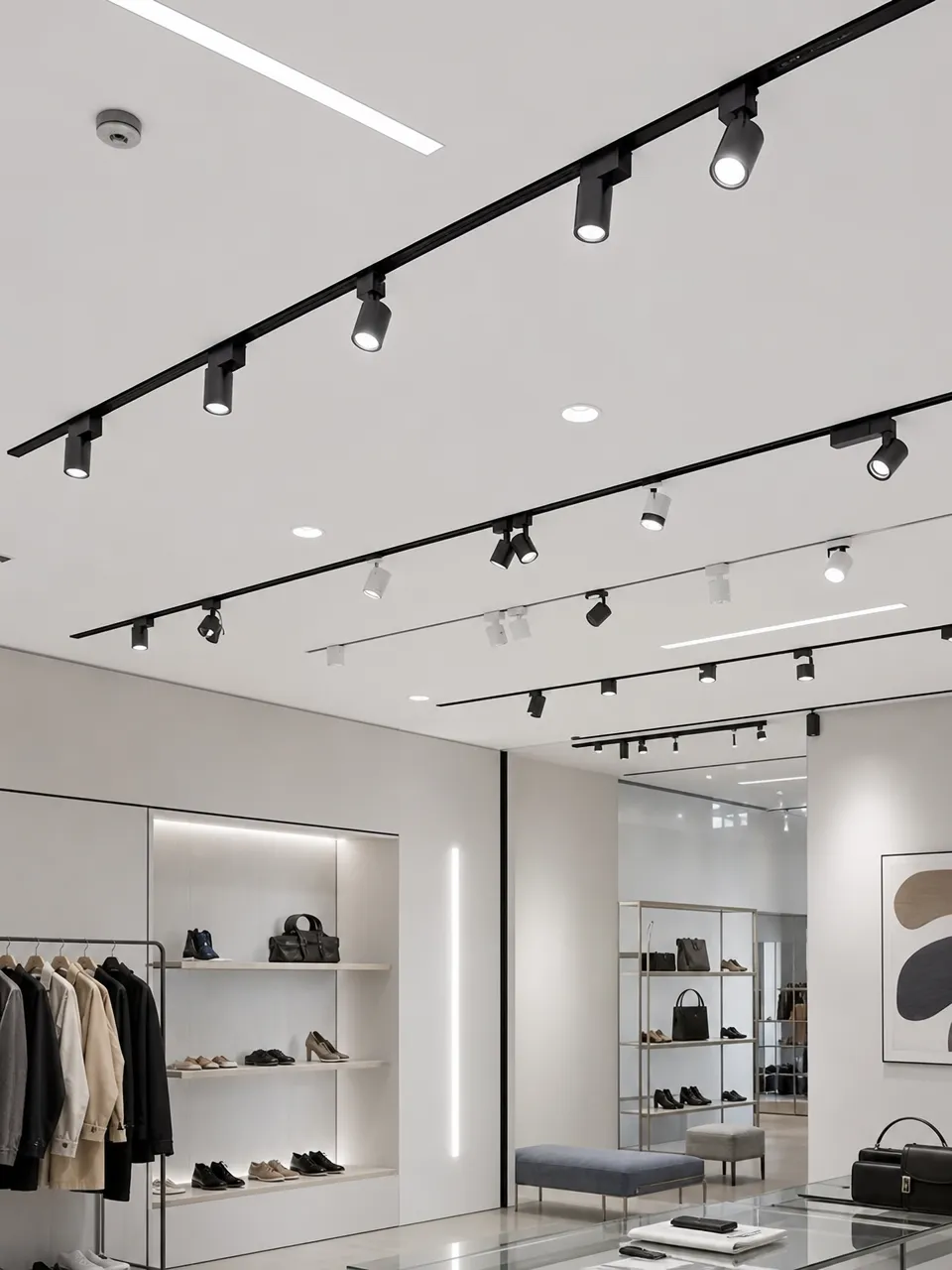
What We Manufacture and Where It Fits Your Sourcing
Spotlight lighting is a precision category. The beam angle has to land where the designer specified. The housing has to hold its aim after installation. The driver has to run clean on the local grid voltage without flicker. These aren't aspirational requirements — they're the baseline your downstream customers expect, and failures in any of them come back to you as warranty claims or project punch-list items.
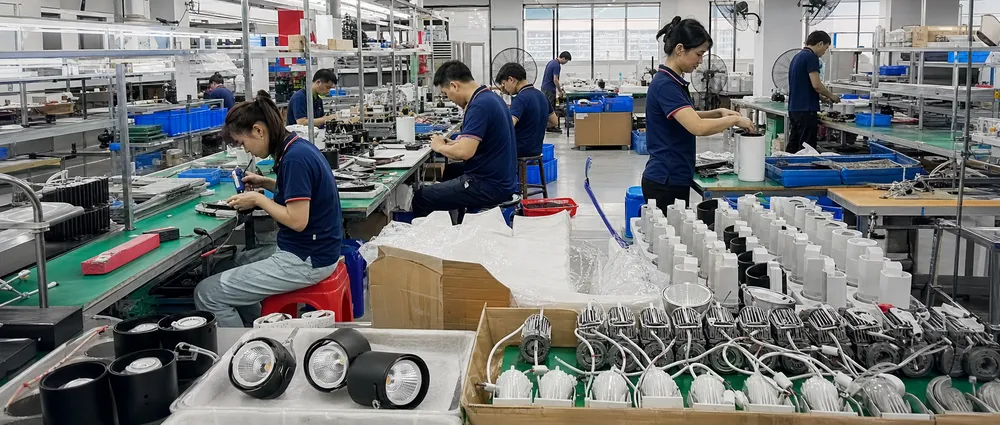
We've been manufacturing spotlight lighting and track lighting at our Guzhen facility since 2008. The product line has grown from a narrower decorative focus into a full architectural and commercial range — seven distinct product lines that cover the main configurations buyers in North America, Europe, the Middle East, and Australia actually need. The range runs from recessed downlights and ceiling-mounted spotlights through adjustable accent fixtures, track-mounted systems, wall washers, and gallery-grade spotlights with tight beam control.
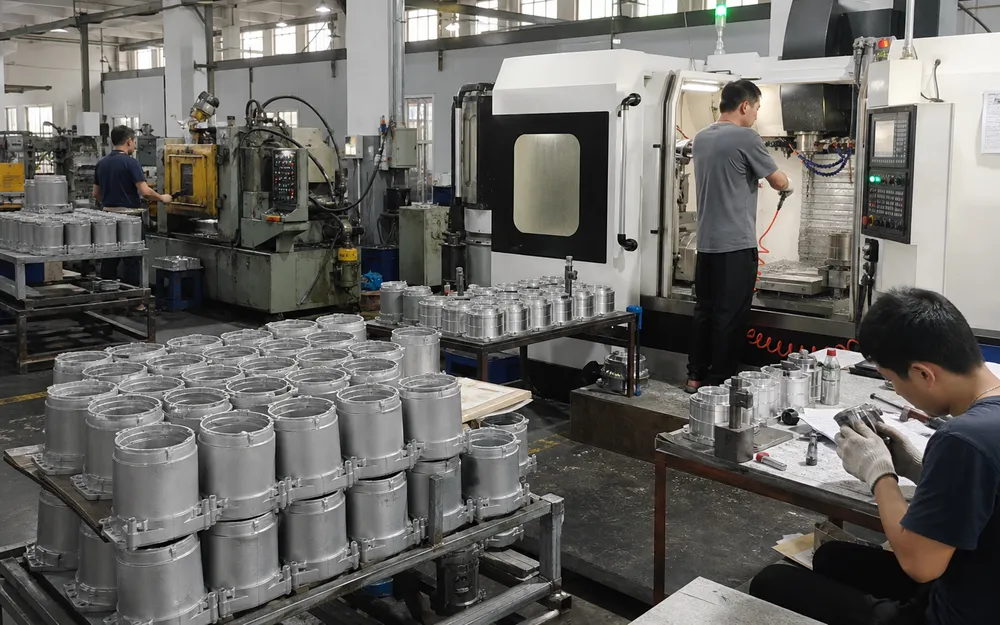
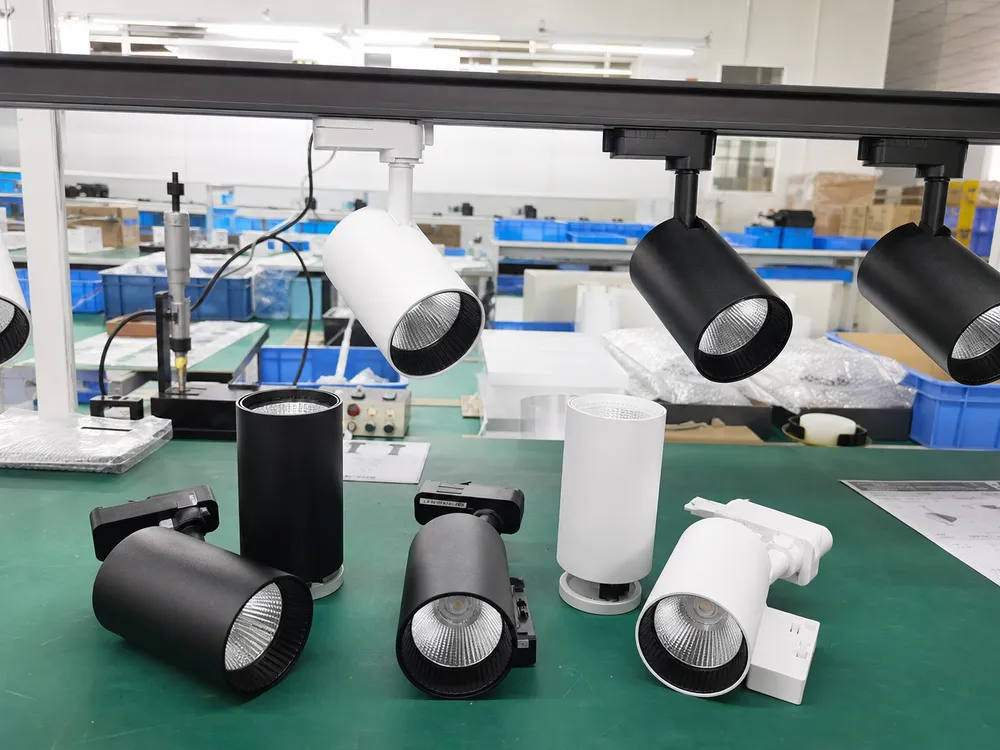
What separates a spotlight manufacturer from a spotlight assembler is what happens before the fixture reaches the packing line. We die-cast and machine our own aluminum housings in-house, run our own surface finishing, and verify photometric output in our optical lab before any design goes into production. That vertical integration is why our beam angle tolerances hold across a production batch — not just on the sample you approved, but on unit 4,000 of a 4,000-unit order.
Product Line Overview
Seven product lines, each targeting a distinct configuration and application segment. The range is designed so you can consolidate spotlight and track lighting sourcing with one factory rather than splitting across multiple suppliers.
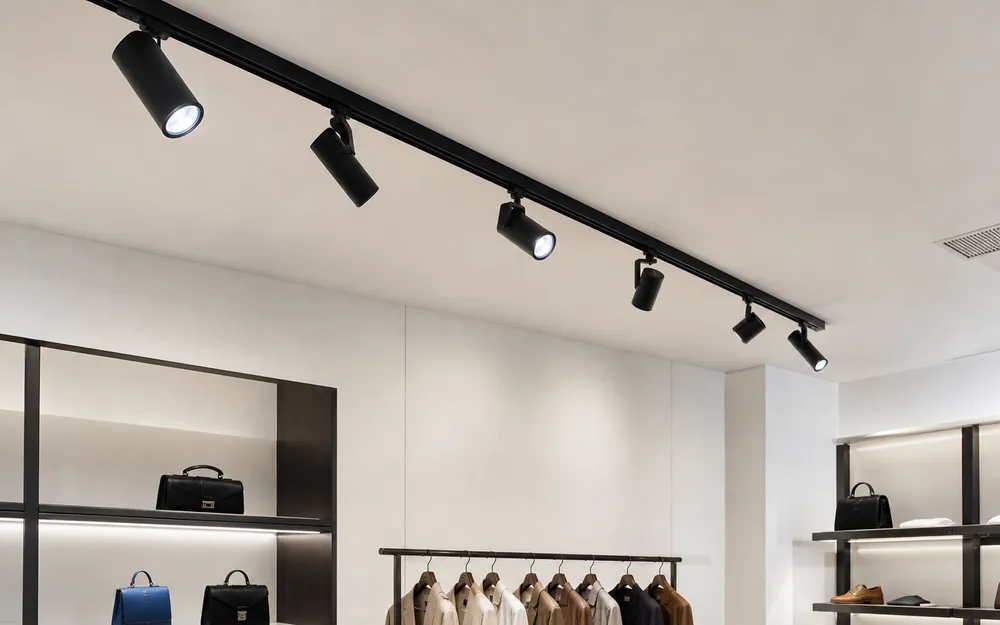
Track Lighting
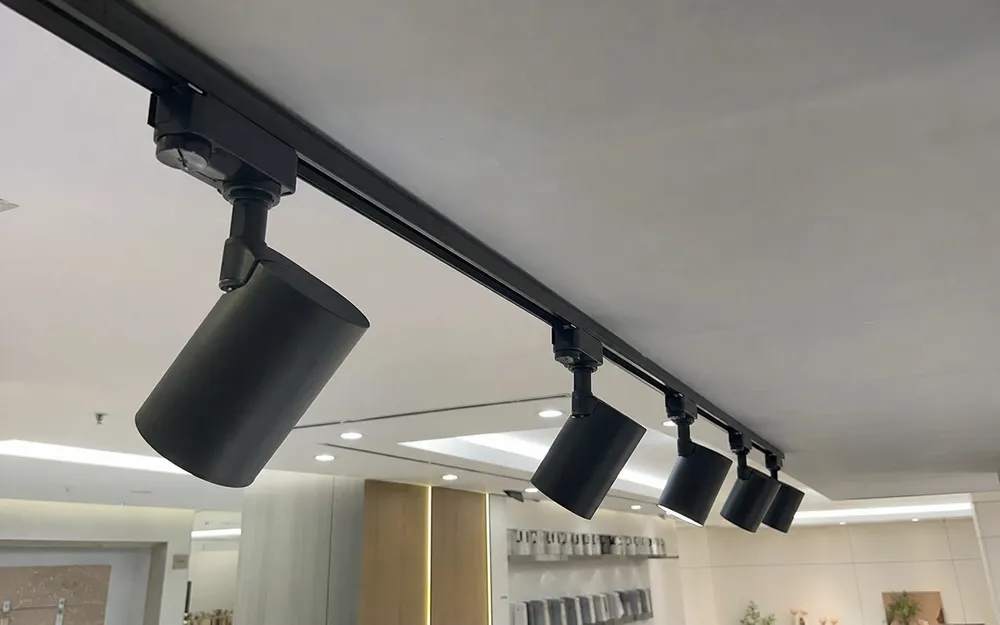
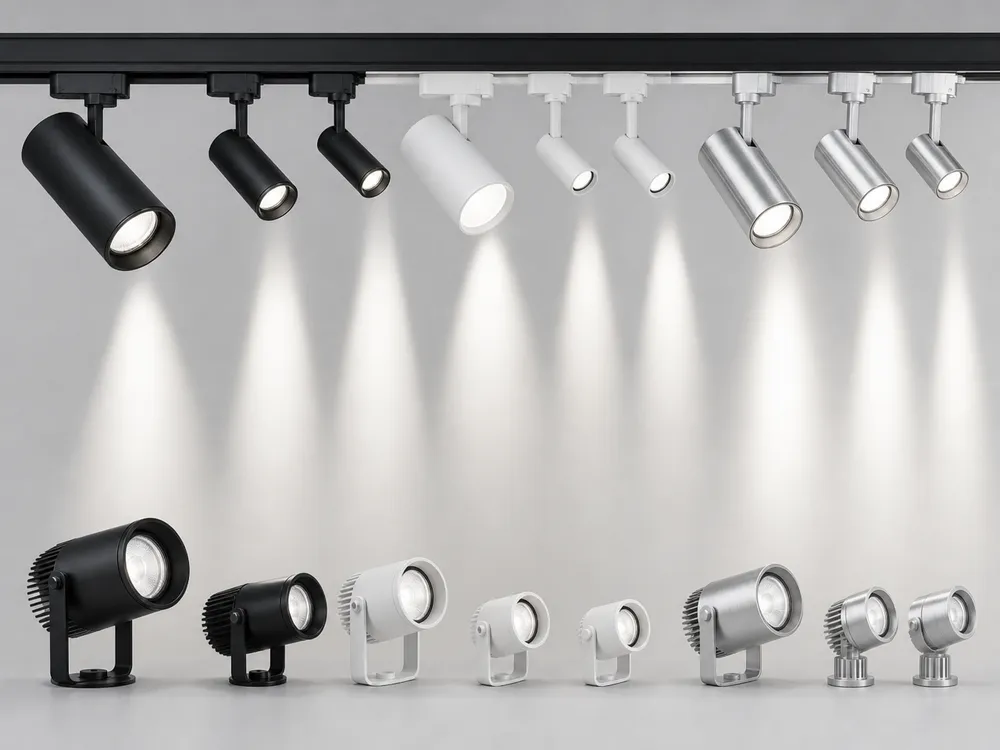
Track-mounted spotlight systems for retail, hospitality, and commercial interiors. Single-circuit and three-circuit track configurations, compatible with standard 48V track infrastructure. Heads are adjustable through 350° rotation and 90° tilt, so your buyers can reposition accent lighting without rewiring. Available in 1-phase and 3-phase variants to cover both residential-grade and commercial-grade electrical installations.
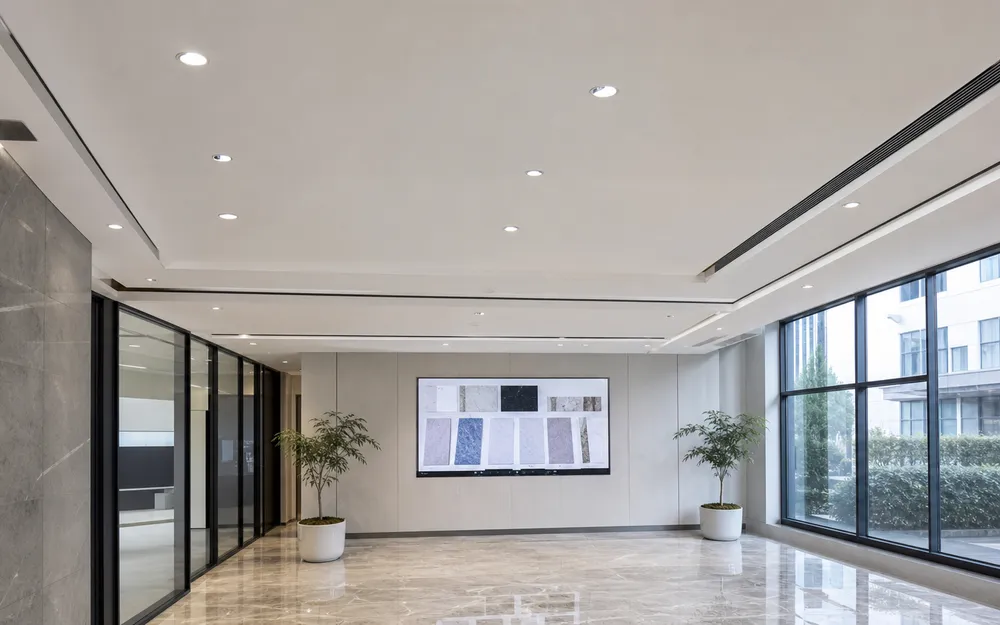
Recessed Spotlights
Ceiling-recessed downlights and spotlights for clean architectural installations. Cut-out dimensions are standardized to common ceiling tile and drywall module sizes — 68mm, 75mm, 90mm, and 100mm — so your installation contractors aren't cutting custom holes. Adjustable-head variants tilt to 30° for accent applications without the visible hardware of a surface-mounted fixture.
Ceiling Spotlights
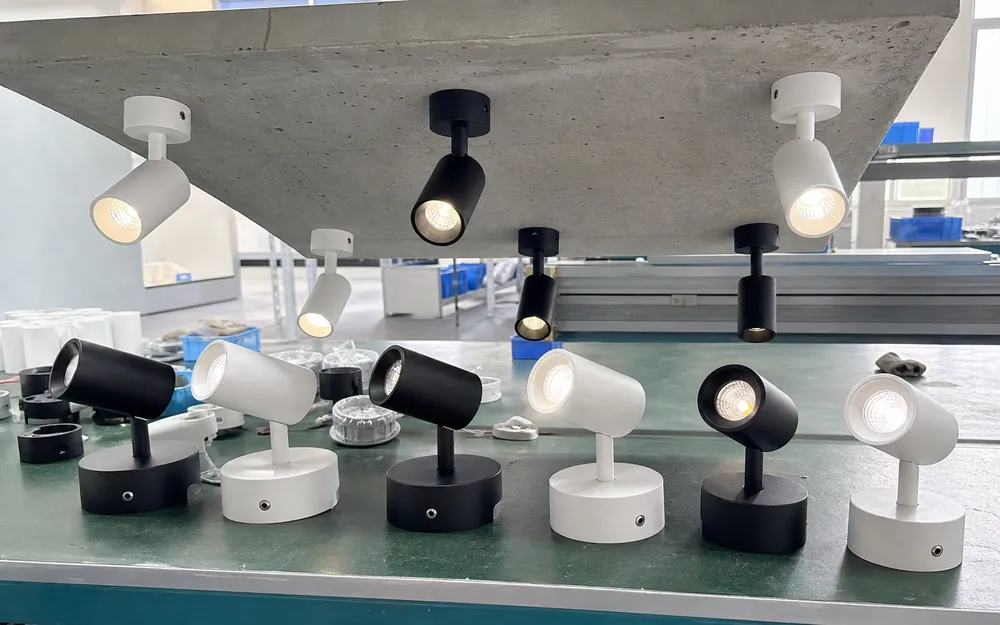
Surface-mounted ceiling spotlights for spaces where recessing isn't an option — concrete ceilings, heritage buildings, and retrofit projects. The housing profile is kept low to avoid the industrial look that surface-mounted fixtures often carry. Available in single-head and multi-head configurations for broader coverage from a single ceiling point.
Adjustable Spotlights
Built around a gimbal mechanism that holds its position after aiming — a detail that matters more than it sounds. Cheap gimbal joints loosen over time, and a spotlight that drifts off its target in a retail display or hotel corridor is a service call your buyer has to handle. We run the gimbal friction spec at a torque that requires deliberate force to reposition, so it stays where it's aimed. The fix was a tighter tolerance on the pivot pin and a nylon friction washer, not a more complex mechanism.
LED Spotlights
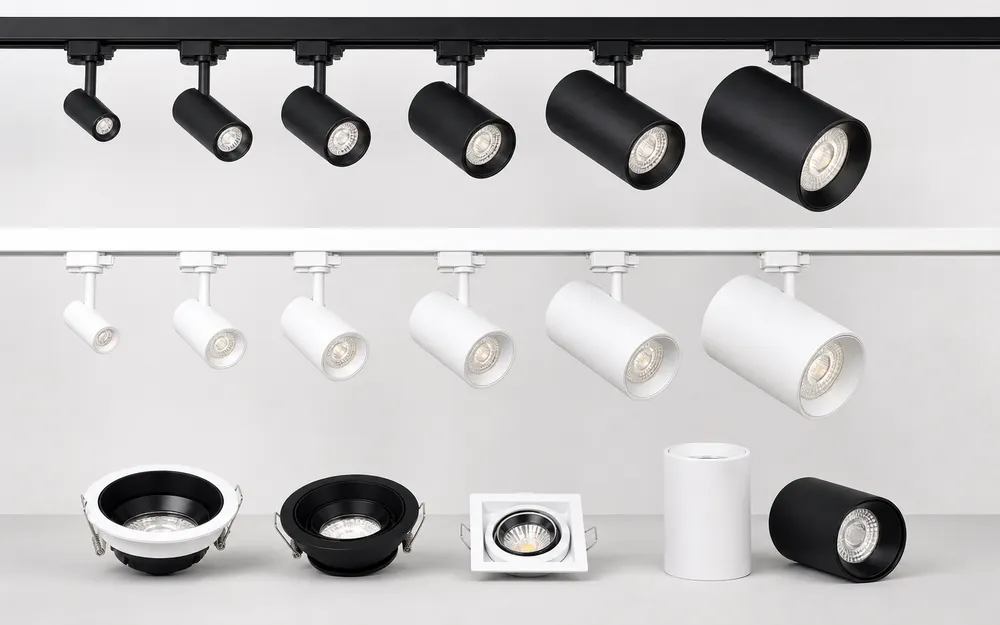
LED spotlight fixtures across the wattage range from 5W to 35W, covering accent lighting through primary task illumination. CRI 90+ standard across the line — relevant for retail and hospitality buyers whose downstream customers are selling or displaying products where color accuracy affects purchase decisions. Beam angles from 15° narrow spot through 60° flood, with intermediate options at 24° and 36°.
Wall Washer Lighting
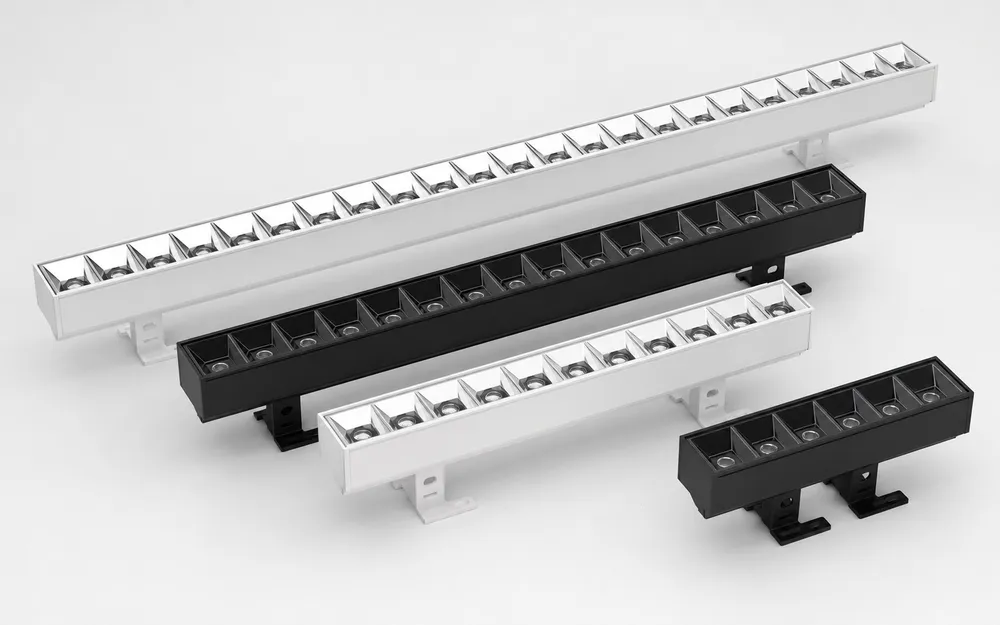
Linear and compact wall washers for architectural surface illumination — feature walls, textured stone, artwork, and facade lighting in interior applications. The optical design uses an asymmetric reflector to throw light across a vertical surface evenly from a ceiling-mounted position, avoiding the hot-spot-and-falloff pattern that a standard spotlight produces when aimed at a wall. Available in 300mm, 600mm, and 900mm linear formats.
Gallery Spotlights
Tight-beam spotlights for art, museum, and high-end retail display applications. Beam angles from 8° to 24°, with anti-glare baffles and optional UV-filtering lenses for light-sensitive artwork. CRI 95+ on the gallery line — the optical lab verifies this on production samples, not just on the initial design approval. For buyers supplying galleries, auction houses, or luxury retail, this is the line where the photometric documentation matters most.
Technical Specifications Across the Range
Category-level parameter ranges for initial sourcing qualification. Exact specifications per product line are on the individual product pages.
| Parameter | Range Across Product Lines |
|---|---|
| Wattage | 5W – 50W |
| Beam Angle | 8° – 60° (narrow spot to wide flood) |
| Color Temperature | 2700K – 6500K (warm white to daylight) |
| CRI | 80+ standard / 90+ LED line / 95+ gallery line |
| Input Voltage | 100–240V AC (universal) |
| Driver Type | Constant current, dimmable (TRIAC, 0-10V, DALI options) |
| Housing Material | Die-cast aluminum (primary), zinc alloy (accent components) |
| Surface Finishes | Matte white, matte black, brushed gold, brushed nickel, chrome, custom RAL |
| IP Rating | IP20 (standard indoor) / IP44 (bathroom, covered outdoor) / IP65 (wet locations) |
| Certifications | CE, UL, SAA, SGS |
| Lifespan (LED) | L70 ≥ 50,000 hours |
| Dimming Compatibility | TRIAC, 0-10V, DALI 2.0 (varies by SKU) |
A Note on Dimming
DALI 2.0 compatibility is available on the commercial track and LED spotlight lines — relevant if your buyers are specifying into smart building or hospitality projects where scene control is part of the brief. Not every SKU carries it, so flag this requirement when you send your inquiry and we'll confirm which configurations apply.
50,000h
LED Lifespan (L70)
CRI 95+
Gallery Line
IP65
Wet Location Rated
100–240V
Universal Input
Where This Product Line Sells: Market Segments Worth Building
Spotlight and track lighting is a high-margin category for distributors and importers because the application range is broad and the replacement cycle is driven by renovation and fit-out activity, not just product failure. The segments below are where our buyers are currently moving volume.
Retail Fit-Out & VM Lighting
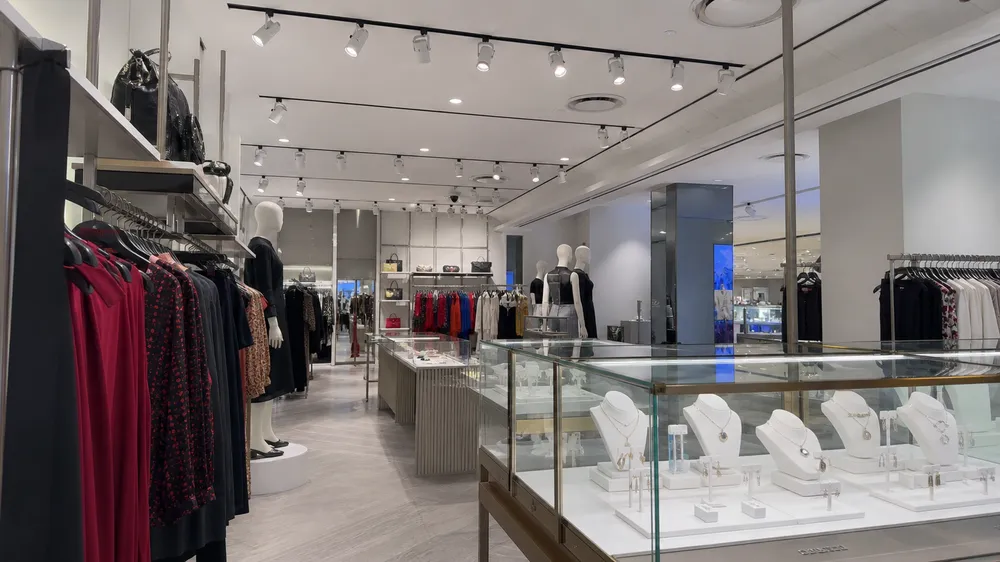
Fashion retail, jewelry, cosmetics, and specialty food retail all use adjustable spotlights and track systems as primary display lighting. The specification driver here is CRI — retailers selling color-sensitive products need 90+ CRI minimum, and the premium for it is real.
Key Spec Driver
CRI 90+ / 95+ — meaningful margin above commodity product
Hospitality — Hotels & Restaurants
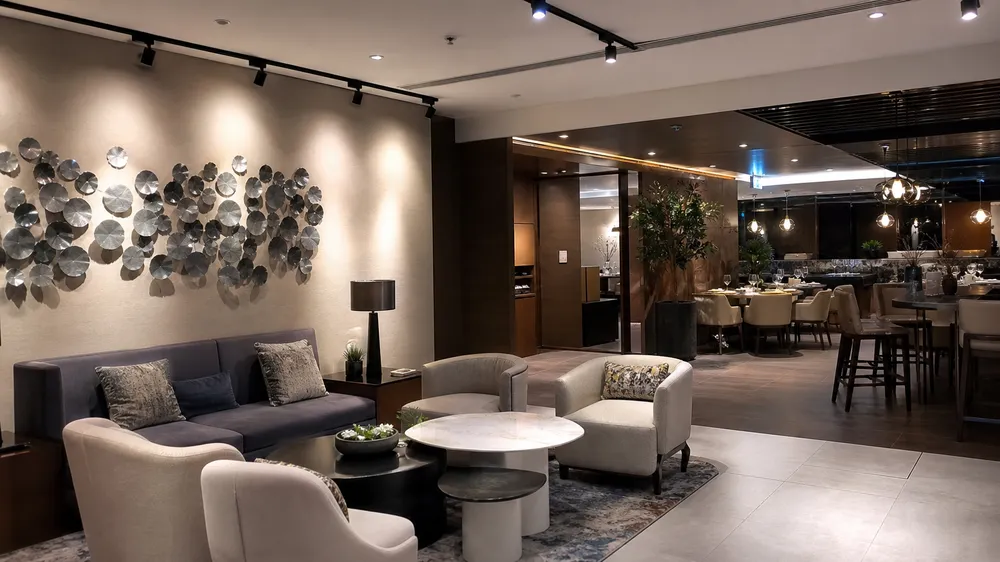
Hotel corridors, lobby feature walls, restaurant dining areas, and bar back-lighting are all track and spotlight applications. Specification requirements include dimming compatibility (TRIAC or DALI for scene control), finish consistency across a large order (a 200-room hotel needs every fixture to match), and documentation for the project's compliance submission.
Key Spec Driver
Dimming + finish consistency — 100% aging test & photometric verification per batch
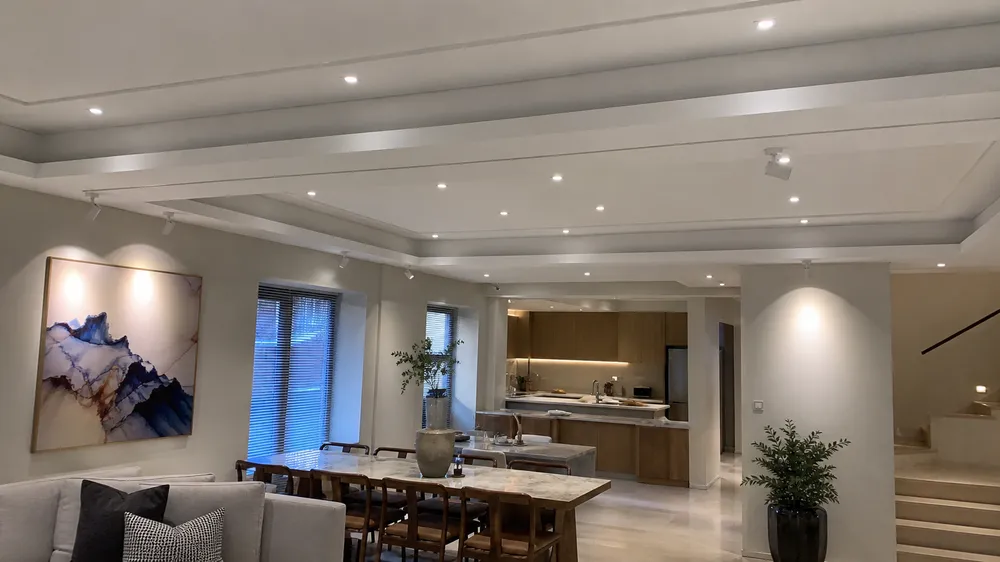
Residential High-End & Villa Projects
Luxury residential projects — villas, penthouses, high-specification apartments — use recessed spotlights and adjustable ceiling spotlights as the primary architectural lighting layer. The buying pattern here is typically through interior designers or lighting consultants who specify by fixture type and finish, then hand the procurement to a contractor or distributor.
Key Spec Driver
Full specification supply — fixture, finish, dimming protocol, and documentation
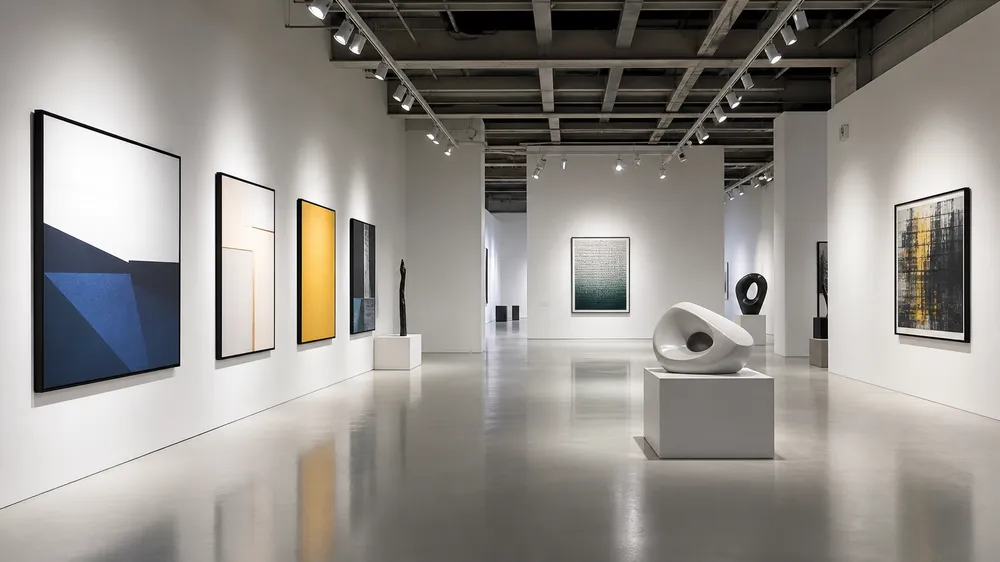
Gallery, Museum & Auction House
A smaller volume segment but a high-value one. Gallery spotlights with CRI 95+ and UV-filtering options are specified by lighting designers who know exactly what they need. If you're supplying this segment, the photometric documentation and IES files we generate from our optical lab are part of what you're selling — the designer needs them for the project submission.
Key Spec Driver
CRI 95+ with UV-filtering — IES files & photometric documentation included
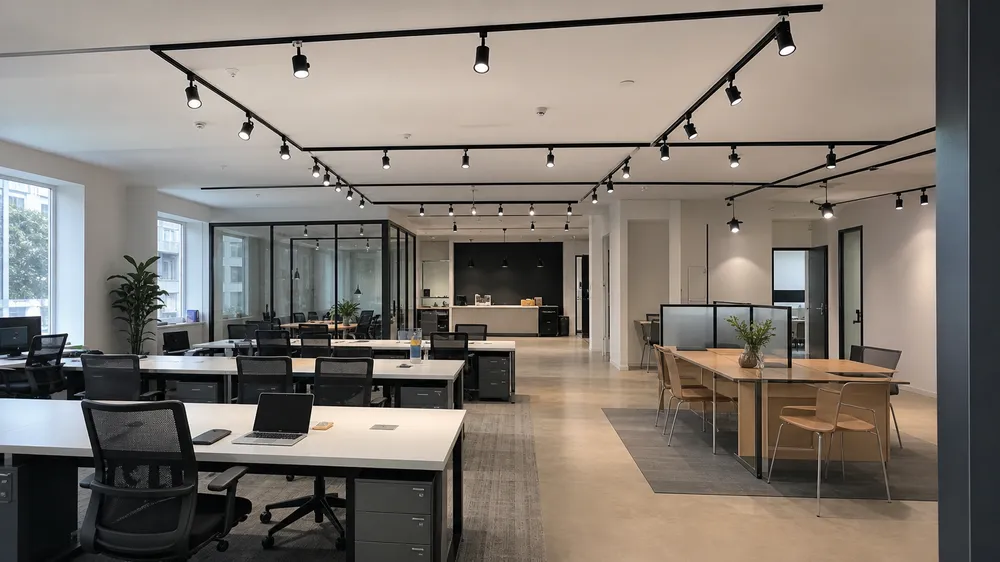
Commercial Office & Co-Working
Track lighting for open-plan offices and co-working spaces, where the layout changes and the lighting needs to move with it. The three-circuit track system is the standard specification here — it allows zone control without rewiring. This is a volume segment with repeat orders as tenants turn over and spaces are reconfigured.
Key Spec Driver
Three-circuit track — zone control without rewiring, repeat order cycle
Why This Category Delivers Margin
- Broad application range across retail, hospitality, residential, gallery, and commercial segments
- Replacement cycle driven by renovation and fit-out activity, not just product failure
- CRI premium creates real margin separation from commodity product
- Project-based buying patterns with full-specification supply capturing more value
Explore product lines by segment application:
In-House Production: Why Housing Tolerances Matter for Spotlight Performance
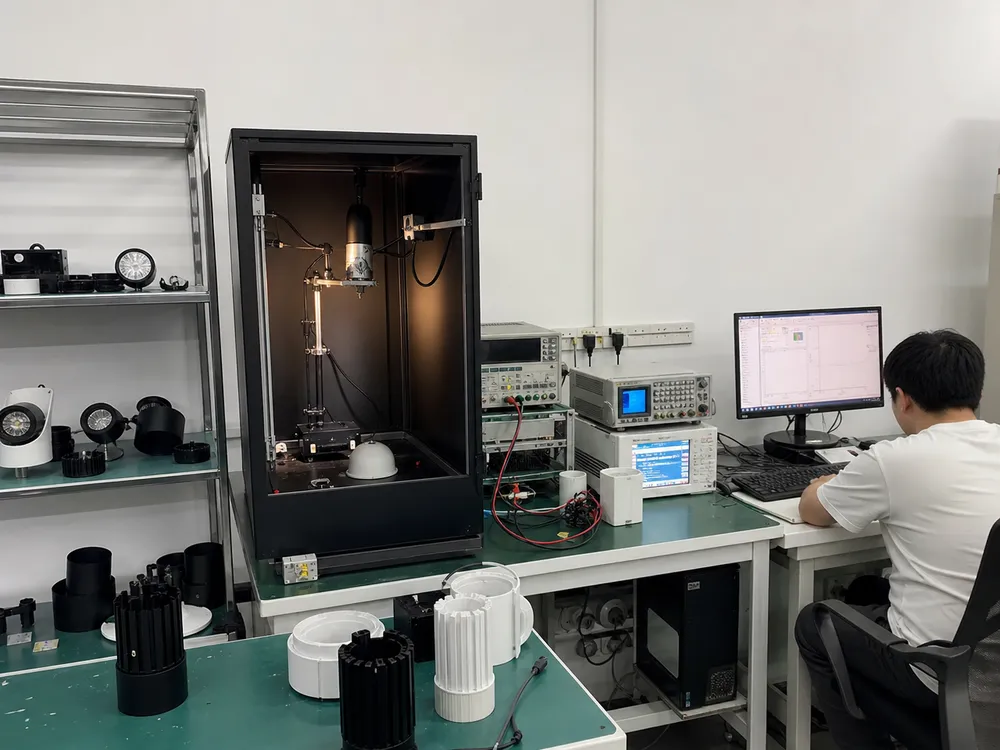
Spotlight lighting is more sensitive to manufacturing precision than most decorative fixture categories. The beam angle is determined by the relationship between the LED source position and the reflector geometry — if the housing dimensions drift, the beam angle drifts with it.
A fixture that leaves the factory at 24° beam angle but arrives at 27° because the LED mounting position shifted 0.5mm during a production run is a problem your buyer's lighting designer will notice.
We control this by manufacturing the aluminum housing in-house on our own CNC equipment. Tolerances on the LED mounting boss and reflector seating surface hold to ±0.1mm across a production batch. We don't buy pre-cast housings from a third-party supplier and hope their tolerances match our optical design — the housing is machined to our spec, on our equipment, with our QC checkpoint after machining and before assembly.
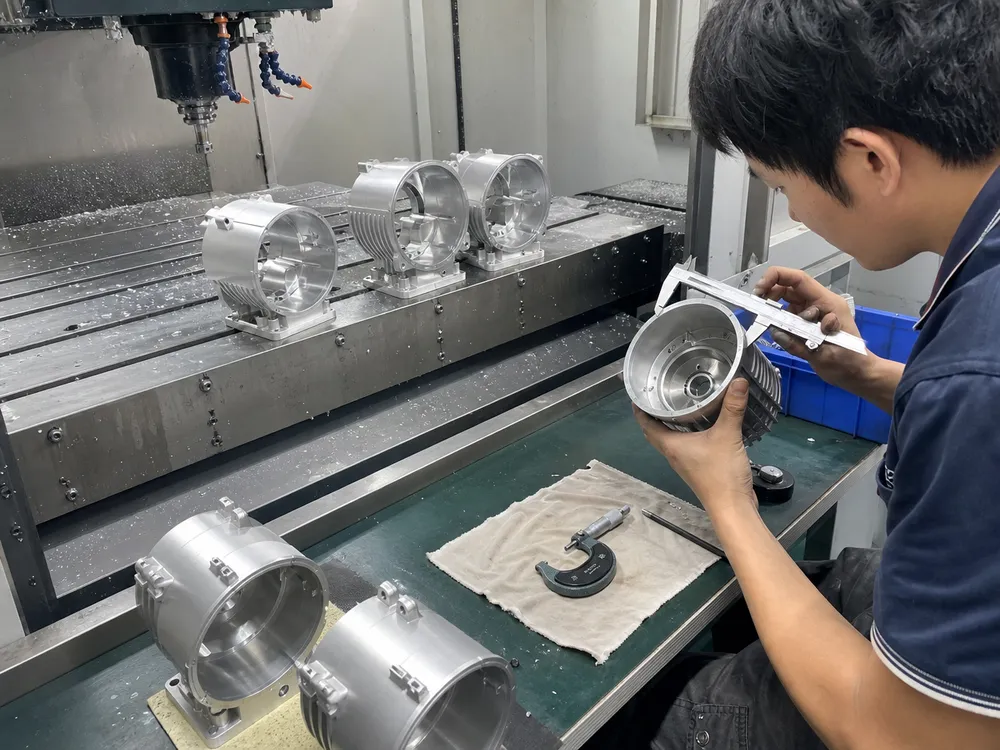
Die-Casting Process & Material Selection
ADC12 aluminum alloy for the primary housing on most spotlight lines — machines cleanly, holds tight tolerances, and delivers good thermal conductivity for heat dissipation from the LED module.
Standard Housing
ADC12 aluminum alloy — optimized for machinability, tolerance retention, and thermal performance across production volumes.
Design-Element Housing
Gallery spotlight line and adjustable gimbal bodies receive a secondary CNC pass after casting for surface quality the finishing line needs for consistent anodized or PVD results.
QC Checkpoint
Dimensional verification after machining and before assembly ensures every housing meets optical alignment requirements before the LED module is installed.
Surface Finishing: In-House Powder Coat & PVD
Both powder coat and PVD lines run in-house — not outsourced to a plating shop. That matters for color consistency across large project orders.
Powder Coat
Thickness controlled at 60–80μm with automated application — consistent across the batch. Standard for matte black, white, and custom RAL colors.
PVD (Physical Vapor Deposition)
Brushed gold and brushed nickel finishes common in hospitality and high-end residential specifications. PVD color is sensitive to process parameters — in-house control ensures all fixtures match.
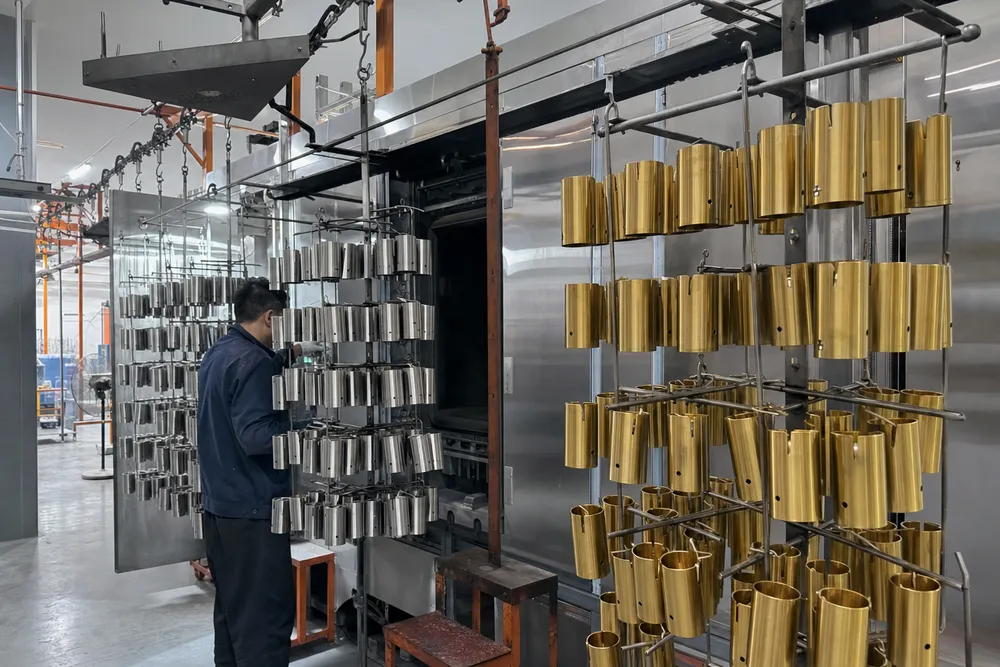
Why this matters for project orders: When you're supplying 300 fixtures for a hotel project, they all need to match. Outsourced PVD introduces batch-to-batch color variation that's visible when fixtures are installed side by side. In-house PVD eliminates that variable.
Photometric Verification and the Certifications Behind It
CE, UL, and SAA certification covers the electrical safety and EMC compliance requirements for European, North American, and Australian markets. These are the certifications your import compliance team needs before the container clears customs.
We hold all three and maintain them — they're not one-time certifications that lapsed after the initial audit.
Beyond the compliance certifications, the photometric verification we run in-house is what protects your buyers' project specifications. When a lighting designer specifies a 24° beam angle at 800 lumens for a retail display, they've done a calculation. If the fixture delivers 28° at 680 lumens, the display doesn't look right and the designer comes back to the contractor, who comes back to the distributor.
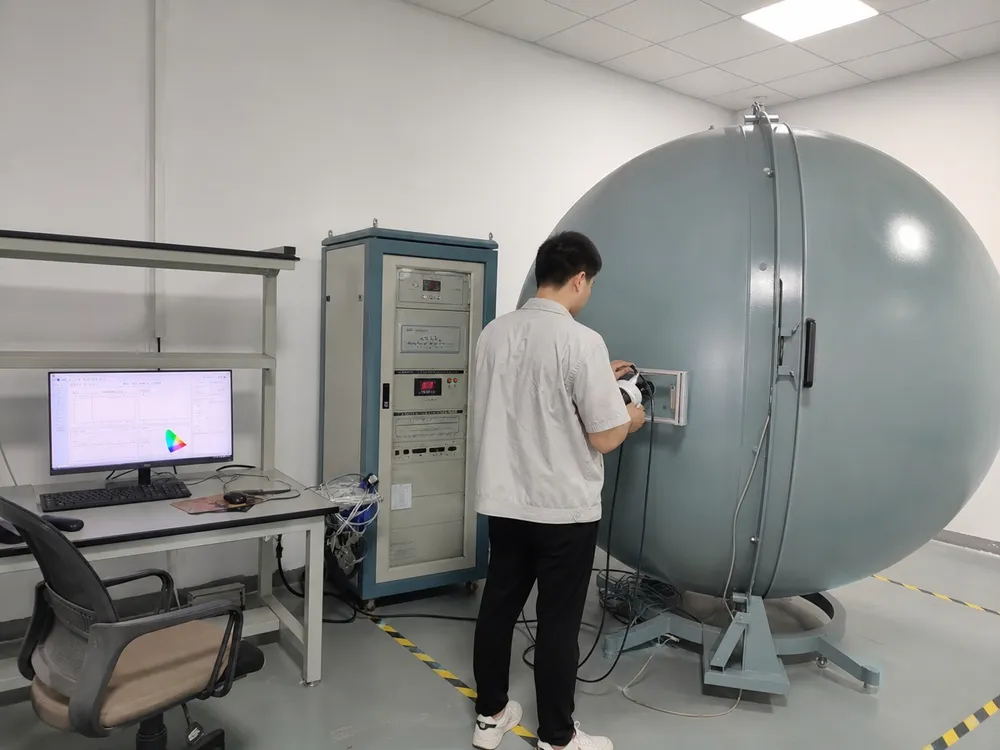
Production Batch Verification
We verify lumen output, beam angle, and color temperature on production samples from each batch — not just on the initial design approval sample. If a batch drifts outside the approved tolerance, it doesn't ship.
Lumen Output
Verified per batch against approved specification — not nominal manufacturer claims.
Beam Angle
Measured on production samples to confirm optical alignment holds across the run.
Color Temperature
CCT consistency checked to prevent visible warm/cool variation within a single project shipment.
IES Files for Project Submissions
For buyers who need IES files for project submissions — standard in North American commercial projects and increasingly required in European hospitality specifications — we generate them from our own photometric measurements.
The IES file reflects the actual production fixture, not a manufacturer's nominal spec. Your buyers' lighting designers can model with confidence that the installed result will match their calculations.
Certifications Held
ISO 9001:2015
Quality Management
CE
Europe
UL
North America
SAA
Australia
SGS
Testing & Inspection
What Goes Wrong with Spotlights — and How We Engineer Against It
Spotlight and track lighting has a specific set of failure modes that experienced buyers have seen before. The ones that generate the most warranty claims and project callbacks are worth naming directly.
Lumen Depreciation Faster Than Rated
The L70 lifespan rating (the point at which lumen output drops to 70% of initial) is only as reliable as the thermal management behind it. LED junction temperature is the primary driver of lumen depreciation — run the LED too hot and the L70 drops from 50,000 hours to 20,000 hours or less.
Our Engineering Fix:
We specify thermal interface material between the LED module and the housing, and the housing geometry is designed to maximize surface area for passive convection. We test junction temperature on new designs in the optical lab before committing to production tooling — if the thermal performance doesn't meet the L70 spec, the design goes back to engineering.
Beam Angle Drift Across a Production Batch
This is a housing tolerance issue. Inconsistent LED mounting positions across a batch cause visible beam angle variation when fixtures are installed side by side.
Our Engineering Fix:
The ±0.1mm CNC tolerance on the LED mounting position is the specific control that prevents beam angle drift across production batches.
Gimbal Joint Loosening Over Time
Adjustable spotlights with loose gimbal joints are a common field complaint. The fixture gets aimed at installation, and six months later it's pointing at the floor.
Our Engineering Fix:
A friction spec on the pivot mechanism that requires deliberate force to reposition — not so tight that it's difficult to aim, but tight enough that vibration and gravity don't move it. We specify this as a torque value and test it on production samples.
Driver Flicker and Compatibility Failures
LED driver compatibility with local dimmer infrastructure is one of the most common sources of field complaints in the spotlight category. A driver that works perfectly with a leading-edge TRIAC dimmer may flicker or buzz with a trailing-edge dimmer, and vice versa.
Our Engineering Fix:
We specify drivers per SKU based on the target market's dimmer infrastructure — North American residential projects get different driver specs than European commercial projects. For buyers who need DALI 2.0 compatibility for smart building integration, we confirm the driver spec before production, not after.
Finish Inconsistency on Large Orders
A 200-room hotel order where the brushed gold fixtures in rooms 1–50 don't match rooms 51–200 is a project failure. PVD color consistency requires tight process parameter control — bath chemistry, temperature, deposition time.
Our Engineering Fix:
Running PVD in-house rather than outsourcing is the control mechanism. We run color verification on finishing samples before committing a large batch to production.
OEM and ODM: From Your Specification to Production
The spotlight and track lighting category is well-suited to OEM and ODM development because the core mechanical and optical architecture is established — what differentiates products at the market level is housing design, finish, beam angle configuration, and dimming protocol. These are all parameters we can engineer to your specification without starting from scratch.
OEM
Your design, our production
If you have approved drawings or a reference sample, we work from those. The process runs:
DFM feedback is where we flag cost traps — overly complex casting geometry, non-standard driver cavities, finishes that require multiple process steps. We'd rather surface those early than quote them in and surprise you at the tooling stage.
ODM
Your concept, our engineering
If you're bringing a market requirement rather than finished drawings, our engineering team develops the design from your brief. A typical brief might look like:
"I need a track spotlight for the North American hospitality market, brushed nickel, DALI-compatible, CRI 90+, at a target landed cost of X"
We've done enough of these to know what the cost levers are in spotlight design, and we'll give you an honest read on what's achievable at your target cost before we start drawing.
Customization Dimensions Available Across the Spotlight and Track Range
Housing Geometry & Profile
Within die-casting constraints
Beam Angle Configuration
Reflector and lens selection
Surface Finish & Color
Standard palette or custom RAL/PVD
Wattage & Driver Specification
Including dimming protocol
Branding & Packaging
Private label, custom carton, documentation
Certification Scope
CE, UL, SAA, or combinations based on your target markets
Minimum order quantities apply and vary by product line and customization scope. Standard catalog items carry lower MOQs than custom tooling projects. Send us your requirement and we'll confirm the MOQ and lead time for your specific configuration.
Packaging, Container Loading, and Landed Cost
Spotlight fixtures are fragile in transit — the adjustable head mechanisms, glass lenses, and thin-wall housing profiles that make them look good on a project also make them vulnerable to drop and compression damage in ocean freight. We've engineered the packaging to handle it.
Each fixture ships in an individual inner carton with die-cut foam inserts that immobilize the head mechanism and protect the lens. The inner carton is rated for the drop forces of standard ocean freight handling — we've tested this, and the foam profile is specific to each fixture model, not a generic insert. Outer cartons are double-wall corrugated, with carton dimensions optimized for 40HQ container loading efficiency.
For track lighting systems, the track sections and heads ship separately within the same outer carton — the track section is the most vulnerable component to bending damage, and it needs its own foam channel rather than being loose in the carton with the heads.
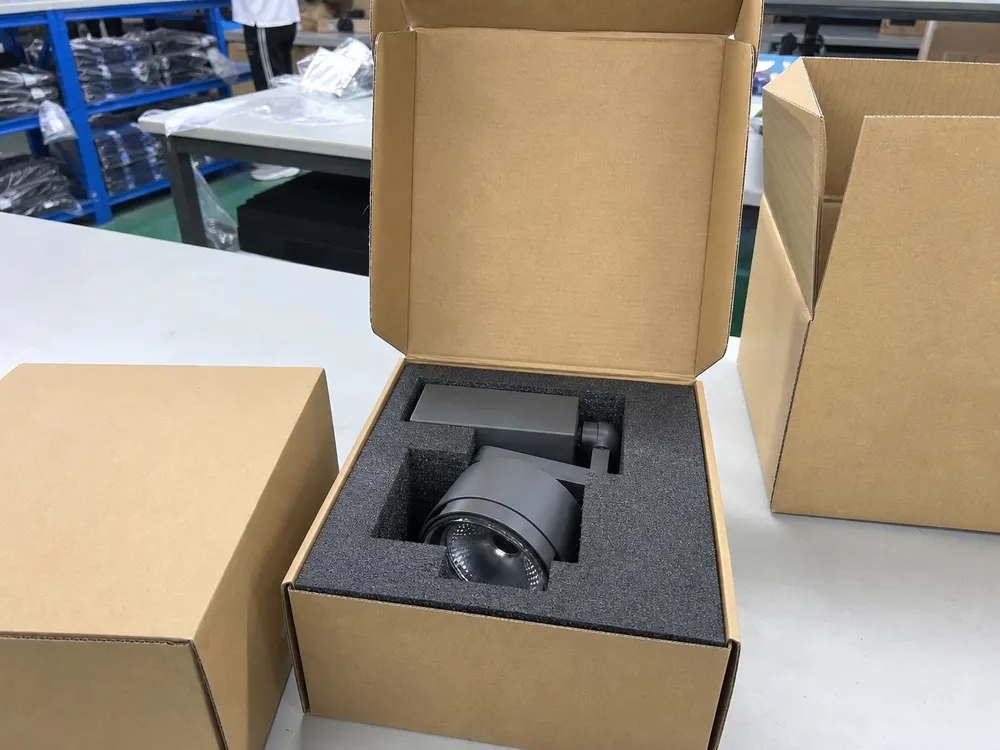
40HQ Container Loading Reference
Compact LED Spotlights
5W–15W range
2,000–3,500
units per 40HQ
Varies by carton configuration
Track Lighting Systems
Track + heads combined
Lower Density
due to track section dimensions
Exact CBM provided with quotation
Pre-Order Planning
Included with quotation
CBM per carton
+ full loading calculations
Plan container before order placement
Model-Specific Foam
Die-cut foam profiles designed for each fixture model — not generic inserts.
Double-Wall Corrugated
Outer cartons rated for ocean freight compression and stacking forces.
Separate Track Channels
Track sections get dedicated foam channels to prevent bending damage.
Optimized Carton Dims
Carton dimensions engineered for maximum 40HQ container utilization.
Plan Container Loading at Quotation Stage
Buyers who plan container loading at the quotation stage rather than at the shipping stage avoid the situation where a 40HQ is 85% full and the economics of the shipment don't work. We provide exact CBM per carton and loading calculations with the quotation so your logistics team can plan the container before the order is placed. It's worth doing the math early.
Sourcing Spotlight Lighting from Guzhen: The Supply Chain Advantage
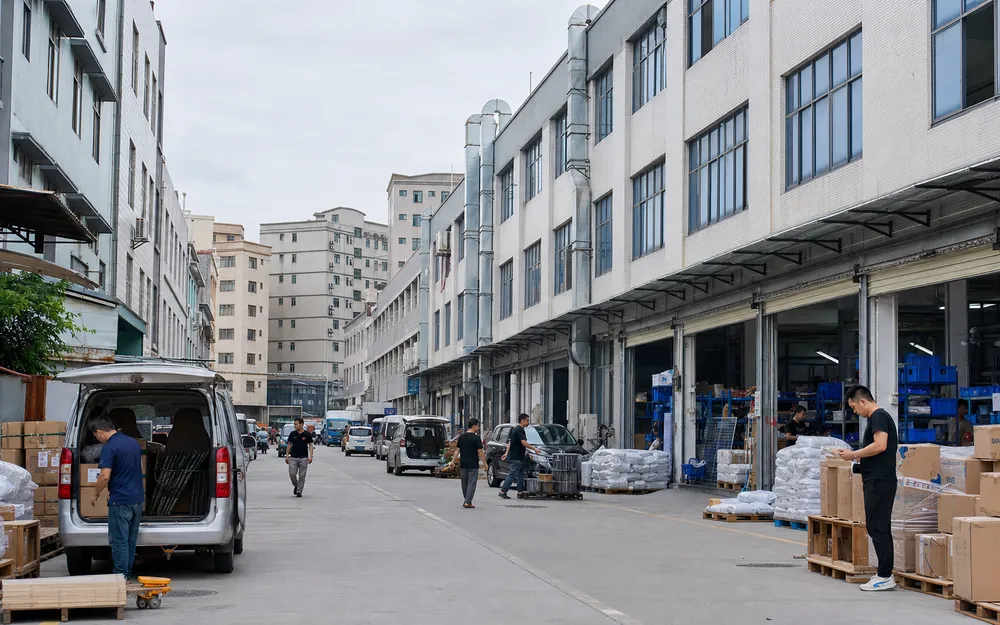
Guzhen, Zhongshan is where the majority of China's decorative and architectural lighting manufacturing is concentrated. The supply chain density here — LED module suppliers, driver manufacturers, optical component suppliers, specialist finishing shops, tooling makers — is what makes rapid prototyping and short lead times possible.
A factory in a different region sourcing the same components adds 5–10 days to the supply chain before production even starts.
For spotlight and track lighting specifically, the Guzhen supply chain advantage shows up in two places: driver sourcing and optical components.
LED Driver Sourcing
LED drivers for the commercial and hospitality market — DALI-compatible, high-PF, low-THD — come from suppliers we've worked with for years and whose quality we know.
Optical Components
Reflectors, lenses, and anti-glare baffles are sourced from specialist optical suppliers within the local supply chain. This means we can iterate on beam angle configurations during prototyping without waiting weeks for components to arrive from a distant supplier.
Lead Times & Production Communication
Standard Catalog Items
25–35 Days
From order confirmation to shipment-ready
OEM/ODM with New Tooling
+15–20 Days
Additional tooling cycle on top of production
Milestone Communication
Proactive
If a production issue affects your ship date, you hear about it before the container is supposed to load
Why Location Matters for Lead Time
A factory in a different region sourcing the same components adds 5–10 days to the supply chain before production even starts. The concentrated Guzhen supply chain — LED modules, drivers, optical components, finishing, and tooling all within the same district — eliminates that lag and enables rapid prototyping iterations that would be impossible with distributed sourcing.
Frequently Asked Questions
Direct answers to the technical and commercial questions we hear most from wholesale buyers, specifiers, and project distributors.
What beam angles are available across the spotlight range, and how do I choose the right one for my application?
The range runs from 8° narrow spot through 60° wide flood, with standard options at 15°, 24°, 36°, and 45° in between. The selection depends on the mounting height and the target illumination area.
Working Selection Guide
- •Retail display lighting at 3–4m mounting height: 24°–36° covers a standard display zone without spilling onto adjacent areas.
- •Gallery and artwork lighting where you need a tight beam that doesn't wash the surrounding wall: 8°–15° is the range.
- •General ambient fill from track lighting at 2.5–3m: 45°–60° gives you the coverage without hot spots.
If you send us the mounting height and the target illumination zone dimensions, we can confirm the beam angle selection before you commit to an order.
Why do LED spotlights lose brightness faster than the rated lifespan in some installations?
The L70 lifespan rating assumes the LED junction temperature stays within the design operating range. When fixtures are installed in enclosed ceiling cavities without adequate ventilation, or when the driver is undersized for the actual load, junction temperature rises above the design point and lumen depreciation accelerates.
The fix is in the thermal design of the fixture — the housing needs to conduct heat away from the LED module efficiently. We test junction temperature on new designs in our optical lab before production tooling is committed.
For buyers supplying projects with enclosed ceiling installations: flag this when you inquire and we'll confirm the thermal performance data for the specific fixture.
What dimming protocols do your spotlights support, and does it matter which one I specify?
The standard line supports TRIAC (leading and trailing edge) and 0-10V dimming. DALI 2.0 is available on the commercial track and LED spotlight lines.
The protocol matters because it has to match the dimmer or control system your buyer's electrician is installing:
TRIAC
Standard for residential and light commercial in North America and Europe.
0-10V
Common in commercial office and retail fit-out.
DALI 2.0
Specified in smart building, hospitality, and high-end commercial projects where scene control and individual fixture addressability are part of the brief.
Specifying the wrong protocol means the dimmer doesn't work correctly — flicker, buzz, or no dimming at all. Tell us the target application and we'll confirm the right driver spec.
What is the MOQ for spotlight and track lighting, and can I mix SKUs within an order?
MOQ varies by product line and whether the order is standard catalog or custom. Standard catalog items carry lower MOQs than custom tooling projects.
SKU mixing within an order is possible — we can combine different spotlight configurations in a single container. Send us your SKU list and target quantities and we'll confirm the MOQ structure and whether the order qualifies for a mixed-SKU arrangement.
Do you provide IES files and photometric test reports for project submissions?
Yes. IES files are generated from our in-house optical lab measurements on the production fixture — not from nominal spec sheet data. Photometric test reports are available per SKU.
For North American commercial projects and European hospitality specifications, these are standard documentation items and we include them in the order documentation package.
If you need specific test report formats for a particular market's compliance submission, flag it when you place the order.
What certifications do your spotlights carry, and which markets do they cover?
CE
European market — electrical safety & EMC
UL
North American market
SAA
Australia & New Zealand
SGS
General quality audit
ISO 9001:2015
Quality management system
For buyers supplying multiple markets from a single SKU, we can confirm which certification combination applies to your target markets and whether any additional market-specific testing is needed.
Start a Sourcing Conversation
The spotlight and track lighting range covers seven product lines with CE, UL, and SAA certification, in-house photometric verification, and OEM/ODM capability from 7–10 day prototype to production.
If you're building a product line or fulfilling a project specification, the most useful next step is a direct conversation about your specific requirement. Send us your fixture type, target market, volume, and any certification or dimming requirements — we'll come back with a detailed quote and, where the application warrants it, a recommendation on beam angle and driver configuration based on what's working for our existing buyers in your region.
Direct Contact
Factory Address
No. 14 Beisan Rd, Gusan Ind. Zone,
Guzhen, Zhongshan, Guangdong, China
Wholesale only. Strict MOQ applies.