
Ceiling Spotlights Built for Commercial Deployment
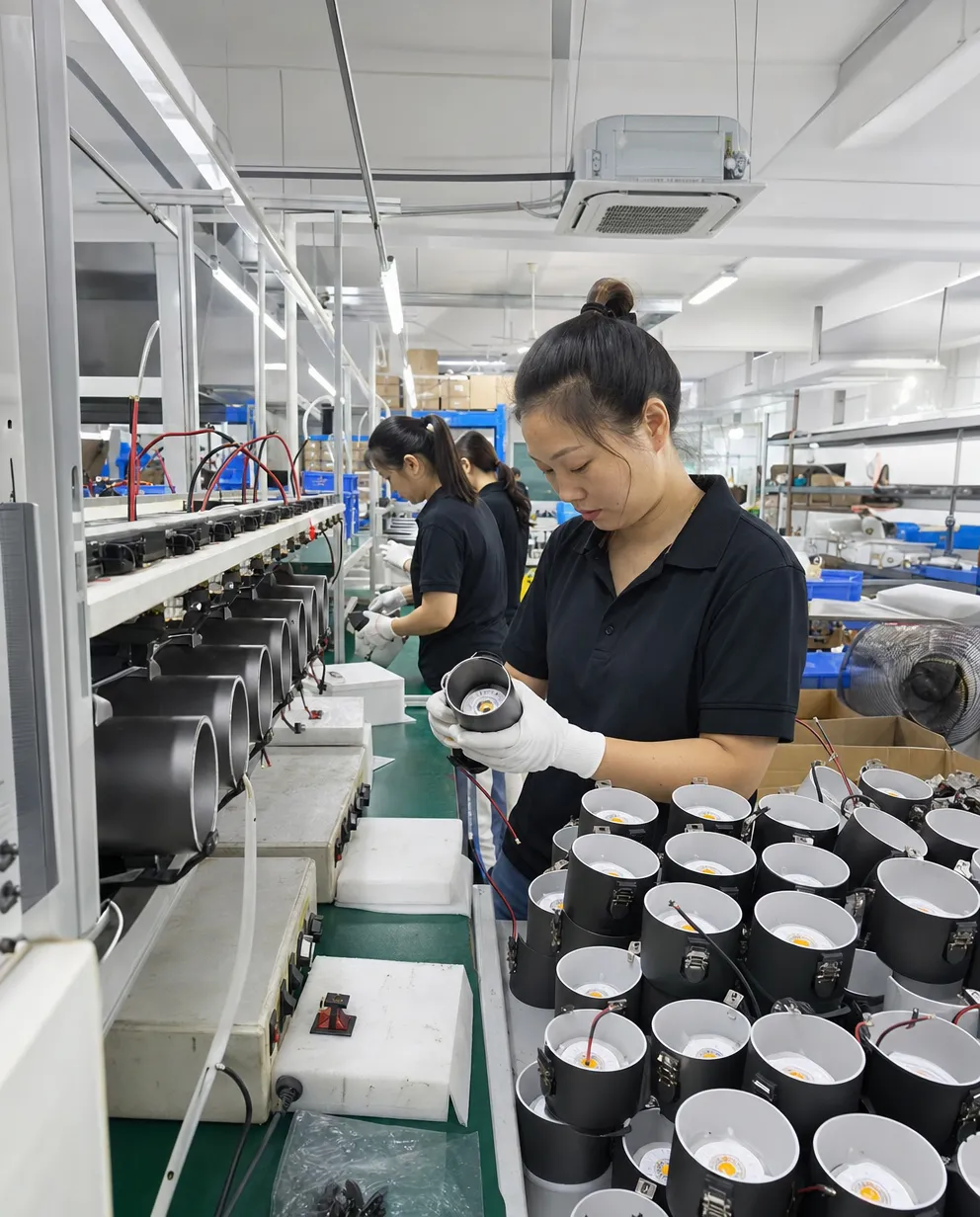
Wholesale ceiling spotlights — die-cast aluminum, multi-market certified, OEM-ready. Every unit ships after 100% aging test.
CE, UL, and SAA certifications held in-house, so your compliance documentation is ready when your import team needs it.
What Ceiling Spotlights Are — and Where This Product Sits
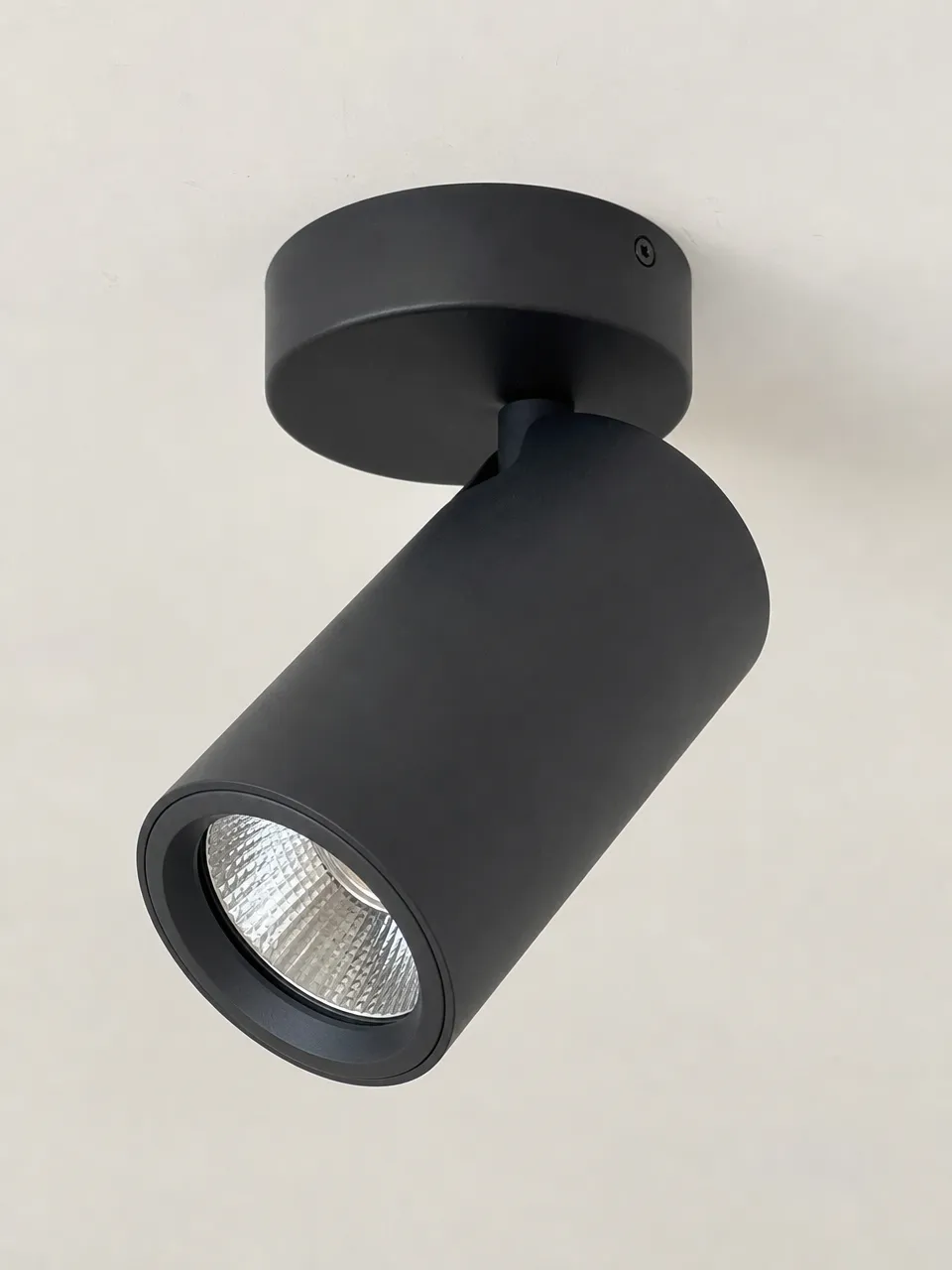
Ceiling spotlights are surface-mounted or semi-recessed directional luminaires that attach directly to the ceiling plane, typically on a fixed or adjustable gimbal, and project a focused beam downward or at an angle. They're distinct from recessed spotlights (which sit flush inside the ceiling void) and from track heads (which clip onto a rail system). The ceiling spotlight mounts independently — one fixture, one ceiling point, one beam.
That distinction matters commercially. Ceiling spotlights are the go-to specification for retrofit projects where cutting into the ceiling isn't feasible, for concrete slab construction common across the Middle East and Southeast Asia, and for hospitality fit-outs where the designer wants the fixture itself to be visible as part of the aesthetic. Your buyers in these segments aren't choosing between ceiling spotlights and recessed — they're specifying ceiling spotlights because the application demands it.
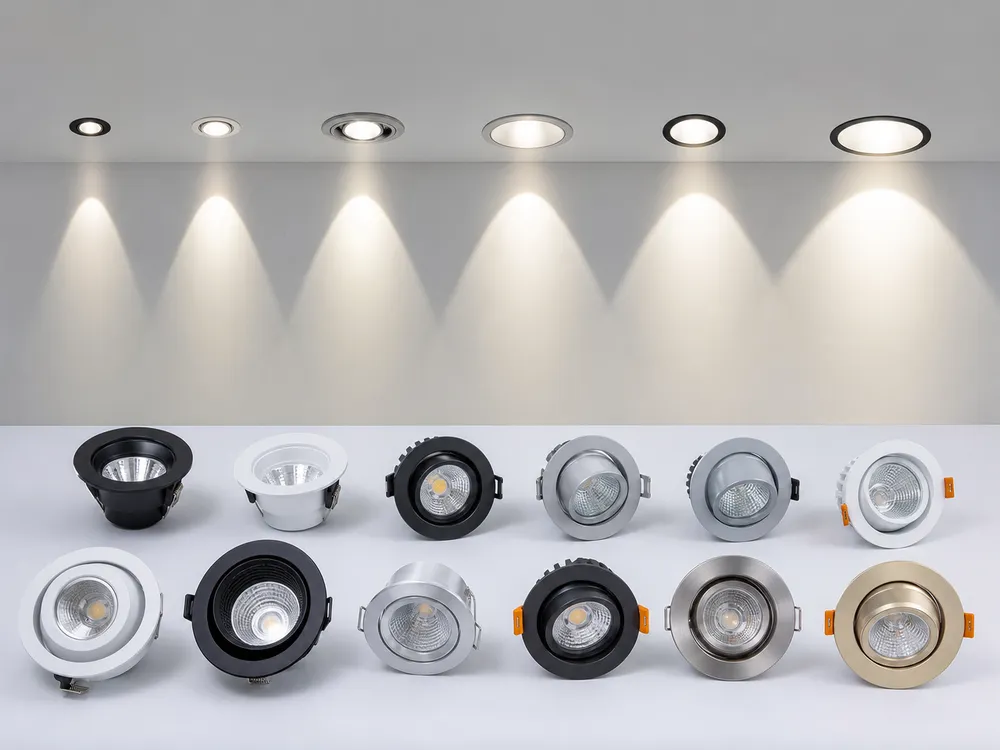
Our ceiling spotlight range covers single-head and multi-head configurations, fixed and adjustable beam angles, and a finish portfolio that runs from matte black and brushed gold through to custom RAL colors on qualifying order volumes. The housing is die-cast aluminum throughout — not pressed steel, not zinc alloy on the body. Die-cast aluminum gives you the dimensional consistency that makes installation predictable and the thermal mass that keeps LED junction temperatures in range over long operating hours.
View our full Spotlights & Track Lighting range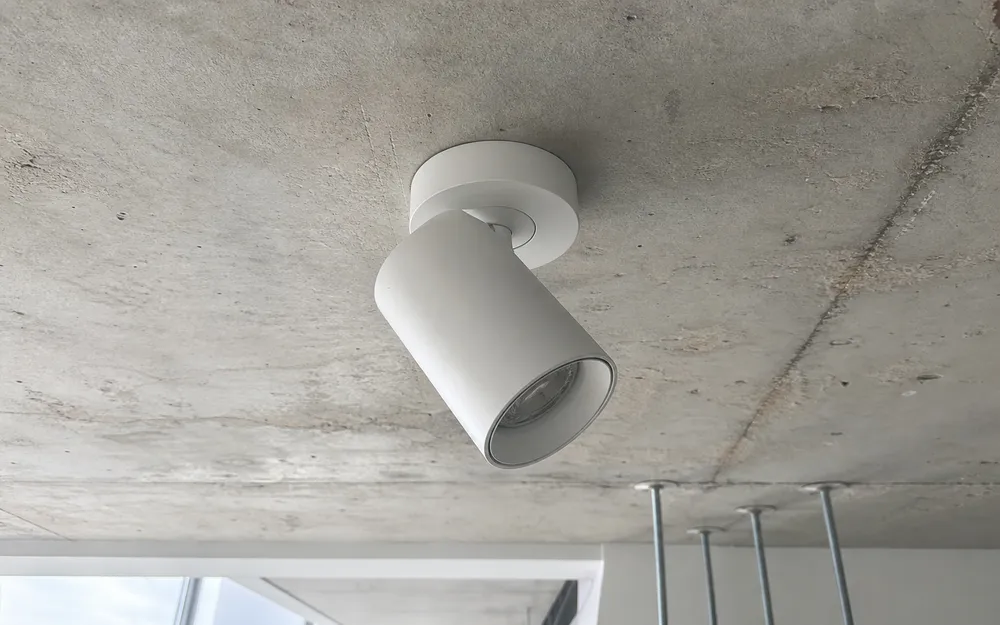
Retrofit Projects
No ceiling void required
Concrete Slab
Middle East & SE Asia
Hospitality
Fixture as aesthetic
Technical Specifications
These are industry-standard parameters for our ceiling spotlight range. Exact values vary by SKU — contact us with your target spec and we'll confirm the precise configuration.
| Parameter | Typical Value |
|---|---|
| Housing material | Die-cast aluminum (ADC12 alloy) |
| Finish options | Matte black, brushed gold, brushed nickel, white, custom RAL |
| Power range | 7W – 35W |
| Beam angle options | 15° / 24° / 36° / 60° (narrow spot to wide flood) |
| Color temperature | 2700K / 3000K / 4000K (CCT selectable per order) |
| CRI | ≥90 Ra (standard); ≥95 Ra available on request |
| Input voltage | 100–240V AC, 50/60Hz |
| Driver type | Constant current, integrated; TRIAC / 0-10V / DALI dimming available |
| IP rating | IP20 standard; IP44 available for bathroom/damp-location specs |
| Certifications | CE, UL, SAA, SGS |
| Typical lumen output | 600–2800 lm (wattage-dependent) |
| Beam adjustability | Fixed or ±30° tilt gimbal (model-dependent) |
| Mounting | Surface ceiling mount; canopy diameter 80–120mm typical |
| Operating temperature | -20°C to +45°C |
| Rated lifespan | L70 ≥ 50,000 hours |
Specifications shown are industry-standard values for this product type. Actual specifications vary by SKU. Contact us for detailed product data sheets and photometric reports.
Die-Cast Aluminum Housing: Why the Material Choice Affects Your Downstream Risk
The housing material on a ceiling spotlight is where most of the quality variance in this category lives, and it's worth being direct about what we do and why.
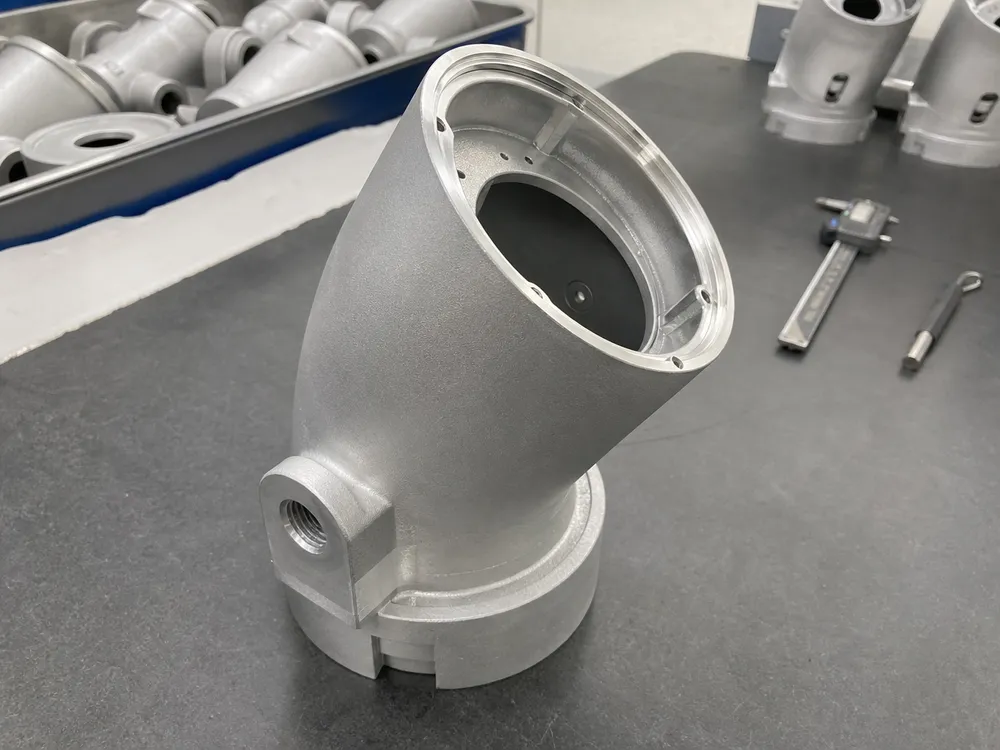
We run ADC12 die-cast aluminum on the housing for all ceiling spotlight SKUs. ADC12 is a high-silicon aluminum alloy — it flows well in the die, holds tight dimensional tolerances on the mounting boss and gimbal seat, and dissipates heat efficiently from the LED module. The alternative you'll see from lower-cost suppliers is pressed steel or thin-wall zinc alloy. Pressed steel is cheaper to form but corrodes at weld points and doesn't conduct heat away from the driver cavity. Zinc alloy is heavier and has lower thermal conductivity than aluminum — fine for decorative applications where heat management isn't critical, but a liability in a spotlight running 25–35W continuously.
The practical consequence for your business: aluminum housing ceiling spotlights run cooler, which means LED lumen maintenance stays higher over the fixture's life. A fixture that delivers 90% of its rated lumens at 25,000 hours generates fewer warranty complaints from your downstream customers than one that's visibly dimmed at 15,000 hours. We've seen this play out with buyers who switched from steel-housing spotlights — the warranty claim rate dropped noticeably, and that's a real margin impact when you're servicing a hotel account with 300 fixtures installed.
Housing Material Comparison
ADC12 Die-Cast Aluminum
High-silicon alloy with excellent thermal conductivity. Flows well in die, holds tight tolerances on mounting boss and gimbal seat.
- Superior heat dissipation
- Corrosion resistant
- Dimensional consistency ±0.1mm
- Lightweight
Pressed Steel
Cheaper to form but introduces long-term reliability concerns in continuous-use commercial applications.
- Corrodes at weld points
- Poor heat conduction from driver cavity
- Lower lumen maintenance over time
- Higher warranty claim rates
Zinc Alloy
Heavier with lower thermal conductivity. Acceptable for decorative applications but a liability in 25–35W continuous-use spotlights.
- Heavier than aluminum
- Lower thermal conductivity
- Not suited for high-wattage continuous use
- Accelerated lumen depreciation
CNC Tolerances: ±0.1mm Across Production Batches
CNC tolerances on the gimbal seat and mounting boss hold to ±0.1mm across a production batch. That's not a spec we advertise for its own sake — it means the fixture sits flush against the ceiling surface without shimming, and the beam angle you specify is the beam angle that gets installed. For project contractors specifying ceiling spotlights across a 200-room hotel, dimensional consistency is the difference between a clean installation and a callback.
Beam Angle and CCT: Configuring for Your Market Segments
Ceiling spotlights sell into distinct commercial segments, and the beam angle and color temperature configuration that moves in one segment is wrong for another. Here's how we think about it, based on what our buyers across different regions actually order.
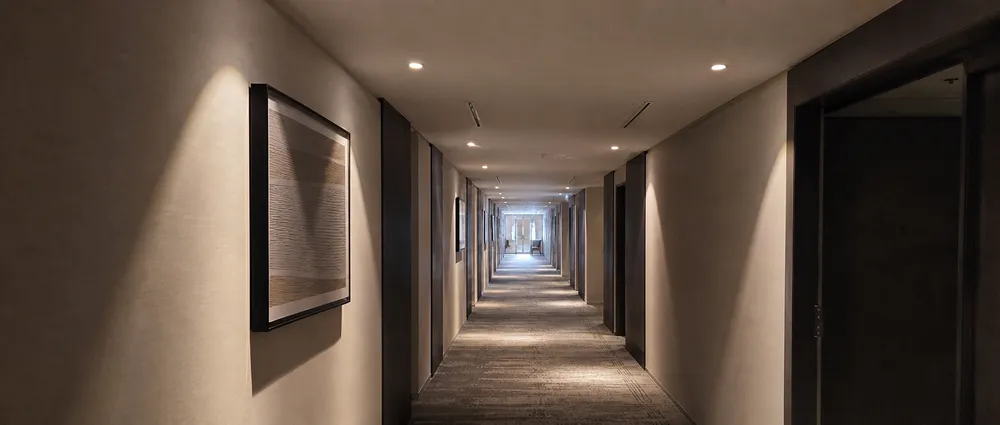
Hospitality
Hotels, restaurants, bars
Warm color temperature reads as premium in hospitality environments, and the mid-range beam angle gives enough spread for table or artwork illumination without the harsh edge of a narrow spot. CRI ≥90 is standard here — color rendering matters when the fixture is over food or artwork.
This is a high-volume, repeatable segment: a hotel chain rolling out a new property program will order the same SKU across hundreds of rooms, and reorder it for the next property. This segment has been our strongest growth area for ceiling spotlights over the past three years — worth building into your line if you're not already there.
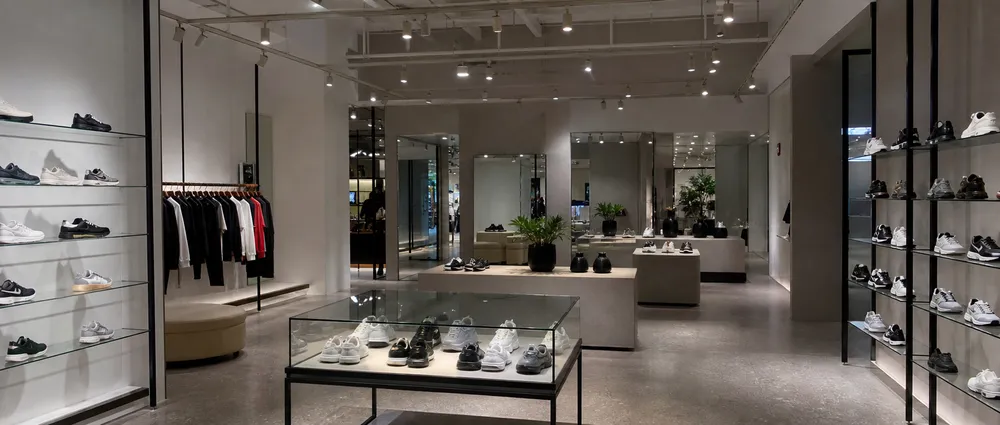
Retail & Commercial Fit-Out
Retail stores, showrooms, commercial spaces
Retail buyers want tight beam control for merchandise accent lighting, and cooler color temperatures read as clean and modern in contemporary retail environments. Dimming compatibility is almost always required — TRIAC dimming for markets with standard dimmer infrastructure, DALI for larger commercial installations with building management systems.
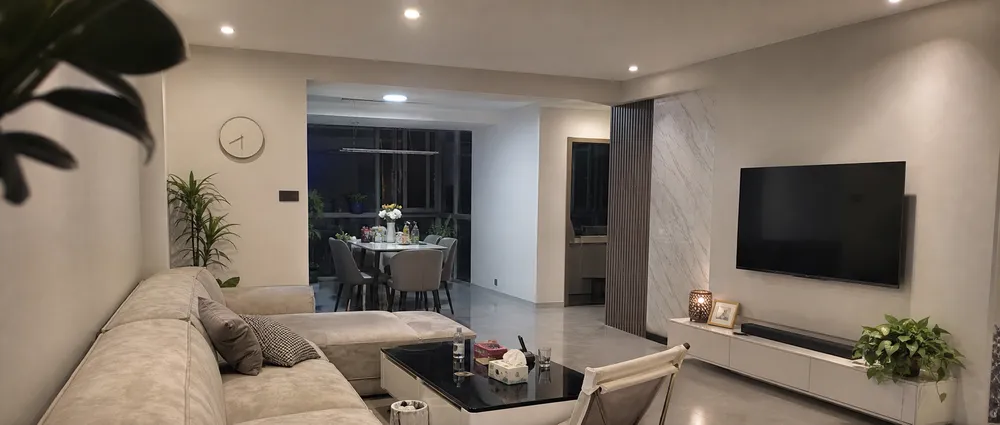
Residential & Villa Projects
Living spaces, villas, bathrooms
The wider beam angle works for general ambient lighting in living spaces, and warm CCT is the residential standard in most markets. IP44 rating comes up frequently for bathroom specifications — worth stocking if you're supplying residential contractors.
Gallery & Museum
Art galleries, museums, exhibition spaces
This is a lower-volume but higher-margin segment. The CRI requirement is non-negotiable for art display, and buyers in this segment are willing to pay for it. We can generate IES files from our optical lab for project submissions — useful if your buyer is a lighting designer who needs photometric data for the specification document.
See also: Gallery Spotlights for dedicated museum-grade fixtures.

Each configuration is available as a standard SKU or custom build
Contact us with your target segment and volume — we'll recommend the specific configuration and confirm availability.
Certifications and Market Compliance
CE, UL, and SAA are held in-house and maintained — not sourced from a third-party certificate broker. That distinction matters when your import team is reviewing documentation: the test reports are ours, the Declaration of Conformity is ours, and when a certification body asks a follow-up question, we can answer it.
CE
Covers the European market and is required for import into EU member states. Our ceiling spotlights comply with the Low Voltage Directive (LVD) and Electromagnetic Compatibility Directive (EMC). RoHS compliance is standard across the range — no restricted substances in the PCB or driver components.
UL
Covers the North American market. UL-listed ceiling spotlights clear the compliance review that most US and Canadian distributors require before adding a new SKU to their catalog. If your buyers are in the US market and you're currently sourcing non-UL product, the compliance gap is a real barrier to shelf placement with larger retail or electrical wholesale accounts.
SAA
Covers the Australian market. The certification is held and current — if you're supplying Australian electrical wholesalers or project contractors, the documentation is ready.
SGS
Audit reports are available on request for buyers whose procurement process requires third-party factory verification.
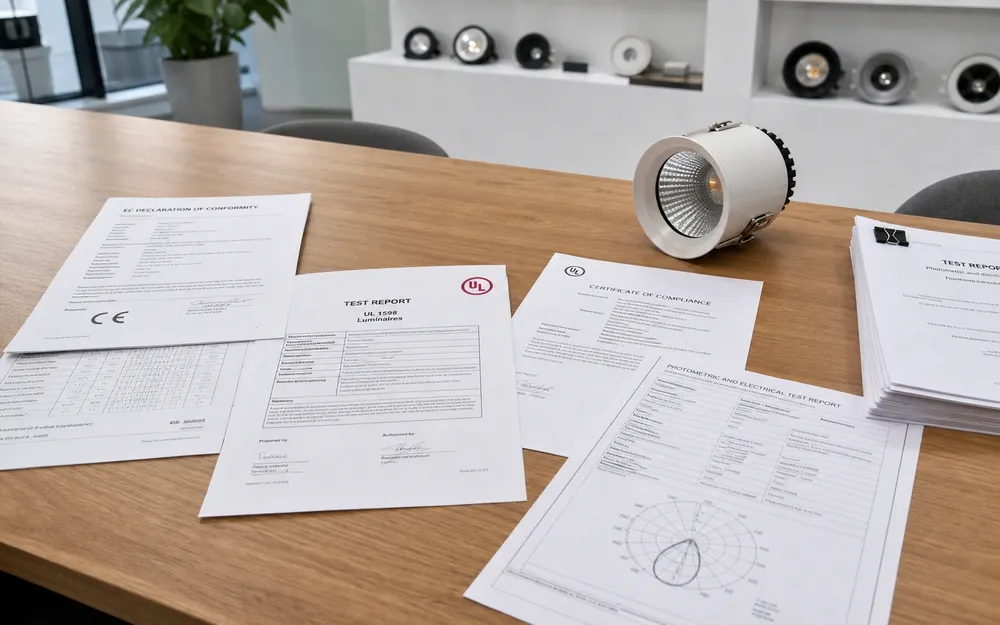
Documentation Ready for Tender Packages
For buyers entering new markets or supplying project contractors who need compliance documentation as part of the tender package, we maintain test reports and Declaration of Conformity per SKU.
- Test reports issued under our own name — not brokered
- Declaration of Conformity maintained per SKU
- Direct follow-up with certification bodies when questions arise
OEM and Custom Configuration: What Can Be Changed, What Can't
Most of our ceiling spotlight buyers aren't ordering off-the-shelf catalog product — they're building a line with their own branding, or specifying a configuration that matches a project requirement. Here's what's practical to customize and where the constraints are.
What We Customize Regularly
Finish & Color
Any RAL color is available on runs of 100+ units. Brushed gold, matte black, and brushed nickel are our highest-volume finishes and are available at standard MOQ. Custom PVD finishes (rose gold, champagne, gunmetal) are available on runs of 200+ units.
Beam Angle & CCT
Selectable per order at standard MOQ — no tooling change required.
Dimming Protocol
TRIAC, 0-10V, and DALI are all available. Specify at order time.
Driver Brand
We can accommodate specific driver brand requirements (Meanwell, Inventronics, Tridonic) for buyers whose projects have specified driver brands. Minimum order quantities apply.
Branding
OEM labeling on the fixture and packaging is standard. We don't put our name on your product.
Packaging
Custom retail packaging, white-label cartons, and FBA-ready labeling are all available.
What Requires Tooling Investment
Housing Geometry Changes
Different canopy diameter, different gimbal design, different mounting configuration — these require new die tooling. Tooling cost and lead time depend on complexity. Our engineering team can quote this from a drawing or reference image. Prototype turnaround after tooling approval runs 7–10 working days.
Non-Standard Mounting Configurations
Surface mount to pendant conversion, or integration with a proprietary track system — these are handled as ODM projects with dedicated engineering support.
What We Won't Do
We don't substitute the aluminum housing for pressed steel or zinc alloy to hit a lower price point. If the target cost requires a material change that compromises thermal performance, we'll tell you directly rather than quote it in and deliver a product that generates warranty claims.
Start an OEM Project
For OEM projects, send us your reference design, target market, volume, and certification requirements. Our engineering team will come back with a feasibility assessment and quote within 3–5 working days.
- Reference design or drawing
- Target market and certification needs
- Volume estimate
- Feasibility response in 3–5 working days
Market Segments Where Ceiling Spotlights Move
Hotel and Serviced Apartment Fit-Out
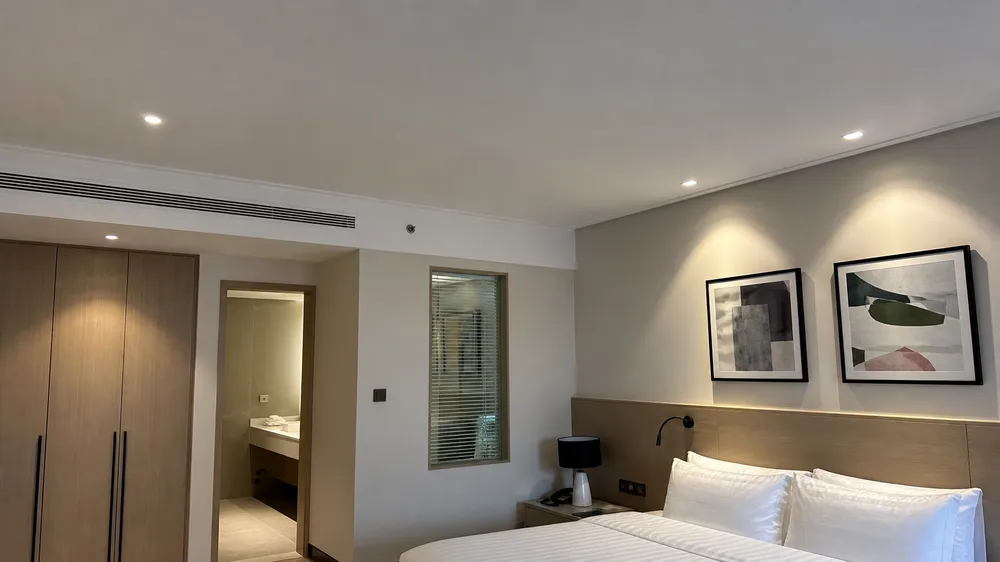
Hotel developers and FF&E contractors specify ceiling spotlights for guestroom accent lighting, corridor lighting, and lobby feature lighting. A mid-scale hotel property typically runs 8–15 ceiling spotlights per room across 100–300 rooms — that's 800–4,500 units per property, often with a repeat order for the next property in the pipeline.
Buyers supplying this segment need consistent finish quality across large batches (a color mismatch between rooms is a defect the hotel operator will flag) and reliable lead times that fit the construction schedule.
Retail Chain Rollout
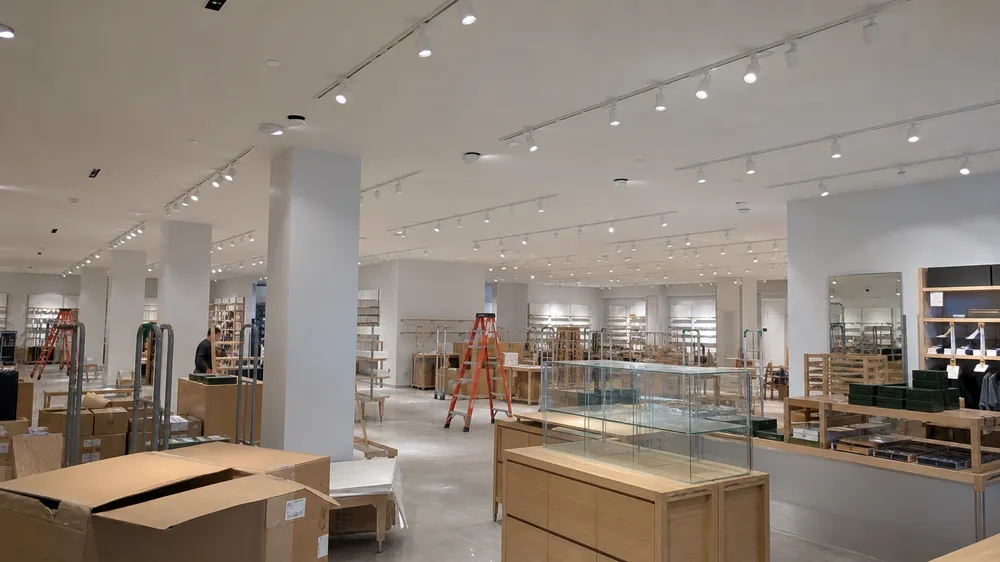
Retail chains specifying ceiling spotlights for merchandise accent lighting order in large batches tied to store opening schedules. The SKU is typically fixed for the duration of the rollout — 50 to 200 stores, same fixture, same finish, same beam angle.
Supply chain reliability and batch-to-batch consistency are the primary sourcing criteria. A distributor who can lock in a retail chain account has a predictable, high-volume revenue stream for the duration of the rollout.
Residential Developer Projects
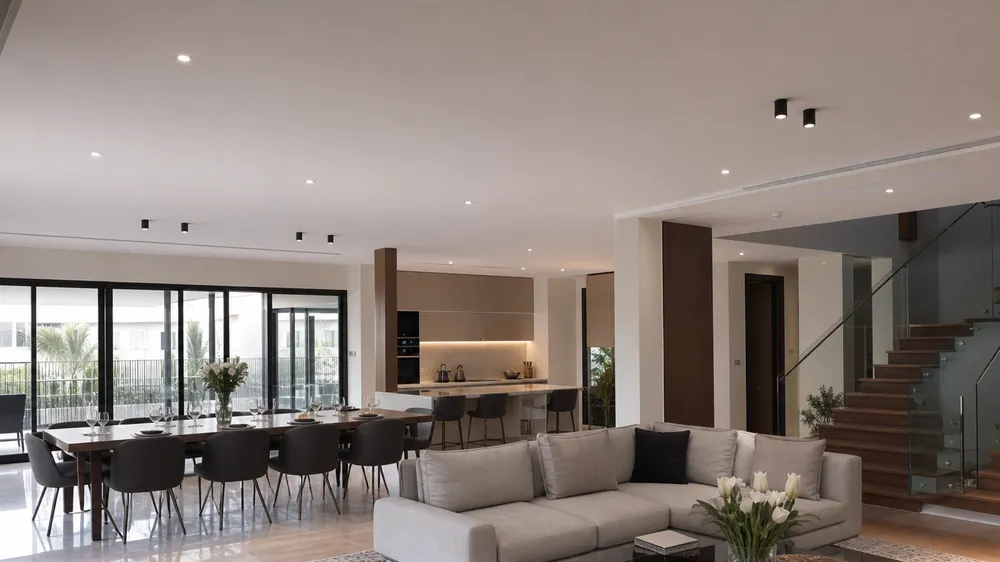
High-end residential developers in the Middle East, Southeast Asia, and Australia specify ceiling spotlights for villa and apartment projects. These are typically project-specific configurations — a developer may want a custom finish that matches their interior design scheme, or a specific CCT that their lighting designer has specified.
OEM capability and the ability to produce a custom sample within 7–10 days are the differentiators here.
Electrical Wholesale Distribution
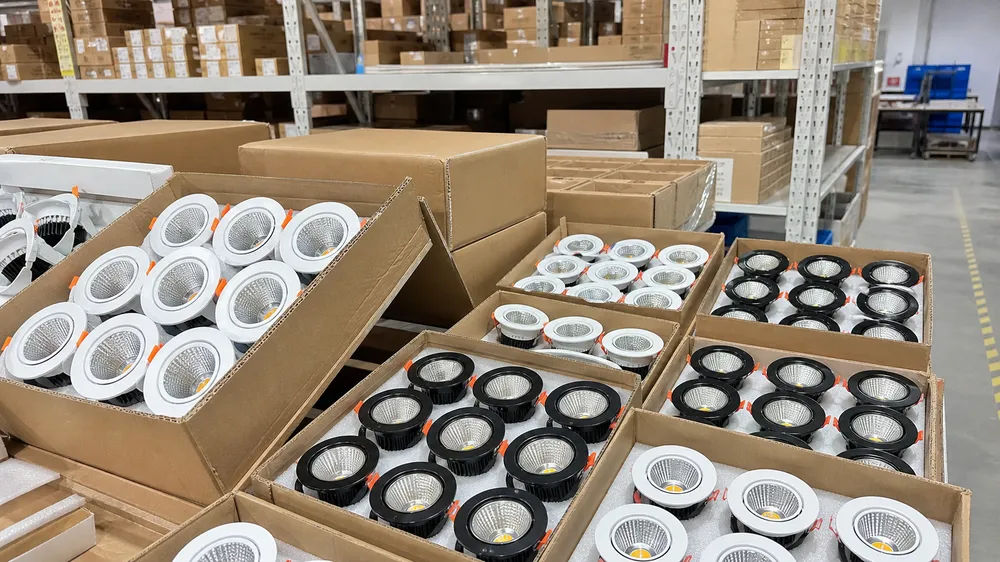
Electrical wholesalers stocking ceiling spotlights for contractor supply need a range that covers the common beam angle and CCT combinations, with consistent availability and predictable lead times for reorders.
The margin opportunity is in stocking a differentiated product — CE/UL/SAA certified, CRI ≥90, aluminum housing — that commands a premium over commodity product and generates fewer warranty returns.
How We Pack and What It Means for Your Landed Cost
Ceiling spotlights are compact fixtures, but the finish quality — brushed gold, matte black, PVD — is vulnerable to contact damage in transit. We pack each fixture in an individual foam-lined inner carton, with the gimbal locked in position to prevent movement during shipping. Outer cartons are rated for ocean freight compression and drop forces.
For 40HQ container loading, we optimize carton dimensions to maximize units per container. On a standard ceiling spotlight SKU, a 40HQ typically loads 3,000–5,000 units depending on fixture size — we'll confirm the exact loading count when we quote, so your freight cost calculation is accurate.
For buyers supplying e-commerce channels or Amazon FBA, we can pack to FBA requirements: FNSKU labeling, poly-bag wrapping, and carton dimensions within FBA limits. White-label packaging with your brand artwork is standard on OEM orders.
Fragile finish variants (brushed gold, PVD finishes) ship with additional foam inserts on the exposed surfaces. We've refined the packaging spec after seeing damage patterns on specific routes — the Gulf and Australian routes in particular have rough port handling, and the extra protection is worth the marginal packaging cost.
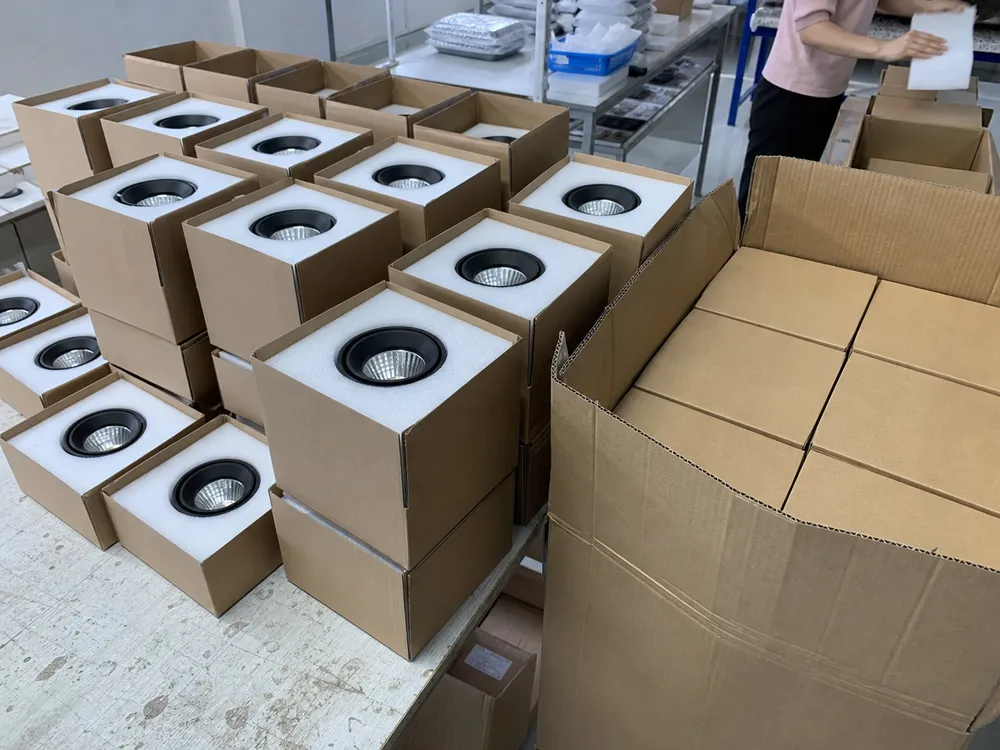
Packaging at a Glance
Individual Protection
Foam-lined inner carton per fixture, gimbal locked in position
40HQ Loading
3,000–5,000 units per container (size-dependent, confirmed at quote)
FBA-Ready Option
FNSKU labeling, poly-bag wrapping, FBA-compliant carton dimensions
White-Label Packaging
Your brand artwork on OEM orders, standard inclusion
Route-Specific Protection
Extra foam inserts for Gulf & Australian routes — refined from observed damage patterns
Ceiling Spotlights vs. Other Spotlight Types: Choosing the Right Fit
If you're building a spotlight range or advising a project contractor on specification, here's how ceiling spotlights compare to the other options in our range:
| Ceiling Spotlights | Recessed Spotlights | Adjustable Spotlights | Track Lighting | |
|---|---|---|---|---|
| Ceiling void required | No | Yes (75–100mm typical) | No | No |
| Beam adjustability | Fixed or ±30° tilt | Fixed or ±30° tilt | Wide-range pan and tilt | Full repositioning on track |
| Best for | Retrofit, concrete slab, feature lighting | New build, clean ceiling aesthetic | Accent and display lighting | Flexible multi-point layouts |
| Finish visibility | Fixture visible — finish matters | Trim ring only visible | Fixture visible | Head and track both visible |
| Installation complexity | Low | Medium (ceiling cutout required) | Low | Medium (track wiring) |
Ceiling Spotlights
- Ceiling void
- No
- Beam adjustability
- Fixed or ±30° tilt
- Best for
- Retrofit, concrete slab, feature lighting
- Finish visibility
- Fixture visible — finish matters
- Installation
- Low
Recessed Spotlights
- Ceiling void
- Yes (75–100mm)
- Beam adjustability
- Fixed or ±30° tilt
- Best for
- New build, clean ceiling aesthetic
- Finish visibility
- Trim ring only visible
- Installation
- Medium (cutout required)
Adjustable Spotlights
- Ceiling void
- No
- Beam adjustability
- Wide-range pan and tilt
- Best for
- Accent and display lighting
- Finish visibility
- Fixture visible
- Installation
- Low
Track Lighting
- Ceiling void
- No
- Beam adjustability
- Full repositioning on track
- Best for
- Flexible multi-point layouts
- Finish visibility
- Head and track both visible
- Installation
- Medium (track wiring)
If your buyer needs a flush ceiling aesthetic with no visible fixture, recessed spotlights are the right specification.
If they need wide-range beam repositioning for display or gallery use, adjustable spotlights give more flexibility.
If the project requires multiple light points on a single circuit with repositionable heads, track lighting is the answer.
FAQ
What is the minimum order quantity for ceiling spotlights?
MOQ varies by configuration. Standard catalog SKUs (fixed beam angle, standard finish, standard CCT) have lower MOQ thresholds. Custom configurations — non-standard RAL colors, custom driver specs, OEM branding — have higher MOQ requirements. Contact us with your specific configuration and we'll confirm the MOQ and lead time.
What beam angle should I specify for hotel guestroom ceiling spotlights?
24° is the most common specification for hotel guestrooms — it gives enough spread to illuminate a bedside table or artwork without spilling onto adjacent surfaces. For corridor lighting where the fixture is mounted higher (3m+), 36° works better to maintain adequate floor illuminance. If the designer has specified a particular beam angle in the lighting layout, match it exactly — beam angle affects the photometric calculation and changing it post-specification creates a compliance issue with the lighting design.
Do your ceiling spotlights support DALI dimming?
Yes. DALI-compatible drivers are available across the range. Specify DALI at order time — it's a driver selection, not a housing change, so it doesn't affect lead time. TRIAC and 0-10V dimming are also available. If you're unsure which dimming protocol your buyer's building management system uses, DALI is the safest specification for commercial projects — it's the most widely supported protocol in commercial BMS installations.
What CRI do I need for retail merchandise lighting?
CRI ≥90 is the minimum for retail applications where color accuracy matters — apparel, cosmetics, food. For premium retail or jewelry display, specify CRI ≥95. The difference in unit cost is modest; the difference in how merchandise looks under the light is significant, and it's a selling point your retail buyers can use with their store design teams. We offer both CRI tiers across the ceiling spotlight range.
How do I verify the certifications before placing an order?
We provide CE Declaration of Conformity, UL listing documentation, and SAA certification per SKU as part of the standard order documentation package. Test reports from the certification bodies are available on request. If your compliance team needs to review documentation before committing to an order, send us the SKU specification and we'll provide the relevant documents for review.
What's the lead time for a custom OEM ceiling spotlight?
For configurations that don't require new tooling (custom finish, custom CCT, custom driver, OEM branding on standard housing), lead time runs 25–35 days from order confirmation. If new die tooling is required for a housing geometry change, add 15–20 days for the tooling cycle. Prototype samples for new OEM designs are available within 7–10 working days from approved drawings.
Start a Sourcing Conversation
If you're building a ceiling spotlight line for a specific market — hospitality, retail, residential, or electrical wholesale — send us your target configuration: beam angle, CCT, finish, dimming requirement, certification market, and volume. We'll come back with a specific quote and, if it's useful, a recommendation on configuration based on what's moving for our existing buyers in your region.
New to sourcing ceiling spotlights from China? Most buyers start with a sample order of 2–5 units to test finish quality and photometric performance against their own spec before committing to a production run. We can ship samples within the standard lead time — contact us to arrange.
Wholesale only. Strict MOQ applies.