

Hallway & Stairway Wall Lighting
Designed for the specific constraints of corridor and stairway installation: compact mounting profiles, directional light distribution, and finish durability that holds across a 500-unit batch. Every fixture ships after 100% aging test.
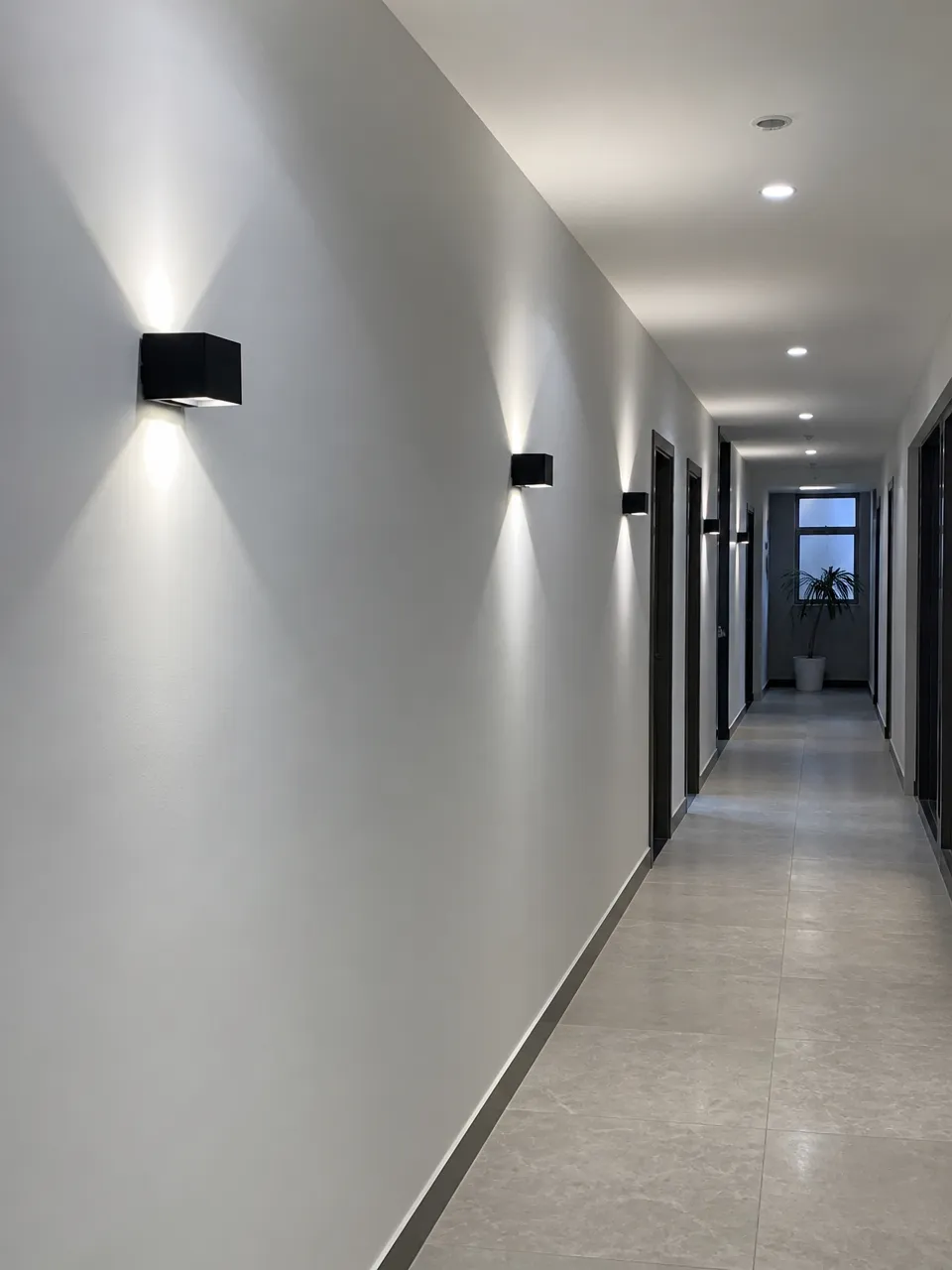
What Makes Hallway & Stairway Wall Lighting a Distinct Sourcing Category
Hallway wall lighting and stairway wall lighting look like a subset of general wall sconces on a spec sheet, but they're a different sourcing problem in practice. The installation environment is constrained — narrow corridors, angled stairway walls, low-clearance ceiling heights — and the fixtures need to work within those constraints without requiring custom electrical work on-site. Mounting depth matters. Projection from the wall matters. Light distribution matters in a way it doesn't for a bedside sconce where the fixture is decorative first and functional second.
We've been making wall fixtures for corridor and stairway applications since the early years of the factory, and the design decisions that come up repeatedly are consistent: buyers need a compact backplate that fits standard junction box spacing across multiple markets, a housing profile that doesn't project so far from the wall that it becomes a hazard in a narrow stairwell, and a light distribution pattern that illuminates the walking surface rather than blinding someone coming down the stairs. Those aren't aesthetic choices — they're functional requirements that determine whether the fixture works in the installation or creates a callback.
Within the wall lighting category, hallway and stairway fixtures occupy a specific position: they're higher-volume than accent pieces (a hotel corridor might run 80–120 units per floor), they're more specification-driven than purely decorative sconces, and they're often part of a larger project package that includes ceiling fixtures and pendant lighting for the same space. That project-package dynamic is worth understanding if you're building a product line — buyers who source hallway wall lighting from us frequently come back for the matching ceiling and pendant SKUs.
View our full wall lighting range for the complete picture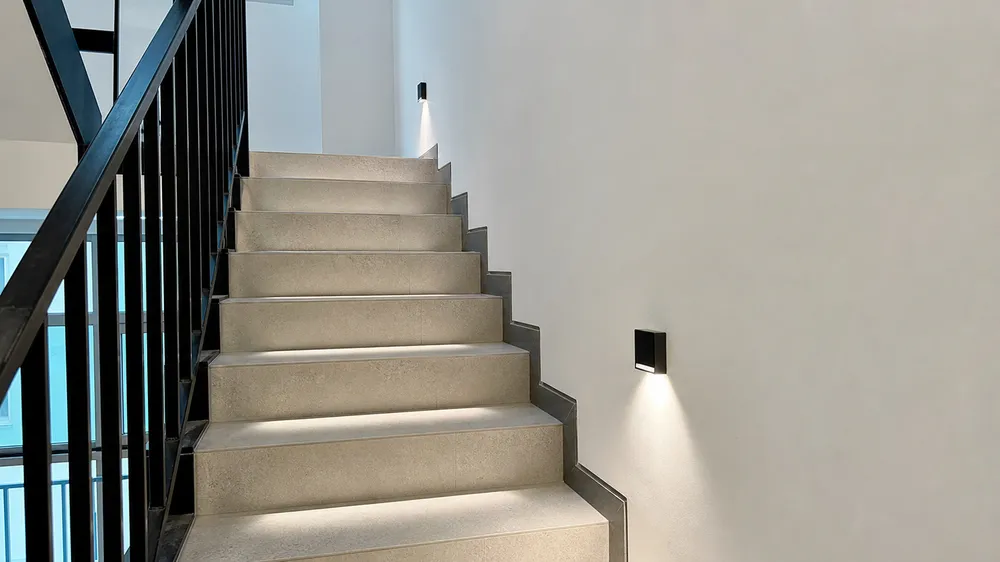
Compact Mounting Profile
Backplate fits standard junction box spacing across multiple markets. Housing projection stays within safe clearance for narrow stairwells.
Directional Distribution
Light pattern illuminates the walking surface rather than blinding someone coming down the stairs — a functional requirement, not an aesthetic choice.
Volume-Ready (80–120 per Floor)
Higher-volume than accent pieces, more specification-driven than decorative sconces. Often part of a project package with matching ceiling and pendant SKUs.
Specifications: What to Put in Your Comparison Sheet
Hallway and stairway wall sconces from ASCLighting are available in two primary housing configurations — uplight/downlight and single-direction — with the following typical parameters. These are industry-standard values for this product type; contact us for exact data sheets on specific SKUs.
| Parameter | Typical Value | Notes |
|---|---|---|
| Housing material | Aluminum alloy (ADC12) | Die-cast in-house; CNC-machined mounting face |
| Shade / diffuser | Frosted glass, clear glass, or metal shade | Glass options blown or pressed; specify per SKU |
| Wall projection | 100–180mm | Compact profiles available for narrow corridors |
| Backplate dimensions | 100×100mm to 150×200mm | Fits standard single-gang and double-gang boxes |
| Wattage | 6W – 18W LED | Driver matched per SKU and destination voltage |
| Input voltage | 100–240V AC, 50/60Hz | Universal driver standard; single-voltage available |
| Color temperature | 2700K, 3000K, 4000K | Specify at order; mixed-batch available on 200+ units |
| CRI | ≥80 (standard) / ≥90 (available) | CRI 90+ recommended for hospitality applications |
| IP rating | IP20 (standard indoor) / IP44 (bathroom-adjacent) | Specify for damp-location installations |
| Dimming | Trailing-edge TRIAC compatible (standard) | 0–10V and DALI available on OEM runs |
| Certifications | CE, UL, SAA | Per destination market; documentation provided |
| Finish options | Matte black, brushed gold, brushed nickel, antique brass, white | Additional RAL colors on OEM runs ≥200 units |
| Standard lead time | 25–35 days from order confirmation | OEM/custom: add 15–20 days for tooling |
Specifications shown are industry-standard values for this product type. Actual specifications may vary by SKU. Contact us for detailed product data sheets and photometric reports.
Three Market Segments Where This Product Moves
Hospitality: Hotels, Serviced Apartments, and Boutique Properties
Hotel corridor lighting is one of the highest-volume repeat segments in the wall sconce category. A mid-scale hotel property running 150 rooms across 5 floors typically needs 80–150 corridor wall fixtures per floor, plus stairwell fixtures — a single property can represent a 500–800 unit order. The specification requirements are consistent: the fixture needs to match the property's interior design language, meet the local electrical code (CE for Europe, UL for North America, SAA for Australia), and hold finish quality across the full batch so the corridor looks uniform three years after installation.
We supply this segment regularly, and the pattern we see is that hospitality buyers come in with a design reference — often a mood board or a competitor fixture they want to match — and need us to produce a version that hits their target landed cost while holding the aesthetic. That's an OEM conversation, and it's one we're set up for: 7–10 day prototype turnaround, in-house die-casting so we can modify the housing geometry without going to a third-party tooling shop, and surface finishing that can match a reference finish sample within two rounds of approval.
Brushed gold is the most common hospitality finish request right now — we have the PVD process dialed in for consistent color across large batches, which is where a lot of factories struggle.
For hospitality buyers, the commercial logic is straightforward: a property developer or FF&E contractor specifying 10 properties per year is a 5,000–8,000 unit annual program. That's the kind of volume where a reliable factory relationship — consistent quality, documentation for import, and a factory that communicates proactively when there's a production issue — is worth more than saving $0.50 per unit on a cheaper source that creates callbacks.
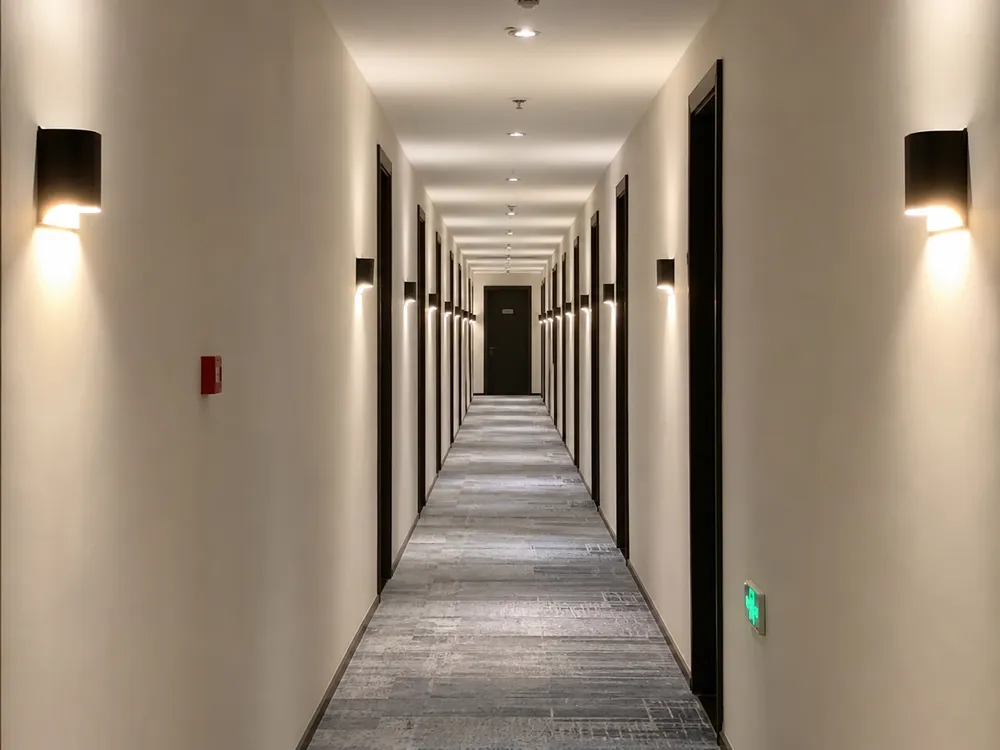
Typical Hospitality Order Profile
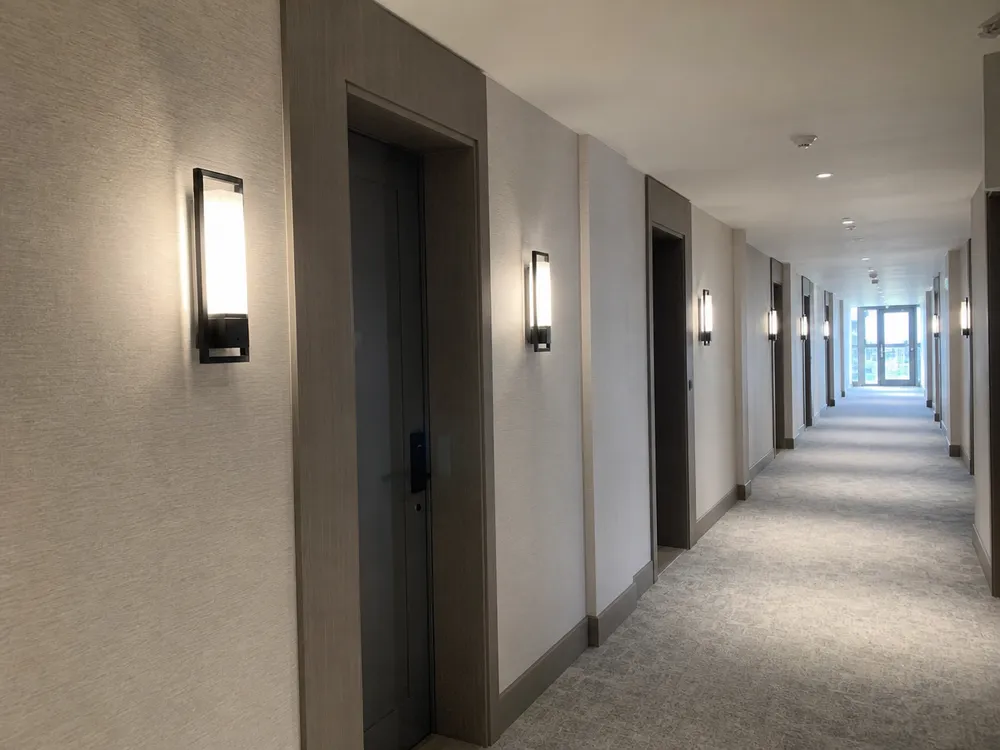
Residential Development: Multi-Unit and Luxury Residential Projects
High-rise residential and luxury villa projects are the second major segment. A 200-unit residential tower might spec hallway wall lighting for every floor corridor, stairwell, and unit entrance — easily 300–500 fixtures per building. The specification here is often driven by the interior designer or the developer's procurement team, and the key decision factors are finish consistency, CE or UL compliance for the destination market, and the ability to supply replacement units 12–18 months after the initial order if there's a phase-two building.
Reorder Consistency Guarantee
We maintain production records per SKU, so reorder consistency is something we can actually deliver rather than just promise. The tooling stays in our facility, the finish formula is documented, and the driver spec is locked to the SKU. When your client calls for 50 replacement units two years later, the fixtures match the originals.
Commercial and Office Fit-Out: Corridors, Stairwells, and Common Areas
Office buildings, co-working spaces, and commercial fit-outs represent a third segment with different buying patterns. These projects are typically specified by a lighting designer or M&E contractor, and the fixture needs to meet a photometric requirement — a minimum lux level at floor height — as well as an aesthetic brief. The corridor wall lighting in this context is often paired with recessed ceiling fixtures, and the buyer needs both to come from a supplier who can provide IES files for the lighting design software.
In-House Optical Lab
Our in-house optical lab generates IES files from actual photometric measurements, not manufacturer estimates. For buyers whose clients are running AGi32 or DIALux calculations for a project submission, that's a meaningful difference — the simulation matches what gets installed.
Learn about our manufacturing capabilities for more on the optical lab and photometric verification process.
Request a Quote for Your Project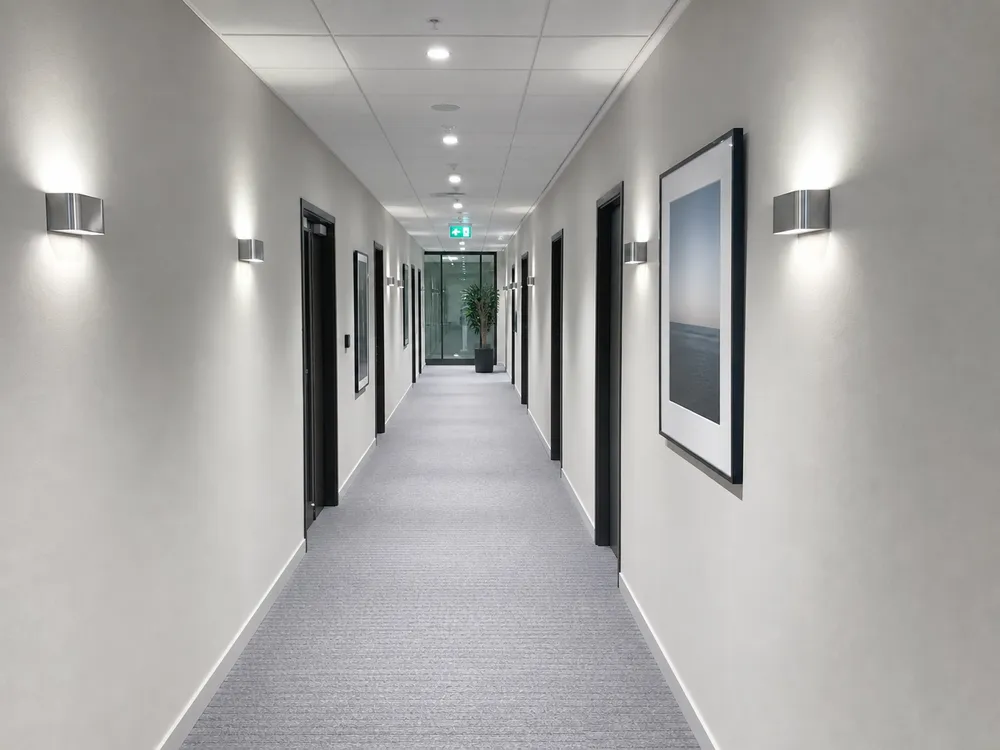
Commercial Specification Requirements
- Photometric performance — minimum lux at floor height
- IES files from actual lab measurements for AGi32 / DIALux
- Aesthetic brief compliance for design-led fit-outs
- Paired supply with recessed ceiling fixtures from single source
Finish Durability and Batch Consistency: The Two Variables That Drive Returns
In the wall sconce category, the two most common sources of buyer complaints are finish inconsistency across a batch and finish degradation in the field. Both are manufacturing problems, not design problems, and both are preventable with the right process.
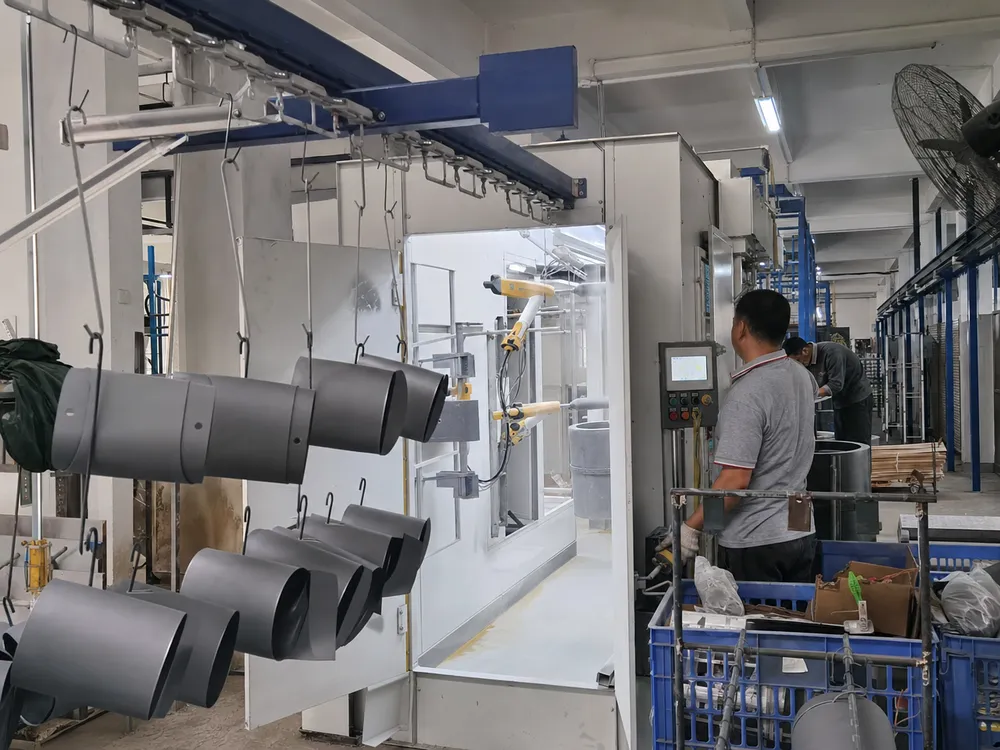
In-House Surface Finishing Line
Our surface finishing line runs electroplating, powder coating, and PVD in-house. Powder coat application is automated — 60–80μm consistent thickness across the batch, not just the first units off the line. Before we commit a finish to a production run, we pull samples and run salt spray testing: 500 hours minimum for standard indoor finishes, 1,000 hours for finishes going into coastal or high-humidity environments.
If the sample fails, we adjust the pre-treatment process before the batch runs.
Lesson Learned: Climate-Specific Testing
We added the extended salt spray protocol after a batch of brushed nickel fixtures showed early corrosion for a Southeast Asian buyer — the ambient humidity in that market is higher than our standard test accounted for. We now ask buyers to flag their destination climate at the order stage.
Batch Consistency: Process Control, Not Just Inspection
Batch consistency is a function of process control, not just quality inspection. We run the same tooling across a production batch — no mid-run tooling swaps — and the automated powder line applies the same parameters to unit 1 and unit 500. For buyers supplying a project where all 200 corridor fixtures need to look identical under the same lighting conditions, that process discipline is what prevents the "why does this one look slightly different" conversation with the end client.
OEM Finish Matching Process
For OEM buyers who need a specific finish matched to a reference sample — a particular shade of brushed gold, a specific matte texture — we run finish approval rounds before production. Two rounds is standard; we've rarely needed a third when the reference sample is physical rather than a digital color code.
Initial finish sample produced from physical reference. Buyer reviews under target lighting conditions.
Adjusted sample with corrections. Approval locks finish formula for production batch.
Locked formula applied consistently across full batch run.
Physical reference samples produce faster approvals than digital color codes
Customization Parameters: What You Can Specify and What Has Limits
Hallway and stairway wall lighting customization at ASCLighting covers four dimensions: housing geometry, finish, light source specification, and branding. Here's what's realistic at different order volumes.
Housing Geometry
Standard catalog housings are available as-is. Modifications to backplate dimensions, wall projection depth, or shade profile require new or modified tooling — typically a 15–20 day tooling cycle before production starts.
For buyers who need a specific mounting depth to fit a non-standard junction box configuration in their target market, this is a common OEM request and one we handle regularly.
Minimum order for tooling-based customization: 200 units per SKU
Finish
The five standard finishes — matte black, brushed gold, brushed nickel, antique brass, white — are available at standard MOQ.
Custom RAL colors via powder coat: available on runs of 200+ units — the powder line changeover cost doesn't make sense below that threshold for either party.
PVD finishes (brushed gold, rose gold, chrome): available on runs of 100+ units.
Custom finish matching to a physical reference sample: available, with two approval rounds included.
Light Source Specification
Color temperature, CRI, wattage, and dimming protocol can be specified per order at standard MOQ. Driver selection is matched to your destination market voltage and certification requirements — we don't use a single driver spec across all markets.
If your project requires DALI or 0–10V dimming for a building management system integration, specify at the order stage; this affects driver selection and adds a small cost premium.
Branding
Private label packaging, custom carton printing, and fixture labeling with your brand name are available at standard MOQ.
Fixture-level branding (engraved or printed logo on the backplate or housing) is available on OEM runs of 200+ units.
What Has Limits
We don't do single-unit custom orders — wholesale only, strict MOQ applies.
Structural modifications that require new die-casting tooling have a minimum 200-unit threshold.
Certifications are held at the factory level for CE, UL, and SAA; if your project requires a specific national certification not in our current portfolio, we can discuss the testing and certification timeline, but it adds lead time and cost.
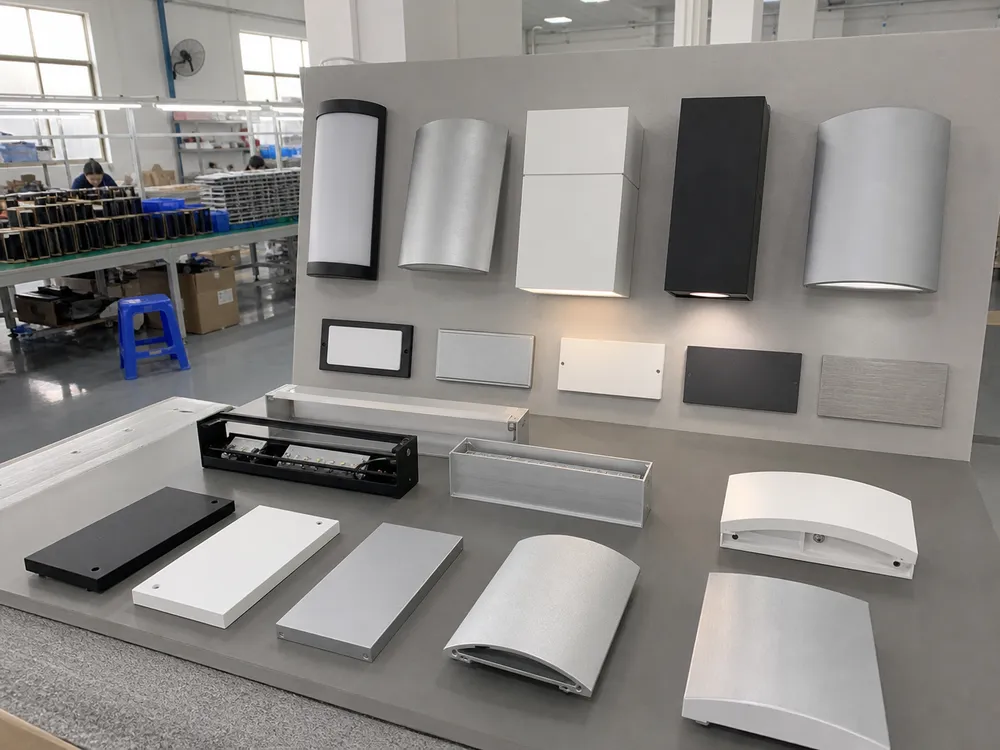
Whether you need a specific mounting depth for a non-standard junction box, a custom RAL color to match an interior specification, or DALI-compatible drivers for building management integration — these are standard OEM requests we handle on a regular production basis.
Discuss Your Customization RequirementsHow We Pack for Corridor and Stairway Fixture Orders
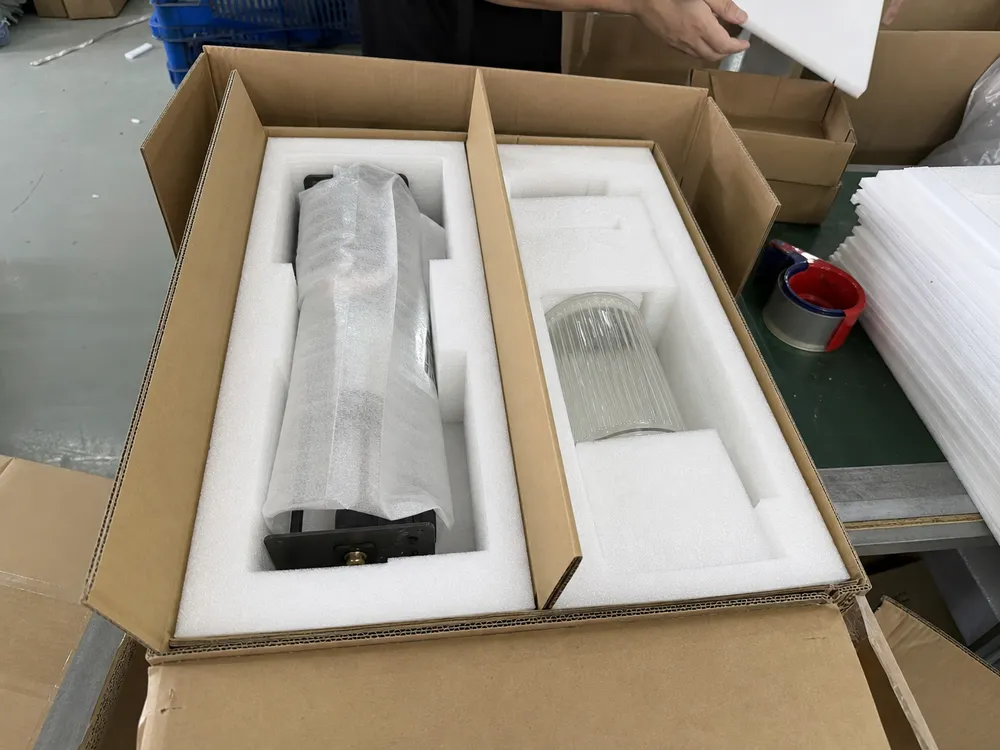
Packaging for hallway and stairway wall sconces is engineered per SKU, not a generic box. Each fixture ships in an individual foam-lined inner carton — the foam profile is cut to the fixture geometry, so the housing and any glass components are immobilized during transit.
Multi-Layer Protection System
The inner carton goes into a master carton with outer reinforcement rated for ocean freight compression and drop forces.
For glass shade variants, we add a secondary foam layer around the glass and a cardboard separator between the glass and the metal housing.
Route-specific packaging: We've tracked damage patterns from specific shipping routes and adjusted the packaging accordingly — the Middle East and Southeast Asia routes have higher handling variability than direct Europe or North America lanes, and the packaging for those destinations reflects that.
Container Loading Efficiency
Standard hallway sconce SKUs (compact profile, 100–180mm projection) typically load at the following densities:
400–600
units per 20GP
900–1,200
units per 40HQ
Depending on carton dimensions. We optimize carton sizing for container loading at the SKU design stage — a 5–8% improvement in units per container is real money on a 1,000-unit order.
If you're planning a large shipment and want to know the loading efficiency for a specific SKU before committing, send us the order quantity and we'll run the numbers.
E-Commerce & Direct-to-Consumer Packaging
For buyers supplying e-commerce channels (Amazon, Wayfair, independent stores), we can configure packaging for direct-to-consumer shipment:
White-label packaging available — specify at the order stage.
Certifications and Compliance for Your Target Market
CE, UL, and SAA are held and maintained at the factory level — not pending, not "available upon request." For buyers importing into Europe, North America, or Australia, the compliance documentation is part of the standard order package: Declaration of Conformity, test reports, and any market-specific labeling requirements.
For hallway and stairway wall lighting specifically, the relevant compliance considerations beyond the fixture certification are:
IP Rating
Standard indoor corridor fixtures are IP20. If the installation includes bathroom-adjacent corridors or covered outdoor stairwells, specify IP44 at the order stage. We manufacture both; the IP44 version uses a sealed driver compartment and gasketed glass mounting.
Dimming Compatibility
Many commercial and hospitality projects use existing dimmer infrastructure. Our standard drivers are trailing-edge TRIAC compatible, which covers the majority of installed dimmers in North American and European markets. If your project has a specific dimmer brand requirement, send us the model — we can verify compatibility before the order.
Material Safety
Powder coat materials on the main finishing line are low-VOC. RoHS compliance documentation is available for buyers importing into EU markets. REACH compliance documentation available on request.
Photometric Documentation
IES files generated from in-house optical lab measurements are available for all standard SKUs. For project submissions requiring photometric data, request IES files at the sample stage.
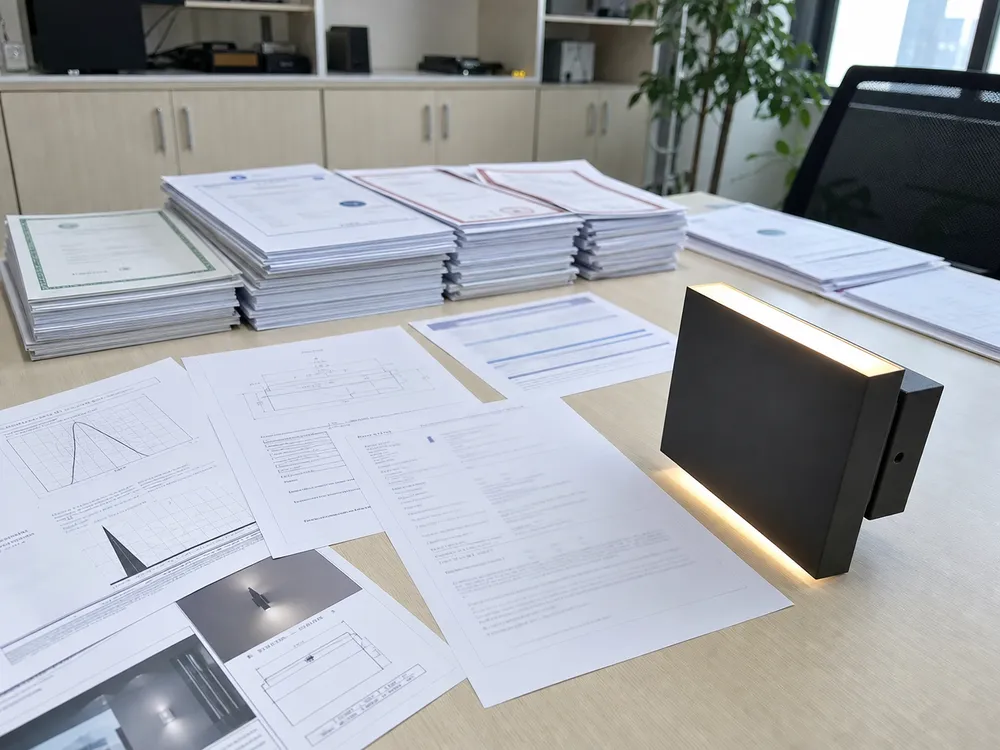
Standard Order Package Includes
- Declaration of Conformity
- Third-party test reports
- Market-specific labeling requirements
- IES photometric files (on request)
Selecting the Right Wall Lighting for Your Application
Hallway and stairway wall lighting is one of eight product lines in our wall lighting range. If you're building a complete wall lighting program or evaluating options across the category, here's how the sibling products position relative to this one:
Wall Sconce Lighting
Broader decorative range, less constrained by installation geometry — better fit for living spaces and feature walls where projection depth and shade size are less critical.
Modern Wall Lighting
Minimalist and contemporary profiles, often specified for high-design residential and hospitality projects where the fixture is a design statement rather than a functional corridor light.
Linear Wall Lighting
Horizontal or vertical linear formats — suited for stairway applications where a continuous light line along the wall is the design intent, rather than individual point fixtures.
LED Wall Lighting
LED-forward range with emphasis on energy efficiency metrics — relevant if your buyer's project has energy code requirements (ASHRAE 90.1, Part L) that require documented efficacy values.
Interior Wall Lighting
Broader interior application range covering living room, bedroom, and dining room — if your program needs wall lighting across multiple room types, this is the starting point.
Not Sure Which Fits?
Send us your project brief or a reference image — we'll point you to the right SKU and configuration.
Common Sourcing Questions
What is the minimum order quantity for hallway wall lighting?
MOQ varies by SKU and configuration. Standard catalog finishes typically start at 50–100 units per SKU. Custom finishes and OEM modifications start at 200 units. Contact us with your specific requirement and we'll confirm the MOQ and lead time.
What color temperatures are available, and can I mix them in one order?
Standard options are 2700K, 3000K, and 4000K. Mixed color temperatures within a single order are available on runs of 200+ units — below that threshold, the production scheduling doesn't support mid-run color temperature changes efficiently.
For most corridor applications, 3000K is the most common specification; 4000K is more common in commercial office fit-outs.
What IP rating do I need for stairway wall lighting in a covered outdoor stairwell?
Covered outdoor stairwells with no direct rain exposure typically require IP44 minimum. If the installation has any exposure to water spray or condensation, IP44 is the right specification. IP20 is for fully indoor, dry locations only.
We manufacture both — specify at the order stage.
Can you match a finish to a reference sample from another supplier?
Yes, for runs of 200+ units. Send us a physical sample (not a digital color code — screen calibration varies too much for finish matching). We run two approval rounds on the finish before committing to production.
The matching process adds 5–7 working days to the pre-production timeline.
Do you provide IES files for lighting design software?
Yes. IES files are generated from in-house photometric measurements for all standard SKUs. Request them at the sample stage or when placing the order.
If you need IES files before committing to a sample order — for a project submission — contact us with the SKU reference and we'll provide them.
What happens if a batch has a quality issue after it ships?
Every luminaire goes through 100% aging test before packing, and photometric verification runs on a sample basis from each batch.
If a quality issue is identified after shipment, we investigate the production records for that batch and work with you on a resolution — replacement units, credit, or root cause documentation depending on the nature of the issue.
We maintain production records per batch, so the investigation is based on actual data, not guesswork.
Request a Quote for Hallway & Stairway Wall Lighting
Send us your project specs — fixture count, target market, finish preference, certification requirements, and any installation constraints — and we'll come back with a detailed quote and a recommendation on configuration based on what's working for our existing buyers in your region.
Most new buyers in this category start with a sample order of 2–4 units to verify finish quality and fit before committing to a production run. We can ship samples within the standard lead time; contact us to discuss sample terms.
Wholesale only. Strict MOQ applies.