

Art Wall Lighting & Picture Lights
CRI 95+ art wall lighting built for galleries, hospitality, and high-end retail — adjustable arm picture lights and gallery fixtures manufactured to color-accuracy standards, not just catalog specs.
Beam angles from 15° to 45°, in-house photometric verification, and OEM capability for private-label programs. CE, UL, and SAA certified for North American, European, and Australian market entry.
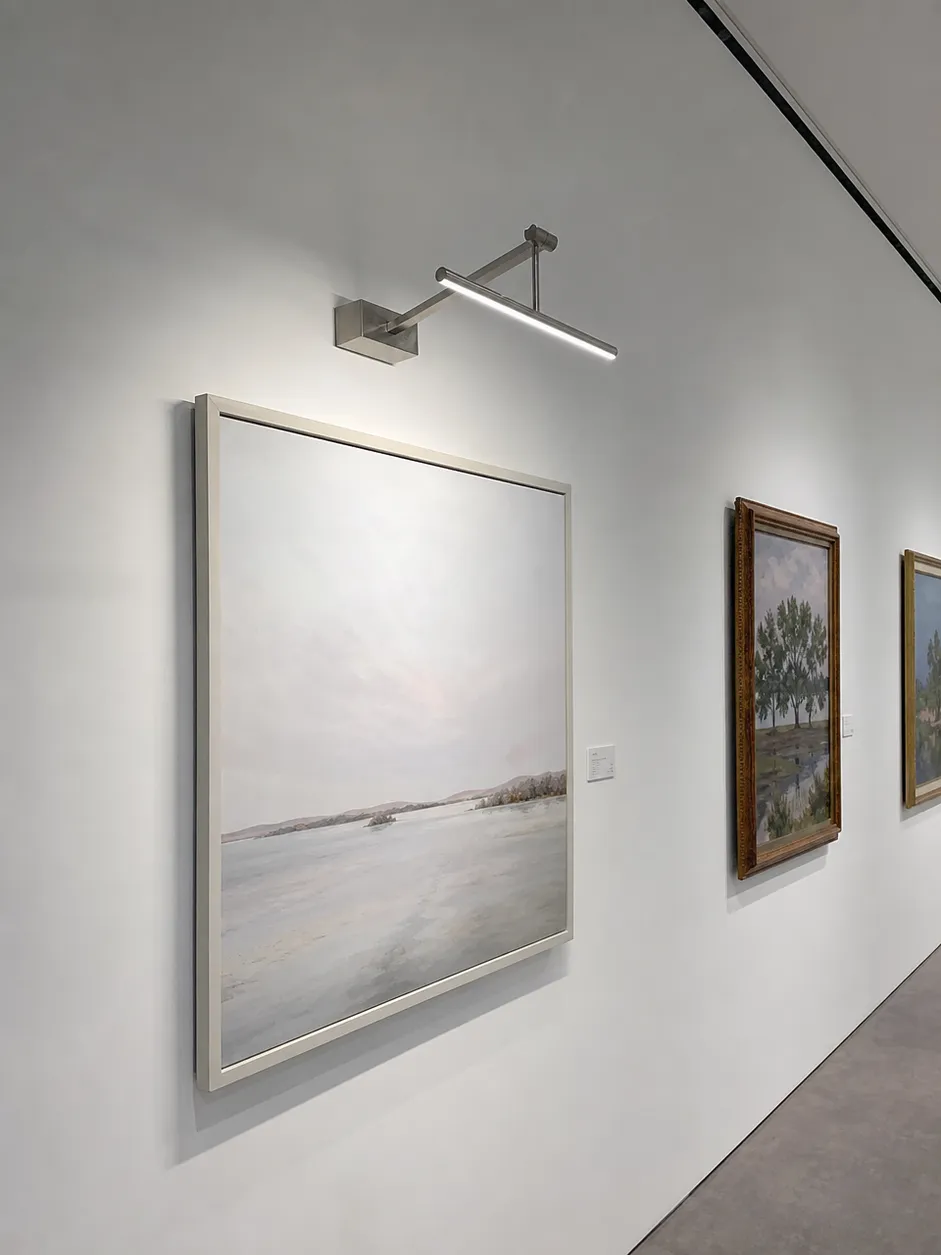
What Makes This Line Different from Standard Wall Sconces
Picture and art wall lighting is a technically specific product, and the buyers who source it know the difference between a fixture that lists CRI 90 on a spec sheet and one that actually performs at that level in a gallery installation. We've been manufacturing this line long enough to understand where the gap between spec and performance usually lives — and it's almost never in the LED chip itself.
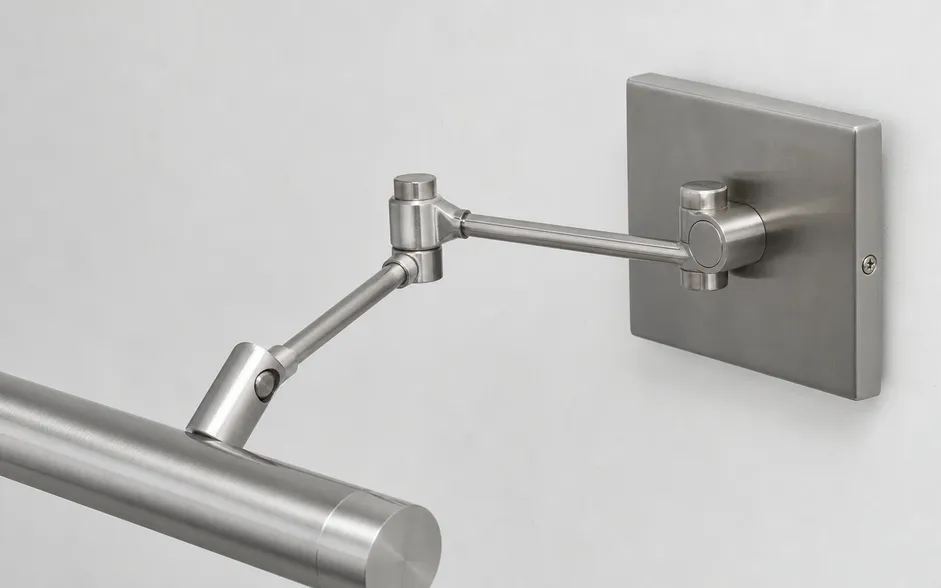
The core of this product is the adjustable-arm picture light: a wall-mounted fixture with an articulating arm that positions the light source above and in front of a framed artwork or display surface. The arm geometry determines the illumination angle, the throw distance, and whether the fixture creates glare on a glazed frame. We run arm lengths from 150mm to 450mm, with pivot adjustment at the wall bracket and at the lamp head, so the fixture can be dialed in to the specific artwork dimensions after installation.
That adjustability is what separates a picture light from a standard wall sconce — and it's also where most of the manufacturing complexity sits.
Arm Geometry at a Glance
- Arm lengths: 150mm – 450mm standard range
- Pivot at wall bracket + pivot at lamp head
- ±30° adjustment on each axis
- Custom arm lengths available for OEM programs
Why CRI 95+ Is Standard, Not an Upgrade
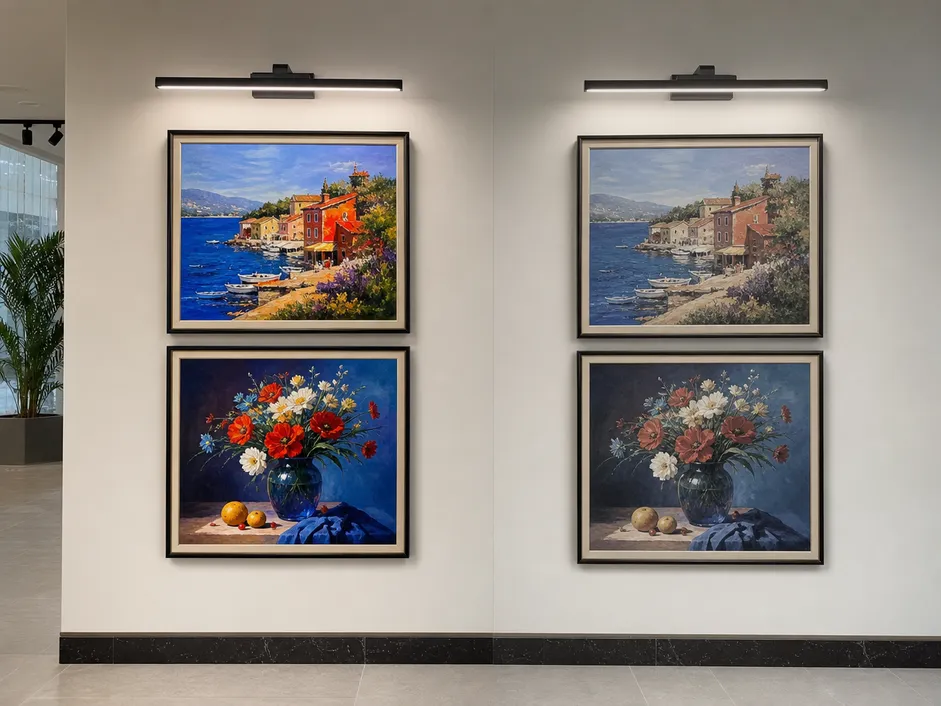
CRI 95+ LED sources are standard on this line, not an upgrade option. The reason is straightforward: if you're selling into galleries, auction houses, or high-end retail, your buyers' customers are evaluating artwork under this light. A CRI 85 fixture will shift warm tones toward orange and cool tones toward green — subtle enough that a casual viewer won't notice, but obvious to anyone who knows what the artwork is supposed to look like.
We specify Samsung or Bridgelux LED chips on this line because the bin-to-bin color consistency is tighter than commodity chips, and color consistency across a multi-fixture gallery installation matters as much as the CRI number itself.
Technical Specifications
Standard production values for the art wall lighting and picture light line. Contact us for detailed product data sheets and photometric reports.
| Parameter | Specification |
|---|---|
| Fixture type | Adjustable-arm picture light, gallery bar light |
| Housing material | Aluminum alloy (die-cast), brass accent options |
| Arm length | 150mm – 450mm (standard range; custom lengths available) |
| Arm adjustment | Pivot at wall bracket + pivot at lamp head, ±30° each axis |
| LED source | Integrated COB, CRI ≥95 standard (Samsung / Bridgelux bins) |
| Wattage | 5W – 20W (fixture-dependent) |
| Color temperature | 2700K, 3000K (warm-white standard for art applications) |
| Beam angle | 15°, 25°, 36°, 45° (interchangeable optics on select models) |
| Lumen output | 400–1,800 lm (wattage-dependent; photometric data available) |
| Color rendering | CRI ≥95 standard; R9 ≥50 on premium configurations |
| Dimming | TRIAC standard; DALI available on request |
| IP rating | IP20 (indoor standard) |
| Voltage | 100–240V AC, 50/60Hz |
| Surface finishes | Matte black, brushed gold, antique brass, brushed nickel, satin white |
| Certifications | CE, UL, SAA, SGS |
| Mounting | Wall surface mount; canopy covers standard single-gang and EU back box |
Specifications shown are standard production values. Actual parameters may vary by model. Contact us for detailed product data sheets and photometric reports.
CRI 95+ and R9: The Specification That Drives Margin in This Segment
Color rendering is the functional requirement that defines this product category, and it's worth being specific about what the numbers mean for your downstream buyers — because this is where the margin justification lives.
CRI (Color Rendering Index) measures how accurately a light source renders colors compared to a reference illuminant. A CRI 80 fixture is adequate for general commercial use. CRI 90 is the threshold for retail and hospitality applications where color matters. CRI 95 is the specification used in gallery and museum lighting, where the standard is set by institutions that have been arguing about color accuracy for decades.
The difference between CRI 90 and CRI 95 is visible to a trained eye on saturated colors — reds, deep blues, and earth tones — which are exactly the colors that appear in oil paintings, textiles, and luxury goods displays.
R9 is the specific sub-index for saturated red rendering, and it's the number that gallery lighting specifiers actually check. A fixture can achieve CRI 95 with a weak R9 score by performing well on the other test colors. We specify R9 ≥50 on our premium configurations because red rendering is where art lighting either earns its specification or doesn't.
General Commercial
Retail & Hospitality
Gallery & Museum
Why R9 ≥50 Matters
We've had buyers come to us after their previous supplier's "CRI 95" fixtures failed a gallery's acceptance test — the CRI number was technically correct, but R9 was in the 30s. That's a problem you don't want to discover after a container has shipped.
A fixture can hit CRI 95 on paper while rendering saturated reds poorly. The R9 sub-index isolates red rendering specifically. For oil paintings, textiles, and luxury goods where warm tones dominate, a weak R9 means the fixture fails in practice even if the headline CRI number looks correct on the spec sheet.
The Commercial Mechanism
For your buyers in the gallery, auction house, and high-end retail segments, the CRI 95 / R9 ≥50 specification is the argument that justifies a higher price point over commodity wall sconces.
It's a spec they can put in front of their clients and defend. Your margin on this line comes from selling a performance specification, not a commodity fixture.
Beam Angle Selection and Optics: What to Specify for Each Application
Beam angle is the second technical variable that separates a picture light from a general wall fixture, and it's the one that most buyers underspecify. The right beam angle depends on the artwork dimensions, the mounting height, and the throw distance from the fixture to the surface — and getting it wrong means either a hot spot in the center of the painting or spill light onto the wall around it.
Tight Accent
For small-format pieces up to 600mm wide at close throw distances.
Best for: miniatures, small sculptures, jewelry displays
Standard Artwork
Covers single-panel artwork 600–1200mm wide at typical mounting heights of 200–300mm above the frame.
Best for: standard paintings, framed photography, portraits
Most Versatile
The most versatile angle for mixed-format installations and display cases.
Best for: rotating exhibitions, mixed media, display vitrines
Broad Wash
For feature walls, large-format photography, or display cases where even coverage matters more than tight accent.
Best for: feature walls, murals, large-format prints
Interchangeable Lens Optics
On select models, the optics are interchangeable — the lamp head accepts different lens inserts, so the same fixture can be reconfigured for different artwork sizes without replacing the unit.
This is a meaningful feature for gallery and hospitality buyers whose installations change: a hotel that rotates its art program quarterly doesn't need to re-specify fixtures every time.
IES Files from Our Optical Lab
We generate IES files from our in-house optical lab for all standard models. If your buyers are submitting to a lighting specification or working with a lighting designer, IES files are the deliverable that gets a fixture approved — not a catalog photo.
This is one of the areas where buying from a factory with an actual optical lab matters. A trading company can't generate IES files because they don't have the measurement equipment.
Market Segments: Where Art Wall Lighting Generates Repeat Business
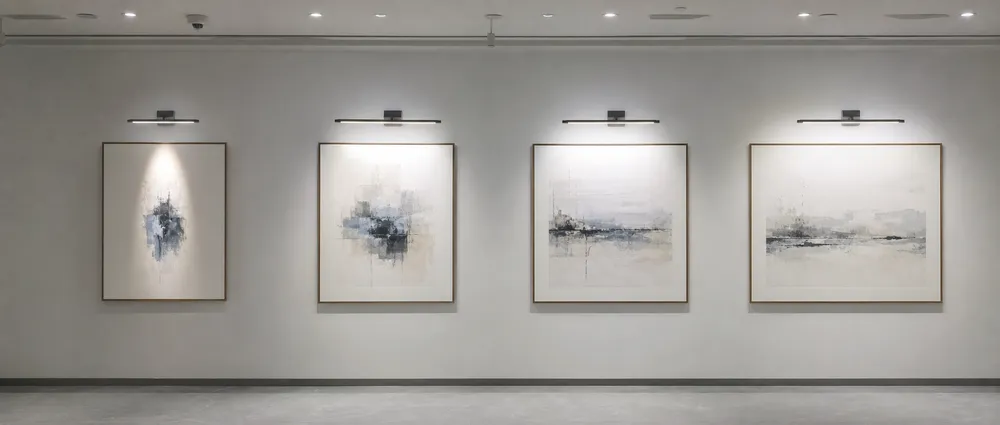
The buyer pool for gallery wall lighting and picture lights is narrower than commodity wall sconces, but the margin profile and reorder patterns are significantly better. Here's how the segments break down commercially.
Commercial Galleries & Auction Houses
Anchor SegmentA mid-size commercial gallery typically runs 20–60 picture lights across its exhibition spaces, with a full refresh cycle every 5–8 years and partial replacements as fixtures fail or the space is reconfigured.
The buying pattern is project-based initially, then maintenance-driven — once a gallery has standardized on a fixture, they reorder the same model for replacements rather than re-specifying. That reorder dynamic is worth building for.
Primary markets: North America and Europe. Growing segment: Middle East auction and private gallery sector, supplied through distributors.
Luxury Hospitality
Highest-Volume Single-ProjectFive-star hotels, boutique properties, and serviced apartments with art programs. A 150-room hotel with an art program might specify 2–4 picture lights per room plus gallery-style fixtures in public areas, putting a single project in the 400–700 unit range.
Hospitality buyers prioritize batch color consistency — a corridor of picture lights with visible color temperature variation is a problem — documentation for FF&E schedules, and the ability to reorder matching fixtures for future phases.
Our ±100K batch color temperature tolerance and per-SKU documentation package are built for this buyer.
High-End Retail
Multi-Location ProgramsJewelry stores, luxury fashion boutiques, and premium home goods retailers use art wall lighting for display case illumination and feature wall accent. Specification requirements overlap with gallery: CRI 95+, tight beam control, and finishes that complement the retail environment.
Retail buyers tend to order in smaller quantities per location but across more locations, making them a good fit for distributors building a specialty lighting catalog.
A chain of 30 jewelry boutiques specifying 8–12 picture lights per location is a 240–360 unit program — repeatable and margin-positive.
Residential Interior Design
High-Value / Referral-DrivenHigh-specification residential projects where the client has an art collection. Interior designers specifying for private clients typically order 10–30 units per project, but the per-unit value is higher and the relationship tends to generate referrals.
This segment is best served through lighting showrooms and interior design trade accounts rather than direct distribution.
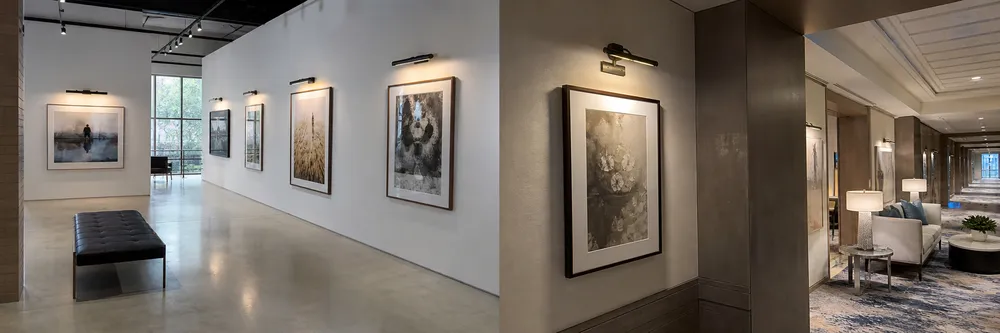
Arm Geometry and Mounting: The Manufacturing Detail That Affects Installation Cost
The adjustable arm is where most of the manufacturing complexity in this product lives, and it's worth explaining what we do differently — because arm quality directly affects your buyers' installation experience and your warranty exposure.
Three-Component Arm Assembly
The arm assembly consists of three components: the wall bracket, the arm body, and the lamp head. Each pivot point uses a friction-fit mechanism with a locking screw — the arm holds its position under the weight of the lamp head without drifting, and the locking screw secures the final angle after adjustment.
We machine the pivot housings to ±0.15mm tolerance on the bearing surfaces — tighter than the industry norm for this product type. Loose pivot tolerances are the most common failure mode in adjustable picture lights: the arm drifts over time, the fixture ends up pointing at the ceiling, and the end user calls it a defect.
Internal Wiring & Arm Body
The arm body is extruded aluminum on standard models, with the wiring routed internally through the arm channel. External wiring on a picture light is a finish problem — it looks cheap and it's vulnerable to damage during adjustment.
Internal routing requires a more complex extrusion profile and a wiring harness that can flex through the pivot range without fatiguing. We use silicone-jacketed wire on the internal harness because it handles repeated flexing better than PVC insulation, which can crack at the pivot point after a few hundred adjustment cycles.
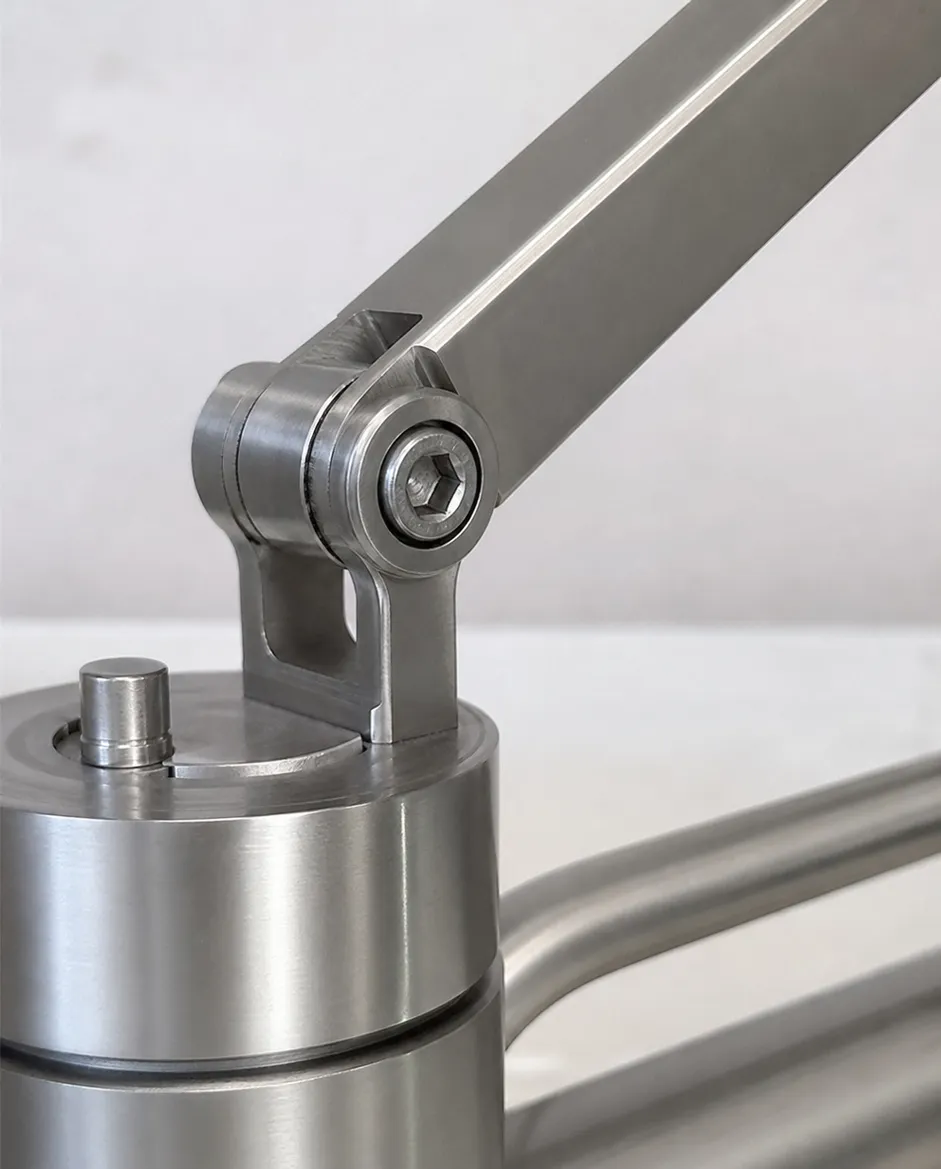
Wall Bracket & Canopy
Wall bracket dimensions are standardized to cover both North American single-gang box spacing and European back box dimensions, so the same fixture ships to both markets without a hardware change.
The canopy covers the wall bracket and the junction box opening — canopy dimensions are machined to ±0.2mm so the fit against the wall is clean, not approximate.
Pivot housing tolerance
Canopy machining tolerance
NA & EU box compatibility
Building Your Own Art Lighting Line
Custom art wall lighting is a meaningful part of what we do in this product category. The buyers who come to us for OEM work are typically distributors who want a differentiated product for their gallery or hospitality accounts — something that isn't available from their competitors' catalogs.
OEM work on picture lights starts from your drawings or a reference sample. The main customization variables are arm length, arm profile geometry, lamp head design, finish, and branding. Arm length is the most common customization request — buyers who supply large-format art installations often need arms in the 500–600mm range that aren't in our standard catalog.
MOQ Thresholds for Customization
Custom Arm Length — 100 units+
Below that, the extrusion tooling cost doesn't make sense for either side.
Custom Finish (RAL / PVD) — 200 units+
Beyond our standard five finishes, we can match a custom RAL color or a specific PVD finish for bespoke interior schemes.
Custom Branding & Packaging — Same MOQ thresholds
Logo on the canopy, custom packaging, private label documentation — standard OEM practice.
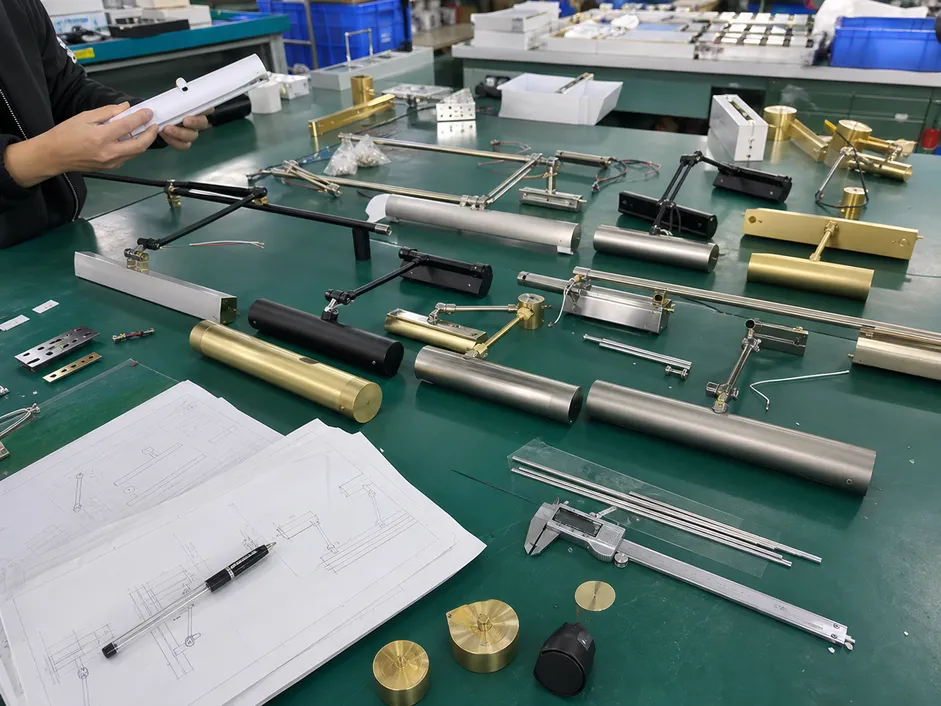
ODM: New Design Development
For buyers who want to develop a new picture light design rather than customize an existing one, our ODM process starts from a brief: reference images, target dimensions, target retail price, and the market you're selling into.
Our structural engineers develop the production-ready design, and we flag cost traps early — arm geometry that requires expensive tooling, finish combinations that add process steps, lamp head designs that complicate the wiring harness.
Prototype turnaround: 7–10 working days from approved drawings to a functional sample with production-intent finishing.
Certifications and Compliance for Gallery and Hospitality Buyers
CE, UL, and SAA certifications are held and maintained on this product line — not obtained once and left to expire. Test reports and Declarations of Conformity are available per SKU as part of the order documentation package.
UL Certification
For North American buyers — covers the electrical safety requirements for US and Canadian market entry.
Markets: United States, Canada
CE Certification
For European buyers — covers the Low Voltage Directive and EMC requirements.
Markets: European Union, EEA
SAA Certification
For Australian buyers — covers the AS/NZS standards for electrical safety and compliance.
Markets: Australia, New Zealand
UV & IR: The Conservation Compliance Dimension
Critical for gallery and museum buyers
For gallery and museum buyers specifically, there's a compliance dimension beyond electrical safety: UV and IR content in the light output. Traditional halogen picture lights emit significant UV and IR radiation, which degrades artwork over time — this is why institutions have been transitioning to LED.
Our LED sources emit negligible UV and IR compared to halogen, and we can provide spectral power distribution data on request for buyers whose clients need to document this for conservation purposes.
Selling point: Commodity wall sconce buyers don't care about UV/IR data, but gallery buyers absolutely do — it's worth having the data available for your accounts.
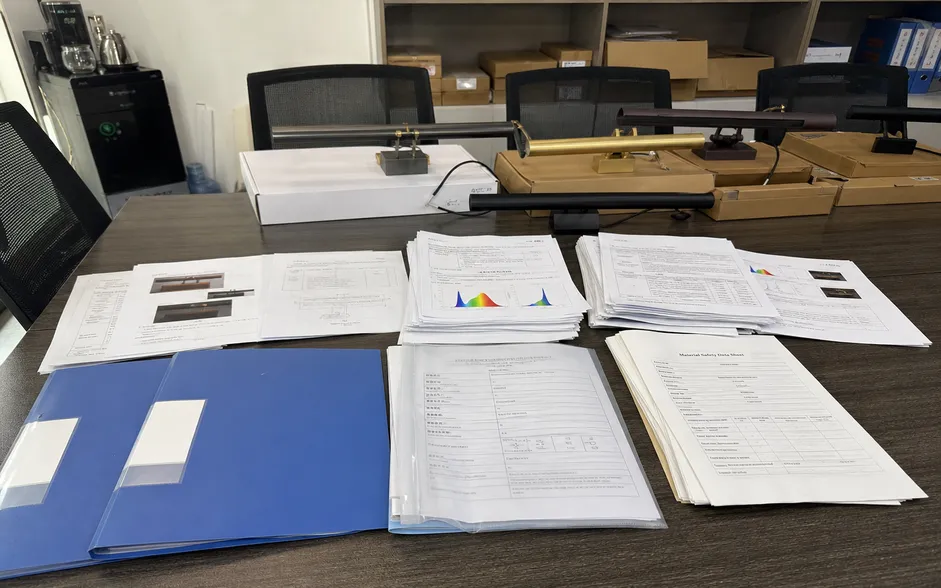
Additional Compliance Documentation
SGS Audit Reports
Available on request for supply chain verification.
RoHS Compliance
Maintained for all products — restriction of hazardous substances for European market entry.
Material Safety Data
Available for buyers whose import compliance teams require it.
Spectral Power Distribution Data
On request for conservation documentation purposes.
Packaging and Container Loading for Art Lighting Programs
Picture lights are fragile goods — the adjustable arm is a precision mechanism, and the lamp head contains the LED assembly and driver. Packaging engineering matters here more than it does for a simple wall sconce.
Each fixture ships with the arm pre-assembled to the wall bracket, with the lamp head detached and packed separately in a foam-lined inner compartment. The arm is secured in a fixed position for shipping with a foam insert that prevents pivot movement during transit. The inner carton uses EPE foam cut to the fixture profile; the outer carton is corrugated double-wall rated for ocean freight stacking compression.
For fixtures with brass or antique finish elements, we add a microfiber wrap on the finished surfaces before foam packing — these finishes mark easily and a scratch on a premium fixture is a warranty claim.
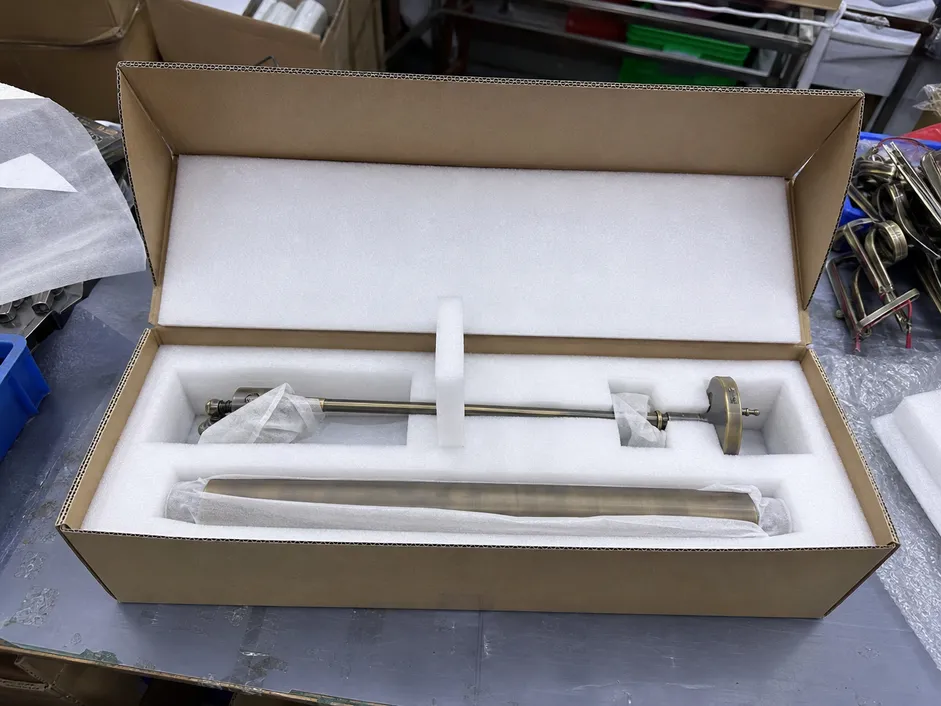
Inner Protection
EPE foam cut to fixture profile. Lamp head in separate foam-lined compartment. Arm locked in fixed position to prevent pivot movement.
Outer Carton
Corrugated double-wall construction rated for ocean freight stacking compression. Microfiber wrap on brass and antique finishes before foam packing.
Container Loading
A 500-unit picture light program in standard arm lengths typically loads in a single 40HQ with room for other SKUs. Loading plans provided with each large order.
Direct Site Delivery Configuration
For gallery and hospitality programs where the buyer is receiving fixtures at a project site rather than a warehouse, we configure packaging for direct site delivery:
- Individual cartons labeled with room number or installation location
- Packing list that maps each carton to the installation drawing
- Developed for hospitality FF&E programs where the receiving team isn't a warehouse operation
Frequently Asked Questions
What is the minimum order quantity for picture lights?
MOQ varies by configuration. Standard catalog models in existing finishes have lower MOQs than custom arm lengths or custom finishes. Contact us with your target model and volume — we'll confirm the MOQ and whether your requirement fits the standard catalog or needs a custom quote.
What CRI should I specify for gallery and museum art lighting?
CRI ≥95 is the standard for gallery and museum applications. Beyond the headline CRI number, check the R9 value — R9 measures saturated red rendering, which is the sub-index that gallery lighting specifiers actually test. We specify R9 ≥50 on our premium configurations. For conservation-sensitive applications, also ask for spectral power distribution data to confirm UV and IR output levels.
What beam angle is right for standard framed artwork?
For a standard single-panel artwork 600–1200mm wide, mounted at typical ceiling heights with the picture light positioned 200–300mm above the frame, a 25° beam angle is the most common specification. For smaller pieces or tighter accent work, use 15°. For large-format pieces or display cases where even coverage matters more than tight accent, use 36° or 45°.
If your buyers' installations vary, specify a model with interchangeable optics — the same fixture can be reconfigured without replacement.
Can picture lights be dimmed, and what dimmer compatibility should I expect?
Yes — TRIAC dimming is standard on this line, compatible with the most common residential and light commercial dimmer infrastructure in North America and Europe. We specify drivers with a validated compatibility list for the target market.
DALI-compatible drivers are available for commercial building management system integration — specify this requirement before production, as it affects driver selection. If your buyers are installing in a hospitality property with a BMS, DALI is worth specifying.
Do you provide IES files for lighting specification submissions?
Yes. IES files are generated from our in-house optical lab for all standard models. If your buyers are working with a lighting designer or submitting to a formal lighting specification, IES files are the deliverable that gets a fixture approved. Request IES files when you place your sample order — we include them in the technical documentation package.
What is the lead time for OEM picture light development?
Prototype turnaround runs 7–10 working days from approved drawings to a functional sample with production-intent finishing. Production lead time after sample approval runs 25–35 days for standard volumes.
If new tooling is required for a custom arm profile or lamp head geometry, add 15–20 days for the tooling cycle.
We communicate milestones proactively — tooling completion, production start, and estimated ship date are confirmed before you place the production order.
Other Wall Lighting Lines Worth Considering
If picture and art wall lighting isn't the right fit for your current program, here's where the adjacent lines sit:
Wall Sconce Lighting
Decorative wall-mounted fixtures for hospitality and residential applications where the aesthetic role matters more than color accuracy. Broader style range, lower price point than the art lighting line.
Modern Wall Lighting
Clean geometry and minimal ornamentation for residential and light commercial applications. The highest-volume line for North American and Northern European distributors.
Linear Wall Lighting
Bar-format fixtures for bathroom vanity, corridor accent, and architectural wash. Different product type from picture lights, but sometimes specified alongside them in hospitality projects.
LED Wall Lighting
Energy-efficient wall fixtures with integrated LED sources, built for markets where energy compliance is a procurement requirement.
Not sure which line fits your market?
Source Art Wall Lighting Direct from the Manufacturer
We manufacture picture lights and gallery wall lighting for distributors, importers, and project contractors who need a factory that understands the color accuracy requirements of this segment — not just a supplier that lists CRI 95 on a spec sheet.
Send us your requirements: fixture type, arm length, beam angle, finish, target market, volume, and certification requirements. We'll come back with a detailed quote and, where relevant, photometric data and IES files for your buyers' specification submissions.
Wholesale only. Strict MOQ applies.
Contact Our Team
Address
No. 14 Beisan Rd, Gusan Ind. Zone,
Guzhen, Zhongshan, Guangdong, China