

Luxury Ceiling Lighting Direct From Factory
Die-cast aluminum construction, PVD and electroplated finishes, CE/UL/SAA certified for your target market.
Built for importers, distributors, and project contractors who need consistent finish quality across 200-unit batches, not just a perfect sample. Full OEM/ODM capability with 7–10 day prototype turnaround.
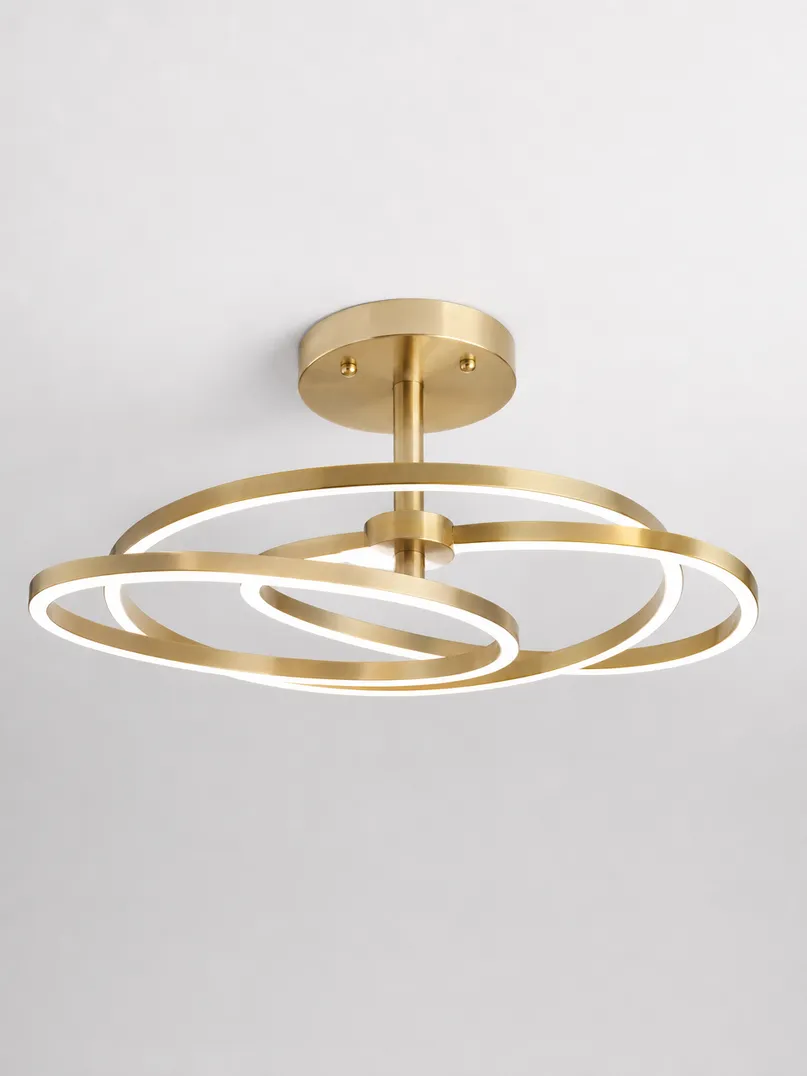
What Separates Luxury Ceiling Lighting from the Standard Tier
The ceiling fixture category has a wide quality spread, and the gap between a standard ceiling light and a genuine luxury ceiling light isn't just aesthetic — it's structural and process-driven. Most of the ceiling fixtures in the mid-market use stamped steel housings with liquid-painted finishes. They look fine in a sample photo. They look different by the time a 300-unit batch arrives, because stamped steel tolerances drift across a production run and liquid paint application is inconsistent without tight process controls.
Our luxury ceiling lighting line is built on die-cast aluminum and zinc alloy housings, machined to ±0.1mm on critical mounting dimensions. The difference matters commercially: your installation teams aren't dealing with fit variance on-site, and your downstream customers aren't calling about finish inconsistency six months after installation. Die-casting also gives us the geometry freedom to produce the complex profiles — curved canopies, layered shade structures, recessed LED channels — that define the contemporary ceiling lighting aesthetic without the structural compromises that come from bending sheet metal into shapes it wasn't designed for.
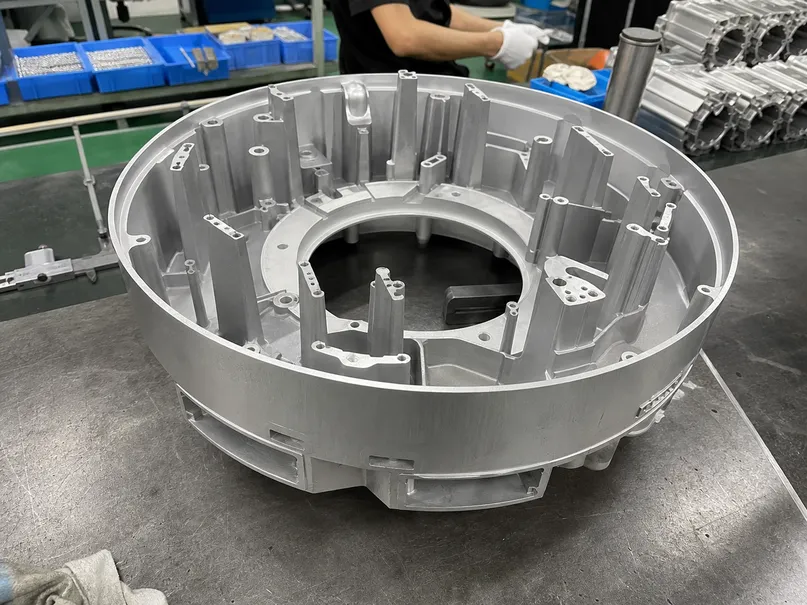
Die-Cast Construction
ADC12 aluminum and ZA-8 zinc alloy housings machined to ±0.1mm — no fit variance across production runs.
In-House Finishing
Electroplating, PVD, and powder coating on the same line — your batch doesn't compete with other customers' orders.
Complex Geometry
Curved canopies, layered shade structures, recessed LED channels — profiles that sheet metal can't achieve without compromise.
Surface Finishing: Where the Luxury Tier Earns Its Margin Premium
We run electroplating, PVD, and powder coating in-house on the same finishing line. Brushed gold, champagne, matte black, antique brass, chrome — these aren't outsourced to a third-party plating shop where your batch competes with other customers' orders.
Powder coat thickness runs 60–80μm with automated application across the full batch. For PVD finishes, we run adhesion testing on production samples before committing a batch, because PVD delamination is the most common failure mode in high-end ceiling fixtures and it shows up at the customer's site, not in the factory.
We added the PVD adhesion protocol after a batch of brushed gold fixtures developed micro-delamination in a humid climate market — that was an expensive lesson, and it's now a standard checkpoint.
Technical Specifications
These are industry-standard parameters for our luxury ceiling lighting range. Exact specifications vary by SKU and custom configuration — contact us for product-specific data sheets.
| Parameter | Specification |
|---|---|
| Housing material | Die-cast aluminum (ADC12) / zinc alloy (ZA-8) |
| Shade / diffuser materials | Blown glass, acrylic, fabric, metal mesh (SKU-dependent) |
| Finish options | Brushed gold, champagne gold, matte black, antique brass, chrome, brushed nickel, custom RAL |
| Finish process | PVD, electroplating, powder coating (60–80μm) |
| Mounting types | Flush mount, semi-flush mount, surface mount |
| Diameter range | Typical 300–800mm; custom sizes available |
| Height / drop | Typical 150–400mm; adjustable rod lengths available |
| Wattage range | 18W–80W (LED integrated); driver-matched per SKU |
| Color temperature | 2700K / 3000K / 4000K; CCT-tunable available |
| CRI | ≥90 Ra standard; ≥95 Ra available on request |
| Dimming compatibility | TRIAC, 0-10V, DALI (specify at order) |
| Input voltage | 100–240V AC, 50/60Hz |
| IP rating | IP20 standard (indoor); IP44 available for bathroom/wet-area variants |
| Certifications | CE, UL, SAA, SGS |
| Warranty | 3 years standard |
Specifications shown are industry-standard values for this product type. Actual specifications may vary by SKU. Contact us for detailed product data sheets and photometric reports.
How We Build the Finish Quality Your Downstream Market Expects
The finish is the first thing your customer's customer evaluates, and it's the most common source of warranty claims in the decorative ceiling fixture category. We've been running surface finishing in-house since 2008, and the process discipline we've built around it is the main reason our RMA rate on finish-related issues stays low.
The finishing sequence for a luxury ceiling fixture starts with die-cast housing preparation: shot blasting to remove casting skin, followed by chemical pre-treatment to ensure adhesion. This step is where most factories cut corners — skipping or shortening the pre-treatment to save cycle time. We don't, because adhesion failures at weld seams and casting parting lines are the direct result of inadequate pre-treatment, and they show up as bubbling or peeling 12–18 months into the product's life. That's a warranty claim your customer files, not a factory problem.
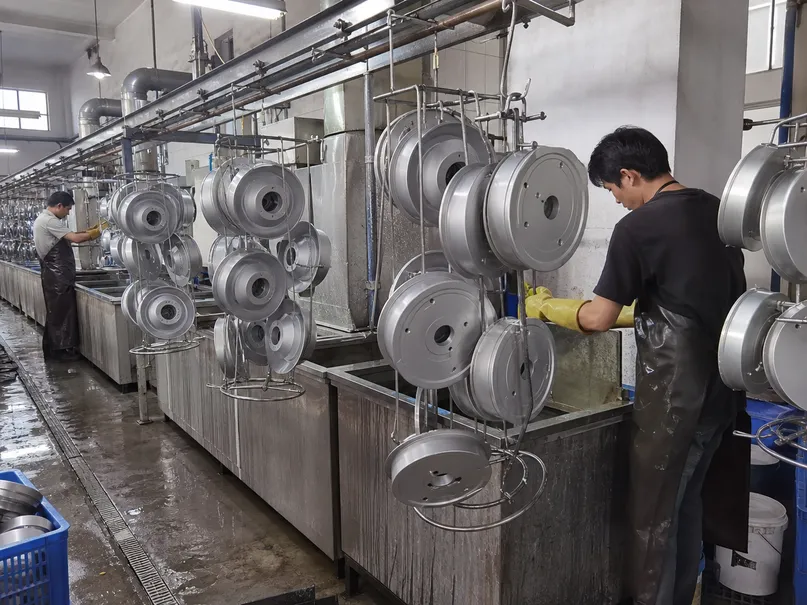
Electroplated & PVD Finish Substrate Preparation
For electroplated and PVD finishes, the substrate preparation is even more critical. We run a multi-stage cleaning and activation sequence before the plating bath — degreasing, acid activation, and rinse stages — because contamination at any point in that sequence produces micro-porosity in the plating layer that accelerates corrosion in humid environments.
Our Gulf and Southeast Asian buyers are particularly sensitive to this: coastal and tropical climates stress finish quality in ways that a factory in a dry climate won't catch in internal testing. We run salt spray testing on finish samples from each new SKU before production commitment, and we maintain test records per batch for buyers who need documentation.
Powder Coat — Automated Electrostatic Line
Powder coat runs on an automated line with electrostatic application — 60–80μm consistent thickness across the full batch, not just the first units off the line. Color consistency is checked against approved color chips at the start of each run and at mid-run. If a batch drifts outside the ΔE tolerance we've agreed with the buyer, it doesn't ship.
Consistent Across Full Batch
Tighter Than Industry Standard
Available for Documentation
Market Segments Where Luxury Ceiling Lighting Generates Repeat Volume
Luxury ceiling lighting isn't a single-sale category. The segments below generate structured repeat business — project pipelines, annual procurement cycles, or product line refreshes — which is the commercial logic for building a sourcing relationship rather than a one-off order.
Hospitality Fit-Out & Renovation
Hotels, boutique resorts, and serviced apartment operators specify ceiling fixtures by project, typically 50–500 units per property across multiple room types. The procurement pattern is project-based but recurring — a hotel group rolling out a new brand standard across 20 properties is a 1,000–10,000 unit program.
Contractors and FF&E suppliers who serve this segment need a factory that can hold finish consistency across multiple production runs, because a lobby fixture from the first batch and a replacement from the second batch need to match. Our batch documentation and color matching protocol is built for exactly this requirement.
Luxury Residential Development
High-end residential developers and interior design firms specify ceiling fixtures at the project level — a 200-unit luxury apartment tower might specify 4–6 ceiling fixture SKUs across common areas and unit types, with quantities of 200–800 units per SKU.
The margin profile is strong because the developer's specification locks in the product, and the contractor has limited ability to substitute. Distributors who have established relationships with residential developers in their market can build a predictable annual volume around this segment.
(This segment has grown significantly for our buyers in the Middle East and Southeast Asia over the last three years — worth building into your product line if you're in those markets.)
Commercial Interior Fit-Out
Office lobbies, retail flagships, restaurant groups, and high-end retail chains specify contemporary ceiling lighting as part of brand environment packages. Restaurant groups in particular are a high-volume repeatable segment — a chain rolling out 30 new locations per year with 15–20 ceiling fixtures per location is a 450–600 unit annual program from a single account.
The fixture needs to be consistent across locations and replaceable when damaged, which means your supplier needs to hold the SKU in production or commit to a minimum reorder run.
Overseas Distributors Building a Premium Line
If you're a distributor adding a luxury ceiling lighting category to your existing line, the key commercial question is margin differentiation. A fixture with a die-cast aluminum housing, PVD brushed gold finish, and CRI ≥90 LED module commands a 40–60% retail premium over a stamped steel equivalent in most markets — and the visual difference is immediately apparent to the end buyer.
We can help you spec a starter SKU mix based on what's moving for our existing distributors in your region.
OEM/ODM: From Your Concept to Production-Ready Fixture
The majority of our luxury ceiling lighting volume is OEM or ODM — buyers who want a product that's theirs, not a catalog item they share with every other distributor sourcing from Guzhen. We've been running OEM development since 2008, and the process is straightforward.
For OEM projects where you have finished drawings or a reference sample, our engineering team reviews the design for production feasibility and cost optimization before tooling is committed. The most common cost traps in luxury ceiling fixture design are:
- Overly complex casting geometry that requires multi-piece tooling
- Non-standard driver cavities that force custom driver procurement
- Finish combinations that require sequential process steps on the same part
We flag these early and propose alternatives that preserve the design intent while keeping the tooling and unit cost within your target.
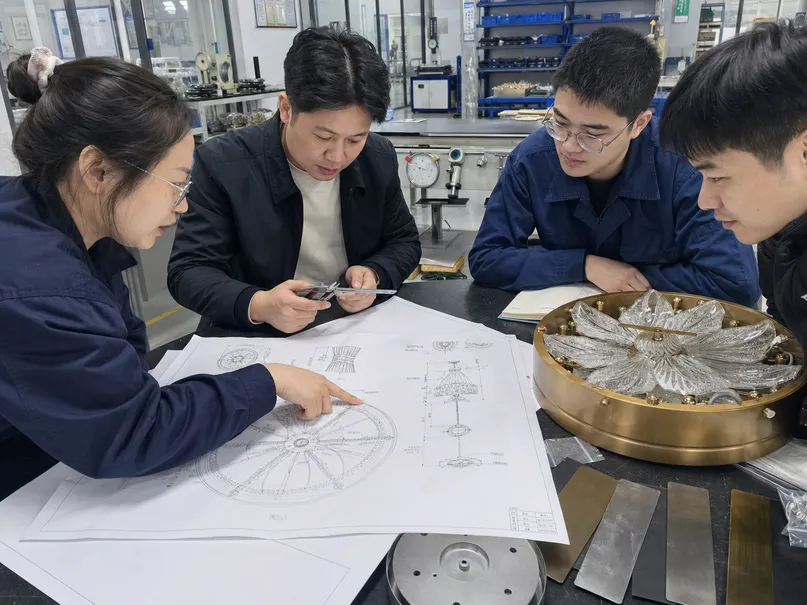
OEM — Your Finished Design
You bring finished drawings or a reference sample. Our engineering team reviews for production feasibility and cost optimization before tooling is committed.
7–10 working days from approved drawings to physical sample — a functional sample with production-representative finish, not a mock-up.
ODM — Your Concept, Our Engineering
You bring a concept — reference images, mood boards, dimensions, and target cost. Our structural engineers develop the design from there.
We've developed enough luxury ceiling fixtures across enough markets to know what sells in North America versus the Gulf versus Southeast Asia — the aesthetic preferences, the finish preferences, the size preferences.
Margin-Protective Design Direction
If you tell us your target retail price point and your market, we can propose a design direction that protects your margin rather than designing something that looks great but lands at a cost that doesn't work.
Custom branding — your logo on the fixture, your packaging, your documentation — is standard on OEM orders. Minimum order quantities for OEM tooling projects are higher than catalog items; contact us with your project scope and we'll give you a clear MOQ and tooling cost breakdown.
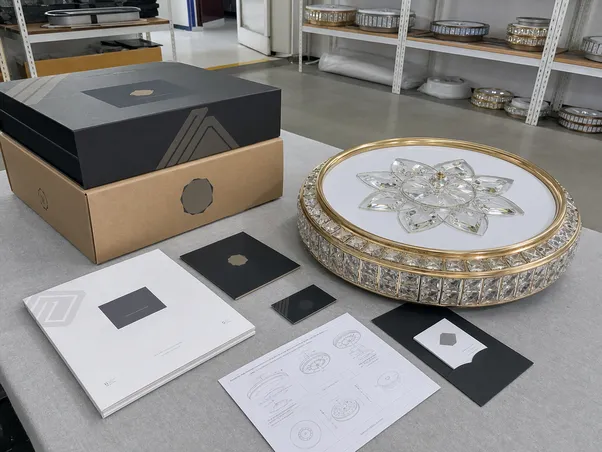
Certifications and Compliance Pre-Qualification by Market
Luxury ceiling lighting sold into regulated markets needs to arrive with the right documentation. We hold CE for Europe, UL for North America, and SAA for Australia — the three most common compliance requirements for our export markets. SGS audit reports are available on request.
North America — UL
UL certification covers the fixture's electrical safety and is required for most commercial and residential applications. Our UL-listed fixtures ship with the certification mark and supporting documentation.
Additional options: For buyers who need Title 24 compliance (California) or DLC listing for commercial rebate programs, we can discuss driver and module specifications that meet those requirements — these are project-specific and need to be confirmed at the design stage.
Europe — CE
CE covers the Low Voltage Directive and EMC requirements. We maintain Declaration of Conformity documents per SKU and can provide test reports from our accredited testing partners.
Energy efficiency: For buyers in markets with specific energy efficiency requirements (ErP Directive, for example), we can specify drivers and LED modules that meet the applicable tier.
Australia — SAA
SAA certification is held and maintained. We've been shipping to Australian distributors long enough to understand the specific documentation requirements for Australian customs clearance.
Documentation prep: If your compliance team has a documentation checklist, send it to us before the order and we'll prepare the package accordingly.
Supply Chain Material Compliance
Beyond the certifications we hold, our LED modules and drivers are sourced from suppliers with RoHS and REACH compliance documentation, so your import team isn't chasing material safety declarations after the container arrives.
We learned early that documentation gaps at customs cost more in delays and storage fees than the cost of getting the paperwork right the first time.
Container Loading and Export Packaging for Fragile Decorative Fixtures
Luxury ceiling fixtures are among the most damage-prone products in the lighting category during ocean freight — glass diffusers, extended metal arms, and PVD-finished surfaces all require packaging engineering, not just bubble wrap. We've developed export packaging per SKU based on the damage patterns we've seen from specific shipping routes.
Each fixture ships in an individual foam-lined inner carton with die-cut foam inserts matched to the fixture geometry. Glass components are wrapped separately and packed with compression-resistant foam between the glass and the carton wall. Outer cartons are rated for the drop and compression forces of ocean freight — we test carton stacking strength against the actual column load in a 40HQ container, not against a theoretical standard.
For fixtures with extended arms or multi-tier structures, we include internal bracing that prevents arm deflection during transit.
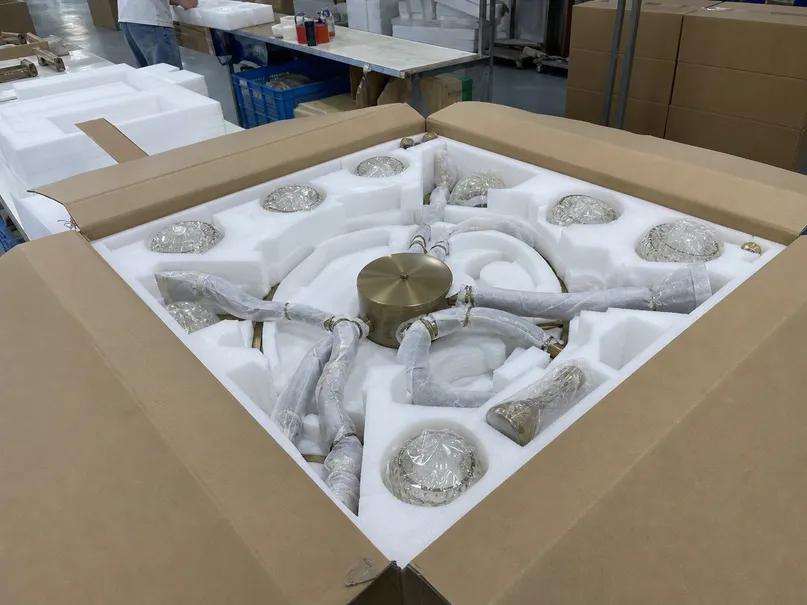
Die-Cut Foam Inserts
Matched to fixture geometry per SKU. Glass components wrapped separately with compression-resistant foam between glass and carton wall.
Real-Load Stacking Tests
Outer cartons rated against actual column load in a 40HQ container, not theoretical standards. Drop and compression forces of ocean freight accounted for.
Internal Arm Bracing
Extended arms and multi-tier structures include internal bracing that prevents arm deflection during transit vibration and handling.
40HQ Container Loading Optimization
We optimize carton dimensions during the packaging design phase. A 5–8% improvement in units per container is real money on a 2,000-unit order — we've seen buyers recover the cost of a packaging redesign in a single container.
If you're planning a large-volume order, send us your target container quantity and we'll run the loading calculation before finalizing carton dimensions.
Frequently Asked Questions
What is the minimum order quantity for luxury ceiling lighting?
MOQ varies by product type and whether the order is catalog or OEM. For catalog items, standard MOQ starts at 50 units per SKU. For OEM projects requiring new tooling, MOQ is higher and depends on the tooling investment — contact us with your project scope for a specific MOQ and tooling cost breakdown.
We work wholesale only; we don't fulfill single-unit orders.
What CRI should I specify for luxury ceiling lighting in hospitality applications?
For hospitality — hotels, restaurants, high-end retail — specify CRI ≥90 Ra as a minimum. At CRI 90+, skin tones and material textures render accurately, which is the standard expectation in premium hospitality environments.
If your buyer is specifying for a high-end restaurant or luxury hotel lobby where food and material presentation is critical, CRI ≥95 Ra is worth the small cost premium — we can source modules at that spec.
Standard commercial and residential applications are typically fine at CRI ≥80, but that's the mid-market tier, not the luxury tier.
How do I prevent finish inconsistency across multiple production runs for a long-term project?
This is the right question to ask before placing a large project order. The answer is batch documentation and color standard retention. We maintain approved color chips and finish standards per SKU, and we check production batches against those standards at the start of each run.
For buyers with multi-run projects — a hotel group rolling out across multiple properties, for example — we recommend retaining a set of approved production samples from the first run as physical color standards for subsequent runs. We can also provide batch-specific finish test reports if your project documentation requires them.
The key is to establish the standard on the first run and document it, not to assume the factory will match it from memory.
What dimming systems are compatible with your luxury ceiling lighting fixtures?
We specify the driver per SKU based on the dimming protocol you need:
- TRIAC (leading edge and trailing edge) — covers most residential and light commercial dimmer infrastructure in North America and Europe.
- 0-10V — standard for commercial applications with building management systems.
- DALI — available for projects requiring addressable control.
The important thing is to specify the dimming protocol at the order stage — retrofitting a different driver after production is possible but adds cost and lead time. If you're not sure what your end market uses, tell us the destination country and application type and we'll recommend the appropriate driver spec.
What lead time should I plan for a custom OEM luxury ceiling lighting project?
For OEM projects requiring new tooling:
Total from approved drawings to shipped container is typically 50–65 working days for a first-run OEM project. For repeat orders on established tooling, lead time drops to 25–35 days from order confirmation.
We communicate milestones proactively — if a production issue is going to affect your ship date, you hear about it before the container is supposed to load.
Other Ceiling Lighting Options
If luxury ceiling lighting isn't the right fit for your current sourcing requirement, our ceiling lighting range covers several adjacent categories:
Modern Ceiling Lighting
Clean-line contemporary designs at a more accessible price point, suited for volume residential and commercial projects where the luxury tier premium isn't justified.
View RangeDecorative Ceiling Lighting
Ornamental and statement ceiling fixtures with higher design complexity, suited for hospitality and high-end retail where the fixture is a focal point.
View RangeFlush Mount Ceiling Lighting
Low-profile ceiling fixtures for spaces with ceiling height constraints; available in both standard and premium finish tiers.
View RangeIndustrial Ceiling Lighting
Exposed hardware and raw material aesthetic, suited for restaurant, retail, and loft residential segments.
View RangeGet a Quote for Luxury Ceiling Lighting
Send us your fixture requirements — target market, volume, finish preferences, certification requirements, and any OEM brief or reference design — and we'll come back with a detailed quote and, where relevant, a recommendation on configuration based on what's working for our existing buyers in your region.
Most new buyers in this category start with a sample order to evaluate finish quality and construction before committing to a production run. We can ship samples within the standard lead time for catalog items.
+86 134 2021 9307
No. 14 Beisan Rd, Gusan Ind. Zone, Guzhen, Zhongshan, Guangdong, China
Wholesale only. Strict MOQ applies.
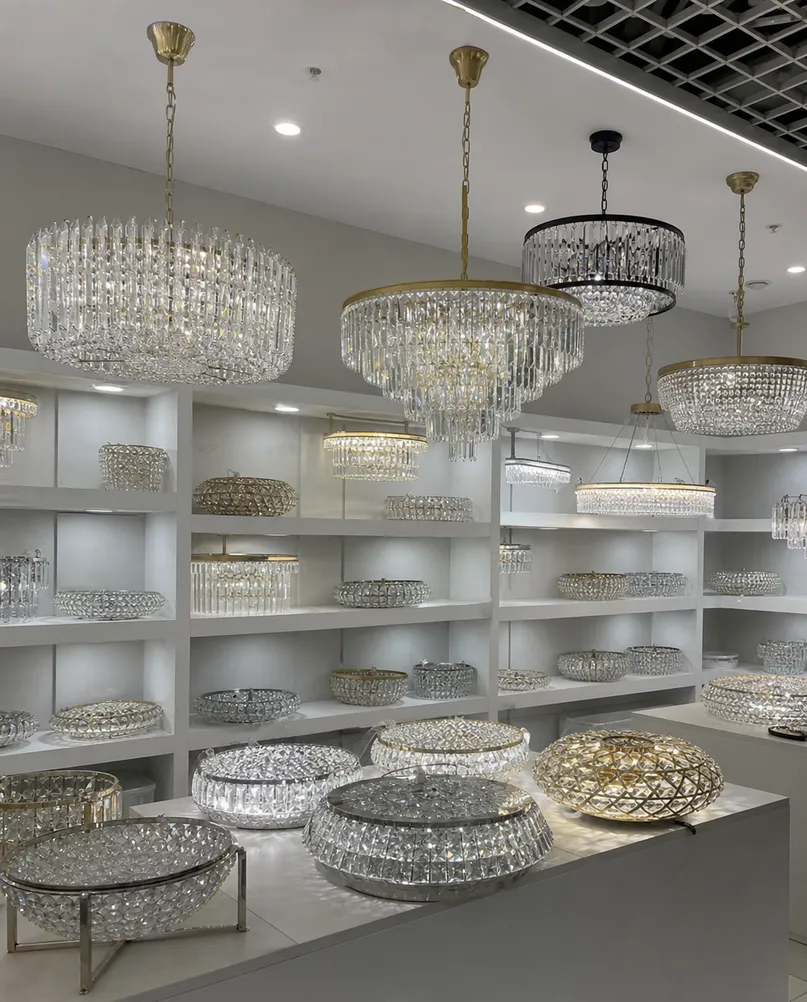
Sample Lead Time
7–10 days for catalog items