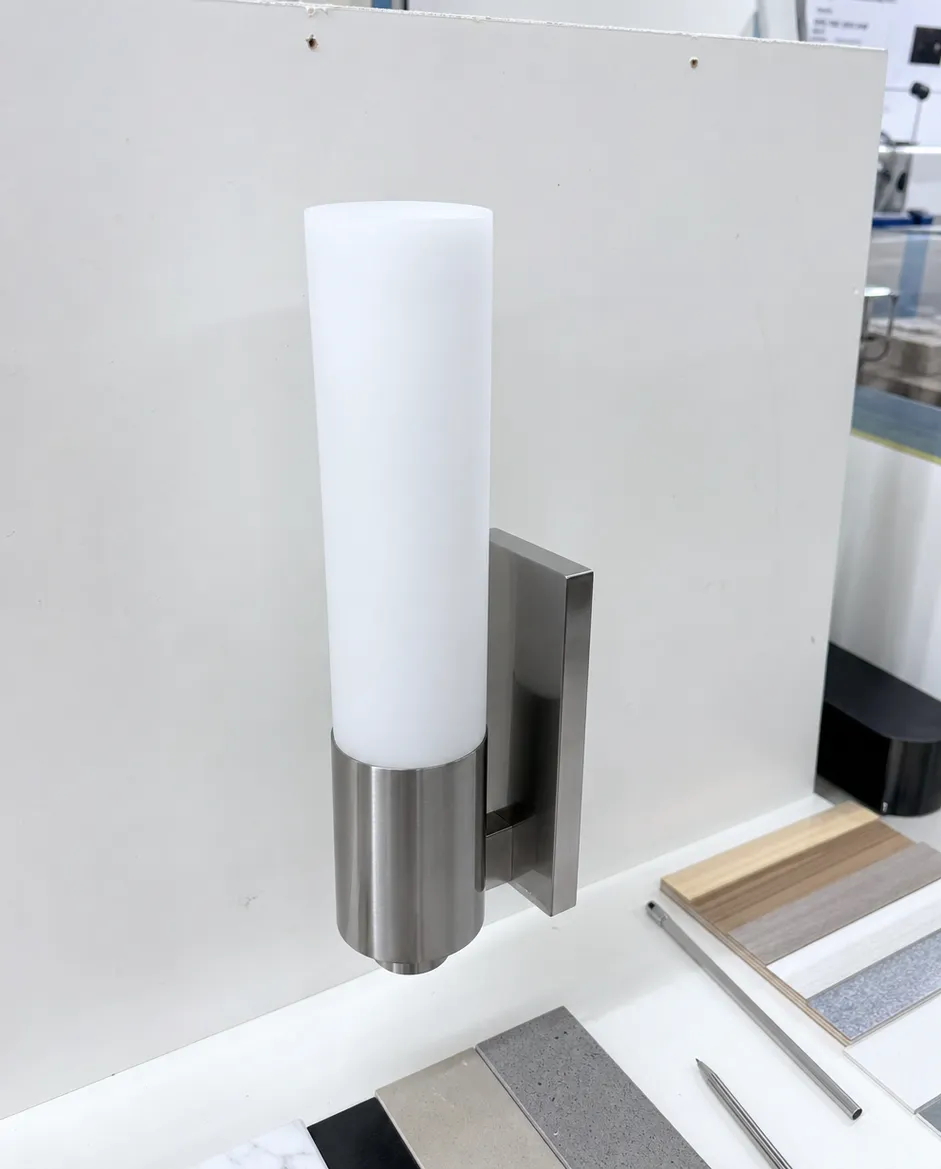

Custom Wall Sconces Built to Your Spec
Factory-direct custom wall sconces — engineered from the housing geometry outward, certified for your market, shipped on schedule.
Prototype in 7–10 working days. CE, UL, and SAA held in-house — no waiting on third-party certification work when you're ready to import.
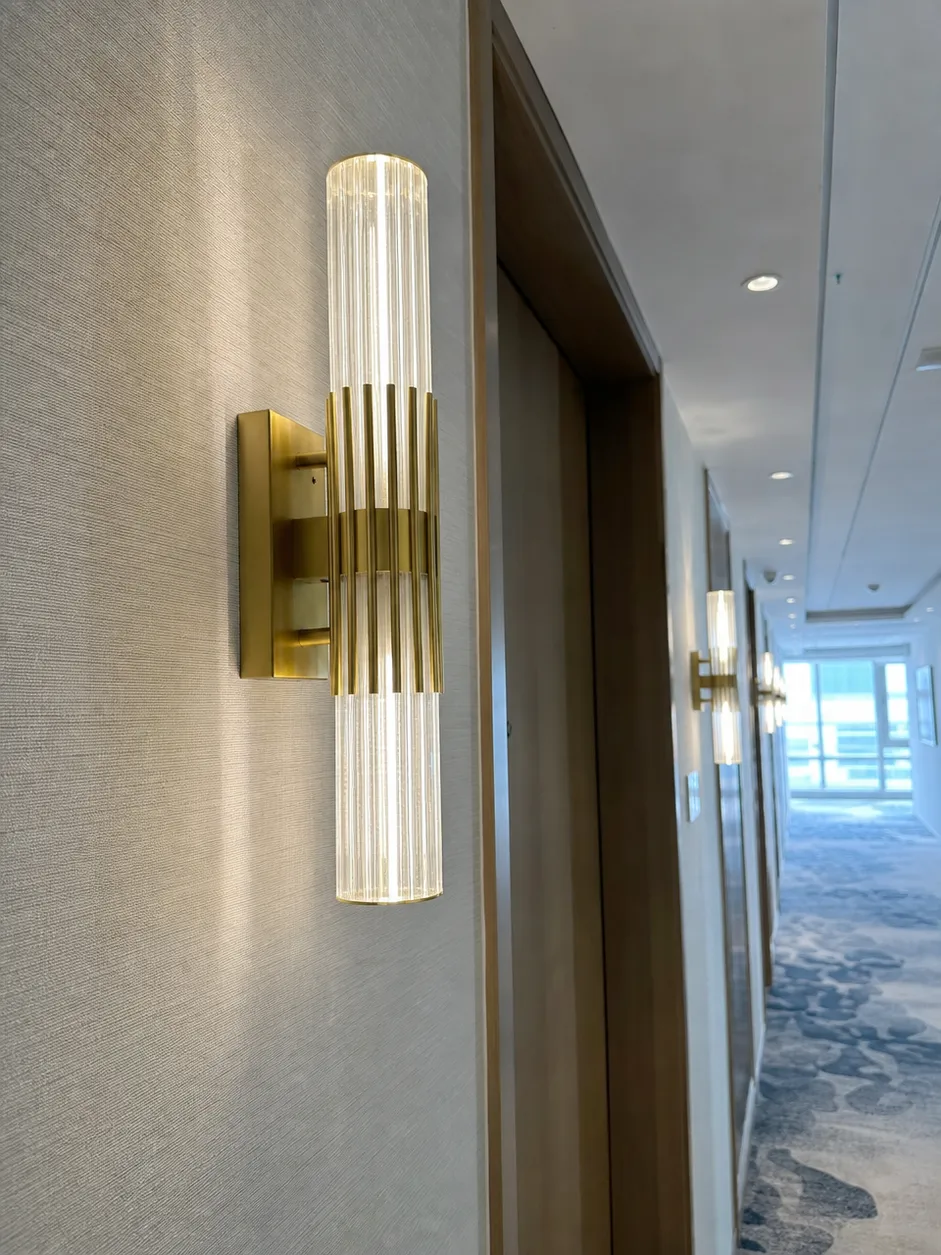
What "Custom" Actually Means at the Production Level
Most factories use "custom" to mean color selection and logo placement. We use it to mean the fixture is engineered from the housing geometry outward — die-cast aluminum body shaped to your drawing, surface finish matched to your specification, driver selected for your destination market's voltage and dimming infrastructure, and photometric output verified in our optical lab before tooling is committed.
Custom wall sconces sit at the intersection of decorative intent and installation precision. The wall plate dimensions, canopy depth, and wire exit position all affect how the fixture installs against a finished wall surface — and a millimeter of slop on the canopy fit is the kind of thing that generates callbacks from your downstream customers.
We hold CNC tolerances to ±0.1mm on critical mounting dimensions, so the fixture your customer receives installs the way the drawing says it will.
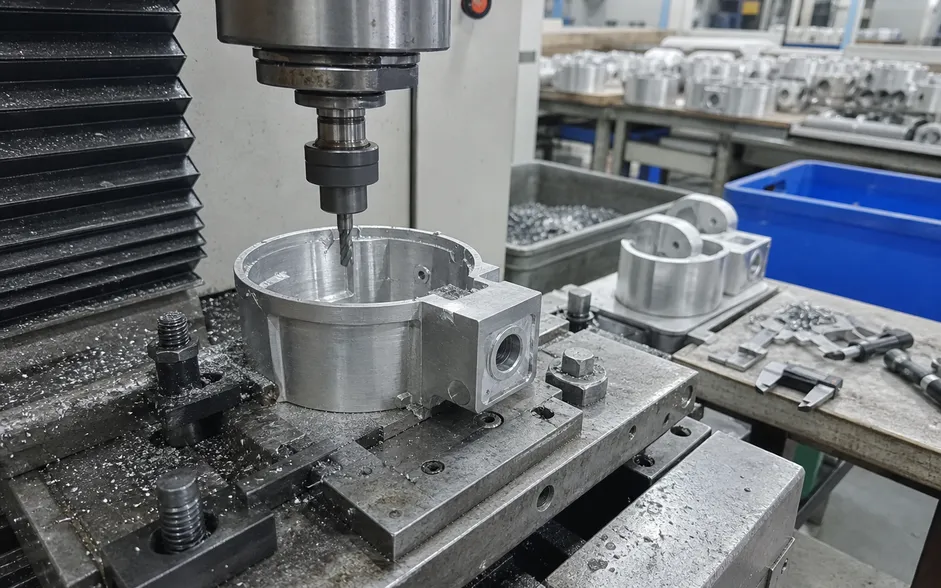
The distinction matters commercially: a fixture that installs cleanly and holds its finish across a 200-unit hotel corridor order is a fixture your buyer reorders. One that generates punch-list items on the first project is a fixture you discount to move and eventually discontinue.
We've been making decorative wall lighting since 2008, and the repeat order rate from our hospitality and residential distribution buyers is the clearest signal we have that the production discipline is working.
Engineered Geometry
Die-cast body shaped to your drawing, not selected from a catalog of existing shells.
Optical Lab Verified
Photometric output confirmed before tooling is committed — no surprises at production scale.
±0.1mm Tolerance
CNC precision on critical mounting dimensions eliminates installation callbacks.
Market-Specific Drivers
Driver selected for your destination market's voltage and dimming infrastructure.
Specification Parameters for Custom Wall Sconce Programs
The table below reflects industry-standard parameters and our typical production ranges. Actual specifications are confirmed per project — contact us with your requirements for exact values.
| Parameter | Typical Range | Notes |
|---|---|---|
| Housing material | Die-cast aluminum, zinc alloy | Aluminum standard; zinc alloy for smaller decorative components |
| Body dimensions | Width 80–400mm, projection 60–250mm | Custom geometry available with new tooling |
| Wall plate / canopy | 80–180mm diameter or custom shape | Round, square, rectangular — tooled per project |
| Wattage | 5W–40W LED | Driver specified per SKU and destination market |
| Voltage | 110–120V / 220–240V / dual-voltage | Specified at order; driver selected accordingly |
| Color temperature | 2700K, 3000K, 4000K standard | Custom CCT available on request |
| CRI | ≥80 standard; ≥90 available | High-CRI specified for hospitality and gallery applications |
| Dimming compatibility | TRIAC, 0–10V, DALI | Confirmed per driver selection and market requirement |
| IP rating | IP20 standard; IP44 available | IP44 for bathroom and covered outdoor applications |
| Surface finishes | Brushed gold, matte black, chrome, antique brass, custom RAL | PVD, electroplating, powder coat in-house |
| Certifications | CE, UL, SAA | Held in-house; documentation provided per order |
| MOQ | From 50 units (OEM with existing tooling) | New tooling programs: discuss per project |
| Prototype lead time | 7–10 working days | From approved drawings to functional sample |
| Production lead time | 25–35 days (standard); add 15–20 days if new tooling required | From order confirmation |
Specifications shown are industry-standard values and typical production ranges. Confirm exact parameters via inquiry.
7–10 Day Prototyping
From approved drawings to functional sample — evaluate fit, finish, and light output before committing to production tooling.
50-Unit MOQ
OEM programs start at 50 units with existing tooling. New tooling programs discussed per project scope and complexity.
In-House Finishing
PVD, electroplating, and powder coat capabilities on-site. Custom RAL colors matched without outsourcing delays.
The Production Process Behind a Custom Wall Sconce Order
This is where the difference between an assembly operation and a manufacturer shows up. Most decorative lighting factories in Guzhen buy die-cast housings from a casting supplier, buy drivers from a driver supplier, and assemble. We run die-casting, CNC machining, and surface finishing under the same 12,000 m² roof. That vertical integration is not a marketing point — it's the reason we can hold dimensional consistency across a 500-unit batch and why finish quality doesn't drift between the first carton and the last.
Die-Casting & Machining
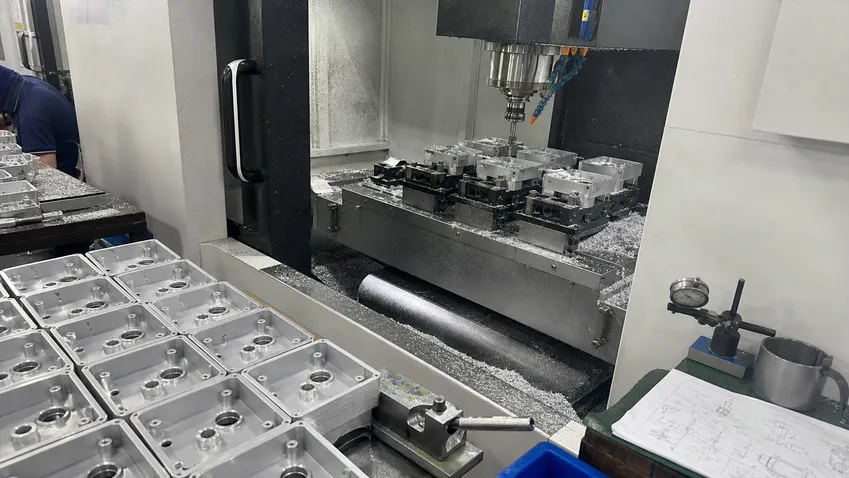
Aluminum alloy housings are cast on-site and CNC-machined to final dimensions. The wall plate bore, mounting hole pattern, and wire channel are all machined in the same setup — no secondary operations that introduce positional error.
We run the same tooling across a production batch without mid-run swaps, so the 500th unit comes out of the same dimensional envelope as the first.
We've seen what happens when a factory swaps tooling mid-run to service another customer's order — the dimensional drift is subtle enough to pass visual inspection but shows up as installation inconsistency in the field.
Surface Finishing
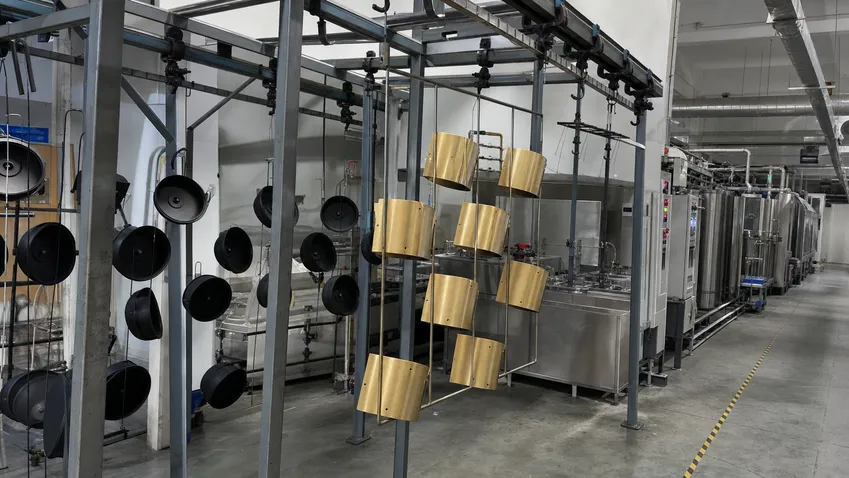
The finishing line handles electroplating, powder coating, and PVD in-house. Powder coat thickness runs 60–80μm with automated application — consistent across the batch, not just the sample.
For buyers supplying coastal markets or humid climates, we run salt spray testing on finish samples before committing a batch to production.
Highest-Volume Finishes
Process dialed in — color matching repeatable across reorders.
Driver Selection & Wiring
LED driver selection is matched to fixture wattage, dimming compatibility, and the certification requirements of your destination market. We don't use a single driver spec across all products.
North America (UL)
120V with TRIAC dimming compatibility
Europe (CE)
220–240V with DALI or 0–10V dimming
This matters when your buyer's electrician is on-site and the fixture needs to work with their existing dimmer infrastructure — a driver mismatch at installation is a warranty claim you absorb.
Optical Verification
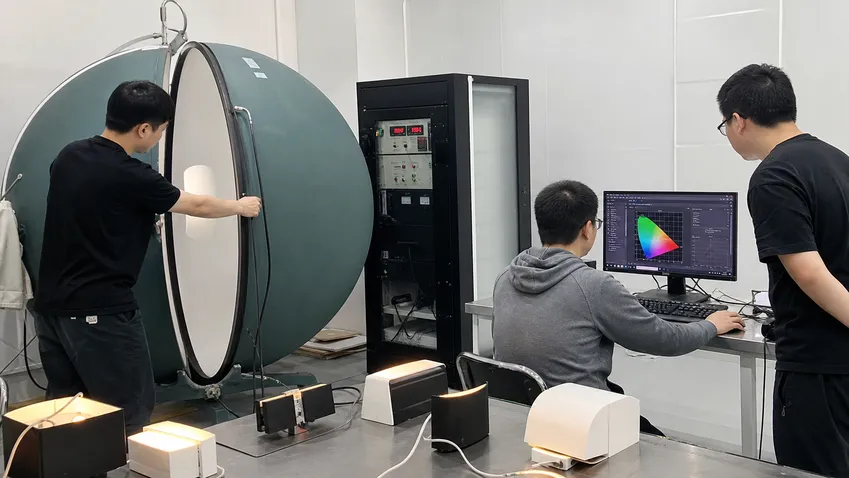
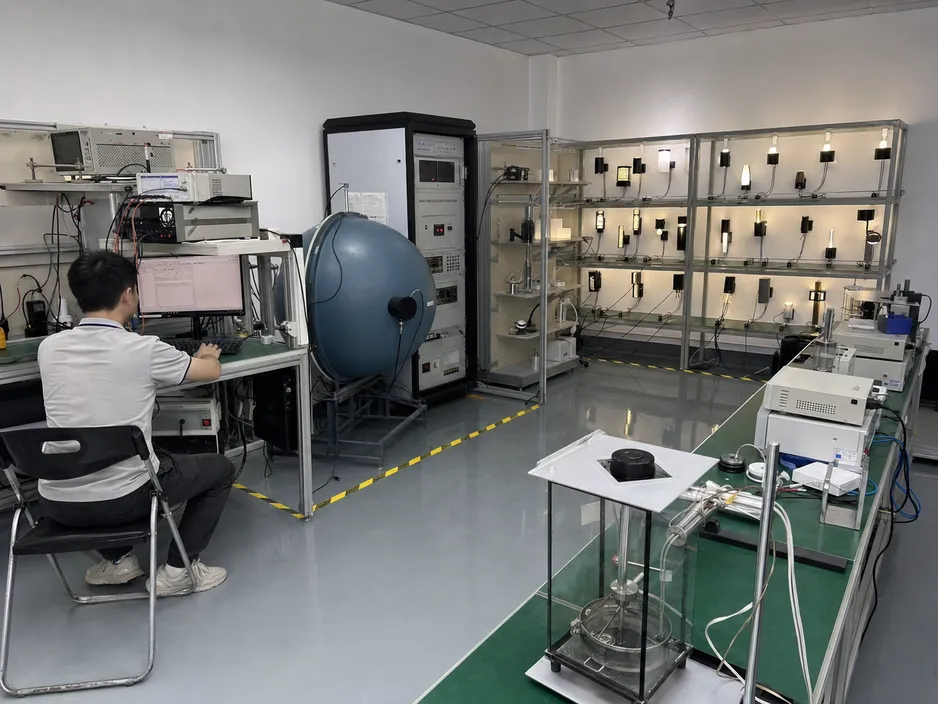
The in-house optical lab runs photometric testing on new designs and on production samples. Lumen output, beam angle, and color rendering are verified against spec before a design goes into production.
For buyers who need IES files for project submissions — hotel FF&E packages, commercial interior specifications — we generate them from our own measurements.
Market Segments Where Custom Wall Sconces Generate Repeat Volume
Wall sconces are a high-reorder product category when you're positioned in the right segments. The fixture is a per-room item in hospitality and residential projects, which means a single project win translates to meaningful unit volume, and a satisfied end client means the same spec gets written into the next property.
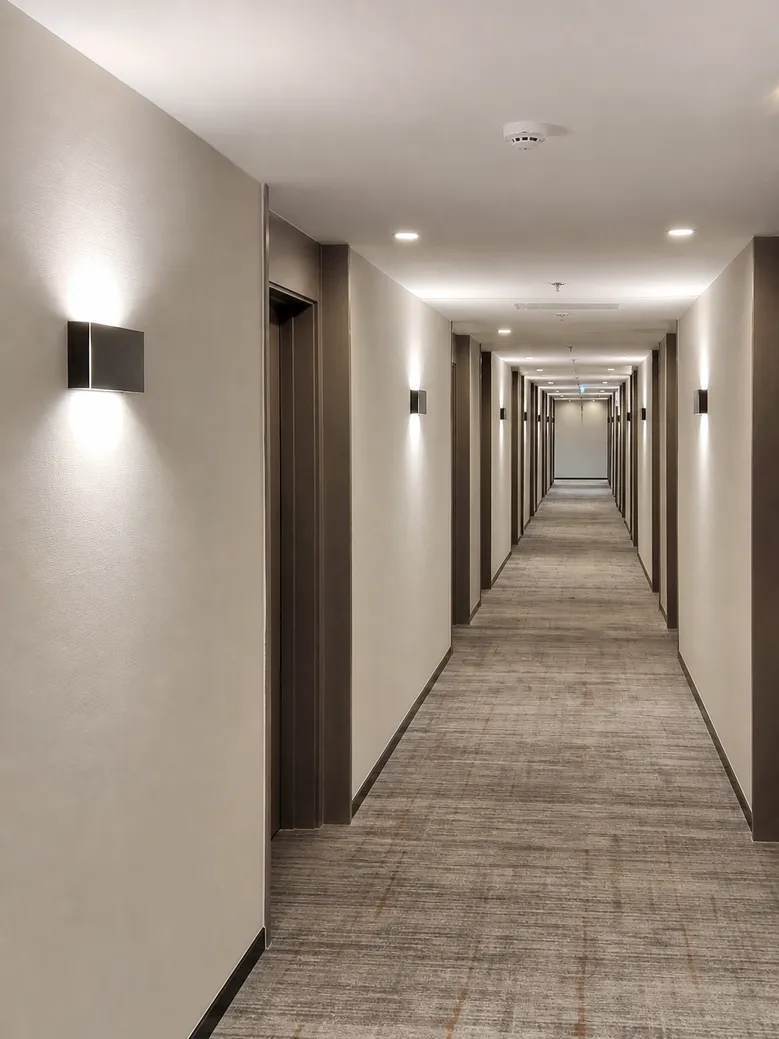
Hospitality FF&E Supply
Hotel corridor and guestroom wall sconce programs are the highest-volume repeatable segment in this category. A 200-room hotel property typically specifies 2–4 wall sconces per room plus corridor fixtures — 400–800 units per property, often with a consistent finish and form factor across the brand standard.
Hospitality FF&E distributors and procurement firms that supply these programs need a factory that can hold finish consistency across multiple production runs, because the brand standard doesn't change between the first property and the tenth.
Our batch documentation and finish matching process is built for exactly this requirement.
Luxury Residential & Villa Projects
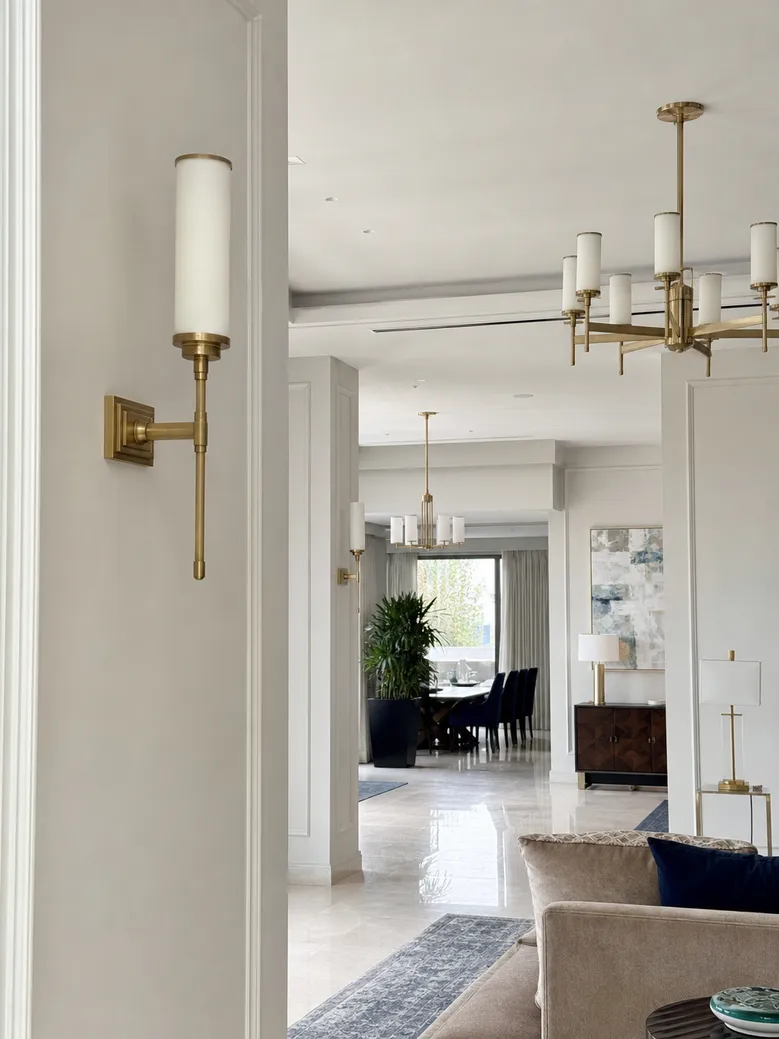
High-end residential contractors and interior design firms sourcing for villa and luxury apartment projects typically specify custom wall lighting as part of a coordinated fixture package — the sconce finish matches the pendant, the pendant matches the chandelier.
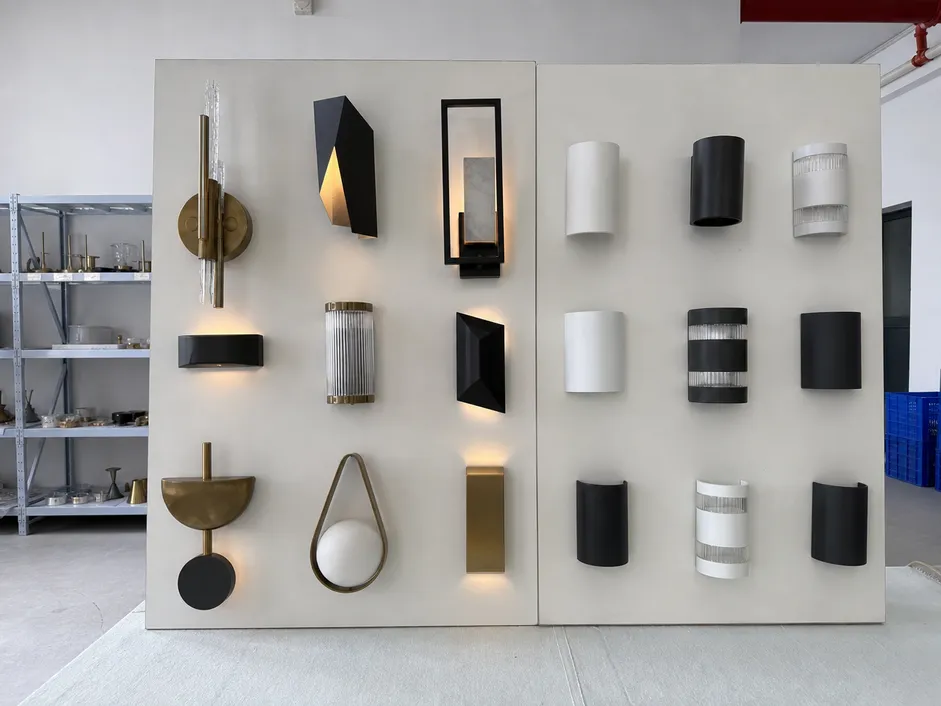
Buyers supplying this segment need a factory that can produce across multiple fixture types with consistent finish matching. We manufacture the full decorative range — wall sconces, pendants, chandeliers — so a coordinated package can come from a single source with a single finish reference.
This matters more than it sounds: finish matching across suppliers is one of the most common sources of project punch-list items in luxury residential.
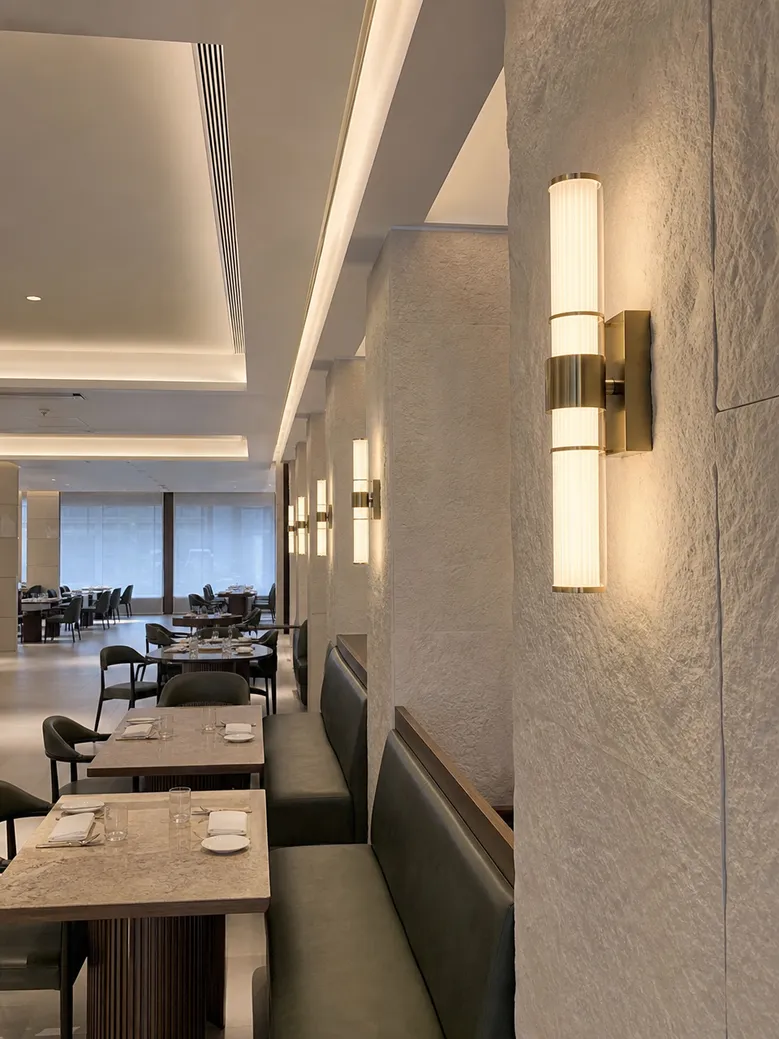
Restaurant & F&B Fit-Out
Restaurant lighting programs typically run 20–80 wall sconces per venue, with a design-forward brief and a tight installation schedule.
The commercial opportunity here is in the fit-out contractor and restaurant group relationships — a contractor who specs your sconce into one venue and gets clean installation and consistent finish will write it into the next project.
The reorder pattern in this segment is project-by-project rather than continuous, but the per-project volume and the relationship stickiness make it worth building.
Overseas Distributors — Private-Label Lines
Distributors in North America, Europe, and Australia who are building or expanding a private-label decorative lighting line use custom wall sconces as a core SKU — the fixture type has broad application across residential and commercial interiors, and a well-designed sconce with a proprietary finish or form factor gives the distributor a differentiated product that isn't directly price-comparable on Amazon or at trade shows.
Our OEM program supports private-label packaging, custom branding, and documentation packages tailored to the destination market's import requirements.
Discuss Your Market Segment and Volume Requirements
Whether you're supplying hospitality FF&E, luxury residential, restaurant fit-outs, or building a private-label line — let's talk about how our production capabilities align with your program needs.
Start the ConversationCustomization Scope: What Can Be Specified, What Has Limits
Housing Geometry
New housing geometry requires new tooling. Tooling cost and lead time depend on complexity — a simple cylindrical body with a standard canopy is a different tooling investment than a multi-component decorative form.
We quote tooling separately from unit cost, and tooling is amortized over the production run.
Worth noting: For buyers who want to start with an existing form factor and modify it (different canopy shape, adjusted projection depth, added decorative element), we can often work from existing tooling with modifications rather than full new tooling — this is worth discussing before assuming a full tooling cost.
Surface Finish
Any RAL color is available on the powder coat line. PVD finishes (brushed gold, rose gold, gunmetal, champagne) are run in-house. Electroplating covers chrome, nickel, and antique brass.
Custom finish matching — matching an existing fixture finish from another supplier, or matching a hardware finish specified by an interior designer — is something we do regularly. We work from physical samples or Pantone/RAL references.
Consistency across runs: Finish matching across production runs is where a lot of factories fall short — we maintain finish reference samples per SKU and check against them at the start of each production batch.
Electrical Configuration
Voltage, wattage, dimming protocol, and driver brand can all be specified.
For buyers with specific driver brand requirements — Meanwell, Inventronics, or others — we accommodate this.
For buyers who need a specific dimming protocol for compatibility with a smart home or building management system, we specify the driver accordingly.
Certification Scope
CE, UL, and SAA are held in-house. If your program requires a certification we don't currently hold for a specific configuration, we can discuss the path.
Some configurations can be covered under existing certification scope, others require additional testing. We're transparent about what's covered and what isn't before you commit to a program.
What Has Limits
Fully Custom Optical Design
Custom lens geometry, custom reflector profiles — requires optical engineering time and prototype validation beyond the standard 7–10 day turnaround.
Minimum Order Quantities
Minimum order quantities below 50 units on OEM programs with existing tooling are generally not viable given the line setup cost. We'll tell you this upfront rather than quoting it and walking it back later.
Certifications and Market Compliance
CE, UL, and SAA are held in-house and maintained — not obtained once and left to expire. For buyers importing into Europe, North America, or Australia, the documentation package is ready: Declaration of Conformity, test reports, and material safety data are maintained per SKU and provided as part of the order documentation.
For buyers concerned about downstream market compliance beyond the fixture certification itself — RoHS compliance on materials, REACH compliance for European import, California Proposition 65 requirements for North American distribution — we maintain material declarations and can provide documentation on request. These aren't afterthoughts; they're part of the standard documentation package for buyers in regulated markets.
Europe
North America
Australia
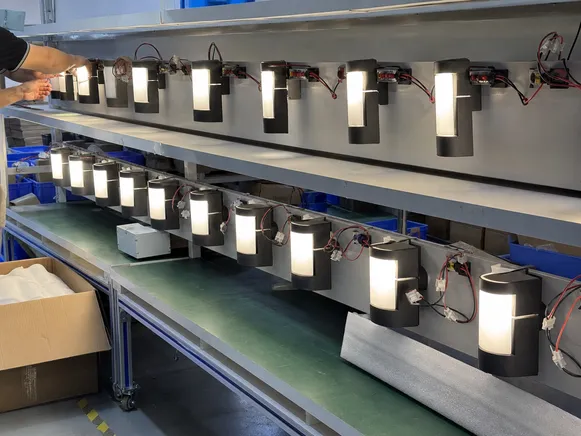
100% Aging Test Before Shipment
The aging test is the QC step that matters most for your warranty exposure. Every luminaire runs powered for a minimum burn-in period before packing. LED driver failures and wiring faults show up here, not in your customer's installation.
For a distributor carrying a private-label line, a driver failure in the field is a warranty claim, a replacement shipment, and a customer service conversation — the aging test is what prevents that.
Standard Documentation Package
Declaration of Conformity
Per SKU, maintained current
Test Reports
Full electrical & safety testing
Material Safety Data
RoHS, REACH, Prop 65
RoHS Compliance
Material declarations on file
REACH Compliance
European import documentation
California Prop 65
North American distribution ready
Packaging, Container Loading, and Landed Cost Considerations
Protective Packaging Engineering
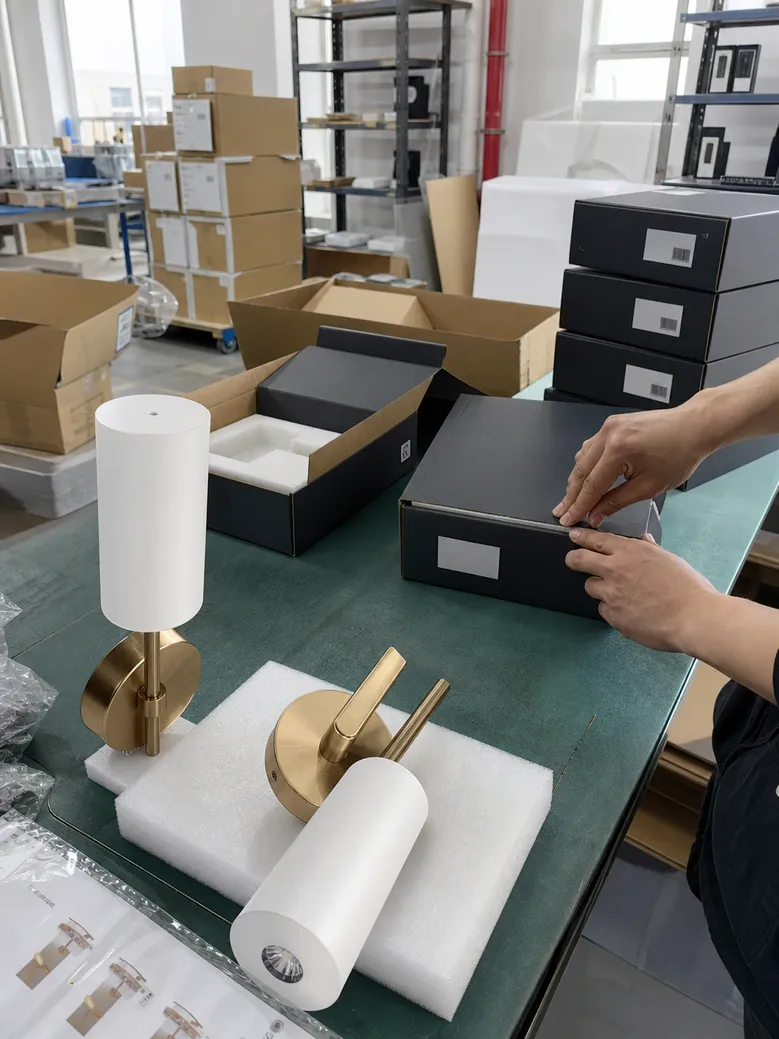
Custom wall sconces ship in individual foam-lined cartons with outer carton reinforcement. Decorative fixtures with projecting arms or glass elements get additional internal bracing — we've mapped the damage patterns from specific shipping routes and adjusted the packaging accordingly.
For buyers supplying e-commerce channels (Amazon FBA, Wayfair, independent online stores), we can configure packaging for mail-order durability and FBA labeling requirements, including blind drop-shipping and white-label packaging.
E-Commerce Packaging Options
- Amazon FBA labeling and carton compliance
- Blind drop-shipping (no factory branding)
- White-label packaging with your brand identity
- Mail-order durability testing for parcel carriers
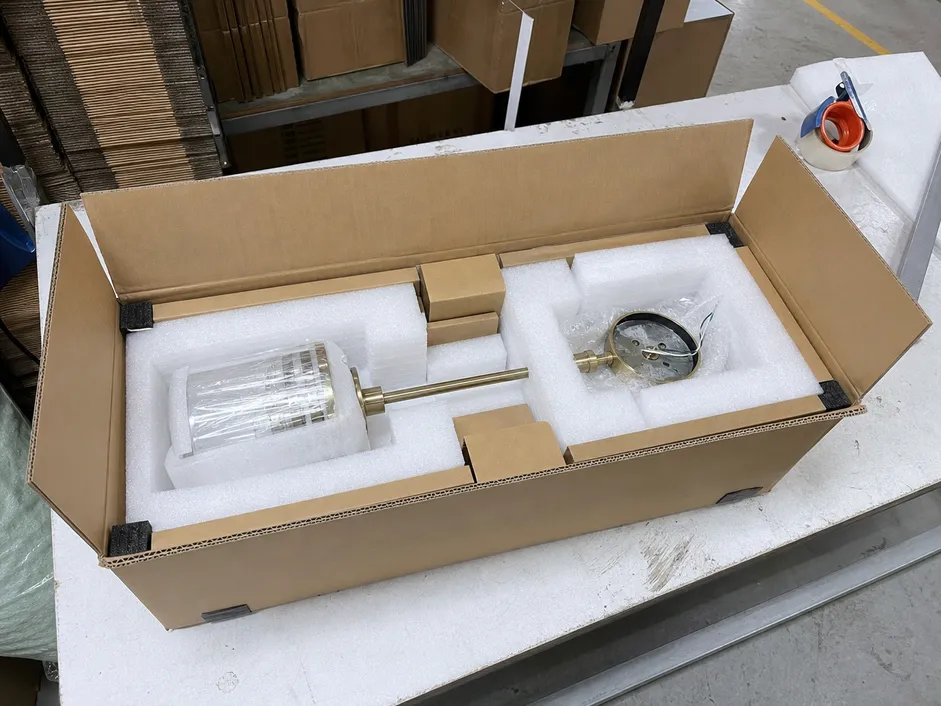
Container Loading Efficiency
Container loading efficiency on wall sconces depends heavily on fixture geometry. Compact sconces with a shallow projection load efficiently — a standard 40HQ container can carry a meaningful volume of units. Larger decorative sconces with extended arms or glass shades require more carton volume per unit and load less efficiently.
Carton Optimization
We optimize carton dimensions for container loading as part of the production planning process.
5–8% More Units
A 5–8% improvement in units per container is real money on a 1,000-unit order.
Route-Specific
Damage patterns mapped from specific shipping routes inform bracing and carton design.
Landed Cost Breakdown
For buyers calculating landed cost: the fixture unit cost, tooling amortization, freight, and any destination-market compliance costs (import duties, certification fees) all factor in. We can provide a detailed cost breakdown per configuration to support your landed cost calculation — this is a standard part of how we work with buyers who are building a business case for a new SKU.
Sourcing Custom Wall Sconces vs. Standard Catalog Product
The question buyers in this category face is whether to source a custom program or work from a standard catalog. The honest answer depends on your volume and your market positioning.
Standard catalog product from any factory gives you faster availability and no tooling cost, but it gives your competitors the same product. If you're building a private-label line or supplying a project with a specific design brief, catalog product doesn't solve the problem.
Custom wall sconces — with a proprietary form factor, a specific finish, or a configuration tuned to your destination market — give you a product that isn't directly comparable on price.
Standard Catalog
- Faster availability
- No tooling cost
- Competitors access the same product
- Directly comparable on price
- Cannot meet specific design briefs
Custom Program
- Proprietary form factor and finish
- Not directly comparable on price
- Tuned to your destination market
- Protects SKU from direct price competition
- Requires volume to justify tooling
When the Economics Work
The economics work when your volume justifies the tooling investment and when the differentiation translates to margin. For a distributor building a line, the tooling cost is a one-time investment that protects the SKU from direct price competition. For a project contractor, the custom spec is often required by the design brief — the question is just finding a factory that can execute it reliably.
Distributors
One-time tooling investment protects the SKU from direct price competition across your line.
Project Contractors
Custom spec is often required by the design brief — the question is finding a factory that executes reliably.
Running Custom Programs Since 2008
We've run both types of programs since 2008. The buyers who get the most value from a custom program are the ones who come in with a clear brief — target retail price, destination market, design reference, and volume expectation — rather than a vague "we want something custom."
The clearer the brief, the faster we can spec the right configuration and quote it accurately.
Your Brief Should Include:
- Target retail price
- Destination market
- Design reference
- Volume expectation
Other Custom Decorative Lighting Programs
If custom wall sconces are part of a broader fixture package, we manufacture across the full decorative range. Sourcing from a single factory eliminates the finish-matching problem and simplifies your documentation.
Custom Pendant Lighting
OEM/ODM pendant programs, single and multi-light configurations, glass and metal shade options.
Custom Lighting Fixtures
Full custom fixture development across all types, from concept to production.
Custom Architectural Lighting
Architectural-grade custom luminaires for commercial and hospitality projects.
Hospitality Custom Lighting
Complete FF&E lighting programs for hotel and restaurant projects.
For a coordinated fixture package — sconces, pendants, and ceiling fixtures in a matched finish — sourcing from a single factory eliminates the finish-matching problem and simplifies your documentation.
View All Custom Decorative Lighting ProgramsFrequently Asked Questions
What is the minimum order quantity for custom wall sconces?
OEM programs using existing tooling start from 50 units. For programs requiring new tooling, MOQ is discussed per project based on tooling cost and unit economics — typically 100–200 units minimum to make the tooling investment viable. We'll tell you the MOQ upfront when we quote the tooling.
How long does prototyping take for a new custom wall sconce design?
7–10 working days from approved drawings to functional sample. That covers CNC-machined prototype housing, provisional surface finishing, and driver integration — a working sample you can test with your own customers, not a mock-up. If your design requires optical validation (custom beam angle, specific lumen output), add time for photometric testing.
What certifications do your custom wall sconces carry?
CE (Europe), UL (North America), and SAA (Australia) are held in-house. The certification scope covers standard configurations — if your program has specific configuration requirements, we confirm coverage before you commit. Documentation packages (Declaration of Conformity, test reports, material declarations) are provided per order.
Can you match a specific finish to an existing fixture or hardware specification?
Yes. We work from physical samples, Pantone references, or RAL codes. PVD, electroplating, and powder coat are all run in-house, which gives us more control over the match than factories that outsource finishing. We maintain finish reference samples per SKU and check against them at the start of each production batch to ensure reorder consistency.
What dimming protocols are supported?
TRIAC, 0–10V, and DALI are all available — the driver is specified per SKU based on your destination market and the dimming infrastructure your buyers are working with. If you have a specific smart home or BMS compatibility requirement, send us the spec and we'll confirm the right driver configuration.
How do you handle finish consistency across multiple production runs?
We maintain a finish reference sample for each SKU and run a color/finish check at the start of every production batch against that reference. If a batch drifts outside tolerance, it doesn't proceed. For buyers running a private-label line with multiple reorders over time, this is the process that keeps your product looking consistent across the line.
Start Your Custom Wall Sconce Program
Send us your design reference, target market, volume expectation, and any certification requirements. Our engineering team will come back with a configuration recommendation, tooling assessment, and detailed quote — including a breakdown of unit cost, tooling cost, and lead time.
Most new buyers in this category start with a prototype order to validate the design and finish before committing to full production. We can ship a functional prototype within 7–10 working days of drawing approval.
Wholesale only. Strict MOQ applies.