

LED Pendant Lighting
Integrated LED pendant lighting built for buyers who need driver reliability, market compliance, and finish consistency — not just a low unit price.
Every SKU ships with a matched driver, 100% aging test, and photometric data. CE, UL, and SAA certified for North America, Europe, and Australia.
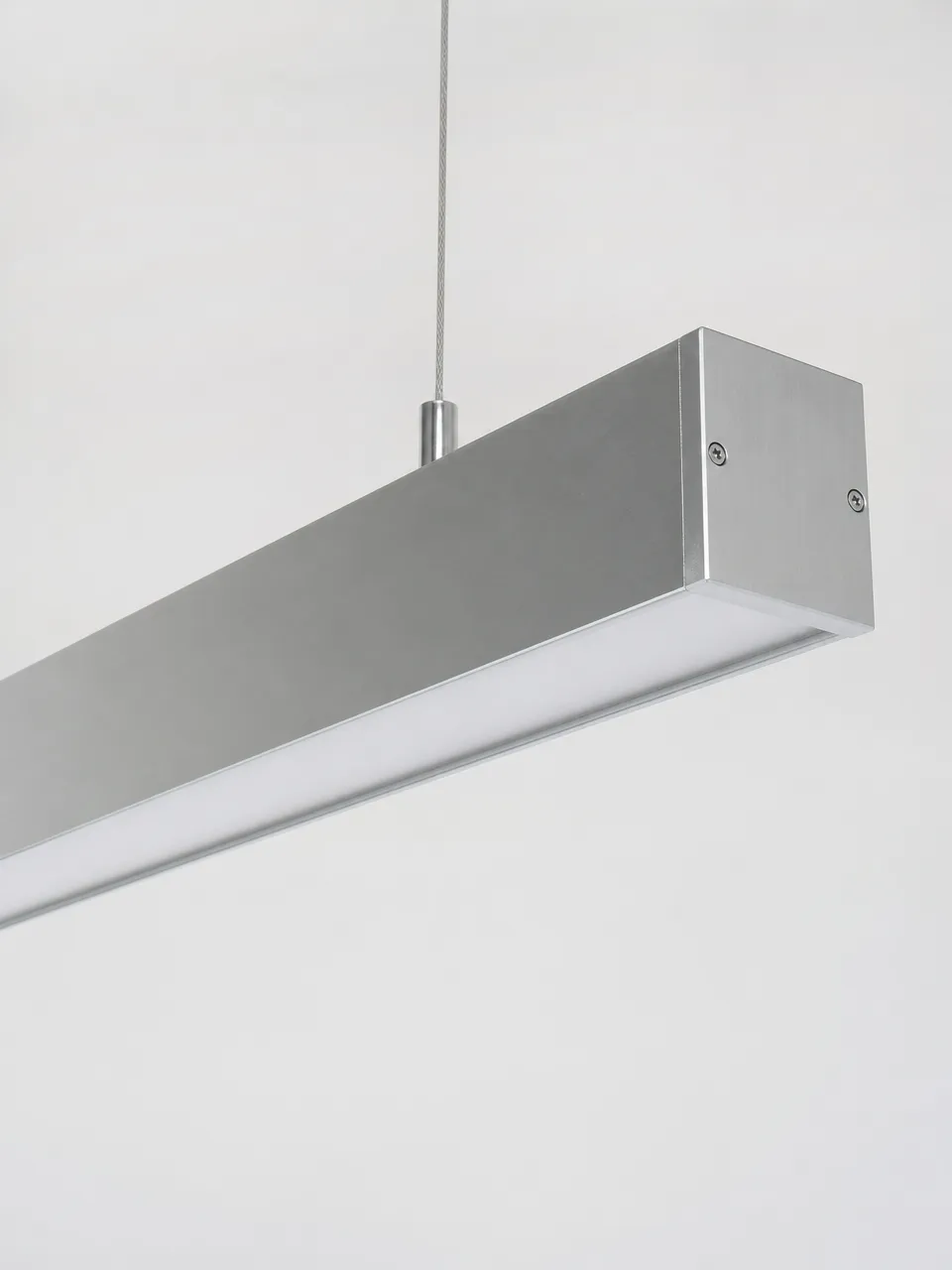
What Makes LED Pendant Lighting a Different Product to Source
LED pendant lighting is not the same sourcing decision as a socket-type pendant. When the light source is integrated into the fixture, the driver, the thermal management, and the LED module are all part of the product — and all of them have to work together correctly for the fixture to perform over its rated life. A socket-type pendant can ship with a bad bulb and the buyer replaces it. An integrated LED pendant with a failed driver or a thermal design that runs the junction temperature too hot is a warranty claim, a return, and a damaged relationship with your downstream customer.
We've been making integrated LED pendants since the technology became viable for decorative applications, and the failure modes we've seen in the field are consistent: undersized drivers that fail under sustained thermal load, heat sinks that weren't modeled for the fixture's actual operating environment, and LED modules that depreciate faster than rated because the junction temperature runs above spec. Our response to each of those failure modes is built into how we design and test these fixtures — not as a marketing claim, but as a production requirement.
The parent category page covers our full pendant lighting range and the in-house production infrastructure behind it — view all pendant lighting. This page focuses on what's specific to the LED-integrated sub-category: driver selection, thermal management, photometric performance, and the compliance requirements that vary by destination market.
Undersized Drivers
Drivers that fail under sustained thermal load are the most common field failure in integrated LED pendants. We match driver capacity to actual operating conditions, not just nominal wattage.
Inadequate Thermal Design
Heat sinks that weren't modeled for the fixture's actual operating environment lead to accelerated lumen depreciation and premature failure. Our thermal modeling accounts for real-world installation conditions.
Accelerated LED Depreciation
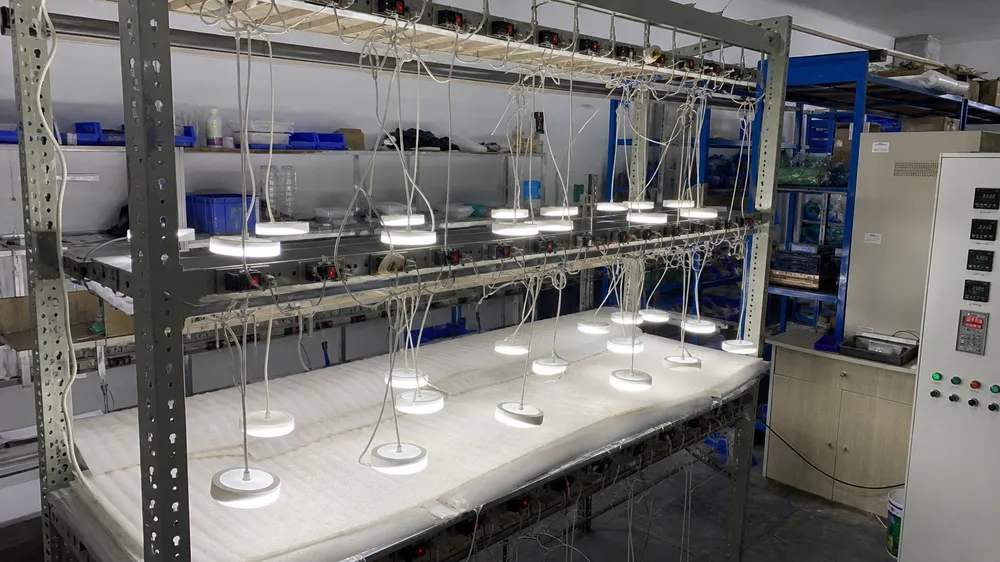
LED modules that depreciate faster than rated because junction temperature runs above spec. Every fixture undergoes 100% aging testing before shipment to verify thermal performance under load.
LED Pendant Lighting Specifications
These are the standard parameters for our LED pendant lighting range. Individual SKUs carry exact values; the table below reflects the range across the product line.
| Parameter | Standard Range / Options |
|---|---|
| Housing Materials | Aluminum alloy (ADC12), zinc alloy (ZA-8), steel |
| Shade / Diffuser Materials | Acrylic, PC diffuser, metal, blown glass, molded glass |
| Finish Options | Matte black, brushed gold, brushed nickel, white, chrome; custom PVD/powder coat on OEM orders |
| Light Source | Integrated LED module (non-replaceable) |
| Wattage | 6W – 48W (typical range; custom wattages on OEM) |
| Luminous Efficacy | ≥80 lm/W standard; ≥100 lm/W on high-efficiency SKUs |
| Color Temperature | 2700K, 3000K, 4000K standard; custom CCT available on OEM orders |
| CRI | ≥80 standard; ≥90 available on specified SKUs |
| Dimming Compatibility | TRIAC (standard for North America residential); 0-10V (commercial/hospitality); DALI (BMS-integrated projects) |
| Voltage | 100–240V AC universal; 120V and 230V dedicated versions available |
| Driver Type | External constant-current driver, matched per SKU |
| Driver Brand | Established manufacturers with documented MTBF data |
| Rated Lifespan | L70 ≥ 30,000 hours at rated operating temperature |
| Suspension Drop | 0.5m – 3m standard; custom lengths available |
| IP Rating | IP20 standard (indoor); IP44 on selected designs |
| Certifications | CE, UL, SAA, SGS; RoHS compliant |
| MOQ | Strict MOQ applies; contact for SKU-specific minimums |
Specifications shown are standard values for this product line. Actual specifications vary by SKU. Contact us for detailed product data sheets and photometric reports.
Driver Selection and Thermal Management: The Two Variables That Determine Field Performance
This is where LED pendant lighting either works or doesn't, and it's worth explaining how we handle it because most product pages skip it entirely.
Driver Matching
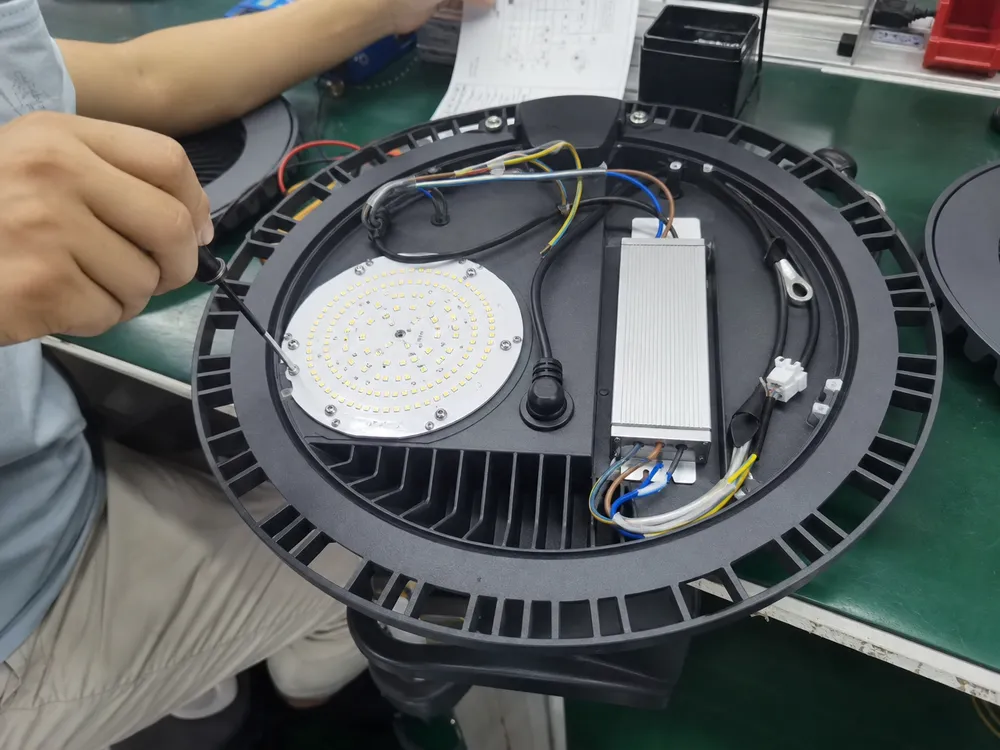
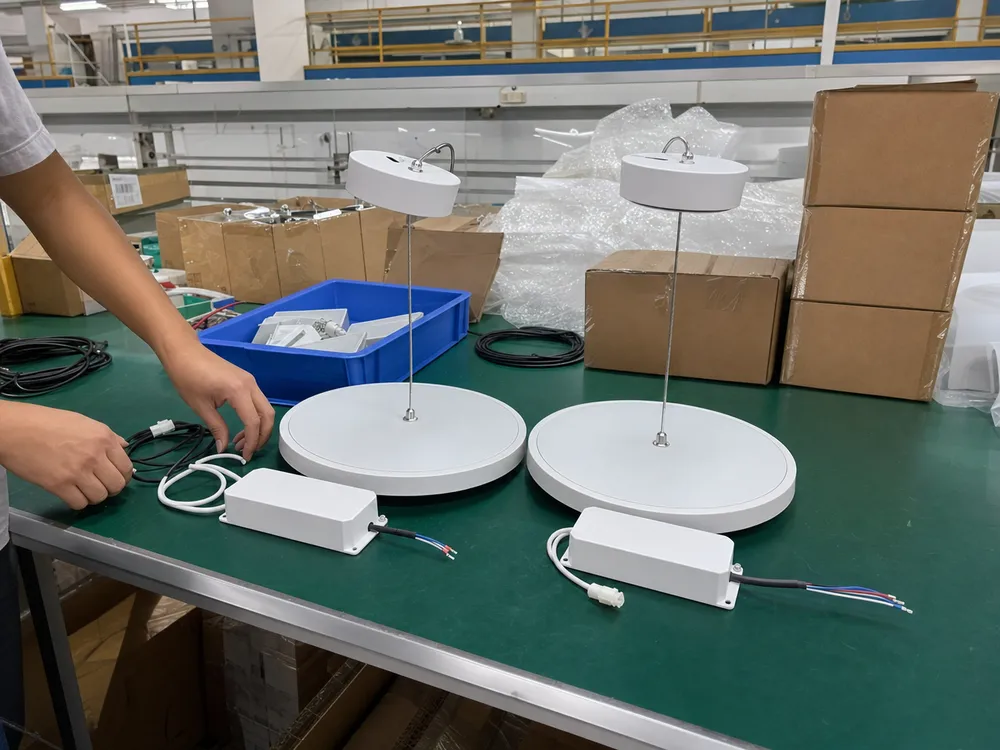
We don't use a single driver spec across all LED pendant SKUs. The driver is selected per fixture based on wattage, the fixture's thermal environment, dimming compatibility requirements, and the certification requirements of the destination market.
A 12W pendant going to a North American residential buyer gets a TRIAC-compatible driver that works with standard residential dimmers. The same fixture going to a European hospitality project gets a 0-10V driver for compatibility with the property management system. These are not interchangeable — a driver mismatch at installation is an expensive problem that generates callbacks and warranty claims.
We've seen containers arrive in North America with 0-10V drivers that were incompatible with the residential dimmers the end buyers had installed. That's an avoidable problem if the driver is specified correctly at the order stage.
Driver Quality
We specify drivers from established manufacturers with documented MTBF data. The cheapest driver that passes the initial certification test is not the same as a driver that performs reliably over 30,000 hours of operation.
The difference shows up in your warranty claim rate 18–24 months after your customers install the fixtures — not in the initial unit cost.
We've made the decision to use better components and reflect that in our pricing rather than compete on the lowest possible unit cost.
Thermal Design
The LED module's rated lifespan — L70 ≥ 30,000 hours — is only achievable if the junction temperature stays within the rated range during operation. That requires a heat sink sized for the fixture's actual thermal environment, not a generic aluminum plate.
For each LED pendant design, we model the thermal performance during prototyping and verify it with temperature measurements on the prototype before tooling is committed.
The heat sink geometry, the driver cavity ventilation, and the LED module mounting method are all part of the thermal design — not afterthoughts.
If a fixture is going into an enclosed ceiling recess or a low-ventilation installation environment, we flag that at the specification stage and adjust the thermal design accordingly.
Need driver specifications matched to your market?
Tell us your target market and volume — we'll confirm driver compatibility and pricing.
Photometric Performance and IES Files for Project Submissions
For buyers supplying commercial, hospitality, or specification-driven residential projects, photometric data is not optional — it's part of the project submission package. Lighting designers and M&E consultants specify fixtures by lumen output, beam angle, and color rendering index, and they need IES files to run their lighting calculations.
We generate IES files from our own optical lab measurements — not from the driver manufacturer's datasheet or from a generic LED module spec sheet. The measurements are taken on production-representative samples in our integrating sphere, and the IES file reflects the actual photometric performance of the fixture as assembled, including the effect of the shade or diffuser material on light distribution.
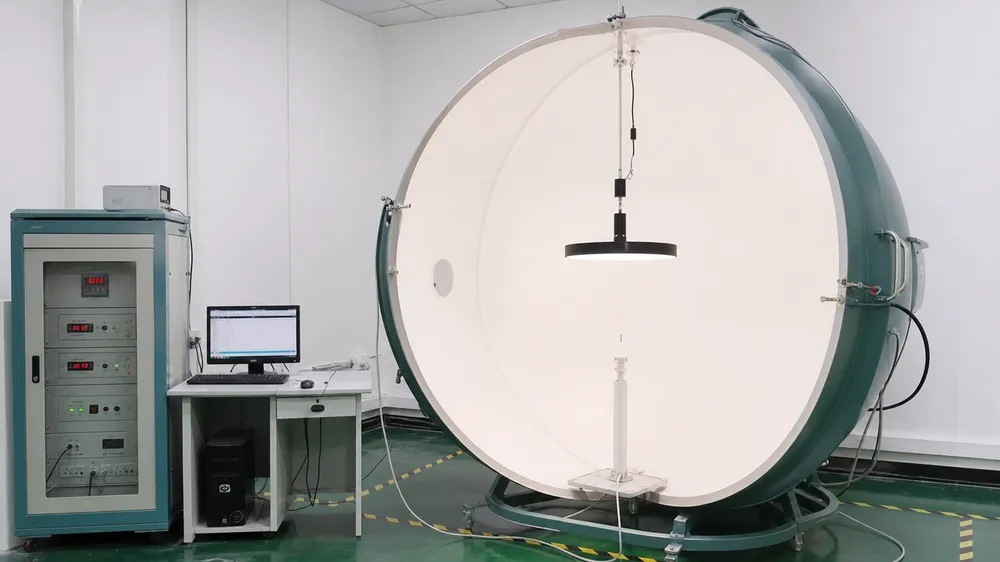
Standard Photometric Data Available Per SKU
-
Lumen output — initial and maintained at L70
-
Beam angle and light distribution curve
-
Color temperature (CCT) and color rendering index (CRI)
-
IES file for lighting design software (AGi32, DIALux, Relux)
-
Photometric test report from in-house optical lab
Third-Party Photometric Certification
For buyers who need third-party photometric certification for project submissions in regulated markets, we can arrange testing through accredited labs — confirm the requirement when requesting a quote.
Compatible Lighting Design Software
Market Segments Where LED Pendant Lighting
Generates Repeatable Volume
Hospitality Fit-Out Supply
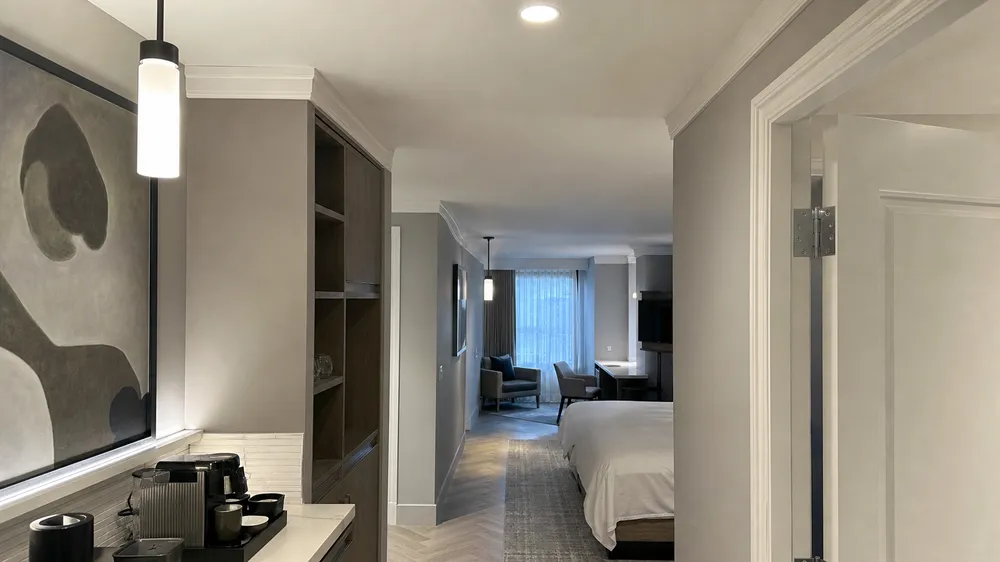
Hotels and serviced apartments are specifying integrated LED pendants across guest rooms, corridors, and public areas — the energy efficiency argument is straightforward for properties managing electricity costs across hundreds of rooms.
A mid-size hotel project runs 300–800 pendant fixtures across multiple zones, each requiring consistent photometric performance and matching color temperature.
The driver compatibility requirement for the property's dimming system is the critical specification variable — get it right at the order stage and the installation goes smoothly; get it wrong and you're dealing with callbacks across the entire property.
This segment has grown steadily for us over the past several years — hospitality buyers who've had driver compatibility problems with other suppliers tend to become long-term customers once they find a factory that handles the specification correctly.
Residential Developer Supply
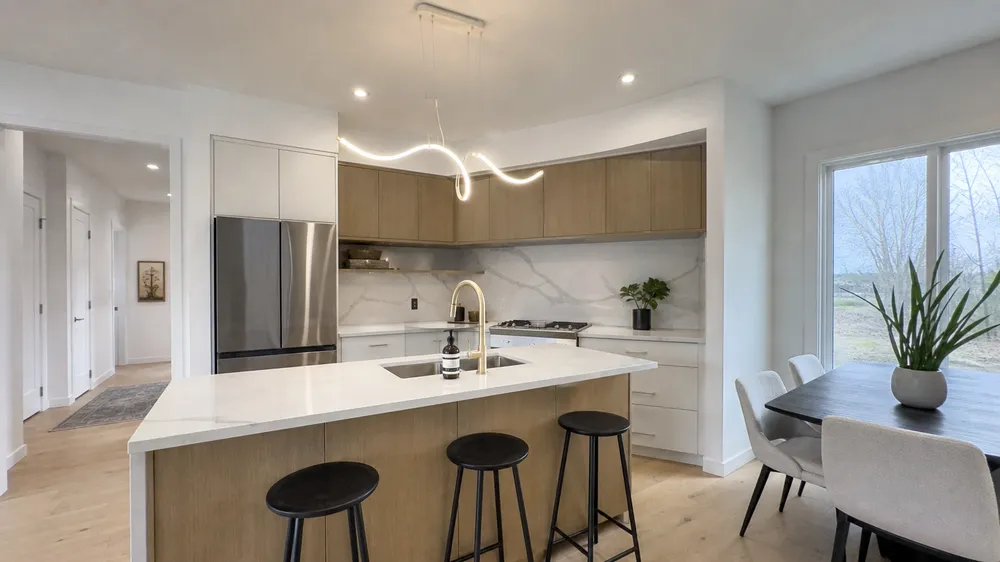
Mid-to-high-end residential developers in North America, Europe, and the Middle East are specifying integrated LED pendants for kitchen islands, dining areas, and entrance spaces across multi-unit developments.
The energy efficiency compliance angle matters here — building codes in California, the EU, and increasingly in the Middle East require minimum efficacy standards for installed lighting. Our LED pendant range meets these requirements, and we can provide the photometric documentation that developers need for building permit submissions.
Volume per project runs 50–500 units depending on development size, with consistent reorder patterns as developers build out phases.
Commercial Interior Fit-Out
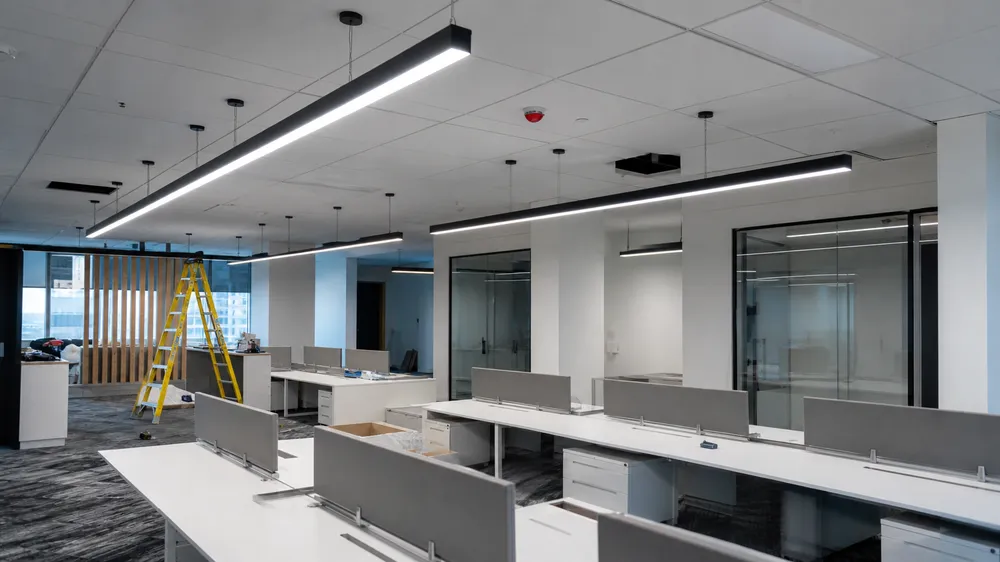
Office fit-outs, retail environments, and restaurant chains specifying pendant lighting across multiple locations need consistent photometric performance, reliable lead times, and the ability to reorder the same SKU across multiple project phases.
Integrated LED pendants are the standard specification for commercial interiors where energy efficiency is a design requirement. The DALI dimming option is relevant for commercial projects with building management system integration — confirm the dimming protocol at the specification stage.
Lighting Distributor Catalog Programs
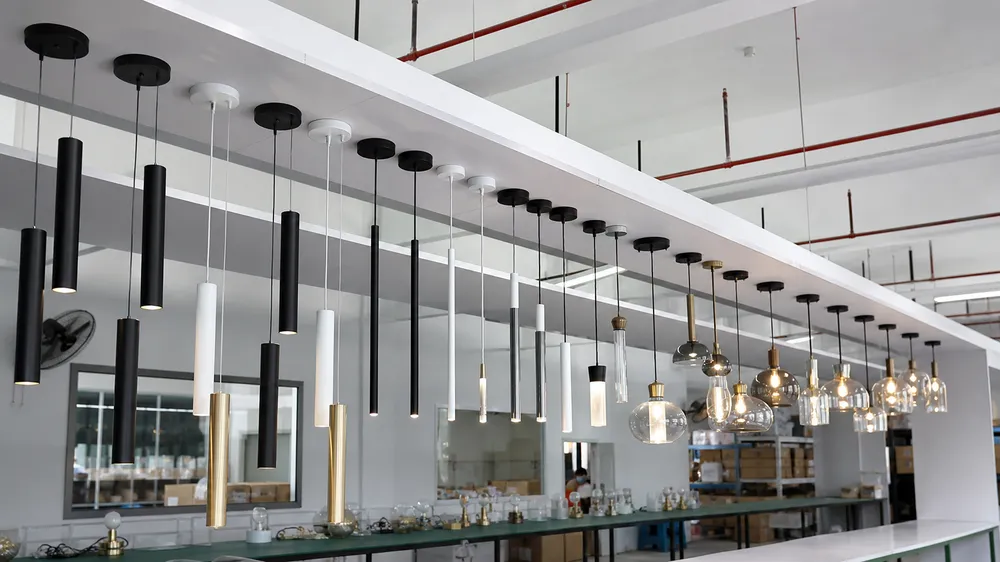
Distributors building an energy-efficient pendant lighting segment need SKUs that meet the efficacy requirements of their target markets, carry the right certifications, and come with photometric data that their commercial customers can use.
Our LED pendant range covers the full style spectrum — from minimalist cylinders to decorative glass diffuser designs — so you can build a coherent catalog segment rather than sourcing from multiple factories with inconsistent quality standards.
Dimming Compatibility: Specifying the Right
Driver for Your Market
Dimming compatibility is the most common source of field problems in LED pendant lighting, and it's worth a direct explanation because the options are not interchangeable.
TRIAC Dimming
North American Residential StandardThe standard for North American residential markets. Works with the leading-edge and trailing-edge dimmers that are already installed in most residential properties.
If your buyer is a residential developer or a distributor selling into the residential market in North America, TRIAC is the default specification.
Most standard residential dimmers from Lutron, Leviton, and similar brands are TRIAC-compatible.
Best For
Residential developers, residential distributors (North America)
0-10V Dimming
Commercial & Hospitality StandardThe standard for commercial and hospitality applications where a centralized lighting control panel manages multiple zones.
The dimmer sends a 0–10V analog signal to the driver to control output. If your buyer is supplying hotels, restaurants, or commercial office fit-outs with centralized lighting control, 0-10V is typically the required protocol.
Not compatible with standard residential dimmers.
Best For
Hotels, restaurants, commercial office fit-outs with centralized control
DALI
Digital Addressable Lighting InterfaceRequired for high-end commercial projects with building management system integration. Each DALI driver has a unique address and can be individually controlled and monitored by the BMS.
If your buyer is supplying Class A office buildings, luxury hotels, or any project where the lighting is integrated into a building automation system, DALI may be specified.
Confirm the BMS protocol with the M&E consultant before ordering.
Best For
Class A offices, luxury hotels, BMS-integrated projects
Multi-Market Driver Configuration
We specify the driver per SKU based on your target market. If you're ordering for multiple markets with different dimming requirements, we can configure the same fixture with different drivers — confirm the split at the order stage and we'll pack and label accordingly.
This means a single pendant design can ship with TRIAC drivers for your North American residential orders and 0-10V drivers for your hospitality projects — same fixture, different electrical configuration, clearly labeled for your warehouse team.
Dimming Protocol Quick Reference
| Protocol | Market Application | Signal Type | Compatible With |
|---|---|---|---|
| TRIAC | Residential (North America) | Leading/trailing edge phase-cut | Lutron, Leviton, standard wall dimmers |
| 0-10V | Commercial & Hospitality | Analog 0–10V DC signal | Centralized lighting control panels |
| DALI | High-end commercial / BMS | Digital addressable (unique per driver) | Building management systems, BMS automation |
Certifications and Market Compliance
LED pendant lighting has more compliance complexity than decorative-only fixtures because the integrated driver and LED module are subject to electrical safety and energy efficiency regulations that vary by market.
CE (Europe)
Covers the Low Voltage Directive (LVD) and Electromagnetic Compatibility (EMC) Directive requirements for the European market. Our CE-certified LED pendant fixtures include the driver in the certification scope — the driver is tested as part of the complete fixture, not separately. For buyers importing into the EU, we provide the Declaration of Conformity and test reports as part of the order documentation.
UL (North America)
UL listing covers electrical safety requirements for the US and Canadian markets. UL-listed fixtures are required for commercial installations in most US jurisdictions and are increasingly expected in residential applications. Our UL listing covers the complete fixture including the integrated driver.
SAA (Australia)
Required for the Australian market. SAA certification covers electrical safety and electromagnetic compatibility requirements under Australian standards.
RoHS Compliance
All LED pendant fixtures are RoHS compliant — restricted hazardous substances (lead, mercury, cadmium, and others) are below the threshold limits. RoHS compliance documentation is available per SKU for buyers importing into the EU or other markets with RoHS requirements.
Energy Efficiency Compliance
For buyers supplying markets with minimum efficacy requirements — California Title 24, EU Ecodesign Regulation, or similar — we can provide photometric data confirming the fixture meets the applicable efficacy standard. Confirm the specific regulation and threshold when requesting a quote.
Documentation Package
For buyers who need a documentation package for import clearance or project submission — test reports, Declaration of Conformity, photometric reports, RoHS declaration — we maintain these per SKU and provide them as part of the order documentation.
Learn more about our certifications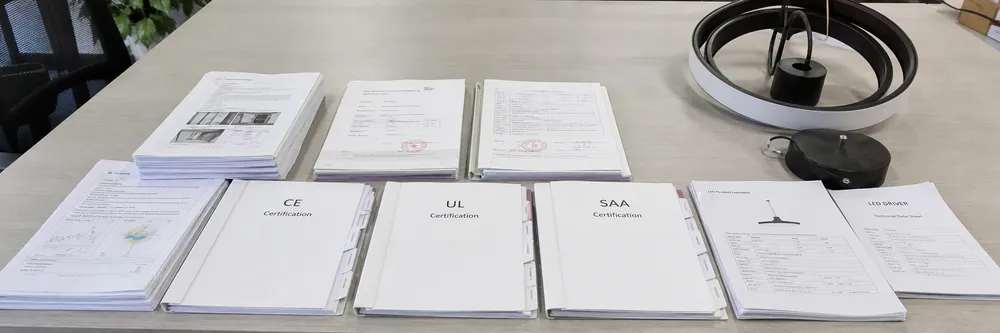
OEM and Custom LED Pendant Lighting
Custom LED pendant lighting is a meaningful part of our production volume — buyers who need proprietary designs, custom finishes, or specific photometric configurations that standard catalog SKUs don't cover.
Custom Wattage and CCT
Standard catalog SKUs run 2700K, 3000K, and 4000K at fixed wattages. For OEM orders, we can configure custom CCT values and wattage levels within the driver's operating range.
Hospitality buyers sometimes specify 2400K for a warmer ambiance in guest rooms; retail buyers sometimes specify 3500K for merchandise display. These are straightforward driver and LED module selections — confirm the requirement at the specification stage.
Custom Finishes
Proprietary powder coat colors and PVD tones for brand-specific product lines. Minimum run requirements apply — below a certain volume, the powder line changeover or PVD setup cost doesn't make commercial sense for either side.
Send us a Pantone reference or physical sample and we'll confirm feasibility and minimum run before you commit.
Custom Form Factors
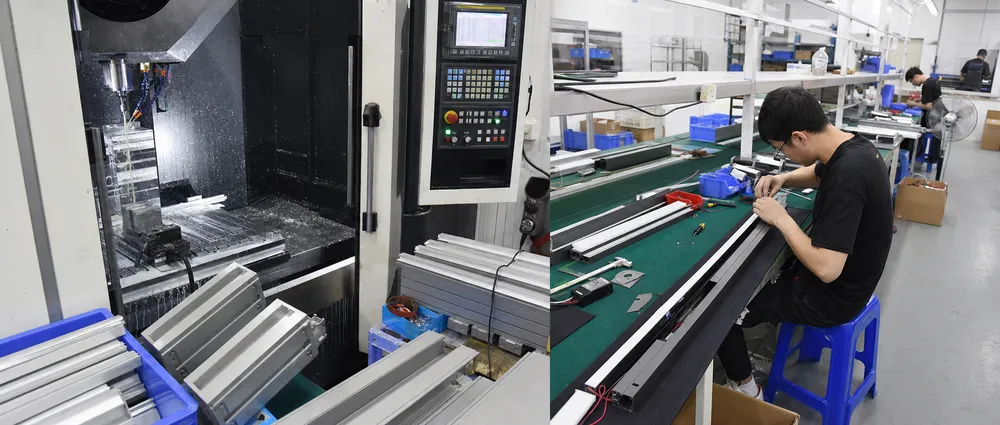
If your design requires a housing geometry, shade configuration, or suspension system that our standard catalog doesn't cover, our R&D team develops the production-ready design from your drawings or reference images.
Prototype turnaround: 7–10 working days from approved drawings to functional sample — that includes CNC-machined housing, provisional surface finishing, and driver integration. Not a mock-up; a working fixture you can test with your own customers.
Private Label
Full private label capability — your brand name on the fixture, your packaging design, your documentation. Standard for buyers building a branded LED lighting line.
Ready to discuss your OEM requirements?
Custom CCT, proprietary finishes, bespoke form factors, or full private label — let's scope your project.
How LED Pendant Lighting Compares to Other Pendant Sub-Categories
LED pendant lighting occupies a specific position in the pendant range — it's the right choice for some applications and the wrong choice for others. Here's how it fits relative to the sibling sub-categories.
| LED Pendant Lighting | Socket-Type Pendants | Glass Pendant Lighting | |
|---|---|---|---|
| Light source | Integrated, non-replaceable | Replaceable bulb (E26/E27, GU10) | Typically socket-type; LED integrated available |
| Field serviceability | Replace fixture at end of life | Replace bulb | Replace bulb |
| Energy efficiency | Higher (driver-optimized) | Depends on bulb choice | Depends on bulb choice |
| Dimming | Driver-dependent; specify at order | Dimmer-compatible bulb | Dimmer-compatible bulb |
| Compliance complexity | Higher (driver in certification scope) | Lower | Lower |
| Best for | Commercial, hospitality, energy-code markets | Residential, markets where serviceability matters | Decorative-priority applications |
When Socket-Type Is the Better Fit
If your market prioritizes end-user serviceability — residential buyers who want to replace bulbs rather than fixtures — socket-type designs are the better fit. Our modern pendant lighting and cylinder pendant lighting ranges serve this segment with replaceable-bulb architectures.
When Glass Pendant Lighting Wins
For decorative-priority applications where the glass shade is the visual centerpiece, our glass pendant lighting range offers the material richness that integrated LED designs typically can't match at the same price point.
When Integrated LED Is the Standard Choice
If your application is commercial or hospitality where maintenance is managed centrally and energy efficiency is a specification requirement, integrated LED is the standard choice. Driver-optimized efficiency, centralized dimming compatibility, and compliance with energy codes make it the default for project-based procurement.

Frequently Asked Questions
What is the minimum order quantity for LED pendant lighting?
Strict MOQ applies. The specific minimum varies by SKU and customization level — standard catalog items have lower minimums than OEM or custom finish orders. Contact us with your target SKU, destination market, and volume, and we'll confirm the MOQ and lead time for your specific requirement.
Why do some LED pendant lights fail within 12–18 months of installation?
Early failure in that timeframe is almost always a thermal management problem or a driver quality issue — not an LED chip failure. The LED chip itself is rated for 30,000+ hours at its specified junction temperature. When the fixture runs hotter than designed — undersized heat sink, driver generating excess heat in a confined space, or installation in an enclosed ceiling recess that traps heat — the junction temperature rises and the driver or LED module fails prematurely.
We model thermal performance during prototyping and verify it with temperature measurements before tooling is committed. We also specify drivers from established manufacturers with documented MTBF data.
If you're seeing early failures in fixtures from another source, the first diagnostic question is whether the fixture is installed in a thermally restricted environment.
What dimming protocol should I specify for hotel pendant lighting?
For most hotel applications, 0-10V is the standard — it's compatible with the centralized lighting control panels that hospitality properties typically use. If the property has a DALI-based building management system, specify DALI.
TRIAC is not the right choice for hotel applications because it's designed for residential dimmer switches, not centralized control panels.
Confirm the property's lighting control system specification with the M&E consultant before placing the order — a driver mismatch across a 500-room hotel is an expensive problem to fix after installation.
What efficacy level do your LED pendant lights achieve, and do they meet California Title 24?
Standard SKUs achieve ≥80 lm/W; high-efficiency SKUs achieve ≥100 lm/W. California Title 24 requires a minimum of 45 lm/W for residential pendant fixtures and higher thresholds for commercial applications — our standard range exceeds these requirements.
We can provide photometric test reports confirming the efficacy for specific SKUs. If you're importing into California or other markets with minimum efficacy requirements, confirm the applicable standard when requesting a quote and we'll provide the documentation package.
Can you provide IES files for lighting design software?
Yes — IES files are generated from our in-house optical lab measurements on production-representative samples. The files are compatible with AGi32, DIALux, and Relux.
For buyers supplying commercial or hospitality projects where lighting designers need to run calculations, IES files are available per SKU as part of the standard documentation package.
If you need third-party photometric certification from an accredited lab for a specific project submission, we can arrange that — confirm the requirement when requesting a quote.
What is the lead time for LED pendant lighting orders?
Standard catalog items: 25–35 days from order confirmation.
OEM orders with new tooling: add 15–20 days for the tooling cycle before production starts.
Prototype turnaround for OEM development: 7–10 working days from approved drawings to functional sample.
If your project has a hard delivery deadline, tell us at the inquiry stage — we'll confirm whether the timeline is achievable before you commit.
Request a Quote for LED Pendant Lighting
Most buyers in this category start with a 2–5 unit sample order to verify driver compatibility with their target market's dimming infrastructure and to test finish quality before committing to volume. We can ship samples within the standard lead time for the specific SKU.
What to Include in Your Enquiry
If you're evaluating LED pendant lighting for a project spec or building a catalog segment, send us:
- The specific design or style direction you're targeting
- Your destination market and any certification requirements
- Your dimming protocol requirement (TRIAC / 0-10V / DALI)
- Your target volume and price point
- Any customization requirements (CCT, wattage, finish, suspension length)
What You'll Receive
We'll come back with a detailed quote, photometric data for the relevant SKUs, and a driver specification recommendation based on your target market.
Get in Touch
Phone / WhatsApp
+86 134 2021 9307Address
No. 14 Beisan Rd, Gusan Ind. Zone,
Guzhen, Zhongshan, Guangdong, China
Wholesale only. Strict MOQ applies.
Explore More Pendant Lighting
Browse related pendant categories from our wholesale catalog.
Modern Pendant Lighting
Contemporary silhouettes for specification projects
Glass Pendant Lighting
Blown and molded glass diffuser options
Cluster Pendant Lighting
Multi-drop configurations for high-ceiling spaces
Staircase Pendant Lighting
Extended-drop pendants for vertical voids
Industrial Pendant Lighting
Metal shade and exposed-hardware designs
Gold Pendant Lighting
Brass and gold-finish pendants for hospitality