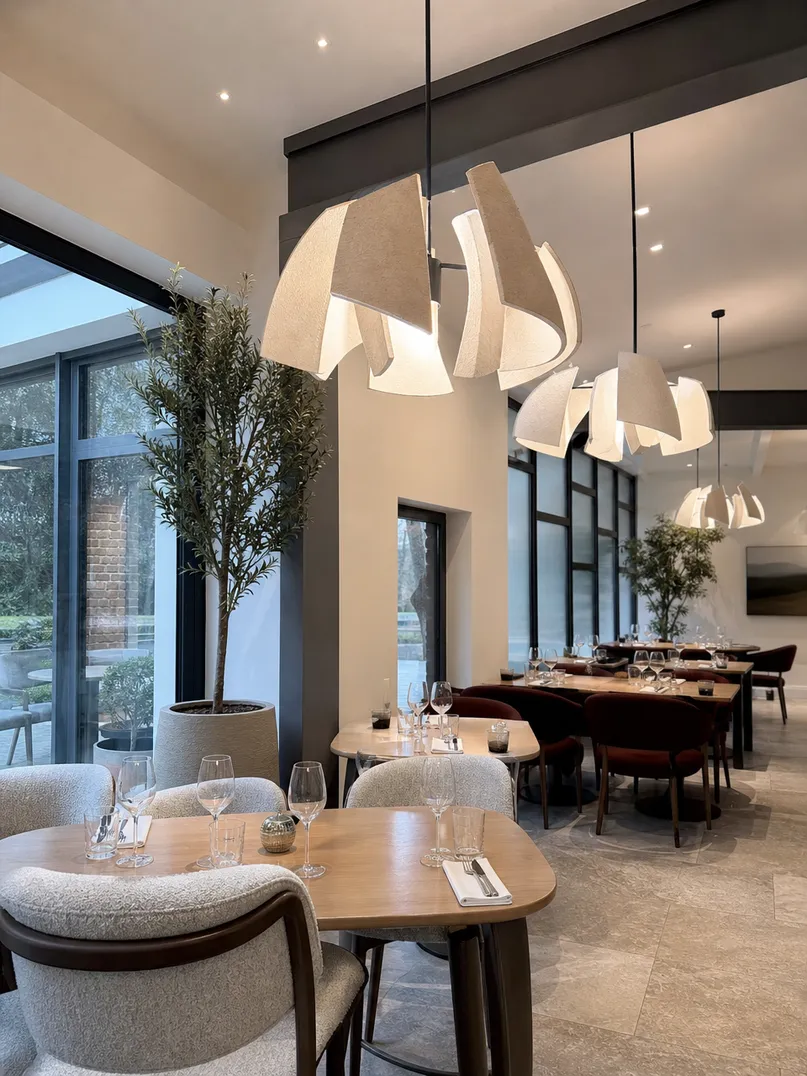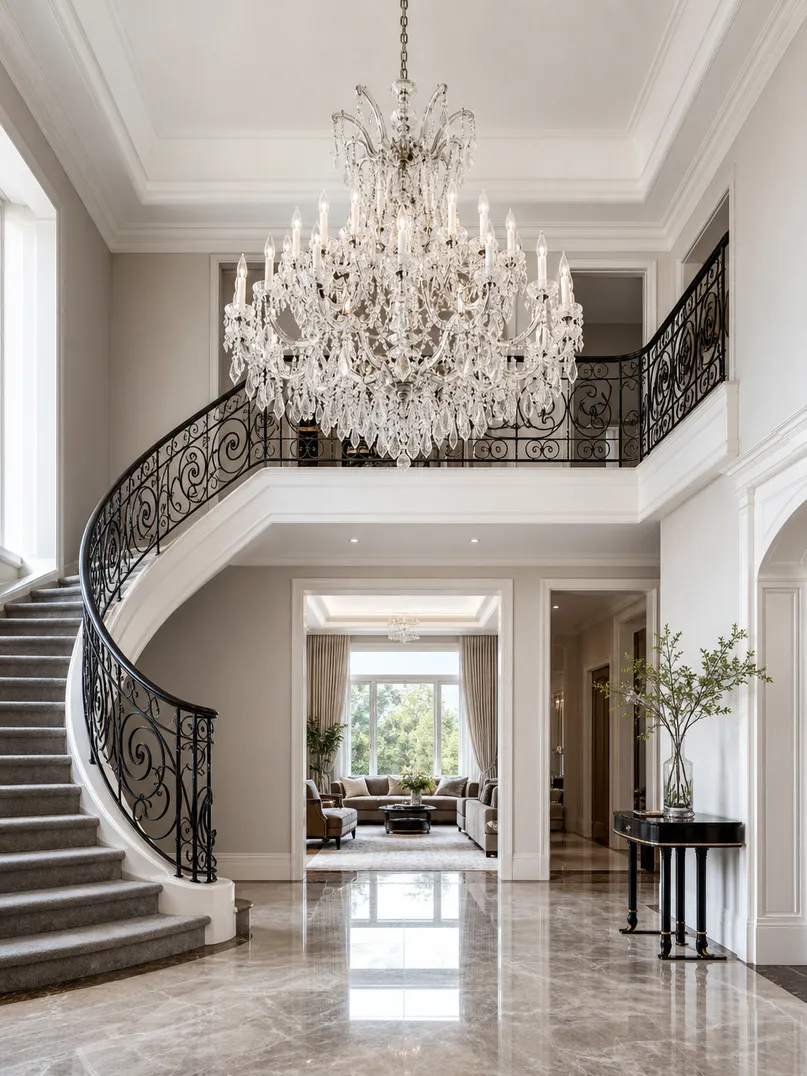

The most common failure point in a villa lighting project isn't a bad fixture. It's a good fixture in the wrong zone, specified from a different factory than the one that supplied the rest of the project.
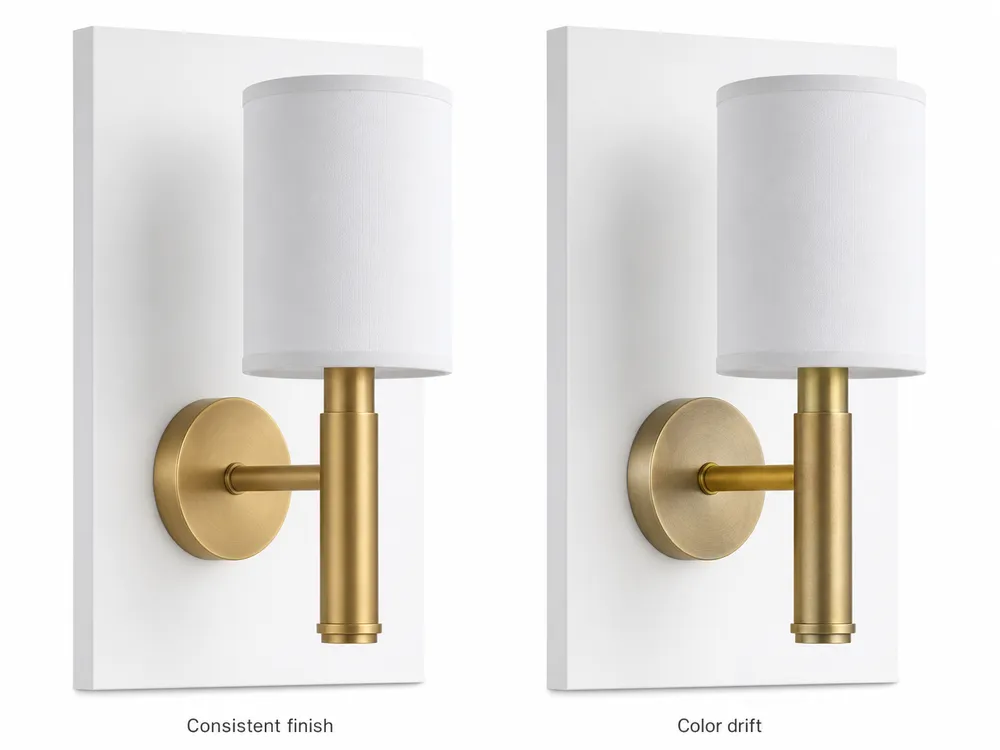
You end up with a living room pendant in warm white at 2700K, a dining chandelier at 3000K, and outdoor wall sconces at 4000K because the contractor sourced each zone separately. The finishes don't match either — brushed gold from one supplier, champagne gold from another, antique brass from a third. On-site, under real light, the difference is obvious. The client notices. The contractor gets the call.
This guide walks through the specification workflow that prevents that outcome — zone by zone, from the entry foyer to the pool surround.
Why Villa Lighting Projects Lose Visual Consistency
The problem isn't that buyers don't care about consistency. It's that the specification process breaks down at the zone boundary — the point where one fixture category ends and another begins.
Indoor zones are typically specified first, often by an interior designer or lighting consultant working from a floor plan. Outdoor zones get added later, sometimes by a different team, sometimes from a different supplier catalog. By the time the project is on-site, you have fixtures from two or three sources, each with their own CCT tolerance, their own finish process, and their own driver spec.
Three failure modes show up repeatedly:
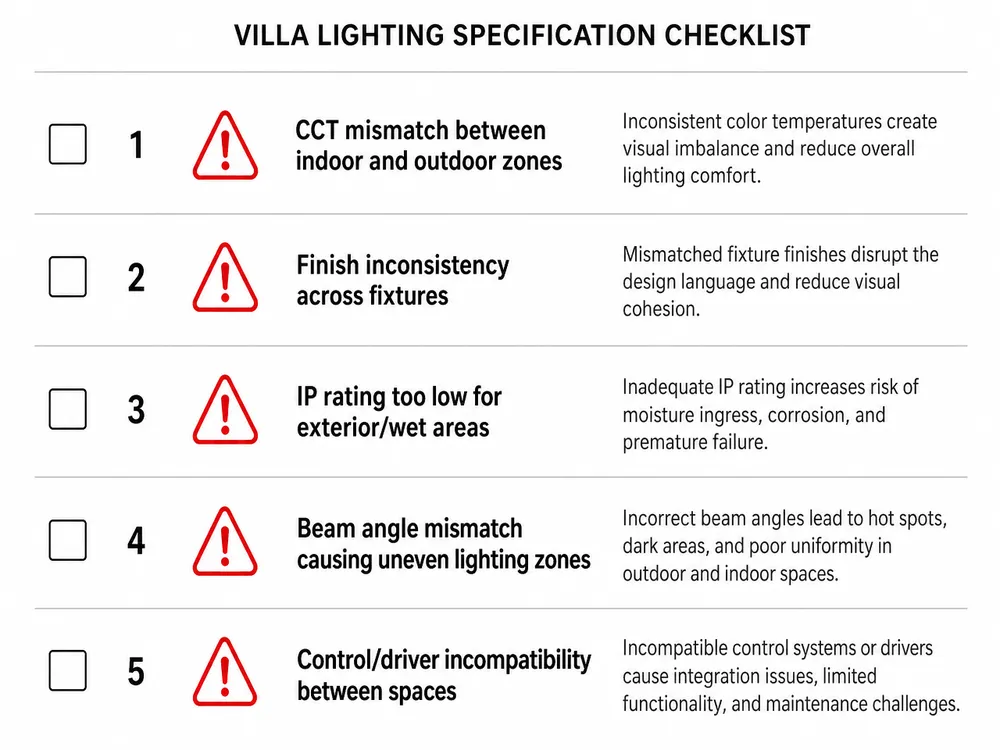
CCT drift across zones. A 300K difference between adjacent zones — say, 2700K in the living room and 3000K in the dining room — is visible to the naked eye under dimmed conditions. Across an indoor-to-outdoor transition, the gap is often wider because outdoor fixtures default to higher CCT for perceived brightness. The result is a warm interior that looks cold the moment you step outside.
Finish mismatch from different production lines. "Brushed gold" is not a standard. Every factory's brushed gold is a different alloy, a different plating thickness, a different surface texture. When you source a pendant from one factory and a wall sconce from another, the finishes will not match — even if both suppliers call it the same name. This is the most common complaint we hear from contractors after a villa project installs.
IP rating gaps at covered outdoor transitions. A covered terrace or loggia is not a dry indoor space. Humidity, condensation, and occasional water ingress from wind-driven rain mean IP44 is the practical minimum — but many buyers specify IP20 interior fixtures in covered outdoor areas because the space "feels" indoor. The fixtures fail within 18 months.
Zone Mapping: Assign Spec Parameters Before Selecting Fixtures
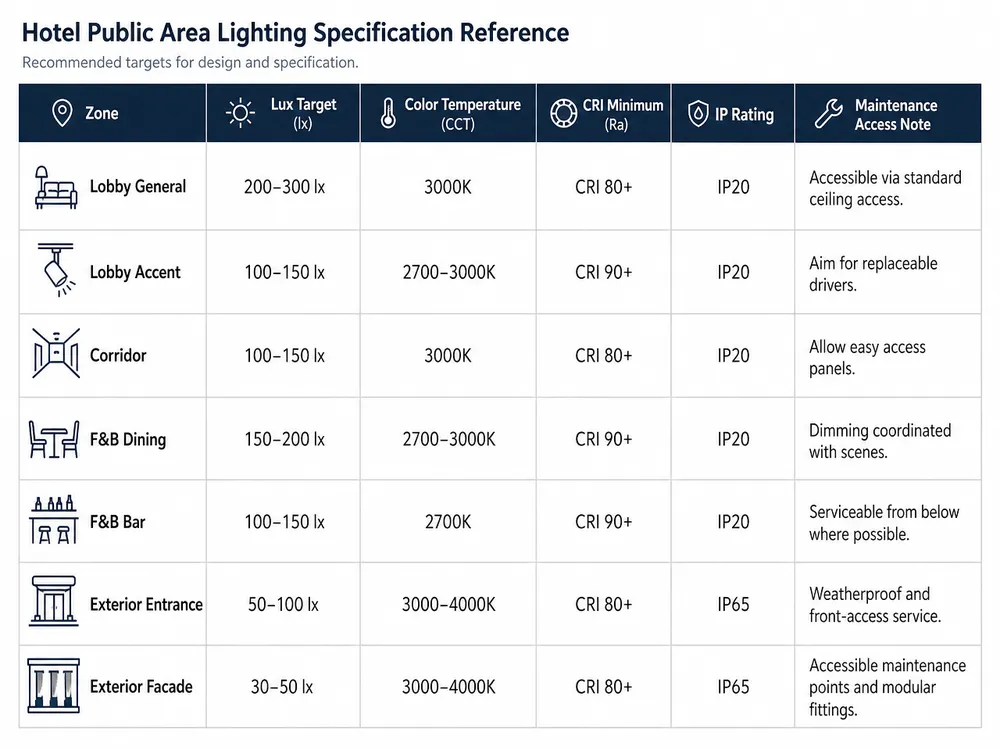
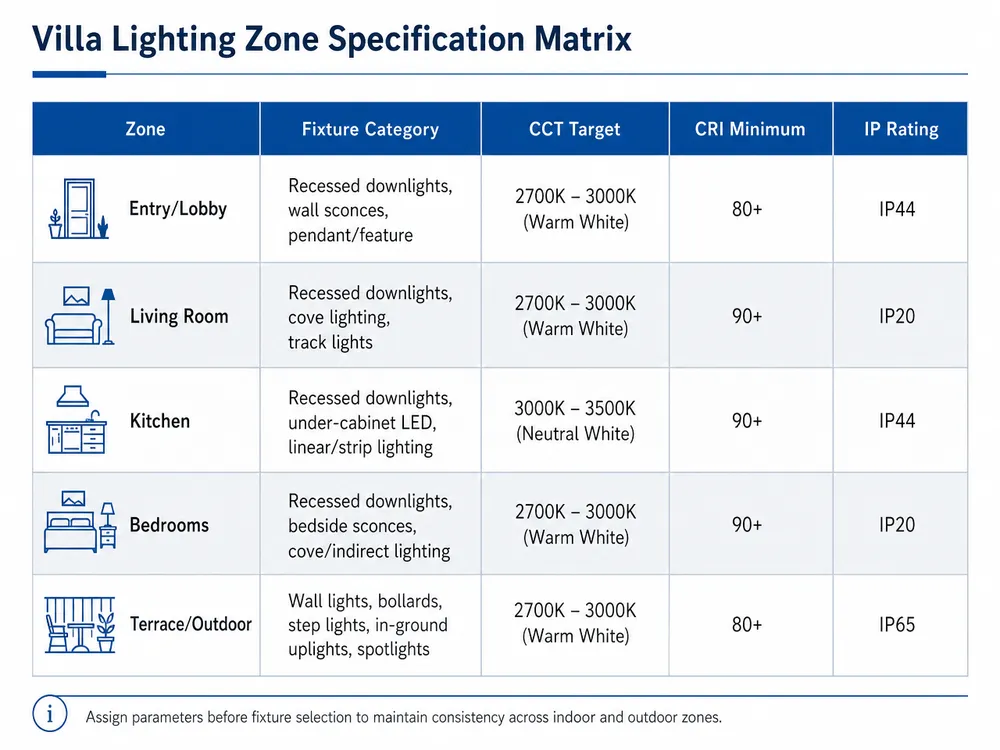
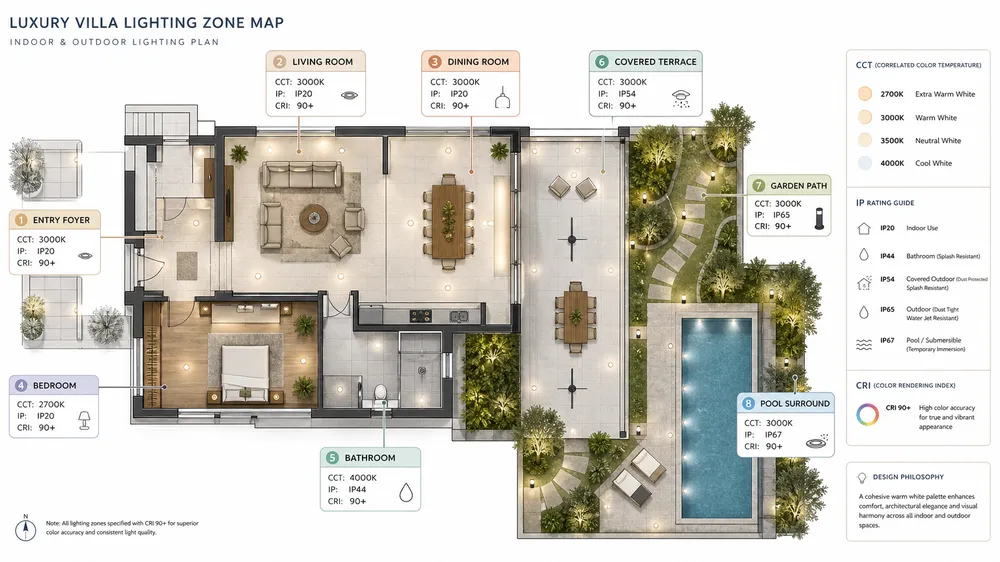
Before you open a catalog, build a zone matrix. This is the document that controls consistency — it defines the CCT, CRI, IP rating, and fixture category for every space in the project before any fixture is selected.
Here's the framework we use when working through villa projects with procurement teams:
| Zone | Fixture Category | CCT Target | CRI Minimum | IP Rating |
|---|---|---|---|---|
| Entry foyer | Pendant / chandelier | 2700–3000K | CRI 90+ | IP20 |
| Living room | Pendant, ceiling, wall sconce | 2700K | CRI 90+ | IP20 |
| Dining room | Chandelier / pendant | 2700–3000K | CRI 90+ | IP20 |
| Master bedroom | Pendant, ceiling, bedside sconce | 2700K | CRI 90+ | IP20 |
| Bathroom | Ceiling, mirror sconce | 3000K | CRI 90+ | IP44 |
| Covered terrace / loggia | Wall sconce, ceiling | 2700–3000K | CRI 80+ | IP44 |
| Exterior facade | Wall sconce, uplighter | 3000K | CRI 80+ | IP65 |
| Garden path | Ground fixture, bollard | 3000–4000K | CRI 80+ | IP65 |
| Pool surround | Underwater / surface | 4000K | CRI 80+ | IP67–IP68 |
A few notes on this table. The CCT column shows targets, not hard limits — but the tolerance between adjacent zones should stay within 300K. If the living room is at 2700K and the covered terrace is at 3000K, that's acceptable. If the terrace is at 4000K, you'll see the shift every time someone walks outside.
The CRI minimum drops to 80+ for outdoor zones because color rendering matters less in landscape and facade lighting than it does in interior spaces where skin tones and furnishings are being evaluated. Specifying CRI 90+ across all outdoor zones adds cost without a visible benefit in most villa applications.
(The bathroom IP44 requirement catches buyers off guard sometimes — they assume IP20 is fine because the fixture is ceiling-mounted away from the shower. In practice, steam and humidity in a bathroom without adequate ventilation will corrode an IP20 driver within two years.)

The Step-by-Step Specification Workflow
With the zone matrix in place, the specification process follows a clear sequence. Skipping steps is where projects get into trouble.
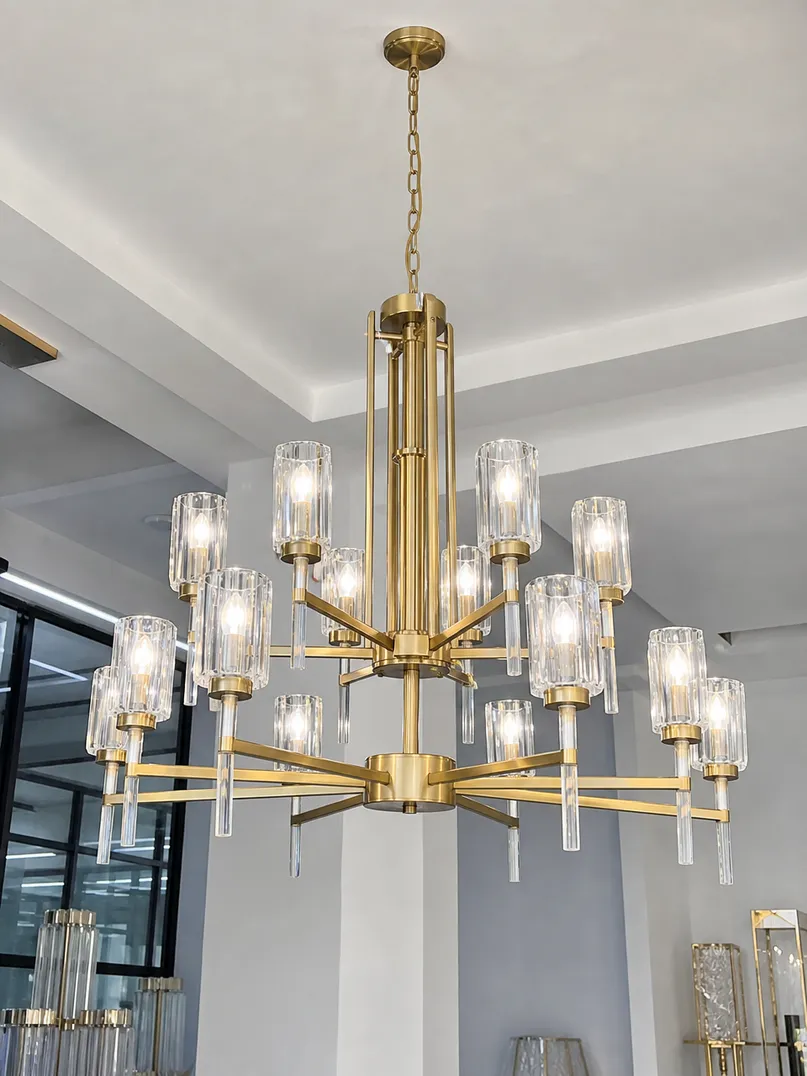
Step 1: Select the anchor fixture. The anchor is the highest-visibility fixture in the project — usually the entry foyer chandelier or the main living room pendant. This fixture sets the finish reference and the CCT reference for the entire project. Every other fixture is specified to match it, not the other way around.
Step 2: Lock the finish reference. Once the anchor fixture is selected, document the finish precisely: the base metal, the plating or coating process, and the color reference. "Brushed gold" is not sufficient. You need the factory's internal finish code, a physical sample, or a confirmed match from the same production line. If you're sourcing all zones from one manufacturer, this is straightforward — the same finishing line runs all SKUs. If you're mixing sources, you need physical samples from each supplier before committing to production.
Step 3: Extend the CCT spec across all zones. Starting from the anchor CCT, assign CCT targets to each zone in the matrix. Work outward from the interior core to the exterior perimeter. The transition from 2700K interior to 3000K covered terrace to 3000K facade is a gradual, acceptable shift. A jump from 2700K to 4000K between adjacent zones is not.
Step 4: Specify IP ratings at every zone boundary. The indoor/outdoor boundary is where IP rating errors concentrate. For every zone that sits at or near an exterior wall, door, or opening, verify the IP rating against the actual exposure conditions — not the architectural category. A covered terrace with open sides in a coastal climate needs IP65, not IP44.
Step 5: Confirm driver compatibility across zones. If the project uses a central dimming system, every fixture in every zone needs a driver that's compatible with the dimmer protocol — DALI, 0-10V, or phase-cut, depending on the system. Mismatched drivers are the most common cause of flickering and non-uniform dimming behavior across zones. This needs to be confirmed at the specification stage, not discovered during commissioning.
Step 6: Build the consolidated fixture schedule. The fixture schedule is the procurement document — one line per SKU, with zone assignment, quantity, CCT, finish code, IP rating, driver spec, and certification requirement. This document goes to the manufacturer with the order. If the manufacturer can't confirm every parameter on the schedule, that's a sourcing risk you need to resolve before production starts.
Handling the Indoor/Outdoor Boundary
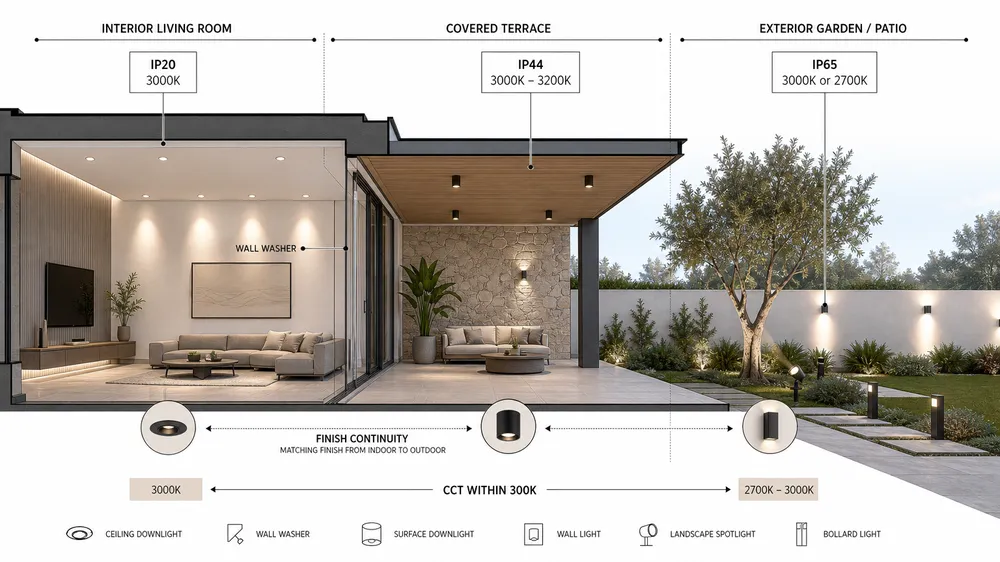
The transition from interior to exterior is where most villa lighting projects develop visible inconsistency. The challenge is that the fixture categories change — you move from decorative pendants and sconces to IP-rated wall fixtures and landscape fittings — but the visual language needs to stay continuous.
Three things control continuity at the boundary:
Finish continuity. The wall sconce on the interior side of a door and the wall sconce on the exterior side should be the same finish, or as close as the IP rating allows. Some finishes — bare brass, for example — aren't practical outdoors without a protective coating that changes the appearance. In those cases, the exterior finish needs to be specified as the closest weather-resistant equivalent, and the interior fixture may need to be adjusted to match. We've had projects where the interior finish was changed to match the exterior option rather than the other way around, because the outdoor fixture was the harder constraint.
CCT continuity. The exterior facade and terrace fixtures should be within 300K of the interior zones they're adjacent to. If the living room is 2700K and the terrace is 3000K, the transition reads as a slight warming of the outdoor space — acceptable. If the garden path fixtures are 4000K, they should be far enough from the interior zones that the shift isn't visible through glass doors or windows.
Scale continuity. A large-format interior pendant next to a small exterior wall sconce creates a visual imbalance at the boundary, even if the finish and CCT match. The fixture scale should step down gradually as you move from interior to exterior, not drop abruptly.
Batch Ordering Strategy: Why Single-Source Matters for Finish Consistency
This is the part of the specification process that most buyers underestimate until they've had a project go wrong.
Finish consistency across a multi-zone villa order depends on more than specifying the same finish name. It depends on the same finishing line, the same batch of plating chemistry, and the same process parameters running across all SKUs in the order. When you source pendants from one factory, wall sconces from a second, and outdoor fixtures from a third, you have three different finishing processes — and three different interpretations of "brushed gold."
We run our surface finishing in-house: electroplating, powder coating, and PVD under the same roof. When a villa project comes through with 12 SKUs across 8 zones, all 12 SKUs go through the same finishing line in the same production window. The plating chemistry is the same batch. The process parameters don't change between the pendant housing and the outdoor wall sconce housing. That's the only way to guarantee that the finish on the fixture in the entry foyer matches the finish on the fixture at the front door.
The same logic applies to CCT. We specify drivers per SKU — not a single driver spec across the catalog. That means the 2700K pendant in the living room and the 2700K wall sconce on the terrace are both hitting the same CCT target from the same LED source spec, not from two different LED bins that happen to be labeled the same. CCT tolerance in LED production is typically ±150K within a bin — if you're sourcing from two factories using different LED suppliers, the actual CCT of your "2700K" fixtures can differ by 300K or more.
For a 500-unit villa project order, the practical recommendation is to consolidate all fixture categories with a single manufacturer who can confirm in-house finishing and per-SKU driver specification. The cost of sourcing from multiple factories to save 5% on individual SKUs is typically recovered in rework, on-site adjustments, and client complaints.
(We've seen projects where the contractor had to replace outdoor fixtures after installation because the finish oxidized differently from the interior fixtures within 12 months. The cost of the replacement — labor, logistics, client relationship — was multiples of what was saved by sourcing the outdoor fixtures from a cheaper supplier.)
Common Specification Mistakes That Create Zone Inconsistency
These are the errors we see most often when reviewing project specs before production:
Mixing CCT without a transition logic. Specifying 2700K in bedrooms, 3000K in living areas, and 4000K in bathrooms without a documented rationale creates a patchwork effect. CCT should follow a spatial logic — warmer in relaxation zones, slightly cooler in task zones — not be assigned arbitrarily by whoever specified each zone.
Specifying finishes by name without a physical reference. "Antique brass" from three different factories will look different. Always request a physical finish sample before confirming a finish spec, and confirm that the same factory can supply all fixture categories in that finish.
Under-specifying IP ratings for covered outdoor areas. IP44 is the minimum for any space with humidity exposure. IP65 is appropriate for any space with direct or indirect water exposure. IP67 is required for fixtures at or near pool level. Specifying IP20 in a covered terrace because it "feels indoor" is the most common IP rating error in villa projects.
Specifying fixtures without confirming dimmer compatibility. If the project has a home automation or dimming system, the driver spec needs to be confirmed against the dimmer protocol before production. A DALI-compatible driver in one zone and a phase-cut driver in another zone will not behave consistently on the same dimming circuit.
Ordering zones separately from different factories. Even if each factory produces good fixtures individually, the finish and CCT will drift between sources. Multi-zone villa projects need a single-source strategy or a very carefully managed multi-source strategy with physical sample confirmation at every zone boundary.
Manufacturer Qualification: What to Verify Before Placing a Multi-Zone Order
Not every lighting manufacturer can hold consistency across a multi-zone villa order. Before committing production, verify these capabilities:
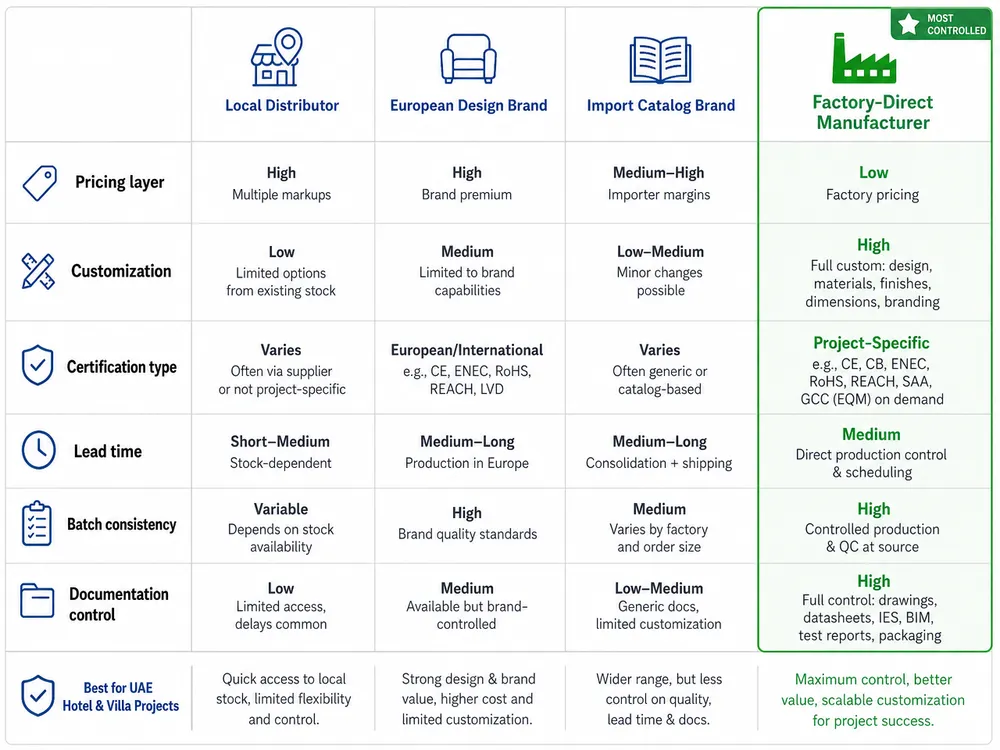
In-house surface finishing. Ask directly: do you run your own finishing line, or do you outsource finishing to a third-party shop? Outsourced finishing means the factory cannot guarantee batch consistency across SKUs produced in different production windows. For a multi-zone order where finish matching is critical, in-house finishing is a hard requirement.
Per-SKU driver specification. Ask for the driver spec sheet for each fixture category in your order. If the factory uses a single driver spec across all products, CCT consistency across fixture types is not guaranteed. Per-SKU driver selection is what allows a manufacturer to hold the same CCT target across a pendant, a wall sconce, and an outdoor fixture.
CCT tolerance documentation. Ask for the CCT tolerance on production batches — not just the nominal spec. A factory that can confirm ±150K or tighter on production output is managing LED binning actively. A factory that can only confirm the nominal CCT is not.
IES file availability. For projects that require photometric data for submission — hotel projects, high-end residential developments with lighting design consultants — the manufacturer needs to be able to provide IES files from their own measurements, not from the LED chip manufacturer's generic data. We generate IES files from our in-house optical lab for all production fixtures, which covers project submissions across North American and European markets.
Batch documentation. For a multi-zone order, ask for batch records that confirm all SKUs in the order were finished in the same production window. This is the paper trail that protects you if a finish inconsistency is discovered on-site.
IP rating certification. Confirm that IP ratings are certified, not self-declared. CE certification covers IP rating verification for European market fixtures. For other markets, ask for the test report from the IP rating test.
If a manufacturer can confirm all six of these, you have a factory that can execute a multi-zone villa order with the consistency the project requires. If they can't confirm in-house finishing and per-SKU driver specification, the risk of zone inconsistency is real.
Putting the Workflow Together
The specification workflow for a multi-zone villa project runs in this sequence:
- Build the zone matrix — CCT, CRI, IP rating, and fixture category per zone — before opening any catalog.
- Select the anchor fixture and lock the finish reference.
- Extend the CCT spec outward from the interior core to the exterior perimeter, keeping adjacent zones within 300K.
- Assign IP ratings based on actual exposure conditions, not architectural category.
- Confirm driver compatibility with the project's dimming system across all zones.
- Build the consolidated fixture schedule and send it to a single manufacturer who can confirm in-house finishing, per-SKU driver spec, and batch documentation.
The zone matrix is the document that makes this work. Without it, each zone gets specified in isolation, and the inconsistencies accumulate. With it, you have a single reference that controls every parameter that affects visual consistency — and a clear brief for the manufacturer.
For Villa Lighting projects where finish matching and CCT consistency across zones are non-negotiable, the sourcing decision matters as much as the specification. A well-written zone matrix sent to a factory that can't hold finish consistency across SKUs will still produce an inconsistent result. The specification and the manufacturer qualification have to work together.
If you're working through a multi-zone villa project and want to review your zone matrix before placing an order, our applications team can work through the fixture schedule with you — checking CCT transitions, IP rating assignments, and finish compatibility across zones. Send your project specs to Lighting Applications for Premium Projects or submit a Request Quote with your zone matrix and fixture categories, and we'll come back with a matched fixture recommendation across all zones.
Frequently Asked Questions
What CCT should I specify for a villa living room? 2700K is the standard for high-end residential living spaces — it reads as warm and relaxed under dimmed conditions. 3000K is acceptable if the space has high ceilings or large windows where a slightly cooler tone reads better. Avoid 4000K in any interior living zone; it shifts the space toward a commercial feel that most villa clients find uncomfortable.
Can I mix fixture finishes across indoor and outdoor zones? You can, but only if the transition is intentional and the finishes are visually compatible. A brushed gold interior transitioning to a matte black exterior can work if the scale and CCT are consistent. What doesn't work is two finishes that are supposed to match but don't — brushed gold from one factory next to brushed gold from another. If you're mixing finishes intentionally, document the transition point in the zone matrix so it's a design decision, not an accident.
What IP rating do I need for a covered terrace? IP44 is the minimum for a covered terrace with open sides. If the terrace is in a coastal location, or if it's exposed to wind-driven rain, specify IP65. IP20 fixtures in covered outdoor areas are the most common cause of premature fixture failure in villa projects — the humidity alone is enough to corrode an unrated driver within 18 months.
How do I confirm that fixtures from different categories will match in finish? Request physical finish samples from the manufacturer for each fixture category in your order, produced from the same finishing batch. A photograph is not sufficient — finish appearance changes significantly under different light sources. If the manufacturer can't provide samples from the same batch, that's a signal that their finishing process isn't controlled at the batch level.
Do I need IES files for a villa lighting project? Not always. IES files are required when the project involves a lighting design consultant who needs to run photometric calculations, or when the project is subject to planning or building approval that requires lighting data. For straightforward villa projects without a formal lighting design submission, IES files are optional but useful for verifying that the specified lumen output is appropriate for the zone dimensions.