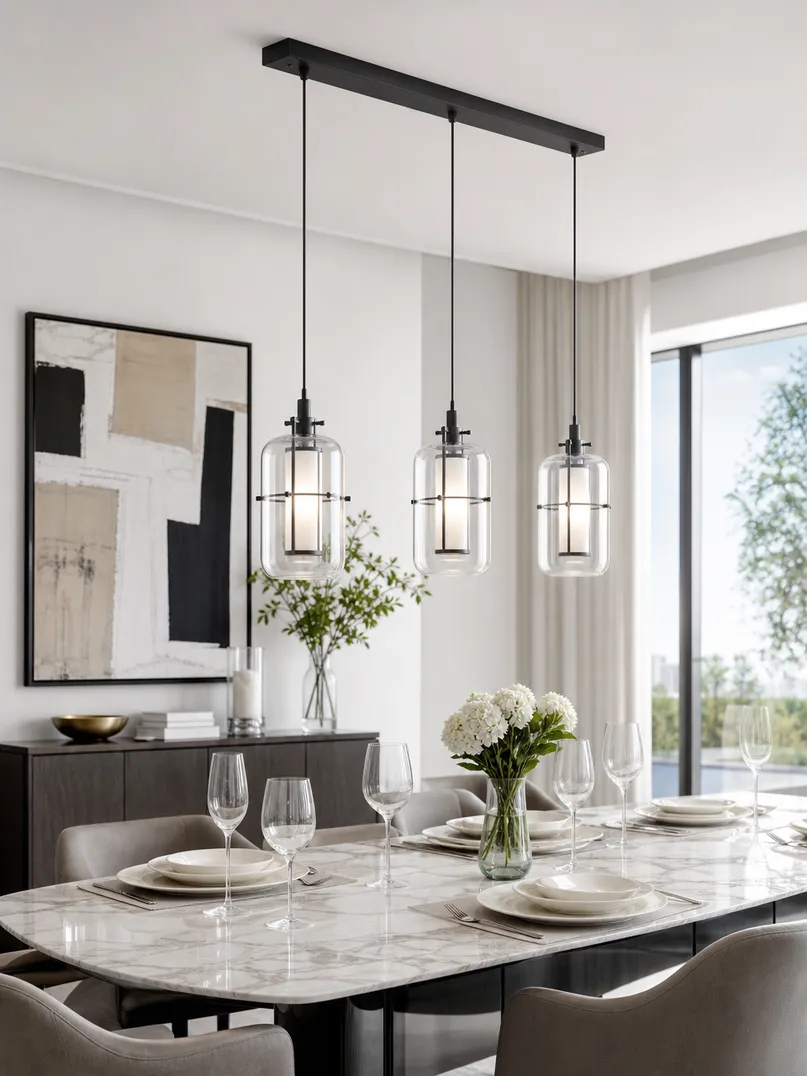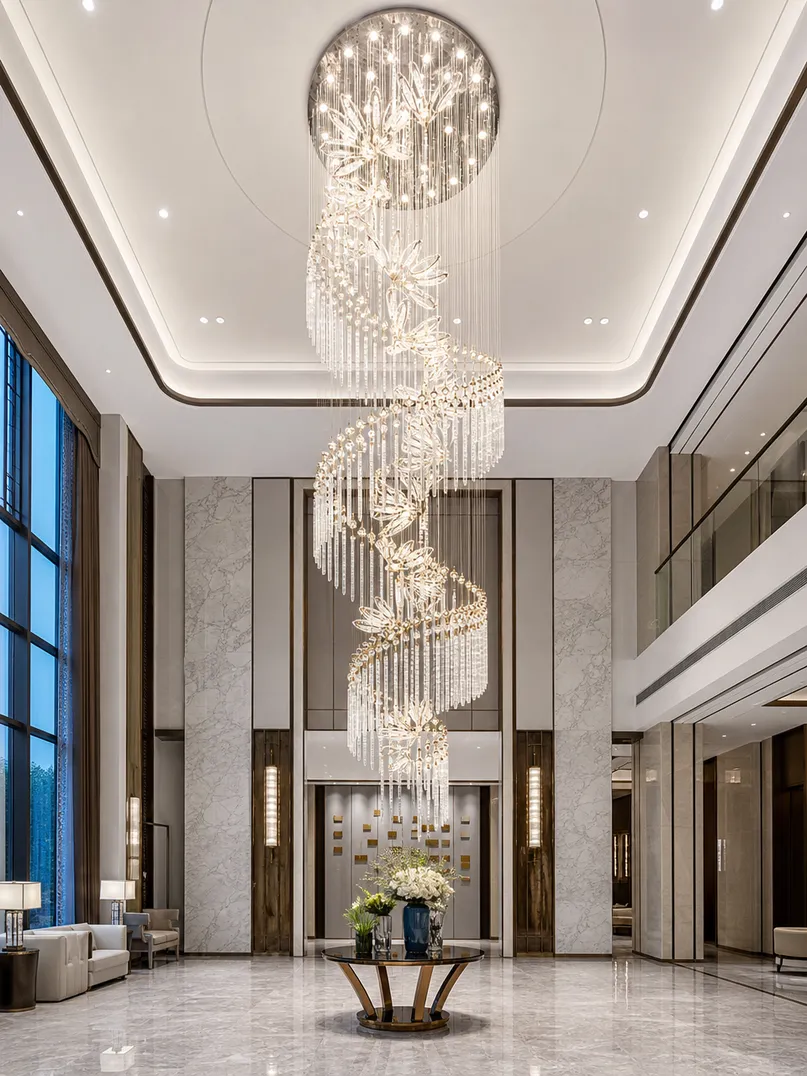

The most common mistake in hotel bedroom lighting specs isn't choosing the wrong fixture style. It's treating the bedroom as a single zone and specifying one ambient light level for the whole room. The result: guests complain the bedside reading light is too dim, the desk is unusable after dark, and the bathroom transition feels like stepping into a different building. Maintenance teams end up fielding complaints that look like fixture failures but are actually specification failures.
Getting the spec right before production starts saves you from two expensive problems: guest satisfaction issues that show up in reviews, and fixture replacement cycles that weren't budgeted. This guide covers both — the technical parameters that define a workable hotel bedroom lighting standard, and the sourcing decisions that determine whether those parameters hold up across a 200-room rollout and the refurbishment cycle that follows.
Why residential bedroom specs fail in hotel environments
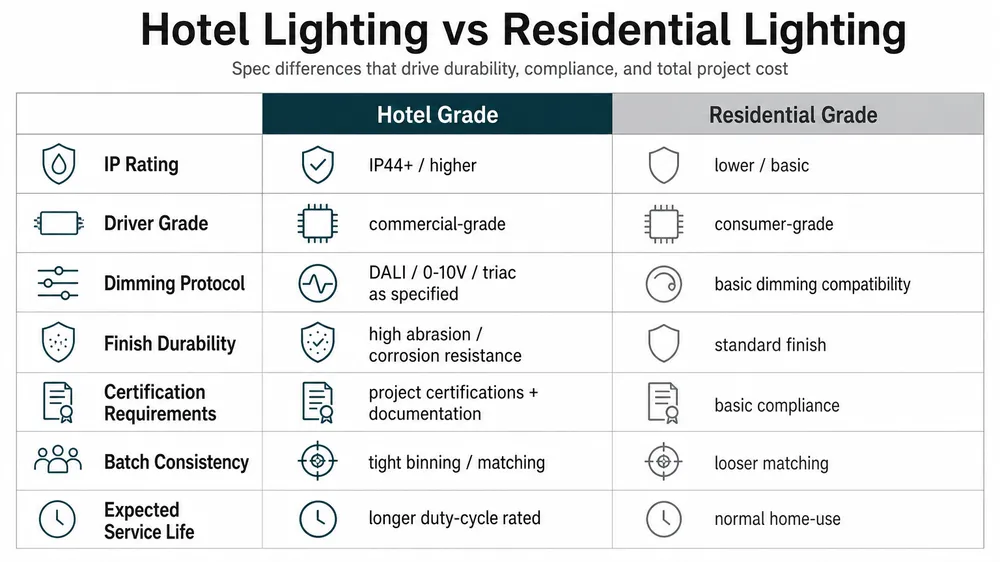
A residential bedroom fixture is designed for one household's usage pattern. A hotel bedroom fixture runs under a fundamentally different load: 300+ occupancy cycles per year, housekeeping teams who handle fixtures daily, and guests who use every switch and dimmer without any familiarity with the system.
Three failure modes show up repeatedly when residential-grade fixtures are specified into hotel rooms:
Driver lifespan under continuous cycling. Residential LED drivers are rated for typical home use — maybe 2–4 on/off cycles per day. In a hotel room, that number is closer to 10–15 cycles daily when you account for housekeeping, turndown service, and multiple guest interactions. Drivers that aren't rated for high-cycle operation fail within 18 months. The fixture looks fine; the driver is dead. Replacement cost per room is manageable — replacement cost across 200 rooms in year two of operation is a budget problem.
Finish durability under housekeeping contact. Housekeeping teams wipe down every surface in a room, including fixture bases, shades, and wall sconces. Powder coat finishes below 60μm thickness show wear at contact points within a year. Electroplated finishes without proper sealing oxidize in humid bathroom-adjacent environments. The fixture that looked right in the sample photo looks tired by the second year of operation.
Dimming compatibility with hotel control systems. Most hotel rooms use centralized lighting control or at minimum trailing-edge dimmers. Residential fixtures are often specified with drivers that work with leading-edge (TRIAC) dimmers only. The result is flicker, buzzing, or incomplete dimming range — all of which generate maintenance calls that aren't actually maintenance problems.
These aren't edge cases. We see them consistently in projects where the spec was built around aesthetics first and operational requirements second.
Zone-by-zone lux and CCT targets
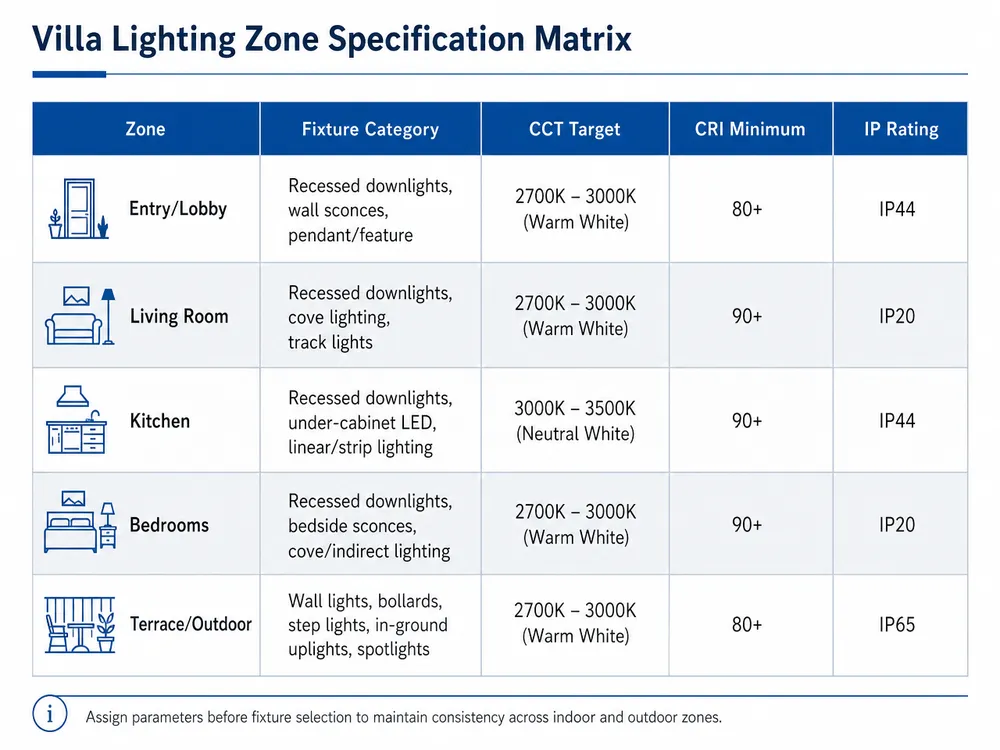
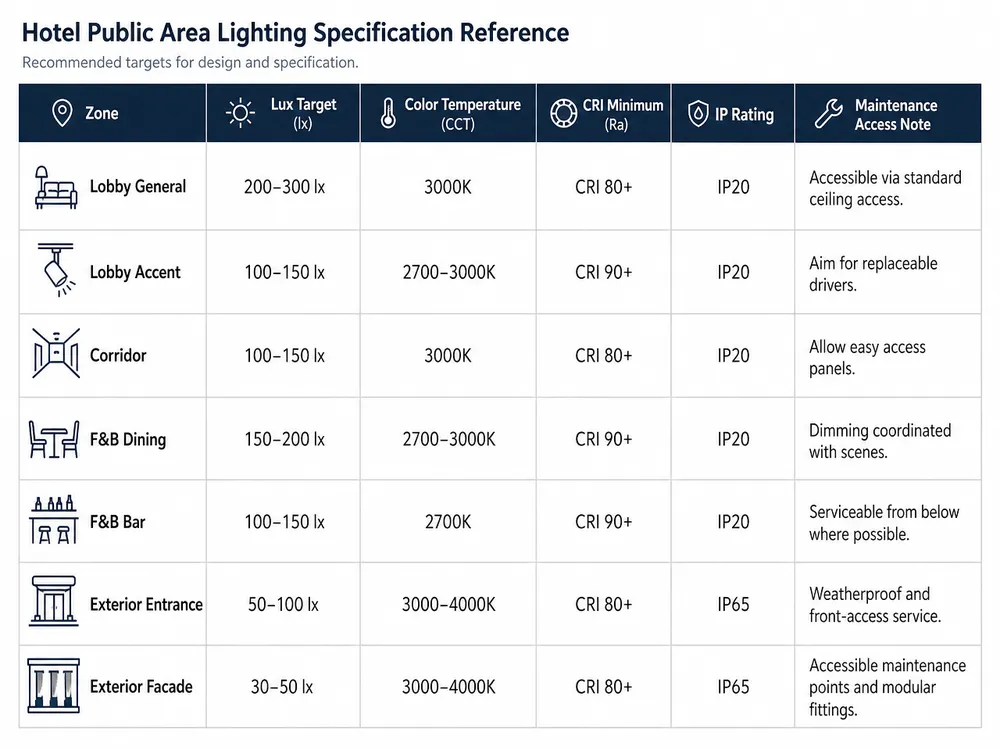
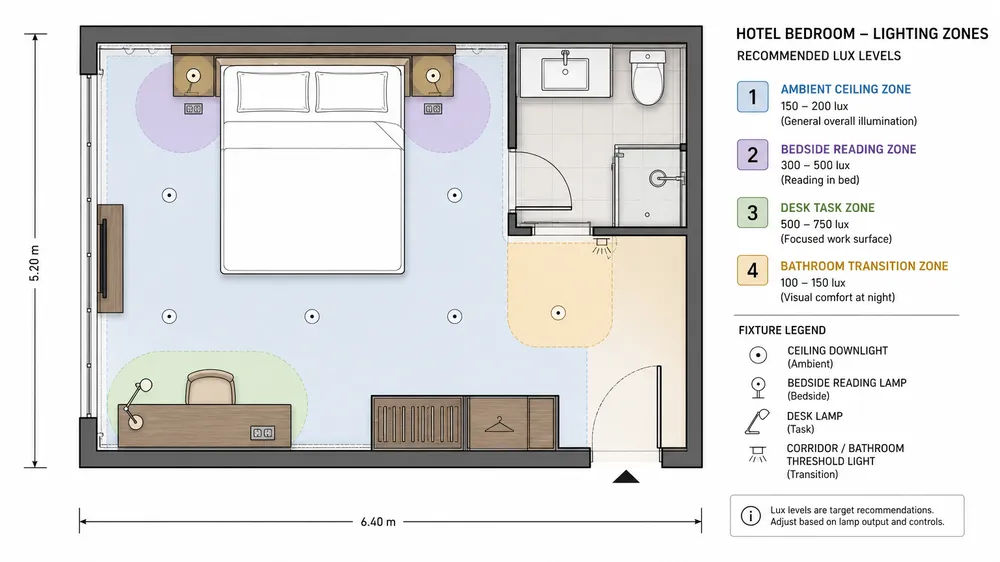
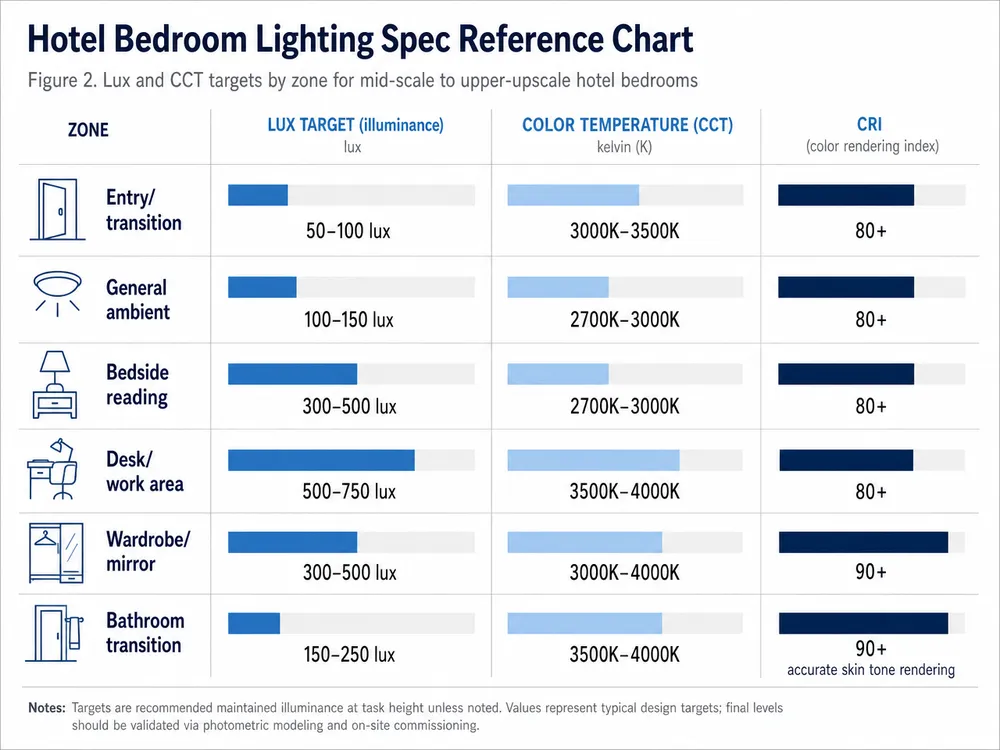
Hotel bedroom lighting works as a system of zones, not a single ambient level. Each zone has a different task requirement, and the spec needs to address them separately. The table below reflects working targets used across mid-scale to upper-upscale hotel programs — not regulatory minimums, but the levels that consistently produce acceptable guest comfort scores.
| Zone | Lux Target (maintained) | CCT Range | CRI Minimum | Dimming Required |
|---|---|---|---|---|
| General ambient (ceiling) | 100–150 lux | 2700–3000K | CRI 80+ | Yes |
| Bedside reading | 200–300 lux at task surface | 2700–3000K | CRI 80+ | Yes |
| Desk / work surface | 300–500 lux at desk height | 3000–3500K | CRI 80+ | Optional |
| Wardrobe / dressing | 150–200 lux | 2700–3000K | CRI 80+ | No |
| Bathroom transition / vanity | 300–500 lux | 3000–4000K | CRI 90+ | Optional |
A few notes on these numbers. The ambient target of 100–150 lux is intentionally lower than office or retail standards — hotel bedrooms are rest environments, and overlighting the ambient layer is a common mistake in budget properties trying to compensate for poor zone design. The desk zone is where you can push toward 3500K without disrupting the room's overall warmth, because guests using the desk are in task mode. The bathroom transition zone warrants CRI 90+ because guests are making grooming decisions there — lower CRI makes skin tones look off, which generates complaints that are hard to trace back to the spec.
(We've had buyers push back on the CRI 90+ requirement for bathroom fixtures, citing cost. The delta between CRI 80 and CRI 90 at the fixture level is smaller than the delta in guest satisfaction scores. It's worth the spec.)
Fixture type selection by zone
The zone targets above define what the light needs to do. Fixture type selection determines whether it can actually do it within the physical and aesthetic constraints of the room.
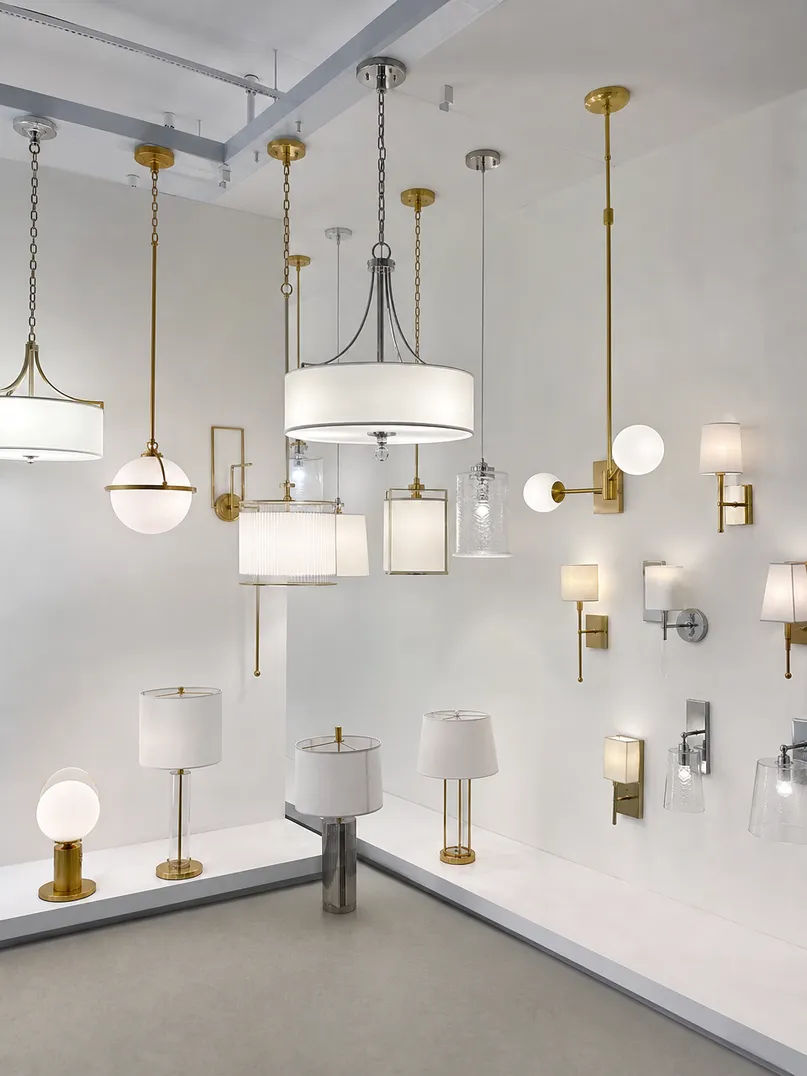
Ambient ceiling layer. Recessed downlights or flush ceiling fixtures are the standard choice for hotel ambient lighting — they're unobtrusive, easy to maintain, and compatible with most ceiling heights. For rooms with higher ceilings (3m+), a pendant or semi-flush fixture can carry the ambient layer while contributing to the room's design identity. The key spec parameter here is beam angle: a 60° flood beam distributes ambient light more evenly than a 36° spot, reducing the hot-spot effect that makes a room feel like a retail display rather than a rest environment.
Bedside reading. Wall-mounted reading sconces are the most reliable solution for bedside task lighting in hotel rooms — they put the light source at the right height, keep the bedside table clear, and eliminate the cord management problem that comes with table lamps in high-turnover environments. Specify adjustable-arm sconces where the room design allows; fixed-position sconces work but require careful placement during installation to ensure the beam hits the pillow zone rather than the headboard. Table lamps remain common in full-service hotels where the aesthetic warrants them, but they require cord management solutions and are more vulnerable to housekeeping damage.
Desk task lighting. A dedicated desk lamp or a ceiling-mounted directional spotlight over the desk zone is the practical choice. Integrated desk lamps (built into the desk furniture) are common in branded hotel programs but create a sourcing dependency between the lighting spec and the furniture spec — worth flagging to the FF&E team early. Standalone desk lamps give more flexibility for replacement and are easier to source consistently across a multi-property program.
Wardrobe and dressing. LED strip lighting inside wardrobe cavities or a small recessed downlight above the wardrobe opening handles this zone efficiently. This is not a zone that warrants decorative fixture investment — function and durability matter more than aesthetics here.
Bathroom transition. Vanity wall sconces flanking the mirror are the standard approach for CRI 90+ bathroom lighting. Overhead downlights alone create unflattering shadows on the face — the flanking sconce arrangement eliminates this. For budget programs where flanking sconces aren't feasible, a high-CRI LED strip above the mirror is an acceptable compromise, but the CRI minimum should not be relaxed.
For a broader view of how these fixture types fit into full hotel lighting programs, see our Hotel Lighting application guide.
Dimming system compatibility: the spec decision that causes the most field problems
Dimming compatibility is where hotel bedroom lighting specs most often create problems that don't surface until installation — or worse, until the first guest complaint cycle.
Hotel rooms use one of three dimming approaches:
- Standalone wall dimmers (budget and limited-service properties): typically trailing-edge (ELV) or leading-edge (TRIAC) dimmers, depending on the property's electrical contractor preference.
- Centralized lighting control systems (full-service and luxury properties): DALI, 0–10V, or proprietary protocols depending on the BMS vendor.
- Bedside panel control (common in branded programs): a bedside panel that controls multiple circuits, often with scene presets.
The fixture spec needs to match the dimming infrastructure — and the dimming infrastructure decision is often made by the electrical engineer, not the FF&E team. This creates a coordination gap that causes real problems. We've seen projects where 500 fixtures were specified with TRIAC-compatible drivers, and the electrical contractor installed trailing-edge dimmers. The result is flicker across every room.
The practical fix: specify fixtures with dual-mode or universal dimming drivers (compatible with both leading-edge and trailing-edge dimmers) for any project where the dimming infrastructure isn't confirmed in writing before the fixture order is placed. The cost premium over single-mode drivers is modest — typically 8–12% at the driver level — and it eliminates the compatibility risk entirely.
For DALI or 0–10V systems, the driver spec must explicitly call out the protocol. Don't assume a "dimmable" driver is DALI-compatible — it usually isn't unless the spec says so.
(We've started including dimming protocol confirmation as a standard item in our pre-production checklist for hotel projects. It catches the gap before production, not after delivery.)
Finish durability and batch consistency across multi-room programs
For a single residential installation, finish variation between two fixtures is a minor aesthetic issue. For a 200-room hotel program, it's a visible quality problem that affects the property's brand perception — and a sourcing problem that's expensive to fix after installation.
Two finish-related issues come up consistently in hotel programs:
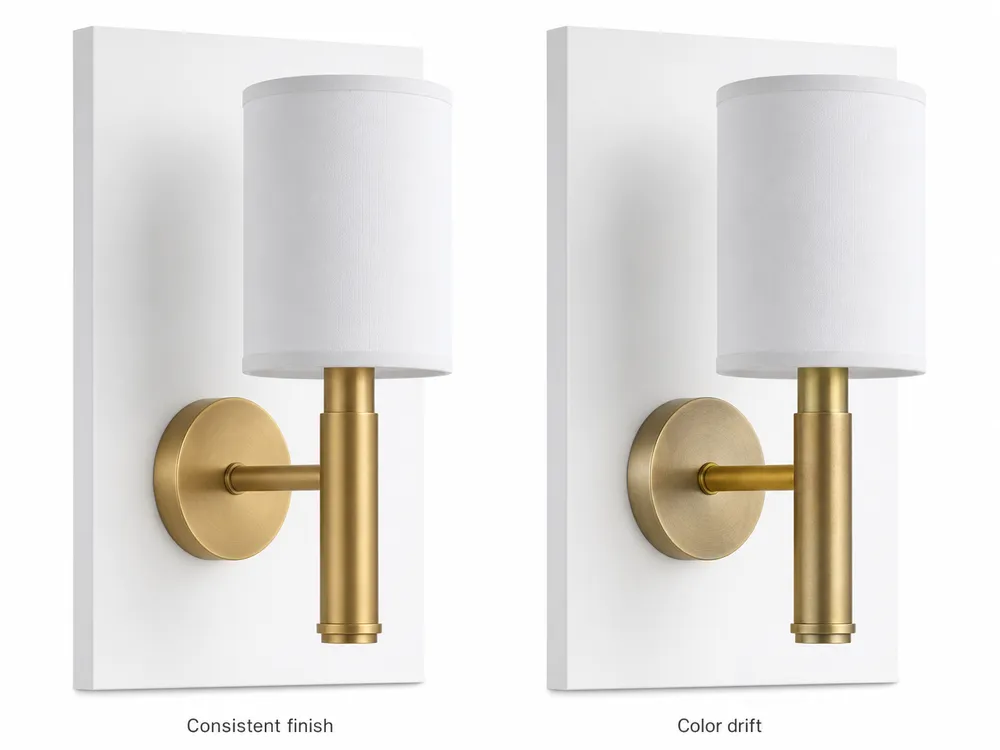
Batch-to-batch color drift. Powder coat and electroplated finishes can drift in color temperature and sheen level between production batches if the process isn't tightly controlled. A brushed gold sconce from batch one and a brushed gold sconce from batch three should be indistinguishable when installed side by side. Achieving this requires consistent powder material sourcing, controlled application thickness (we run 60–80μm on our powder line with automated application), and color verification against a master sample before each batch ships.
Finish wear at contact points. Housekeeping contact, guest handling, and cleaning chemicals all attack finish surfaces. The areas that fail first are typically the base of wall sconces (where housekeeping grips them to clean around them), the switch or dimmer interface on bedside fixtures, and any exposed metal edge on ceiling fixtures. Specifying a minimum 60μm powder coat thickness and requesting salt spray test results (500-hour minimum for standard hotel environments, 1000-hour for coastal properties) gives you a defensible durability baseline.
Our in-house die-casting and surface finishing means we control both variables under one roof — the same tooling runs the full batch, and the finishing line doesn't change process parameters mid-run. For hotel programs ordering 100+ units of a given fixture, we maintain a master finish sample and verify each production batch against it before shipment. That's not a standard practice at assembly-only factories, and it's the difference between a consistent installation and a visible mismatch problem.
For large multi-property programs, batch consistency becomes a supply chain planning issue as well. If your hotel brand is rolling out 10 properties over 18 months, the fixtures installed in property one and property ten need to match. That requires either holding inventory from a single production run (which has carrying cost implications) or working with a factory that can reliably reproduce the finish specification across multiple runs. We document finish parameters per SKU and maintain them across reorders — it's part of how we support multi-property programs.

Certifications and documentation for hotel compliance sign-off
Hotel projects in regulated markets require fixture certifications as part of the building compliance process. The specific requirements depend on the destination market, but the pattern is consistent: the electrical inspector or building authority needs to see certification documentation before sign-off, and missing documentation delays the opening.
CE (European markets): Required for all electrical fixtures sold or installed in EU member states. Covers electromagnetic compatibility and low-voltage directive compliance. For hotel projects, the Declaration of Conformity and test reports should be available per fixture SKU.
UL (North American markets): UL listing is the standard requirement for hotel installations in the US and Canada. Some jurisdictions accept ETL listing as an equivalent. Specify UL-listed fixtures for any North American hotel project — unlisted fixtures will fail inspection.
SAA (Australian market): Required for electrical fixtures installed in Australia. Similar documentation requirements to CE.
Beyond market certifications, hotel projects often require additional documentation for the FF&E procurement package: photometric data (IES files) for the lighting designer's calculations, material safety data for finishes, and in some cases energy compliance documentation for green building certifications (LEED, BREEAM, Green Star).
Our in-house optical lab generates IES files from our own photometric measurements — not from manufacturer data sheets. For hotel lighting designers who need to run AGi32 or DIALux calculations to verify zone lux levels before installation, having accurate IES files from the actual production fixture (not a generic approximation) is the difference between a calculation that matches reality and one that doesn't.
MOQ, lead time, and procurement planning for hotel rollouts
Hotel FF&E procurement operates on project timelines that don't flex easily. A 300-room hotel opening in Q3 needs fixtures on-site by a specific date, and a 6-week production delay doesn't have a good solution once the construction schedule is locked.
A few planning parameters that affect how we structure hotel orders:
MOQ by fixture type. Our standard MOQ for hotel bedroom fixtures runs 50–100 units per SKU depending on the fixture type and whether custom tooling is involved. For a 300-room hotel with 4–5 fixture SKUs per room, the per-SKU quantities are typically well above MOQ — the constraint is usually lead time, not minimum order size.
Lead time structure. Standard catalog fixtures: 25–35 days from order confirmation. Custom or OEM fixtures with new tooling: add 15–20 days for the tooling cycle. For hotel projects, we recommend building a 2-week buffer into the procurement schedule to absorb any production or logistics variance. Ordering to the last possible date on a hotel opening schedule is a risk that's hard to recover from.
Replacement fixture planning. Hotels refurbish rooms on a 5–7 year cycle, and individual fixture replacements happen continuously due to damage and wear. Specifying fixtures from a factory that can reproduce the same SKU 3 years later — same finish, same driver spec, same photometric output — is a real operational advantage. We maintain production documentation per SKU and can rerun a fixture to the original spec on a reorder, which matters when you're replacing 20 damaged sconces in year three and need them to match the 280 that are still on the walls.
(The Guzhen supply chain is part of why we can do this reliably. Component sourcing, tooling, and specialist subcontractors are all local — we're not dependent on a single overseas supplier for a critical component that may have been discontinued.)
For projects with confirmed room counts and fixture schedules, we can provide a detailed quote with lead time milestones and batch delivery options. See our Bedroom Lighting product range for standard hotel-compatible SKUs, or review our broader Lighting Applications for Premium Projects for the full fixture portfolio.
Common specification mistakes and how to avoid them
These are the errors we see most often when reviewing hotel bedroom lighting specs before production:
Specifying a single CCT across all zones. A 3000K ambient fixture and a 3000K bathroom vanity fixture are both technically correct, but the bathroom zone needs CRI 90+ — a spec that says "3000K throughout" without calling out CRI by zone will get you CRI 80 in the bathroom unless you specify otherwise.
No dimming protocol confirmation. As covered above: "dimmable" is not a protocol. Specify the dimming protocol explicitly, or specify universal-compatible drivers.
Ordering replacement fixtures without referencing the original batch spec. Three years after installation, a hotel maintenance team orders replacement sconces and gets a slightly different finish because the reorder didn't reference the original production documentation. Always include the original order number and finish specification in reorder requests.
Underspecifying the desk zone. The desk is where business travelers spend significant time, and 150 lux at desk height (common in budget specs) is genuinely inadequate for extended work. The 300–500 lux target in the zone table above is the working minimum for a desk that functions as a workspace.
Skipping IES file verification. A lighting designer's lux calculation is only as accurate as the photometric data it's based on. Generic IES files from a fixture category (rather than the specific production fixture) can produce calculations that are off by 20–30% — enough to miss the zone targets after installation.
Sourcing checklist for hotel bedroom lighting procurement
Before placing a production order for a hotel bedroom lighting program, confirm the following:
- [ ] Zone-by-zone lux targets defined and verified against IES file calculations
- [ ] CCT and CRI specified per zone (not a single value for the whole room)
- [ ] Dimming protocol confirmed in writing with the electrical engineer
- [ ] Driver spec matches dimming infrastructure (leading-edge, trailing-edge, DALI, 0–10V)
- [ ] Finish specification documented with salt spray test requirement (500hr minimum)
- [ ] Batch consistency protocol confirmed with factory (master sample, per-batch verification)
- [ ] Certifications confirmed for destination market (CE, UL, SAA as applicable)
- [ ] IES files requested and verified against zone lux targets
- [ ] Lead time confirmed against project opening schedule with buffer
- [ ] Replacement fixture reorder process documented (SKU reference, finish spec, driver spec)
- [ ] MOQ confirmed per SKU against room count
This checklist won't catch every project-specific issue, but it covers the gaps that generate the most expensive problems in hotel bedroom lighting programs.
Frequently asked questions
What lux level is required for hotel bedroom ambient lighting?
The working target for hotel bedroom ambient lighting is 100–150 maintained lux at floor level. This is lower than office or retail standards by design — hotel bedrooms are rest environments, and higher ambient levels work against the comfort function of the space. The bedside reading zone is where you need 200–300 lux at the task surface, which is why zone-specific specification matters more than a single room-wide lux target.
Do hotel bedroom fixtures need to be dimmable?
Ambient and bedside reading circuits should be dimmable in any mid-scale or above hotel program. Dimming is a standard guest expectation and a meaningful factor in comfort scores. The desk zone can be non-dimmable in budget programs without significant impact. The critical spec decision isn't whether to dim, but which dimming protocol to specify — confirm this with the electrical engineer before the fixture order is placed.
What CRI is required for hotel bathroom vanity lighting?
CRI 90+ is the working minimum for hotel bathroom vanity lighting. Lower CRI (80–85) produces skin tone rendering that guests notice as unflattering, even if they can't articulate why. The cost difference between CRI 80 and CRI 90 at the fixture level is small relative to the guest satisfaction impact.
How do I ensure finish consistency across a 200-room hotel order?
Specify powder coat thickness (60–80μm minimum), request salt spray test results, and confirm with the factory that a master finish sample will be maintained and used for per-batch verification before shipment. For multi-property programs, document the finish specification per SKU and reference it on all reorders. Assembly-only factories that source finished components from multiple suppliers cannot guarantee batch consistency the way a factory with in-house surface finishing can.
What certifications are required for hotel bedroom fixtures in the US?
UL listing is the standard requirement for hotel installations in the US. Some jurisdictions accept ETL listing as an equivalent. Confirm the specific requirement with the project's electrical engineer or building authority — requirements can vary by state and municipality. For the documentation package, you'll typically need the UL listing certificate, a Declaration of Conformity, and photometric data (IES files) for the lighting designer's calculations.
If your hotel bedroom lighting spec is ready for a factory review, send the fixture schedule, room count, target market, and certification requirements to Request Quote and we'll return a detailed quote with configuration recommendations based on current hotel program experience. For related application guidance, see How to Specify Hotel Lighting for Guest Rooms.